Wildfires
S


Stop

Wildfire shuts down Highway 101 and Pacific Coast Highway in California

Ventura California wildfire
© Ventura Co. Aviation Unit
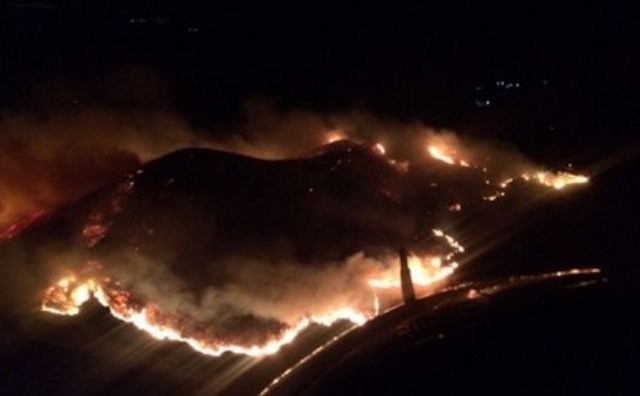
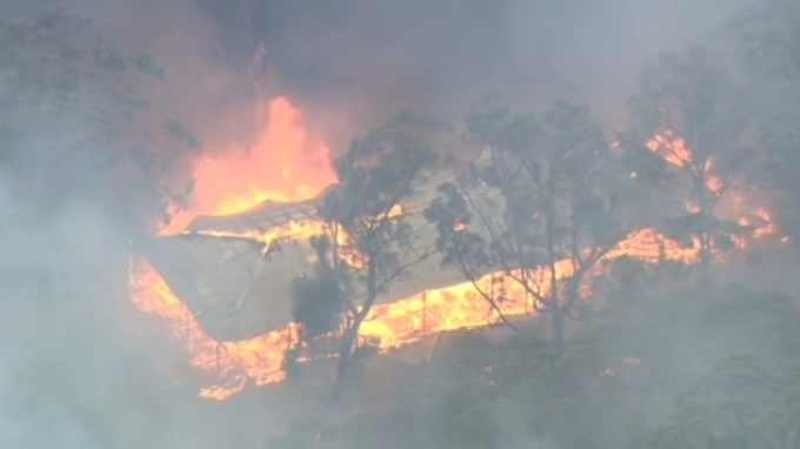
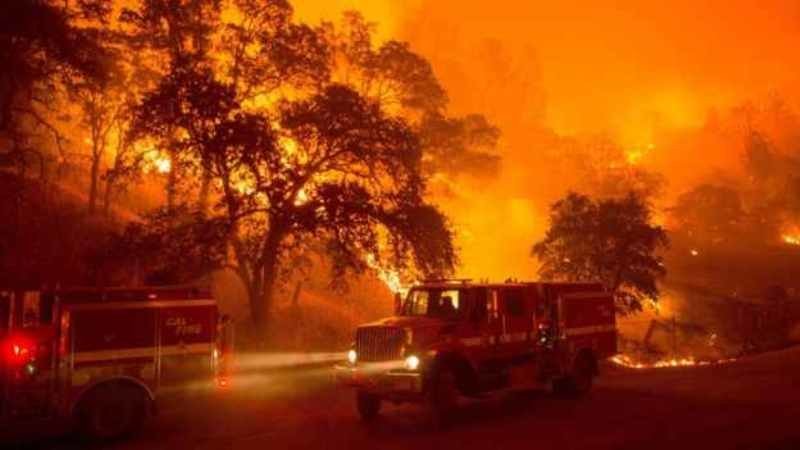
Sections of California's two scenic coastal routes — Highway 101 and the Pacific Coast Highway — were shut down west of Ventura early Saturday because of a rapidly expanding 1,200-acre wildfire driven by high winds, according to fire officials.

The Solimar Beach area, about 10 miles northwest of Ventura, was under mandatory evacuation orders and authorities also urged residents in nearby beach communities to leave the area, according to Capt. Mike Lindbery of the Ventura County Fire Department.

Authorities said about 30 homes were threatened by the fire, which began around 10:30 p.m.PST Friday.
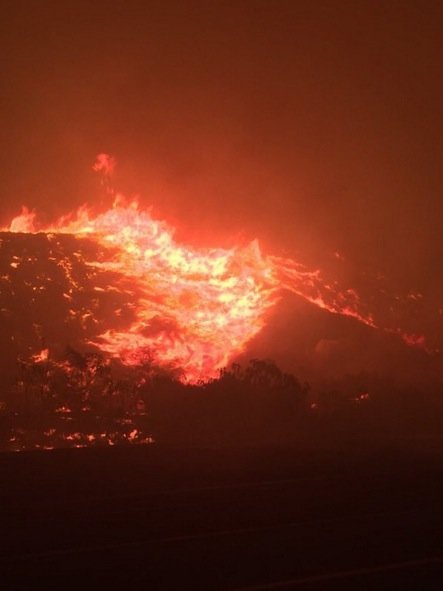
Highway 101/Solimar Beach fire
© Via twitter@LACoFireAirOpNight brush fire 12/25/15 near Highway 101/Solimar Beach.
The Union Pacific Railroad was also asked to stop train traffic in the area.

The National Weather Service predicted sustained winds over over 60 mph in Ventura County Saturday evening.

Lindbery said that more than 600 firefighters were sent to battle the fire that is feeding off thousands of acres of drought-stricken forest and grasslands.

Comment: A meteor was seen in Nevada and California a few days ago. Is this wildfire connected?

From the article: "The object was also later seen flying across [Ventura] California."


See also: SOTT Earth Changes Summary - November 2015: Extreme Weather, Planetary Upheaval, Meteor Fireballs


Fire

'Out of control' wildfires destroy 103 homes on Christmas Day in Victoria, Australia

Australian wildfire
© APTN
Out of control wildfires near the Great Ocean Road destroyed at least 103 homes on Friday, forcing residents to flee nearby towns, Australian Broadcasting Corp. reported, citing Victorian State Premier Daniel Andrews.

About 85 houses in Wye River and 18 at Separation Creek were engulfed by fire that has burned more than 2,000 hectares in the Australian state, according to the report. Residents and holidaymakers who fled Lorne and Allenvale to go to safer areas were allowed to return earlier today, ABC said.

No casualties have been reported. Cooler weather and heavy rain overnight slowed the spread of the fire though fire fighters warned they have yet to bring the situation under control, the report said.


Australia's hot, dry climate makes wildfires a major risk in the southern hemisphere's summer. In February 2009, bush fires across Victoria state killed 173 people and destroyed 150 homes in the worst blazes in the nation's history. Wildfires in February 2014 destroyed about 20 properties in Victoria, while fires in January of that year burned 52 homes on the eastern fringes of Perth.

Fire

America's 2015 wildfire season is now the most expensive on record

California wildfire
© Getty ImagesFirefighters try to contain the Lake County blaze, the worst of 21 major fires in California this year
The 2015 wildfire season is now the costliest on record, with $1.71 billion spent to fight the blazes, the U.S. Forest Service said Wednesday.

The previous record of $1.67 billion, adjusted for inflation, was set in fiscal year 2002, U.S. Department of Agriculture communications director Matt Herrick said. (The Forest Service is part of the U.S.D.A.)

With the season nearly over, 9.8 million acres burned in 2015, the second-highest total since records began in 1960, according to the National Interagency Fire Center in Boise, Idaho. Only 2006, with 9.87 acres charred, had a higher total.

In addition, seven forest service firefighters died this year battling wildfires. Since 2000, on average, 18 firefighters have died each year fighting flames, the fire center reports.

Most of the fires hit the West and Alaska, which is typical. The size of the area burned this year is roughly equivalent to the states of Massachusetts and Connecticut combined.

Over the past 10 years, the Forest Service has spent $1.13 billion on average each year to fight wildfires. That amount does not include local or state costs to fight fires.

Comment: In the US, the 2015 wildfire season has already broken other records this year, whilst a study has shown that wildfire seasons are more destructive and lasting longer almost everywhere on Earth.


Fire

Forest fires rage over northern Spain despite winter rain

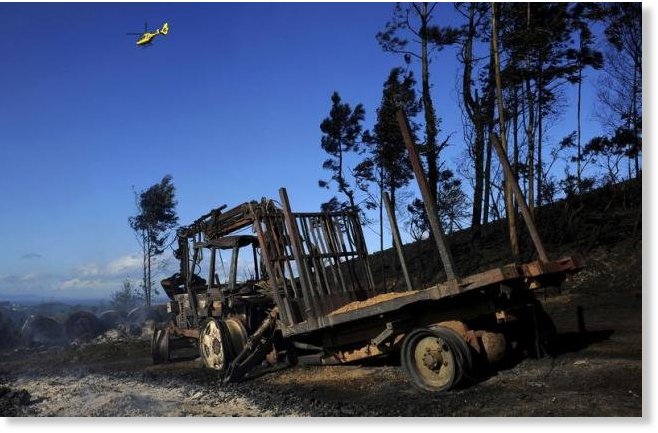
burnt out truck
© Reuters/Eloy AlonsoAn emergency services helicopter flies over a burnt out area devastated by a forest fire in La Caridad, northern Spain, December 20, 2015.
Dozens of forest fires raged across northern Spain on Sunday after strong winds hindered efforts to keep them from spreading, forcing some homes to be evacuated in the worst-affected Asturias region.

More than 100 fires were still burning on Sunday morning in Asturias alone despite rain overnight in some areas, emergency services said.

Television pictures showed several rural houses destroyed by fire but officials said there had been no reports of casualties or damage to villages or towns. Some residents were told to leave their houses as a precaution.

Spain is prone to wildfires in summer, especially in the more arid southern regions and along its Mediterranean coastline. But such incidents are unusual in winter, especially in rainier northern regions including Asturias.

Attention

2015 has been the worst wildfire season in U.S. history

fire wildfire
© Unknown
The nation is closing in on its worst wildfire season in recorded history, with nearly 9.8 million acres already burned -- the equivalent of Massachusetts, Connecticut, Rhode Island and part of New Hampshire going up in flames.

Two large fires and more than 160 smaller ones remain active, and more fires are expected to be reported before the month ends. Together, they're likely to push the 2015 total past the record 9.87 million acres burned in 2006.

The extent of scorched earth reflects a warming trend that has made the United States considerably drier, scientists and fire expects say, with less mountain snowpack particularly in Alaska and the southwest.

Comment: It looks like the US is going up in flames.

See also: SOTT Earth Changes Summary - November 2015: Extreme Weather, Planetary Upheaval, Meteor Fireballs


Fire

South Australian wildfire kills at least 2 and injures others

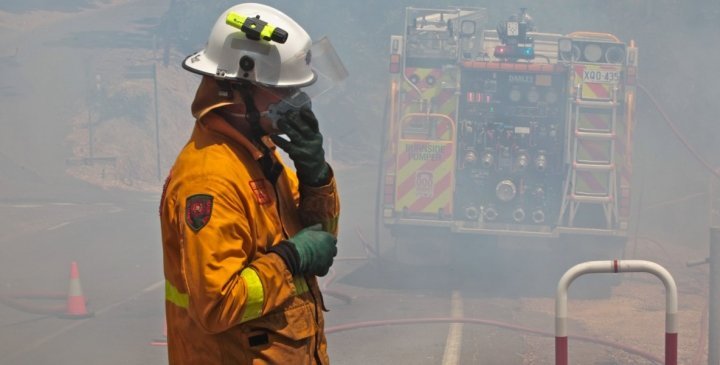
Australian firefighter
A clock frozen in time in the local bowls club destroyed by fire in the mid-north town of Wasleys in South Australia.

Firefighters spent yesterday searching burnt-out cars and homes after the blaze raged across a 40km front.

The Premier of South Australia, Jay Weatherill, took to Twitter to offer condolences to the families affected and thanked the hundreds of firefighters deployed in the area.

"We also know that there have been extraordinary losses of livestock and wildlife", the ABC quoted Weatherill as saying.

The South Australian deaths come after a blaze in the Esperence area of WA last week claimed the lives of three tourists and a local farmer.

"We can't be entirely sure we have identified every single person within the fire ground", Mr Weatherill said.

Fire

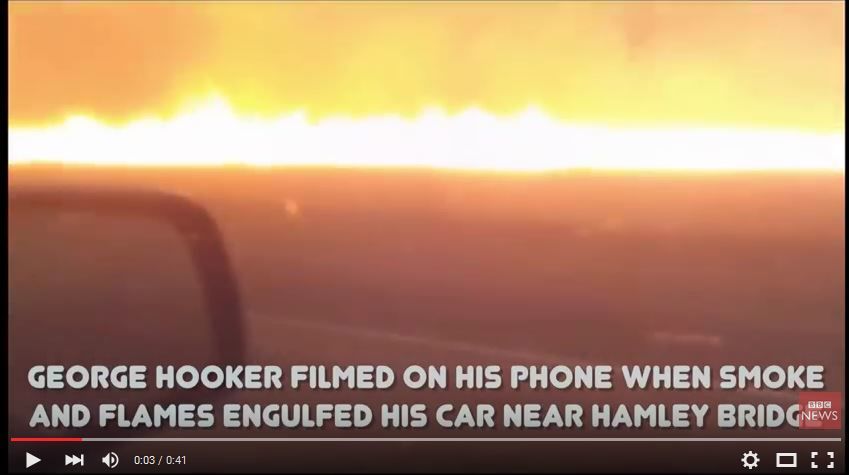
Man films dramatic bushfire escape in South Australia

driving through brushfire
© youtube/BBC News

An Australian man has filmed his terrifying trip through the heart of a bushfire.


George Hooker told the BBC he was driving near Hamley Bridge in South Australia when smoke and flames engulfed his car.

He kept filming on his phone with one hand even as the fire front raced towards him.

Two people have died and 13 hospitalised in the fires burning north of Adelaide.

"There were flames licking at the car, cinders and twigs blowing up against it," Mr Hooker said.

"If I stopped I would have been dead so I just kept going not really thinking much at all."

Comment: See also: Major wildfire kills two as farm animals burned alive in southern Australia


Fire

Major wildfire kills two as farm animals burned alive in southern Australia

Australia wildfires
© AAP
A "fast-moving and dangerous" bush fire leaves two people dead, with thousands of animals thought to have been burned alive.

Firefighters are battling to control a major wildfire in southern Australia which has killed two people and thousands of livestock.

Around 200 firefighters and several aircraft have reportedly been deployed to try and control the blaze, which is burning across a 27-mile front near Adelaide.

One person died in a paddock while a second died in a car, Australian media reported.

Comment: It is not only Australia where the "length and intensity of the fire season" is increasing. A study has shown that wildfire seasons are more destructive and lasting longer almost everywhere on Earth.

Globally we are witnessing extensive wildfires, which in some regions have been described as "unprecedented". The National Interagency Fire Center has described the 2015 wildfire season in the United States as a record breaker. The Amazon jungle is going up in smoke with tens of thousands of wildfires so far this year. Wildfires in Indonesia are causing a toxic haze which threatens millions in southeast Asia.

Rather than attributing this increase to "climate change" which "causes temperatures to rise", could a significant factor in the escalation of these wildfires be that they are fueled from outgassing, then possibly 'sparked' by an increase in atmospheric electric discharge events, such as lightning strikes and other 'cosmic' ignition sources?


Blue Planet

UN Report: Major rise in weather disasters over last 2 decades

Image
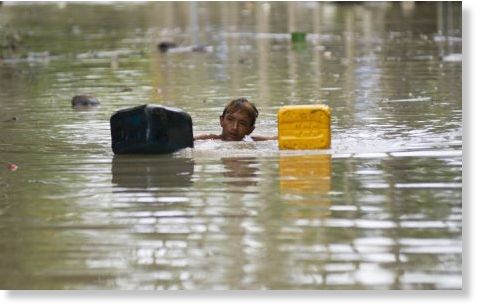
© AFPA flood-affected resident swims through floodwaters in Kalay, upper Myanmar’s Sagaing region on August 3, 2015. Relentless monsoon rains have triggered flash floods and landslides, destroying thousands of houses, farmland, bridges and roads with fast-flowing waters hampering relief efforts.
Since 1995, weather disasters have killed millions of people & left billions injured & homeless.

Weather-related disasters such as floods and heatwaves have occurred almost daily in the past decade, almost twice as often as two decades ago, with Asia being the hardest hit region, a UN report said on Monday.

While the report authors could not pin the increase wholly on climate change, they did say that the upward trend was likely to continue as extreme weather events increased.

Since 1995, weather disasters have killed millions of people, left billions injured, homeless or in need of aid, and accounted for 90 percent of all disasters, it said.

A recent peak year was 2002, when drought in India hit 200 million and a sandstorm in China affected 100 million.

But the standout mega-disaster was Cyclone Nargis, which killed 138,000 in Myanmar in 2008.

Fire

Third 'once-a-century' drought in 15 years: Tens of thousands of wildfires so far this year as Amazon jungle goes up in smoke

Image
The fires follow months of extreme drought in the country's southern states, which experts say is caused by climate change and deforestation.

Brazil's central Amazonas region has registered at least 906 active forest fires due to severe drought in the region, according to a new government report.

The Brazilian Institute for Space Research, known as INPE, reported Sunday that satellites had detected the fires, which account for over 59 percent of all active fires in Brazil.

The region most affected has been the northern state of Amazonas, the heart of the largest rainforest in the world. The region has already seen 11,114 forest fires since January of this year - a 47 percent rise compared to the same period last year, said INPE.

The state capital Manaus has been wreathed in smoke, causing issues for those with respiratory diseases. The smoke has failed to disperse because of the lack of rain and winds in the region lately.

Comment: This is the third 'once-in-a-century' drought the region has had in 15 years...
'Amazon rainforest hit by second 'once in a century drought' in five years'

Daily Mail, 4 February 2011

The Amazon has been hit by its second 'once in a century' drought in five years, scientists say.

A study found that last year's drought was even more severe and more widespread than the disastrous water shortages that gripped the world's largest rainforest in 2005.

The extended dry season is thought to have wiped out swathes of the Amazon, killing millions of trees, amphibians, fish, birds and mammals.
As with the explosion in wildfires in North America, the Arctic, Southeast Asia and elsewhere, we suspect that the vast majority of these fires are not man-made.