Wildfires
S


Bug

Wasps and hornets swarm into Fort McMurray in wake of wildfire

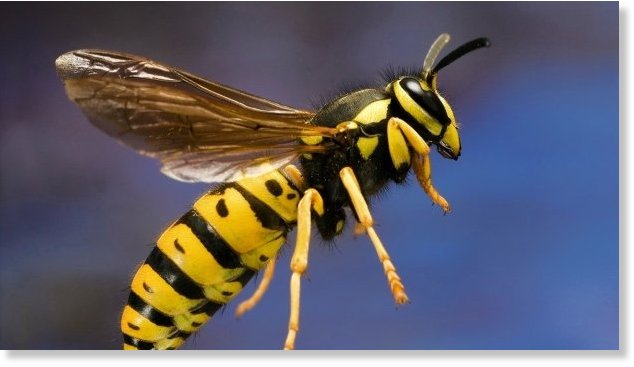
Stinging creatures, like this yellow jacket are swarming around Fort McMurray.
© MINDEN PICTURES/CORBISStinging creatures, like this yellow jacket are swarming around Fort McMurray.
During the weeks when Alberta's oilsands city was a ghost town, swarms of wasps and hornets moved in

A buzzing anxiety has gripped the city of Fort McMurray.

A black mass of wasps, hornets and all kinds of stinging insects have swarmed into the northern Alberta community.

People who have returned to the wildfire-ravaged city have been terrorized by the pests, and social media is humming with close-encounters
, and tips about the best extermination methods.

Nests have cropped up on countless porches and patios; some colonies have even made themselves at home inside long-abandoned homes.

When the raging wildfire called "The Beast" pushed residents out last month, the stinging insects moved in.

Pete Petipcoe/Facebook

Fire

Hundreds evacuated as wildfire rages near Yarnell, Arizona

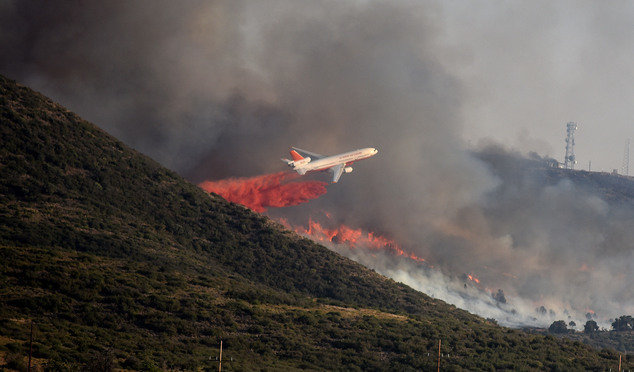
wildfire near Yarnell, Arizona June 2016
© Les Stukenberg/The Daily Courier via APA brush fire burns in Yarnell, Arizona, Wednesday, June 8, 2016.
Hundreds of people evacuated their homes as a wildfire raged near the Arizona town where a 2013 blaze killed 19 members of an elite firefighting crew.

Bureau of Land Management spokeswoman Dolores Garcia said 250 to 300 people left their homes in the town.

The fire grew to 600 acres, but crews expected it to ease somewhat during the overnight with cooler temperatures and higher humidity.

There have been no reports of injuries, the Yavapai County sheriff's office said.

About 140 firefighting personnel were battling the blaze, supported by three air tankers and two helicopters making blaze suppression drops. Garcia said three unoccupied buildings have burned but no homes have been lost near Yarnell, about 60 miles northwest of Phoenix.

The cause of the blaze was being investigated, but Garcia said crews had ruled out lightning.

It was burning south and east of the site of the Yarnell Hill Fire in which members of the Granite Mountain Hotshots died when they got trapped by the flames nearly three years ago — the deadliest U.S. tragedy for wildland firefighters in several decades.


That lightning-caused wildfire destroyed nearly 130 homes in the area.

On Wednesday, some Yarnell homeowners said they saw smoke and received a voluntary evacuation notice on their cellphones.


Comment: Arizona burning? State officials warn of 'potentially significant wildfire season'


Fire

At least 9 wildfires in Oregon sparked by lightning in one day

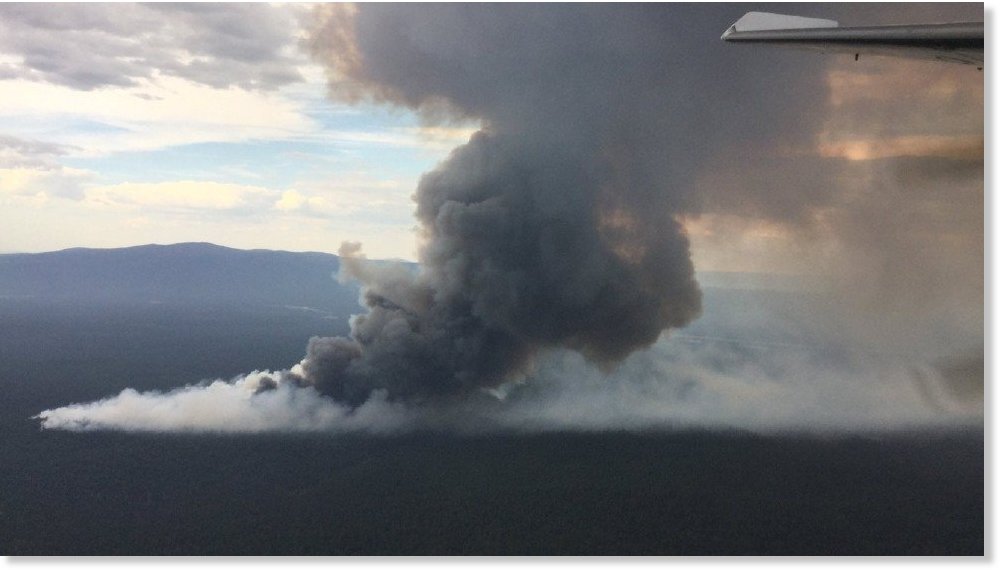
The smoke plume from the Draw Fire as seen from the air on June 6, 2016.
© South Central Oregon Fire Management PartnershipThe smoke plume from the Draw Fire as seen from the air on June 6, 2016.
Wildfires sparked by lightning Sunday continue to burn in southeast and south central Oregon as firefighters faced unfavorable hot and windy weather conditions.

The Owyhee Canyon Fire south of Jordan Valley has burned over 20,500 acres, according to fire officials. The fire is 50 percent contained, but the weather forecast could be a problem.

"Wind and lightning are expected today and could frustrate suppression and containment efforts," fire managers said in a report Tuesday morning.

Twenty miles northeast of Chiloquin in south central Oregon, fire crews are working the 500 acre Draw Fire. It's the largest of about 7 fires sparked by lightning there on Sunday. The other blazes were kept to 3 1/2 acres or smaller, the USDA Forest Service said.

Fire

Could 2016 be California's worst wildfire season?

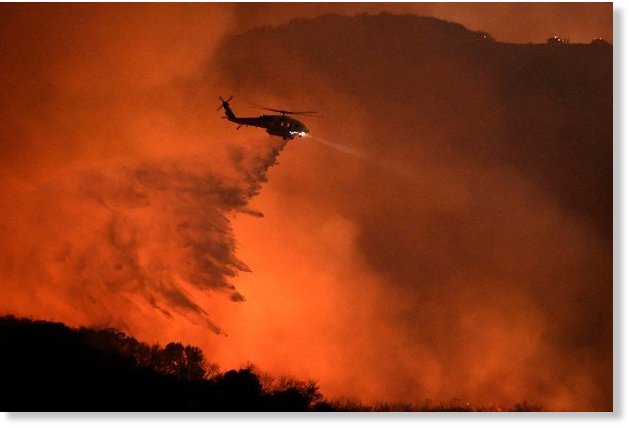
 A helicopter makes a water drop on a fire in Calabasas, California.
© Gene Blevins / Reuters A helicopter makes a water drop on a fire in Calabasas, California.
Consecutive years of drought have killed more tress, and recent rains have added to grass growth, which provides quick fuel for fires.

Five years of drought have dried up California's forests and the first six months of this year has seen twice as many acres burned as the same time in 2015, the Los Angeles Times reported.

By Monday, about 400 firefighters working on the ground and in helicopters had extinguished one blaze in Calabasas, a neighborhood on the edge of Los Angeles. On Tuesday at least two other large fires in the state burned, as the Times reported:
In the north, crews tackled the 3,200-acre Coleman fire as it tore through Los Padres National Forest, threatening several homes. Farther south in Calabasas, residents left their homes as flames consumed more than 500 acres. Fast-approaching flames forced a bride, groom and their guests to act quickly and move their entire wedding at the Inn of the Seventh Ray in Topanga Canyon to a nearby beach.

Fire

Forest fires engulf further areas in Russia

Wildfire
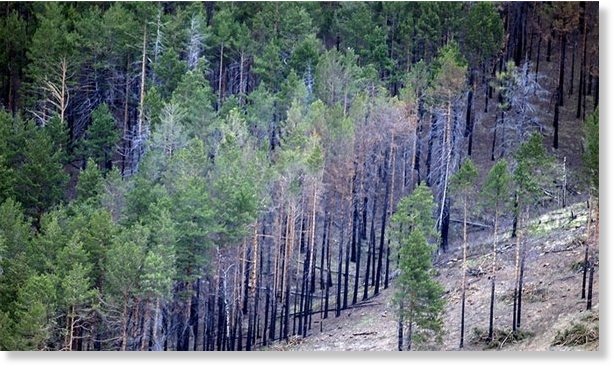
The area of forest fires in Russia increased by 20% in the past twenty-four hours to 10,000 hectares, with more than half of wildfires raging in the Russia's Trans-Baikal Territory in East Siberia, the aerial forest protection service Avialesokhrana reported on Wednesday.

"As of midnight Moscow time on June 8, a total of 65 forest fires were active in Russia on an area of 10,094 hectares, including 12 wildfires in forest areas on a territory of 5,789 hectares in the Trans-Baikal Territory," the service said in a statement, TASS reported.

Apart from Trans-Baikal Territory, the largest area of wildfires was registered in the Republic of Buryatia in East Siberia where almost 2,200 hectares of land are ablaze.

More than 2,700 personnel have been involved in the fire-fighting effort. They have been able to extinguish 70 fire outbreaks on an area of over 1,500 hectares in the past twenty-four hours. Nevertheless, the fire has covered a distance of 3,100 hectares of forests over this time.

Emergency regime has been in effect in Buryatia, the Trans-Baikal Territory and in one district of the Krasnoyarsk and Kamchatka Territories each due to wildfires.

Fire

Crews fight wildfires blazing through Sweden

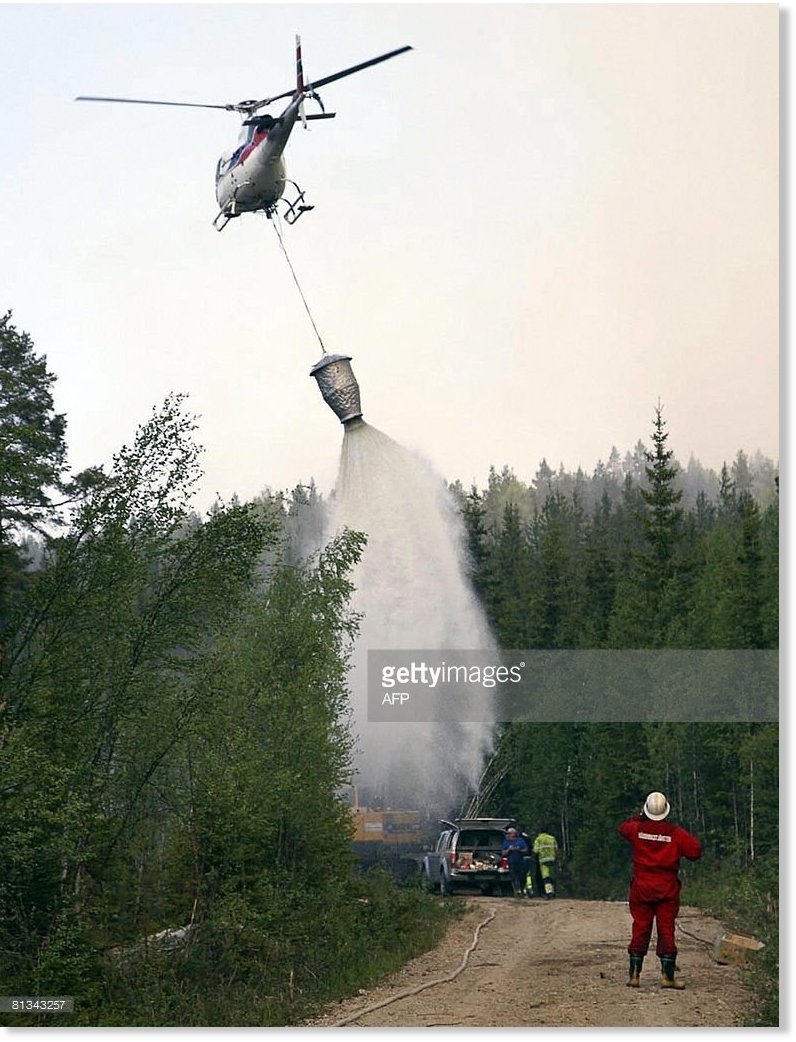
A helicopter drops water on the wildfire
Fire crews are fighting wildfires across Sweden, which has been left dry by an early-summer heatwave.

National weather institute SMHI on Tuesday warned of "an extremely great risk of" forest fires spreading in southern Sweden in the afternoon, with the threat increasing in large parts of the north-east on Wednesday.

"It's been very dry for a while now," said Nils Holmqvist, meteorologist for public broadcaster SVT.

Sweden has experienced sizzling temperatures this summer, with the mercury soaring to 30.2C in Gothenburg on the west coast on June 3rd - the season's hottest day so far. But, while welcomed by many, the sunny days have also left the ground dry, making it vulnerable to wildfires.

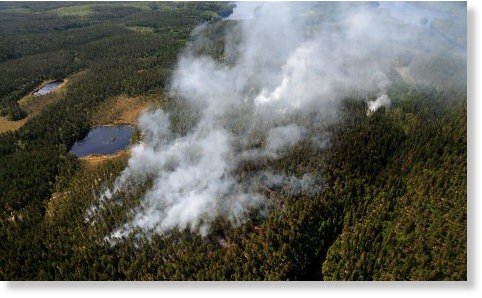
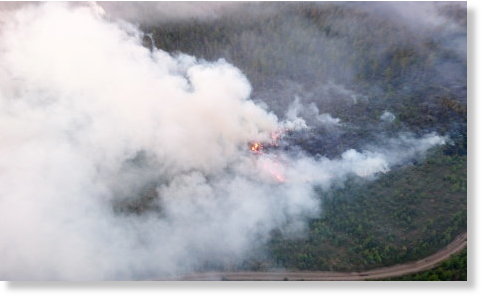
Forest fires swept across central Sweden on Tuesday, including the Vrinnevi forest in Norrköping, Järpmyrberget in Ockelbo and along the railroad between Grängesberg and Ludvika in Dalarna. A fire near Lidhult in the southern Småland region which took days to put out last week flared up again at around noon.


A forest fire at Bengtsfors last week.
© Räddningstjänsten BengtsforsA forest fire at Bengtsfors last week.
The fire near Lidhult last week
© Räddningstjänsten LjungbyThe fire near Lidhult last week

Fire

Ash and dust from Canadian wildfires have been found in Switzerland

canada wildfire dust switzerland
Massive forest fires in western Canada have "injected an enormous quantity of dust into the atmosphere," which has now been found in Switzerland, according to the nation's meteorological authorities.
Ash and dust particles from the massive forest fires ravaging western Canada for the past month have been found in Switzerland, according to Swiss meteorologists.

"The fires have injected an enormous quantity of dust into the atmosphere, (which) is now being detected over Switzerland," the Swiss meteorological authorities said in a report discreetly issued on Tuesday and picked up by Swiss media Friday.

MeteoSwiss said it had determined that particles observed at the Payerne measurement station in the western canton of Vaud on May 24 and 25 had been emitted from western Canada around May 19-20.

Fire

California wildfire threatens homes, mandatory evacuations ordered

California wildfire
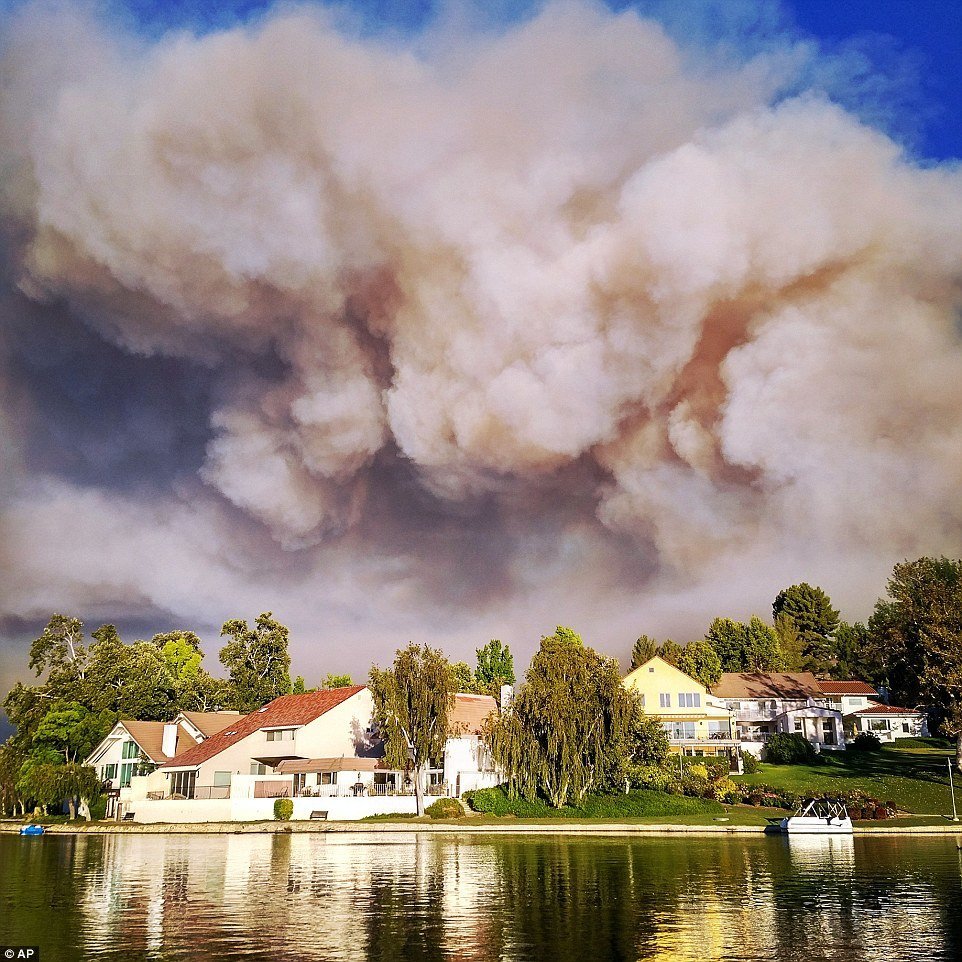
© APThe 200-acre blaze that erupted Saturday afternoon northwest of downtown Los Angeles is threatening about 3,000 homes, according to Los Angeles County fire officials
Mandatory evacuations have been ordered in Southern California, as three brush fires quickly spread on Saturday, one of which is moving dangerously close to homes in the Calabasas area, the Los Angeles County Fire Department said.

Witnesses reported that one fire began near 23062 Mulholland Highway at around 4:30 pm local time. It was originally said to affect two acres, but is now moving towards residential areas.

Local Agoura High School on West Driver Avenue is currently being evacuated.

Three water-dropping helicopters have been dispatched to battle the fire.


Fire

Reignited holdover 'zombie' wildfires have awakened in Alaska

Holdover wildfires in Alaska
© REUTERS/Mat-Su Borough/Stefan Hinman
As if we didn't have enough to worry about with the start of wildfire season, we now have to face the reality of zombie blazes: fires that never really die.

Last year's Alaskan wildfire season was the second-largest ever — and it seems it never entirely ended. A wildfire in southwest Alaska that swept more than 8,000 acres in the Medfra area over the course of this week is a continuation of a 2015 fire that never went out, despite having ceased to visibly burn. The Soda Creek Fire raged through 16,500 acres in the same area last summer, according to Alaska Dispatch News. It smoldered underground, survived the winter, and finally reignited on Sunday, spreading to an acre within an hour.

It's harder than it may seem to completely douse an established wildfire. Fire can burrow deep into the roots of old-growth trees, where it burns slowly, insulated by a thick, moisture-absorbing blanket of decomposing moss, leaves, and twigs on the forest floor. And once the ground freezes, the embers are sealed in, sometimes under feet of snow. Come spring, the ground warms up, the surrounding brush and trees dry out, and the fire can spring back to life.


Comment: Another contributory factor may be 'outgassing' of methane and other natural gases.


These reignited fires — called holdover fires — are becoming more common. Sixteen Alaskan wildfires have been attributed to holdovers this year alone. In the past, officials haven't even kept records of the number of holdovers, but they're rare enough that we know 16 is abnormally high. One of this year's wildfires was started by a holdover fire from two years ago.

In short: Fires are slumbering in the ground, and we have no idea when — and where — they'll wake up.

Comment: Wildfire seasons are more destructive and lasting longer almost everywhere on Earth


Fire

More than 15,000 hectares of forest burnt in Russia over past 24 hours

Wildfire
© Zorikto Dagbayev/TASS
Wildfires have consumed some 24,500 hectares in the last 24 hours across Russia, destroying more than 15,000 hectares of forest, the aerial forest protection service Avialesookhrana said on Tuesday.

Firefighters have managed to extinguish 131 wildfires on the total area of 13,300 hectares. The effort involved almost 5,500 people as well as 838 pieces of equipment and 26 aircraft.

As of Tuesday, some 128 wildfires engulfed the area of more than 77,000 hectares in Russia. The wildfires are raging in the Amur Region in the Far East, the Republic of Buryatia and the Trans-Baikal Territory in East Siberia. The fire hazardous situation has been registered in 81 Russian regions.

The wildfire area in the Trans-Baikal Territory has grown to 22,400 hectares over the past 24 hours, the region's forestry service said. Some 742 people are battling the fires in the region, including paratroopers. A state of emergency has been declared in the local forests.