Wildfires
S


Fire

Nine wildfires burning in California, leaving 70,000 acres scorched

erskine fire california
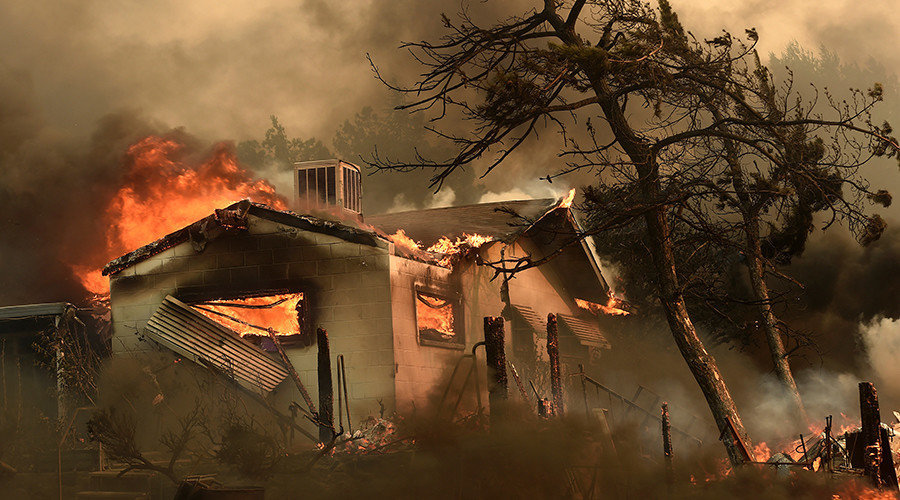
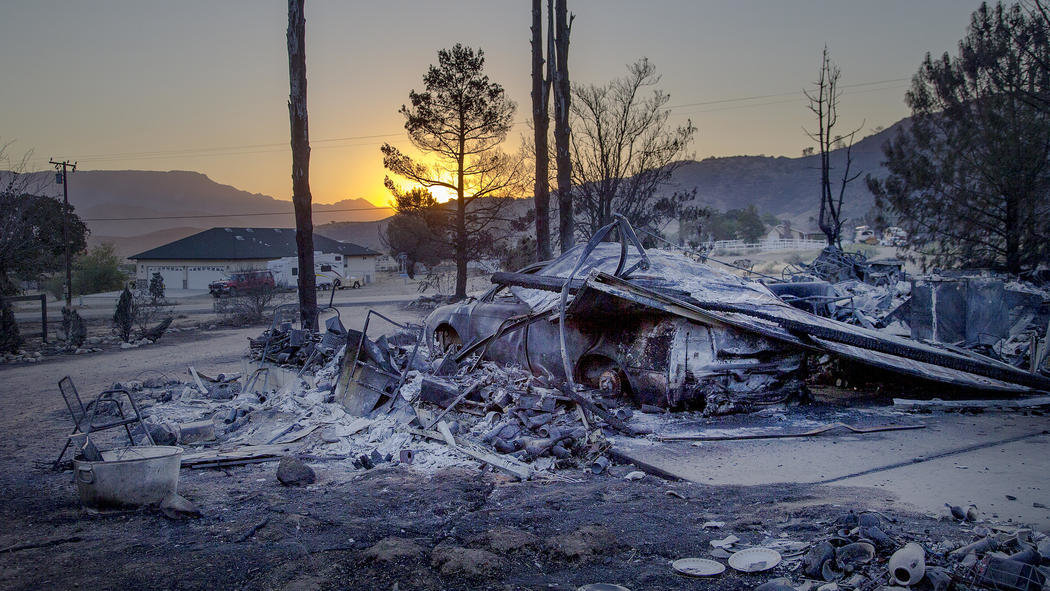
Burned rubble is all that remains of the residence at the Erskine fire in Squirrel Mountain Valley.
Nine wildfires continued to burn throughout California on Monday, as flames left nearly 70,000 acres scorched, and occupied the efforts of more than 5,000 firefighters, according to state and federal fire authorities.

The deadly Erskine fire in Kern County is the largest of the fires and has so far burned 45,388 acres since it began late Thursday, south of Lake Isabella. After destroying 250 structures and causing two deaths, the blaze is only 40% contained.

The fire had initially been suspected of killing three people, but authorities announced Monday one set of remains found in the 4100 block of Fiddleneck, in South Lake, was determined to have belonged to an animal, not a human.

Comment: Could 2016 be California's worst wildfire season?


Cloud Lightning

Thousands of lightning strikes spark dozens of new wildfires across Alaska

lightning strikes across Alaska
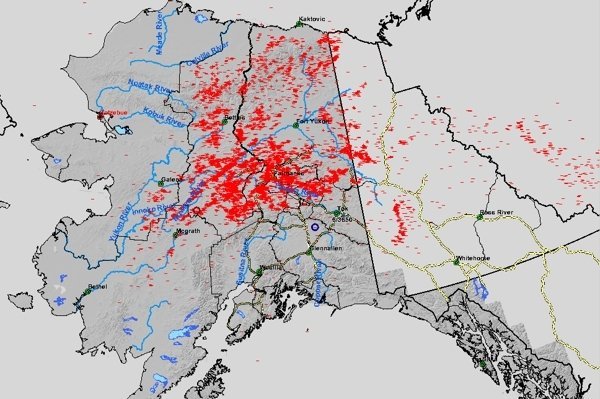
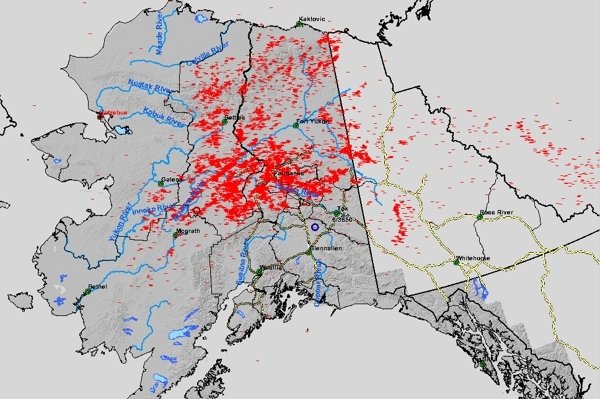
© Courtesy Alaska Interagency Coordination Center10,292 lightning strikes were recorded across Alaska between 6 a.m. and 6 p.m. on June 26, 2016, according to the Alaska Interagency Coordination Center.

Thousands of lightning strikes over the weekend, especially in northern Alaska, have given wildfire crews more than three dozen new fires to contain and track, including at least three near Huslia.

According to Sunday posts on the Alaska Wildland Fire Information blog, maintained by the federal Bureau of Land Management's Alaska Fire Service, about 18,000 new lightning strikes were reported across the state from Friday through Sunday evening, including 10,292 in a 12-hour period from 6 a.m. to 6 p.m. Sunday.

"By 10 p.m. Sunday, there were an estimated 37 new fires reported throughout the state including a few false alarms," fire officials wrote. "Initial attack suppression efforts are underway on several fires with more discoveries anticipated Monday."

Alaska Fire Service spokeswoman Beth Ipsen said in an email Monday morning that numerous tasks remained for fire crews in the wake of the weekend's lightning.

"Things will be changing a little bit today as we add more crews to some fires, fly other fires to see where they're burning and check other areas that recorded lightning strikes to see if anything ignited," Ipsen wrote.

The fire service reported 24 of the new fires are within the service's jurisdiction, with at least four new fires being actively fought by firefighters Sunday.

"Five loads of smokejumpers were dispatched to five different fires at different times Sunday," fire officials wrote.

Comment: A study showed that wildfire seasons are more destructive and lasting longer almost everywhere on Earth.

Could a significant factor in the escalation of these events be that they are fueled from outgassing, then possibly 'sparked' by an increase in atmospheric electric discharge events, such as lightning strikes and other 'cosmic' ignition sources?


Attention

Last 10 months have been the worst period for floods and fires in U.S. history

Erskine fire
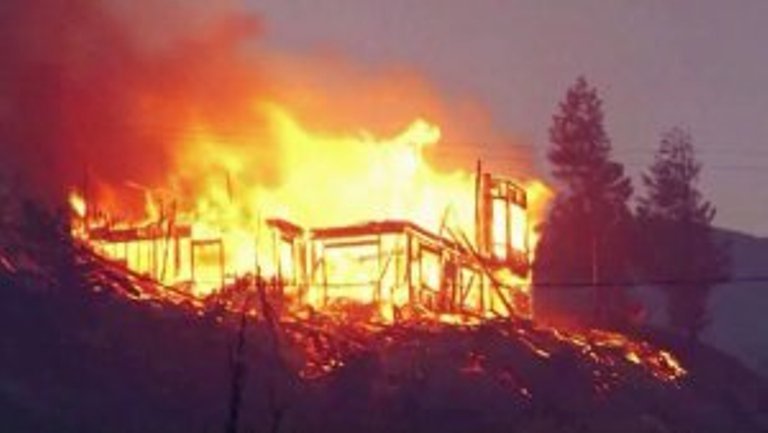
© KBAK via CNN)Flames from the Erskine fire tear through a house in the Lake Isabella area.
As you read this article, the state of California is being ravaged by gigantic wildfires that are raging wildly out of control, and West Virginia is dealing with a "500 year flood". Since last September, the U.S. has been hit by a series of 11 historic floods. Never before in American history have we seen so many major floods within such a compressed space of time.

And just as the Shemitah year ended last September, massive wildfires began erupting all over the country. Thanks to that unprecedented outbreak of large fires, 2015 ended up being the worst year for wildfires in all of U.S. history. And since 2016 began, things have continued to get worse. As far as the total number of acres burned is concerned, we are more than a million acres ahead of the pace that was set last year. So why in the world is all of this happening?

The wildfires that are ripping through many parts of California right now are making headlines all over the world. In particular, the extremely quick moving Erskine fire in Kern County has already destroyed more than 200 homes and authorities are picking through the rubble hoping that they won't discover too many bodies...
The charred remains of two people were found inside a burned down mobile home which went up in flames as the fire tore through the South Lake area of Sierra Nevada, officials said.

The bodies were so horrifically burned that a forensic investigation is required to determine whether they belonged to a human or animal, said Kern County Sheriff spokesman Ray Pruitt.

Officials warned that more residents may be forced to flee the advancing flames as the fire has already scorched more than 30,000 acres.

Comment: For more coverage on the extreme weather affecting the planet, check out the monthly SOTT Earth Changes Summaries. Last month:

SOTT Earth Changes Summary - May 2016: Extreme Weather, Planetary Upheaval, Meteor Fireballs


Fire

'A firefight of epic proportions': Two killed in California's Erskine wildfire

erskine wildfire
© Noah Berger / ReutersFlames from the Erskine Fire engulf a home near Weldon, California, U.S. June 24, 2016.
A furious wildfire has ripped through an area of California, killing an elderly couple as they tried to flee from the deadly flames. At least 80 houses have been destroyed in southern Sierra Nevada, with strong winds fanning the flames further.

Kern County Sheriff, Donny Youngblood, told reporters that at least two people were confirmed to have been killed in the inferno, warning that more victims could be found.

Up to 800 firefighters struggled against the so-called Erskine Fire, which broke out on Thursday in the foothills of Kern County. It roared through sun-drenched trees in the mountains of central California and eventually went out of control. On Friday, local authorities told over 3,000 residents in Lake Isabella to be prepared to evacuate, Reuters reported.

"The forces of nature collided with a spark," Kern County Fire Chief, Brian Marshall, told a news conference on Friday. "The mountainous terrain, five years of drought and wind gusts of over 20mph all drove a fire over 11 miles in 13 hours.

Fire

Evacuations ordered and highways closed as Erskine wildfire spreads quickly in central California

erskine fire kern county CA
Erskine Fire in Kern County, Calif., June 2016
A fast-spreading fire in central California has destroyed at least 80 buildings and is threatening 1,500 more, prompting the evacuation of 10 neighborhoods, the authorities said Thursday night.

The fire three hours north of Los Angeles—dubbed the Erskine fire—had spread to an estimated 5,000 acres (20 square kilometers), prompting the mobilization of hundreds of firefighters, the news website Inciweb said.

The authorities closed several highways and evacuated two schools and a retirement home in the agricultural and oil region after the blaze started Thursday afternoon due to unknown causes.

The blaze is "extremely dangerous, extremely volatile," Kern County Fire Captain Tyler Townsend told the Los Angeles Times. "It's one of the most devastating I've ever seen."

Comment: Could 2016 be California's worst wildfire season?


Fire

Record-breaking heat wave takes four lives as it scorches Southwest U.S.

wildfire yarnell AZ evacuations
© Gene Blevins / Reuters
At least four people have died in a record-setting heat wave that has engulfed the southwestern United States. The deaths occurred in Arizona, where the temperature hit 120 degrees in some places. More than 30 million people are currently under heat warnings or advisories.

The Red Cross defines a heat wave as "a prolonged period of excessive heat, generally 10 degrees or more above average, often combined with excessive humidity." In Phoenix the thermometer climbed to 118 degrees, nearly hitting the city's all-time record of 122 degrees—so hot a Mesa Airlines flight to the city on Sunday was routed back to Texas.

"There'll be a bunch of records broken again today," said CNN meteorologist Chad Myers. "It's not even cooling down at night—that's another part of the problem." The record temperatures are making it the hottest-ever start to summer in Arizona, New Mexico and California, said CNN meteorologist Pedram Javaheri.


Comment: Further reading: Deadly 'heat dome' scorching the Southwestern United States


Fire

Western wildfires triple in size; evacuations ordered in at least three states

wildfire chilili
© Roberto E. Rosales/The Albuquerque Journal via APResidents of the town of Chilili along state road 337 begin to evacuate due to the Dog Head wildfire near the Manzano mountains, Wednesday, June 15, 2016, in Chilili, N.M.
Major wildfires burning across the West have consumed tens of thousands of acres and forced evacuations in at least three states. In New Mexico, one particular wildfire exploded in size on Thursday.

Dry conditions are hampering firefighting efforts in a region that's expected to see dangerous and potentially deadly heat over the weekend and into early next week.

"Humidity values less than 15 percent and dew points as low as the single digits will be present and persistent across a large portion of the Southwest through at least Sunday," said weather.com meteorologist Jonathan Belles.

Fire

'Firenado' spotted inside California's Sherpa wildfire which has tripled in size

Firenado in Sherpa wildfire, California
© YouTube/Focus Tv (screen capture)
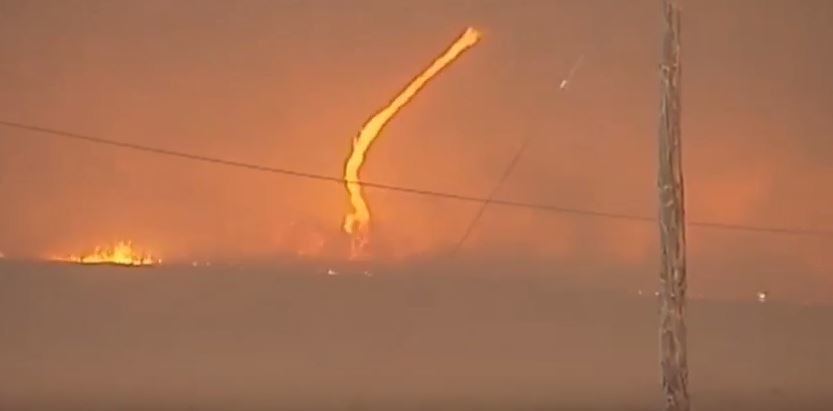
A wildfire in Southern California spawned a fire whirl, also known as a firenado or fire tornado.

A fire whirl is a "spinning vortex column of ascending hot air and gases rising from a fire and carrying aloft smoke, debris and flame," according to the Bureau of Land Management's Glossary of Wildland Fire Terminology.

Fire whirls range in size from less than 1 foot to more than 500 feet in diameter," the glossary said. "Large fire whirls have the intensity of a small tornado."

These fire whirls can form in any size fire, but they are most destructive in large ones. Created by cool air rushing to take the place of hot air, the whirl's spinning can hurl embers and sparks great distances. Whirls usually intensify a wildfire.

Fire whirls are more likely to occur where winds are forced to change directions, such as near a grove of trees.

Thursday's firenado occurred during the Sherpa Fire, which has burned about 1,400 acres west of Santa Barbara, Calif. Authorities evacuated 400 homes and businesses, Reuters reported.


Comment: The Sherpa fire has grown to nearly 6,000 acres after it tripled in size yesterday. Officials described the blaze as 20% contained as a hot, windy weekend looms. See also:

Could 2016 be California's worst wildfire season?


Fire

Wildfires: Goleta, CA; Arizona; Utah; New Mexico

Firefighter blaze
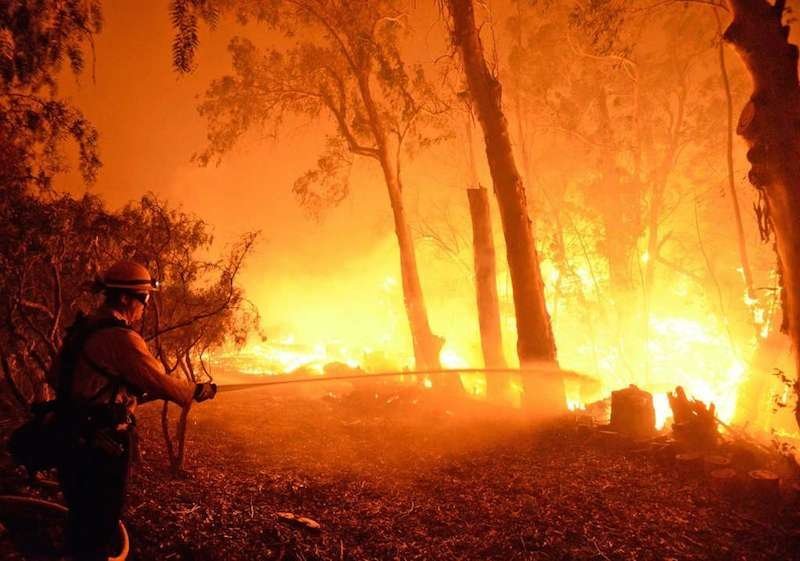
© Mike Eliason, APSanta Barbara firefighter knocks down flames as they approach a ranch near Las Flores Canyon west of Goleta, CA.
A fleet of aircraft dropped water and retardant to combat a wind-driven wildfire burning out of control Thursday in rugged coastal canyons west of Santa Barbara, where hundreds of campers, some rural homes and an oil processing facility evacuated as the flames crept toward the ocean.

Strong gusts and rising temperatures across the dry Western U.S. also worsened wildfires in other states. A blaze in central New Mexico exploded to nearly 19 square miles and forced residents of some small communities to flee after sending up a towering plume of smoke that blanketed the state's largest city in a thick haze. Some structures have burned, but it's not clear whether they were homes.

In eastern Arizona, a small community was evacuated and thousands of other residents were told to prepare to leave after a wind-whipped wildfire charred more than 12 square miles. Blazes also threatened homes in Utah, where a firefighter hurt his head in a fall.

Shirpa Fire
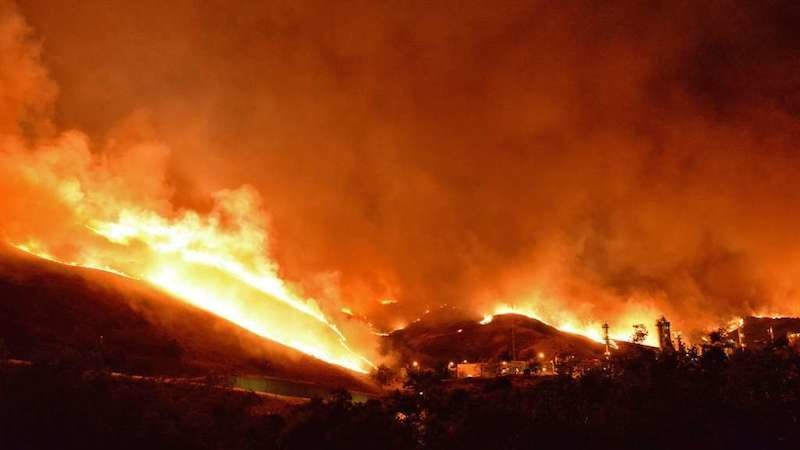
© Mike Eliason, APThe Shirpa Fire races down the canyon area near the ExxonMobil Oil Processing Facility.
The weather was expected to pose problems for crews in those states and California, where flames that ignited Wednesday afternoon chewed through nearly 2 square miles of dry brush in an area that has not burned in some 70 years.

Winds gusting to nearly 40 mph pushed the fire through canyons and close to a few ranch homes and an ExxonMobil crude oil processing facility that employs about 250 workers. No structures were damaged, and no injuries were reported. ExxonMobil evacuated non-essential employees from the Las Flores Canyon site, and those that remained through the night helped protect it against the flames, company spokesman Todd Spitler said.


Fire

Dozens evacuated as fast-burning forest fire sparks in Manzano Mountains, New Mexico

Manzano mountains wildfire
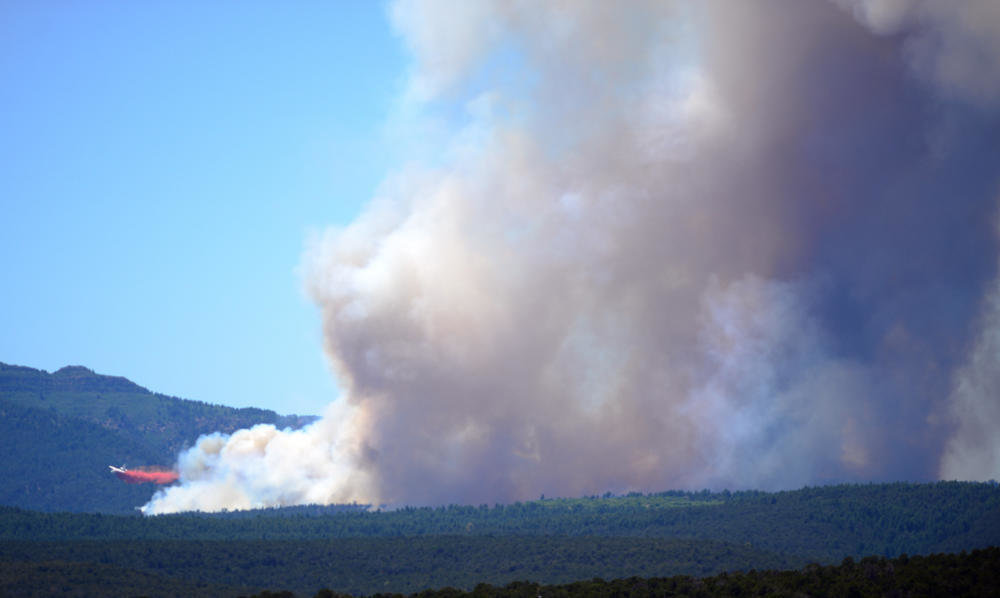
© Adolphe Pierre-Louis/JournalA tanker drops fire retardant on a forest fire near the Fourth of July Campground in the Manzano Mountains on Tuesday.
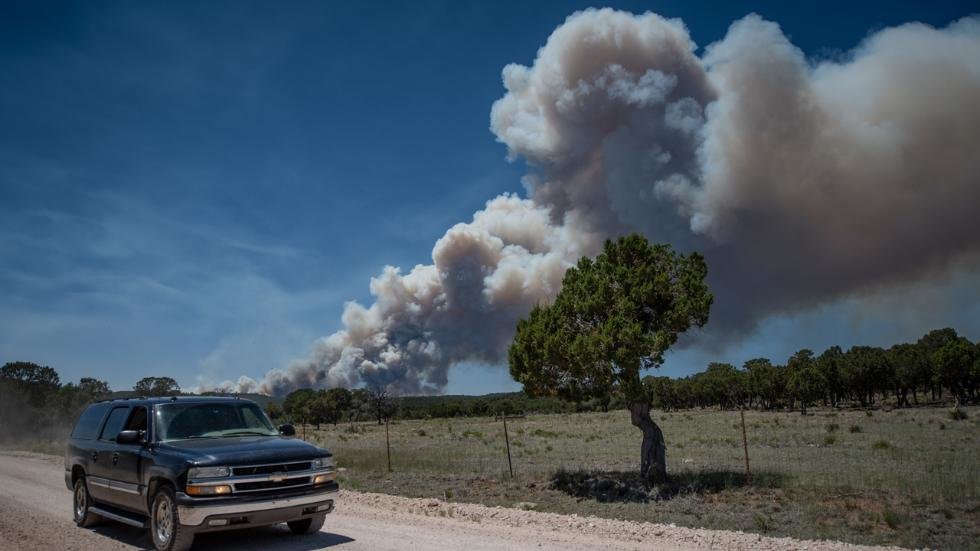
An uncontained forest fire is rapidly burning about 30-acres in the Manzano Mountains near the Fourth of July campground, according to U.S. Forest Service and Albuquerque fire officials.

A Forest Service spokeswoman confirmed Tuesday evening that residents on Camino del Norte and La Parra Road in the Chilili area have been ordered to evacuate.

Donna Nemeth, a spokeswoman for the Cibola National Forest, said the fire is burning in an area previously used for logging. That means there is lots of dry fuel on the ground, and the fire is spreading quicker than normal.

Arlene Perea, of the Mountainair Ranger District, said officials aren't sure how the fire started.