Health & WellnessS


Fire

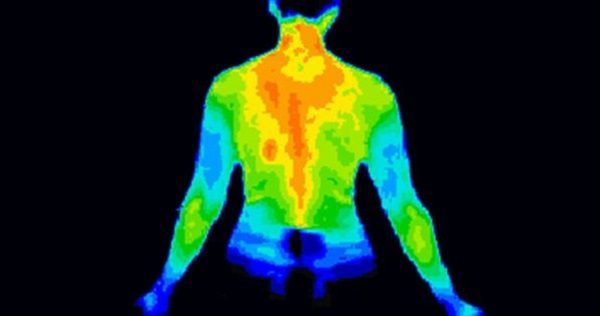
Hotter bodies better at fighting disease

Having a "hot body" has more benefits than ever before, thanks to new scientific findings on the role that elevated body temperature plays in helping fight infections and ward-off disease
hot body
A 2018 study examining the role that temperature plays in the body's inflammatory response has demonstrated that the hotter our body temperature, the more effective our immune system becomes at fighting tumors, healing wounds, and fighting infections.

Researchers at the Universities of Warwick and Manchester in the UK recently published the paper entitled, Temperature regulates NF-κB dynamics and function through timing of A20 transcription,[1] in the Proceedings of the National Academy of Sciences of the USA. Acknowledging that inflammation is often accompanied by changes in body temperature, researchers sought to close the gap of information on how these phenomena may be linked.

Using an experimentation method incorporating mathematical modeling, researchers from the University's Mathematics Institute partnered with biologists, infectious disease specialists, epidemiologists and other scientists to better understand these systemic interactions. These models were used to calculate cellular responses to inflammation, such as how small increases in body temperature affect specific genes, including key inflammatory regulators.


Comment: The Health & Wellness Show: The heat is on: Saunas, sunlight and sweatlodges


Cupcake Pink

Fruit is now so full of sugar it's damaging the health of Zoo animals

red panda
© Eddie Jim
Selective breeding has made the fruit we eat so full of sugar, Melbourne Zoo has had to wean its animals off it.

Fruit is vital in human diets, and we all need to eat more. But at the zoo, keepers found fruit-heavy diets were making some animals obese - and rotting their teeth.


Comment: It's also possible that part of the problem is that, in the wild, these animals would have a greater access to a variety of foods, other than fruit, such as insects and meat.


"The issue is the cultivated fruits have been genetically modified to be much higher in sugar content than their natural, ancestral fruits," says Dr Michael Lynch, the zoo's head vet.

"It's interesting. After doing a lot with nutrition here, I tend to eat less fruit."

Monkeys love bananas. But now, says Dr Lynch, the zoo's primates don't get any fruit at all.

For humans, eating fruit is associated with a reduced risk of coronary heart disease, stroke, obesity, gastric cancer and lung cancer, an evidence review commissioned by the federal government found.


Comment: There is some deadly cognitive dissonance occurring here: Why would modern fruits be detrimental to the health of animals, who are precisely adapted to eat them, and yet still be considered healthy for humans, who are adapted to a predominantly meat and fat (hunter-gatherer) diet? Obesity and other diet related health issues are reaching epidemic proportions and the beginnings of these problems correlate closely with the implementation of current government dietary guidelines.


Comment: For more on the optimal diet for humans, see: Also check out SOTT radio's:


Health

The perfect pooping position

toilet
© shutterstock
If you live in the U.S., there's a good chance you don't put much thought into the best position in which to poop. You simply sit down on the toilet and let nature take its course. Except, for some people, this process isn't simple at all. Up to 27 percent of adults may be chronically constipated,1 which can lead to other problems like anal fissures, rectal prolapse, fecal incontinence and urologic disorders.2

Meanwhile, so-called "pressure diseases," such as hemorrhoids, varicose veins, diverticulitis and hiatal hernia (in which part of your stomach pushes up through your diaphragm), which may relate to straining excessively to have a bowel movement, are about 25 times more common in the U.S. than they are in rural Africa.3 What's different? Many things, such as much of the African population eating a traditional, nonprocessed and fiber-rich diet, and using a squatting position to poop.

This latter item may seem inconsequential, but it's the way humans have been pooping for hundreds of thousands of years. The flush toilet wasn't even invented until 1596 and didn't become widely used until 1851.4

Prior to this, elimination took place via chamber pots, outhouses or simply outdoors, sometimes using holes in the ground. As the variety of latrine changed, so, too, did the pooping position, and this swap of sitting for squatting could be having negative consequences on human health.

Comment: The truth about poo: We're doing it wrong


Cupcake Pink

Nina Teicholz: The limits of sugar guidelines

Sugar
© ANDREW BURTON / REUTERSSugary drinks on display in New York City in 2012, at a news conference about a proposed ban on all soft drinks over 16 ounces in the city's restaurants and stores.
Is there a danger in governments offering too-specific advice on sugar consumption?

A firestorm recently erupted over a paper in the Annals of Internal Medicine that found official advice limiting sugar in diets to be based on "low" or "very low" quality evidence. Because a food-industry group had funded the study, a slew of critics accused the authors of distorting the science to undermine nutrition guidelines and make sugar seem less harmful than it actually is. One prominent nutrition professor called the paper "shameful." "It was really an attempt to undermine the scientific process," said another.

Lost in this torrent of criticism was any significant discussion of the science itself. Regardless of its funding source, was the paper correct in saying that there is insufficient evidence to recommend limiting sugar? And do official guidelines even matter, since we pretty much know that sugar is bad for us?

The Annals paper examined a dozen guidelines on sugar passed by governments around the world since 2002, including the Dietary Guidelines for Americans, which last year recommended limiting sugar intake to 10 percent of calories. One would assume that such advice is based on an ample body of rigorous research. But the Annals study, which included all the papers listed in the various guidelines' bibliographies themselves, claimed that reviews to date had overstated the evidence.

Pills

Antidepressants: Depressingly ineffective?

antidepressants
The use of antidepressants has been controversial for quite some time, and with good reason. Altering the brain's chemistry can yield unpredictable results. Regardless, drug companies and the media have done an extraordinary job at marketing these products and forcing them into our market. Who hasn't heard of Prozac? If you've seen the recent (U.S.) commercials, you can finish this sentence, "Depression hurts, Cymbalta can..."

The use of antidepressants is very common. Between 2005-2008, the CDC estimated 11% of Americans age 12 and older took antidepressants.[1] Over 60% of these people had taken antidepressants for 2 years or longer, and unfortunately less than a third had seen a mental health professional in the last year.

Dollars

Drug companies pay FDA and NIH to fast track and market vaccines

fast money
When it comes to cozy business relationships between government and industry, there is nothing like the lucrative one that Congress has encouraged federal health agencies to create with the drug and vaccine industry. One hand washes the other.

Have you ever wondered how some new drugs and vaccines vault to the front of the line of the FDA's licensing process using fast track approvals? One way is through a federal law, the Food and Drug Administration Amendments Act passed by Congress in 2007, which allows a company developing a treatment for a neglected or rare pediatric disease to pay the FDA for a priority review voucher (PRV). Although FDA approval is not guaranteed, most of the time a PRV secures fast track approval in six rather than 10 months.1,2

According to the FDA, to earn a priority review designation, a pharmaceutical product must pose "significant improvements in the safety or effectiveness of the treatment, diagnosis, or prevention of serious conditions when compared to standard applications." The company seeking approval must also provide "evidence of safety and effectiveness in a new subpopulation."3

Beaker

Study: Many consumers say they are 'grossed out' by genetically modified food

GMO plants
Dive Brief:
  • After more than 20 years of genetic engineering in farming, consumers still remain skeptical and even say they are "grossed out" by genetically modified food, according to a new study from Washington University in St. Louis. Sydney Scott, assistant professor and lead author of the paper "An Overview of Attitudes Toward Genetically Engineered Foods," said people tend to view naturalness as sacred, and genetically engineered food is a violation of that naturalness.
  • That doesn't explain why consumers tend to be fine with heavily processed foods but won't go for GMOs, the study authors note. "Consumers seem to be saying it's not OK to poke into the DNA. That's yucky," Scott said in a news release. "People are grossed out by that."
  • Study authors found that the U.S. tends to have a permissive approach to regulating genetically modified crops and "generally recognizes them as safe." The European Union is more restrictive, allowing only two genetically engineered crops to be grown commercially: potatoes and maize. A key aim of the research team's work was to expose the gap between advocates of genetically engineered foods and opponents. "What we're trying to figure out now is what will allow people to reach a better consensus," Scott said in the press release. "I don't think it's insurmountable."

SOTT Logo Radio

SOTT Focus: The Health & Wellness Show: Exercise Schmexercise: What the hell are we running from?

weight lifting
Approximately 10% of Americans claim to be regular runners. Almost 60 million Americans belong to a gym and about $19 billion dollars a year are spent on gym membership fees. The plethora of fitness centers along with their yoga, aerobics, spinning and CrossFit classes, hiking clubs and sports leagues would suggest that in this country, at least, we're quite fit. Wrong. As a nation, we're fatter and sicker than ever. Why? What happened to all the bikini bods, six pack abs and boundless energy that exercise proponents and personal trainers promised? Why has "eating less and exercising more" proven to be little more than a weight loss pipe dream for most people?

Sure there are multiple proven benefits to regular exercise but it seems that the practice has been vastly oversold, over-emphasized and over-hyped. Is it time we stopped getting all hot and bothered over working up a sweat? Join us for this episode of The Health and Wellness show as we take a closer look at the workout fad, what it's good for and what aspects need to be disregarded.

And stay tuned for Zoya's Pet Health Segment, where she tells us about the shrinking brains of domesticated animals.

Running Time: 01:09:44

Download: MP3


Bacon

Salt scare: How the myth of salt over-consumption is ruining health

Time Magazine salt villain
By 1982, salt was called 'A New Villain' on the cover of Time magazine. The 1988 publication of the INTERSALT study seemed to seal the deal. This massive study involved 52 centers in 32 countries and laboriously measured salt intake and compared this to blood pressure. Across all populations, the higher the salt consumption, the higher the blood pressure. Seemed like a slam dunk, although the effect was quite small. A 59% reduction in sodium intake would be predicted to lower the blood pressure by only 2 mmHG. If your systolic blood pressure was 140, severely restricting your salt could lower that to 138. However, no data existed as to whether this would translate into less heart attacks and strokes. But based on this influential study, in 1994 the mandatory Nutrition Facts Label proclaimed that Americans should only eat 2,400 mg per day (about one teaspoon of salt). Yet the stubborn fact remains that virtually every healthy population in the world eats salt at levels far above that recommendation. The dramatic improvements in health and lifespan of the last 50 years have occurred during a period where almost everybody was considered to be eating too much salt.

Comment: See also:


Biohazard

A 'perfect storm' now surrounds one of the worst Ebola outbreaks in history in the Democratic Republic of Congo

Democratic Republic of Congo Ebola
An Ebola outbreak that has been going on in the Democratic Republic of Congo since August is already one of the worst in history - the 7th worst to be precise - and it looks like it may spiral out of control. Peter Salama, WHO Deputy Director-General for Emergency Preparedness and Response, called the situation "a perfect storm."

Unrest and war in the region combined with community resistance and mistrust of medical personnel are making it difficult for the World Health Organization to get a handle on the outbreak. Dr. Salama said:
"We are now extremely concerned, that several factors may be coming together over the next weeks to months to create a potential perfect storm. A perfect storm of active conflict, limiting our ability to access civilians, distress by segments of the community, already traumatized by decades of conflict and of murder...

...We've seen attacks now on August 24, September 3, 9, 11, 16, 21 and most recently and most dramatically September 22 in the city itself of Beni," he said. He said that Beni was the base for the agency's base for the "entire operation." (source)