Health & WellnessS


Brain

Small trial reverses a year of Alzheimer's cognitive decline in two months using EM waves

light therapy, alzheimers
© (Arendash et al., 2019, Journal of Alzheimer's Disease
In the ongoing efforts to control and treat Alzheimer's, one of the more promising avenues of research is using electromagnetic waves to reverse memory loss - and a small study using this approach has reported some encouraging results.

The study only involved eight patients over a period of two months, so we can't get too excited just yet, but the researchers did see "enhanced cognitive performance" in seven of the participants.

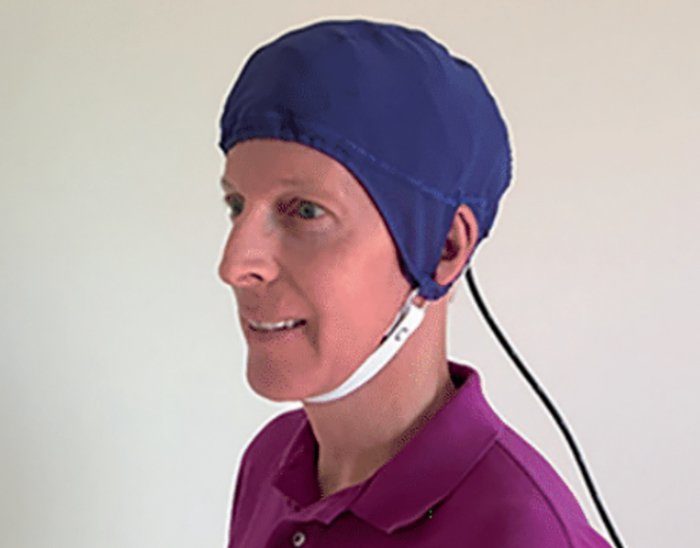
In this case, the volunteers - who all have mild to moderate Alzheimer's disease (AD) - were fitted with what's called a MemorEM head cap, which uses specially developed emitters to create a custom flow of electromagnetic waves through the skull. Treatments are applied twice daily, for an hour, and they can be easily administered at home.

The MemorEM device is being developed by NeuroEM Therapeutics, and we should point out that two of the authors behind the new study founded the company - so there is some vested commercial interest here.

That said, the research has produced a peer-reviewed, published paper, and shows some results that are definitely worthy of future investigation.


Comment: Some other strategies helpful in preventing cognitive decline:


Coffee

Good for what ails you: Green tea offers simple solution to fighting antibiotic resistance, study finds

Cup of tea
© John Beans myfriendscoffee.com via Flickr
An ingredient commonly found in green tea could help eliminate antibiotic resistant bacteria - one of the greatest health risks facing our increasingly antibiotic-reliant world.

Researchers at the UK's University of Surrey found that a natural antioxidant in green tea can help aztreonam, an antibiotic commonly used to treat serious respiratory tract and bloodstream infections.

Such infections are linked to the bacterial pathogen Pseudomonas aeruginosa, and have become increasingly difficult to treat in recent years as it grew resistant to antibiotic treatment.

Info

Short sleeper syndrome

Short Sleeper
© ShutterstockA small segment of the population are born with superhuman sleep needs. They’re called natural short sleepers, and they wake up refreshed and wide awake on very little sleep. And these individuals share a few other quirks, too.
What do Donald Trump, Elon Musk, and Martha Stewart have in common? They're part of the 1 percent.

No, not that one percent. Instead, we're referring to the one percent of people who thrive on far less sleep than what is recommended by doctors and researchers. Scientists label it short sleeper syndrome.

Trump, Musk and Stewart all reportedly get by on less than six hours a night, making them part of the so-called "sleepless elite." Most people need around seven to nine hours of sleep a night for overall health and well-being. But it seems that these guidelines don't apply to a small segment of the population officially called natural short sleepers.

Short sleepers wake up feeling refreshed and wide awake, despite clocking six or less hours of sleep per night. Some short sleepers say a mere few hours of shut-eye a night is all they need to feel great.

It's sort of like being both a night owl and early riser at the same time. And, unsurprisingly, this group has caught the interest of researchers due to their sleep efficiency.

Although sleep needs do vary from person to person, natural short sleepers are rare unicorns in sleep research. Understanding their superhuman sleep needs could unlock some of the standing mysteries of sleep, says Ying-Hui Fu, a researcher who studies the genetics and other attributes of short sleepers at the University of California, San Francisco School of Medicine.

Family

Parents shocked as UK schools teach 6-10yo kids to touch their 'private parts' in beds & showers

School girls
© Jean-Paul Pelissier / Reuters
Parents in Britain are outraged after more than 240 primary schools introduced lessons on "self-stimulation" for children as young as six as part of their sex education program.

A teaching manual, published by the Mail on Sunday, instructs how to teach children aged six to ten about "the rules of self-stimulation." The lessons are part of the new All About Me program rolled out in more than 240 primary schools in central England's Warwickshire County. The program, in turn, is designed to be taught in accordance with the compulsory Relationship and Sex Education (RSE), which will be implemented all across the UK next September.

In the section called 'Touching Myself', the teachers are advised to tell the youngsters that "lots of people like to tickle or stroke themselves as it might feel nice," including touching their "private parts." The children are told that this is "really very normal," despite the fact that "some people may get cross or say that it is dirty."

The children are then warned that it is "not polite" to touch themselves in class or other public places, and they should "only" do it when they "are alone, perhaps in the bath or shower or in bed."

Mail

Dr. Gary Null: Communications Decency Act Immunity Letter

letter
Dear Senator:
It is time for Congress to take action and remove immunity under Section 230 of the Communications Decency Act ("CDA"). The immunity has allowed the big tech companies - the companies that control the information received by the American public - to shield themselves from liability while they abuse their power to censor viewpoints they disagree with. The immunity has left big tech companies no motivation to follow their policies or have a neutral point of view, no motivation to protect the First Amendment right to free speech, no motivation to protect a person's right not to be defamed. Congress has a responsibility to the American public to remove an immunity that hinders rather than protects their First Amendment right to free speech, to protect them from defamation. And for decades Congress has neglected that responsibility.

Microscope 2

Ancient viruses could help kill cancers

virus papioma
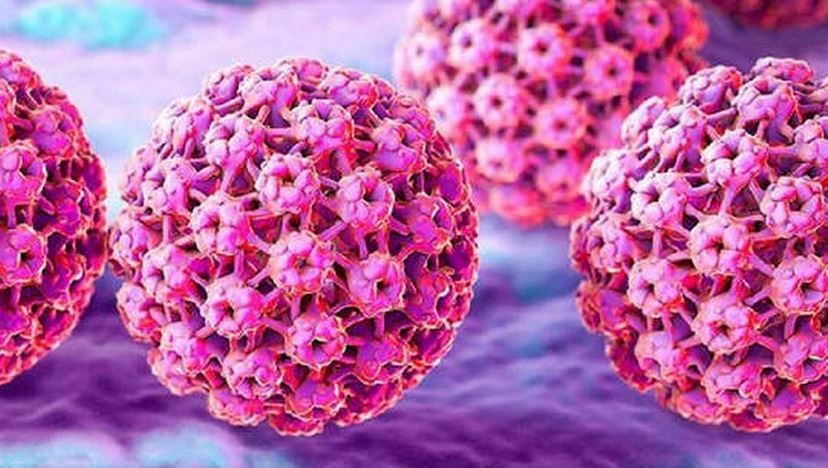
DNA "echoes" of viruses that infected our ancestors millions of years ago could help the immune system to identify and kill cancer cells, according to new research from Crick scientists.

The new study, published in Genome Research, looked at "endogenous retroviruses," fragments of DNA in the human genome that were left behind by viruses that infected our ancestors.

Over millions of years, our ancestors were infected with countless viruses and their DNA now makes up more of our genome than human genes. Approximately 8 percent of the human genome is made up of retroviral DNA, while known genes only make up 1-2 percent.

Comment: See also: Also check out SOTT radio's:


Syringe

New York bans unvaccinated children from public schools

School bus
© REUTERS/Shannon StapletonOrthodox Jewish boy walks by a Yeshiva school bus in New York City
Under a new law that just went into effect in New York, children who were not vaccinated on religious grounds will no longer be permitted to attend public elementary schools in the state.

The new law, which was passed in June and took effect on Friday, gave parents of unvaccinated children a 14-day deadline from the start of the school year to show they had taken steps to give their children at least the first age-appropriate dose in each required immunization, such as the measles, mumps and rubella (MMR) vaccine.

Comment: See also: Jessica Biel joins anti-vaccine activist RFK Jr. to lobby against California pro-vaccination bill


Black Cat

Teen's bizarre sudden-onset schizophrenia & hallucinations caused by something millions of us own

Mean looking cat
© Pixabay / Martin FuhrmannThe teen's cat harbored a dangerous pathogen.
In 2015, a 14-year-old patient developed rapid-onset schizophrenia with hallucinations, thoughts of suicide and homicide. He also believed his cat was trying to kill him, which was closer to the truth than you might think.

His pet cat was not, in fact, a homicidal maniac but it did harbor the pathogen Bartonella henselae, which is associated with 'cat scratch disease.'

This bacterium is typically found in cat blood, particularly that of kittens, and just one bite or scratch can be enough to transmit the pathogen to humans, causing localized swelling and lesions, in addition to issues in the heart and nervous system.

Now, according to new research by scientists at North Carolina State University, in extremely rare cases, 'cat scratch disease' may also induce extreme schizophrenia.

The unnamed patient developed psychiatric symptoms in 2015, claiming to be the "damned son of the devil" while experiencing violent outbursts and suspecting that the family cat was trying to kill him.

Eye 1

Woman who cries crystals instead of tears baffles doctors

eyeball
© Mara Brandl / imageBROKER.com via GlobalLookPress.com
An Armenian woman whose eyes weep crystal-like discharges instead of watery tears has left doctors baffled by the bizarre and painful condition, according to local reports.

Satenik Karazian, 22, from the Shirak region, started experiencing symptoms two months ago. Initially, she'd thought she got some dust in her eyes at the dentist, then her family suspected it was a shard of glass.

Evil Rays

Why the Swiss are rebelling against 5G rollout

Bern 5G protest
© AFPA woman protests the rollout of 5G at a demonstration in Bern in May.
Switzerland was among the first countries to begin deploying 5G, but health fears over radiation from the antennas that carry the next-generation mobile technology have sparked a nationwide revolt.

Demonstrators against the technology are due to fill the streets of Bern later this month, but already a number of cantons have been pressured to put planned constructions of 5G-compatible antennae on ice.

The technology has been swept up in the deepening trade war between China and the United States, which has tried to rein in Chinese giant Huawei - the world's leader in superfast 5G equipment - over fears it will allow Beijing to spy on communications from countries that use its products and services.

Comment: The fact that the Swiss are informed and motivated enough to organize opposition shows that they're still able to think. Meanwhile, the rest of the Western world is complaining they're not getting their increased radiation dosage fast enough.

See also: