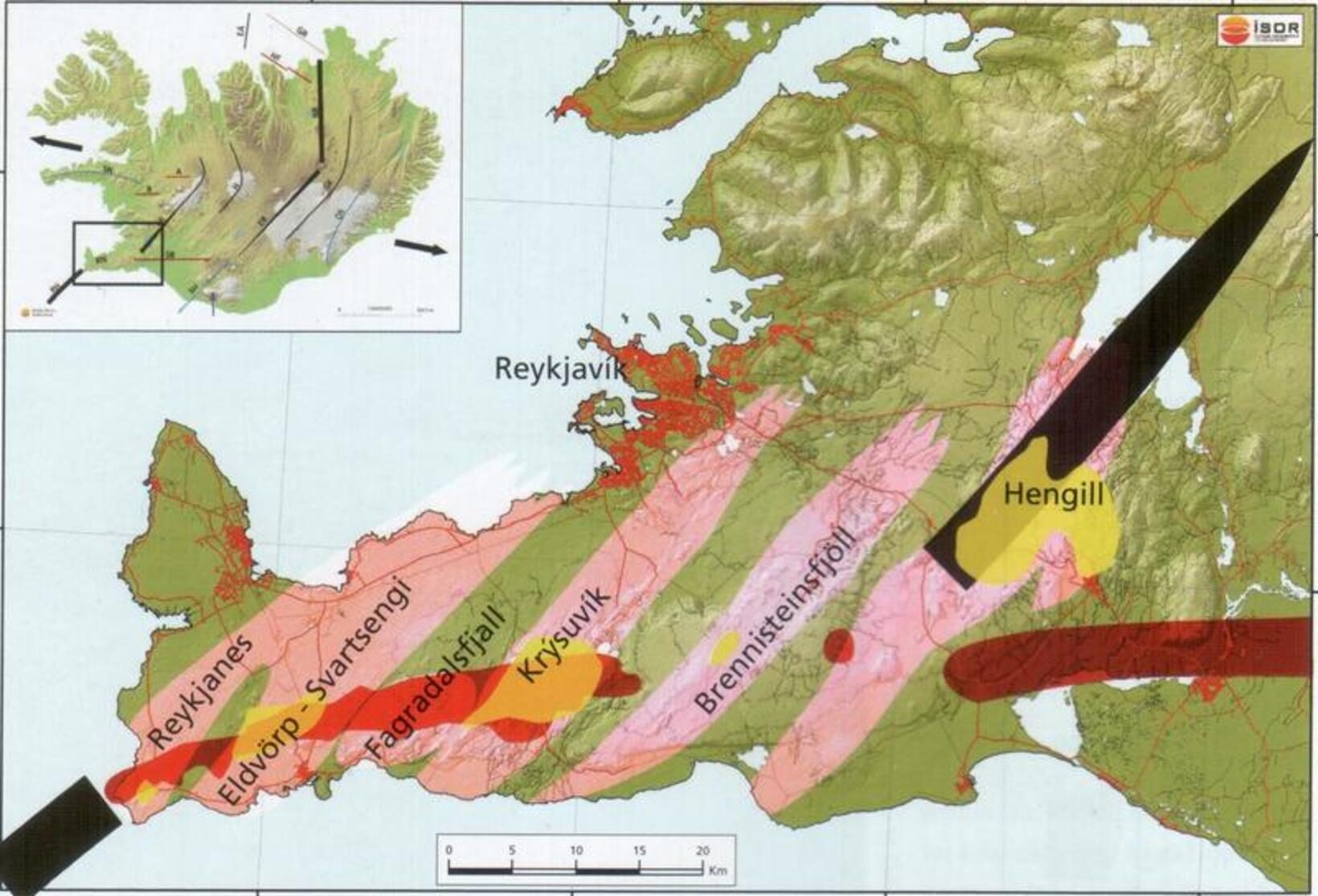
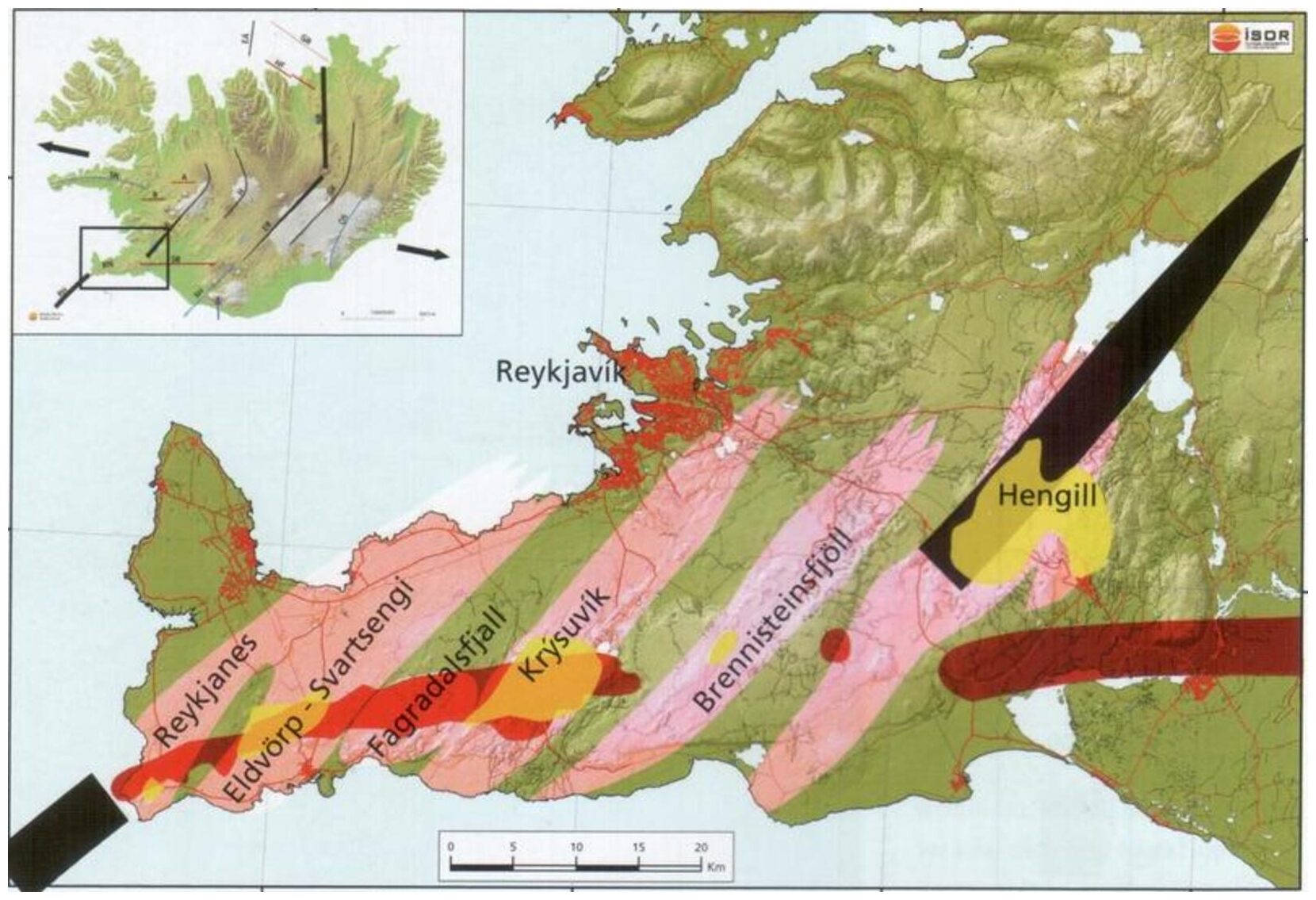
© Map/VísindavefurinnVolcanic systems on the Reykjanes peninsula are shown in pink. The red lines indicate the tectonic plate boundary, where earthquakes are common. Geothermal areas are marked in yellow. Black lines indicate fissure swarms.
states Magnús Á. Sigurgeirsson, geologist at ÍSOR Iceland GeoSurvey - a consulting and research institute in the field of geothermal sciences and utilization.
"That's at least how it has been the past three times, and even dating further back, but we don't have as exact data available on that," he tells
mbl.is . He is referring to the uncertainty regarding whether an eruption can be expected soon on the Reykjanes peninsula, Southwest Iceland.
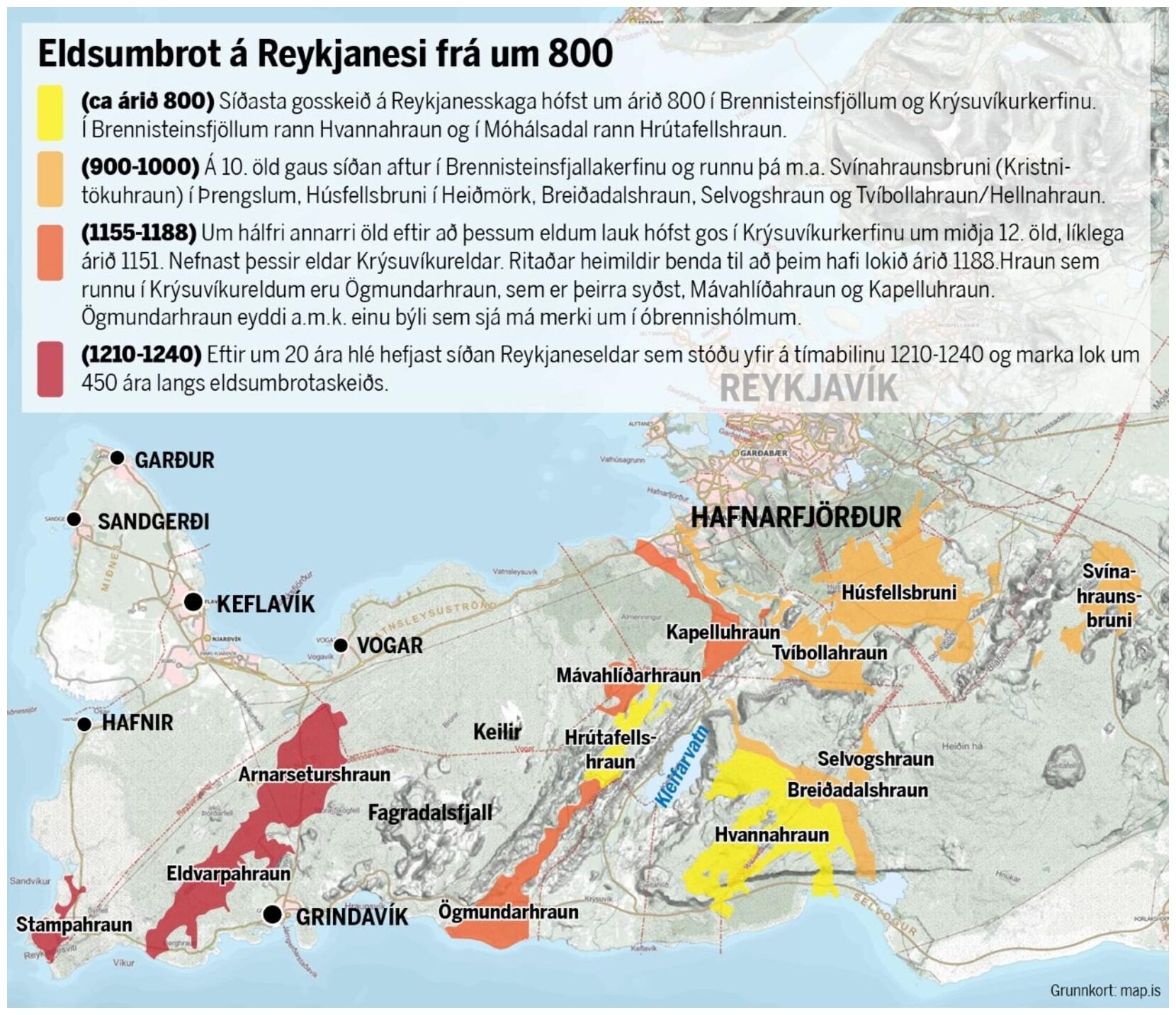
Magnús assembled data on the past three volcanic periods in the area. These were 3,000-3,500 years ago, 1,900-2,400 years ago, and finally between the years 800 and 1240 AD. His information is based on geological maps of the Reykjanes peninsula and on a comprehensive book on volcanic eruptions in Iceland called
Náttúruvá á Íslandi, eldgos og jarðskjálftar.
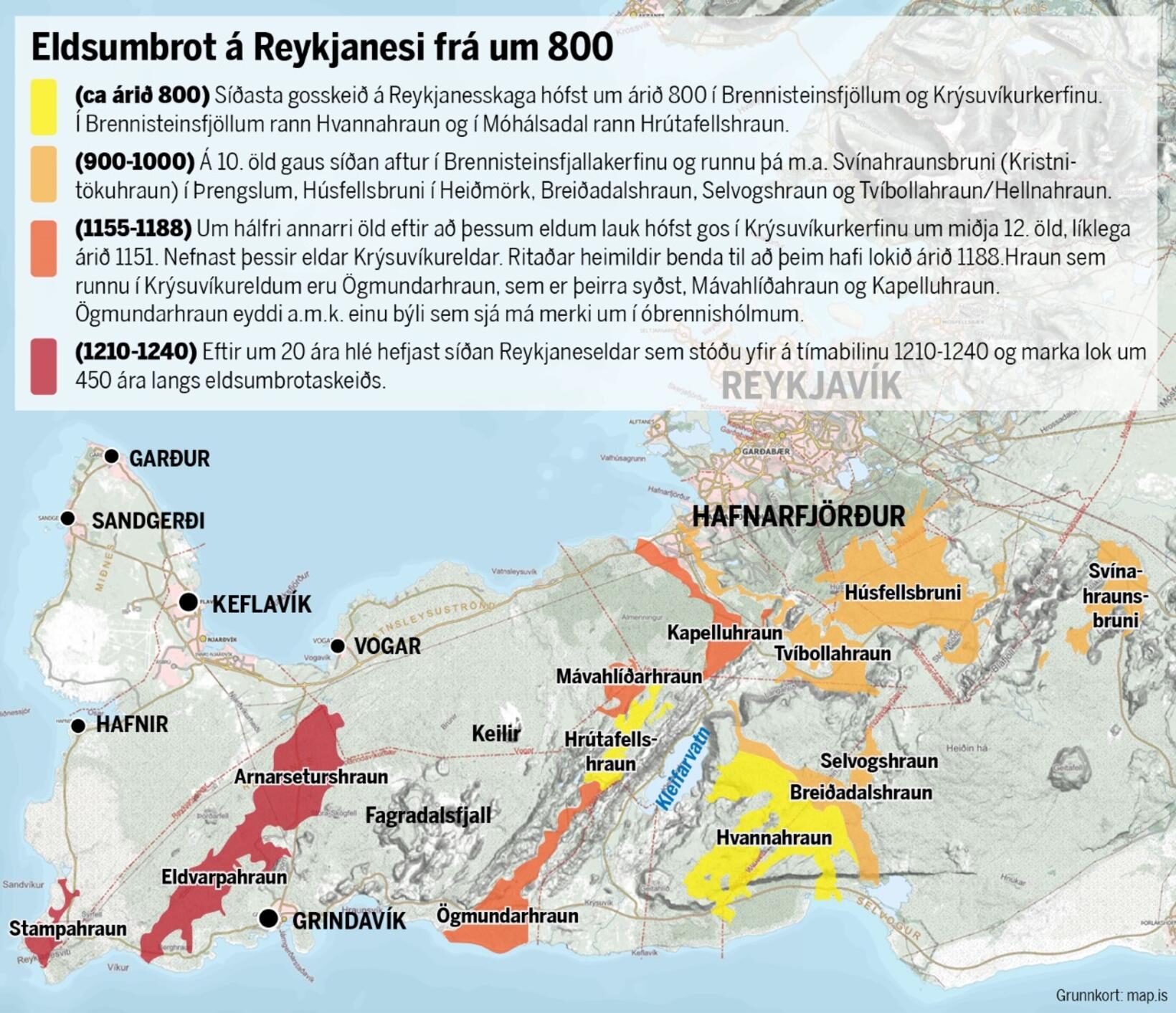
© Graphic/mbl.isAlthough the list of eruptions is in Icelandic, you can see the dates of the eruptions and the corresponding lava fields.









Comment: It certainly seems that seismic and volcanic activity have increased recently:
- Mount Etna erupts for the 10th time in 3 weeks, raining rocks and ash down on Catania, Sicily
- 10 years on from Christchurch disaster, powerful earthquakes strike off New Zealand (UPDATES)
- Croatia sees gaping sinkholes emerge in area ravaged by December 2020 earthquake
- Almost 10 years to the day since mega-quake, another powerful earthquake strikes off Fukushima, Japan
Also check out SOTT radio's: