Earth Changes
Colleagues say that the reason Professor Phil Jones has refused Freedom of Information requests is that he may have actually lost the relevant papers.
Professor Jones told the BBC yesterday there was truth in the observations of colleagues that he lacked organisational skills, that his office was swamped with piles of paper and that his record keeping is 'not as good as it should be'.
The data is crucial to the famous 'hockey stick graph' used by climate change advocates to support the theory.
Professor Jones also conceded the possibility that the world was warmer in medieval times than now - suggesting global warming may not be a man-made phenomenon.
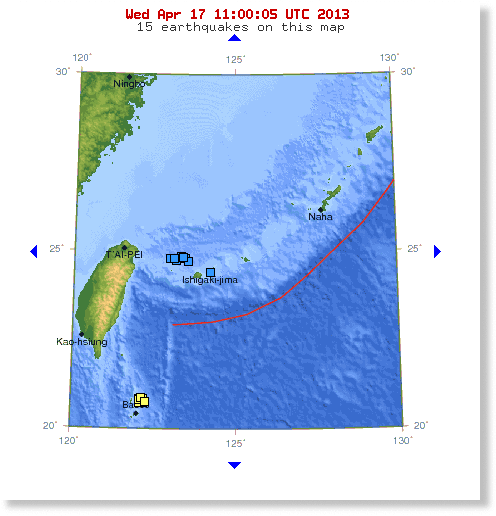
The quake, whose epicenter was located in western Argentina, struck at 9:04 a.m. local time Friday and affected an area stretching from the Atacama region, 1,000 kilometers (620 miles) north of Santiago, to Bio Bio, 500 kilometers (310 miles) south of the capital, the National Emergency Office said in a report.
Thursday's temblor, which caused no fatalities, also damaged six schools and two churches, the Copeco emergency-preparation commission said in a communique.
"We don't know the extent of the damage right now, though there are no reports of serious damage or injuries," the South Pacific nation's National Disaster Office deputy director, Mali'u Takai, said.
Contact with the northern Vavau island group was lost shortly after midnight as Cyclone Rene buffeted the low-lying atolls, tearing down trees, cutting roads and sparking coastal flooding as roiling seas surged ashore.
Within just a few days of its launch, this travesty has already been exposed as a sham. At least three of the five original panel members were found to be in cahoots with the warmist lobby on a rudderless ship skippered by hapless former University of Glasgow principal, Sir Muir Russell.
At the time of publishing this article two of the original crew members have jumped ship - last Thursday it was Dr Philip Campbell, this weekend rumour has it Professor Geoffrey Boulton. Who else will bail out?
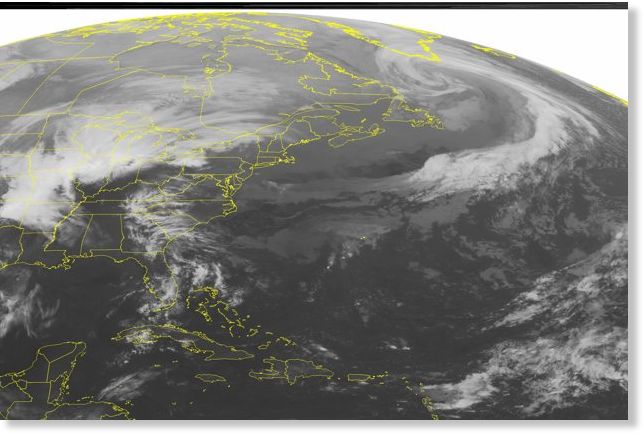
There was snow on the ground in 49 states yesterday, with Hawaii the lone holdout.
It was the United States of Snow, thanks to an unusual combination of weather patterns that dusted the country, including the skyscrapers of Dallas, the peach trees of Atlanta and the Florida Panhandle.
More than two-thirds of the nation had snow on the ground when the day dawned, and then it snowed ever so slightly in Florida to make it 49 states out of 50.

Travelers wait and search for their luggage at Love Field, Friday, Feb. 12, 2010 in Dallas. Up to 5 iches of snow in the Dallas area affected air traffic causing delays and cancelations for the second day.
Light to moderate snow fell steadily throughout the afternoon in Atlanta and its northern suburbs. It wasn't expected to taper off until late evening. There was a chance of more snow for the area on Monday, a federal holiday when many workers will have the day off.
Snow totals weren't expected to be big by mid-Atlantic and Northeast standards, but for a region of the country that rarely gets snow and doesn't budget snow and ice removal the way other parts of the country do, airlines weren't taking any chances.
That left thousands of passengers looking for other travel options.

People walk outside Rome's ancient Colosseum during a snow fall, on Friday, Feb. 12, 2010. A rare snow is coating Rome, dusting church domes but making slick cobblestones treacherous. Rome was last dusted with snow in 2005. The last significant accumulation came in February 1986, when some 20 centimeters (8 inches) piled up, paralyzing the city.
In scenes usually only glimpsed in souvenir "snow domes" Italy's capital was blanketed in white, snarling road and air traffic but delighting many Romans who rode scooters with their feet on the ground and snapped pictures with mobile phones.
Rome was last dusted in snow in 2005, but one meteorologist said the steady snowfall through Friday morning was the heaviest seen in the Italian capital in 24 years.
"It's very exciting. I have been taking pictures of my husband in front of the Colosseum because I thought nobody would believe me if I told them it was snowing in Rome today," said Margaret Jones, a tourist from London.

A lone man walks in the western Mongolian countryside in the Hovd province. Most of Mongolia is covered by snow this winter and 19 of 21 provinces have been hit by harsh winter conditions.
Known locally as a "dzud," the unfolding disaster stems from naturally occurring factors that are combining to wipe out livestock. The summer of 2009 was particularly dry, hampering the ability of many herders to gather sufficient supplies of fodder and hay. And this winter is proving to be one of the harshest in living memory, with heavy snowfall, chilling winds, and temperatures averaging minus 35 Celsius (-31 Fahrenheit). Weakened by hunger, many animals -- especially cashmere goats revered for their soft, valuable wool -- are succumbing to the elements.
The fierce weather so far is responsible for the deaths of over 2 million animals since the start of winter, says Rana Flowers, the United Nations' Acting Resident Coordinator. Nomadic herders account for approximately one-third of Mongolia's labor force. Unlike tsunamis or earthquakes, dzuds are not instantaneous disasters. "The dzud is still unfolding. It's very difficult to predict just how severe it will be further down the track. Spring will be the assessment time," said Flowers.
The devastation could cause an acceleration of migration from rural areas to urban centers. As it stands already, cities and towns are struggling to provide jobs and services to former herders who have abandoned the traditional nomadic lifestyle. Many Mongolians point to climate change and desertification as the main factors behind the demographic shift.
More than 700 calls were made to the State Emergency Service due to severe thunderstorms sweeping across New South Wales.
The biggest falls were in Sydney's north, with 88 millimetres of rain falling in Hornsby and 73 millimetres coming down on Mona Vale in just one hour.
Weather forecaster Chris Webb says Sydney experienced one of the highest rainfall events of the last decade.
"For the city we recorded 65 mills of rainfall in the evening, and that's about a one in five - ten year event," he said.