Earth ChangesS


Question

Hundreds of birds stranded, killed at Utah's Dugway Proving Grounds after being fooled by storm

Image
Images in this story may be disturbing to some readers.

Salt Lake City - Several hundred birds are struggling for survival Monday after they accidentally landed at Dugway Proving Grounds where they are unable to take off again.

A group of eared grebes, a kind of migratory water fowl also known as black-necked grebes, were apparently fooled by the late snow and cold April weather and landed at an area they mistook for water at Dugway Proving Ground, according to spokesperson Paula Thomas.

Because the birds are water-bound, they can't take off from dry land. Several hundred birds were either trapped and struggling or dead when discovered by staff Monday morning, Thomas said.

Comment: A similar strange event happened in the same state just 16 months ago, again involving thousands of birds.It seems that the mass deaths of birds and other animals without any really plausable explanation is being passed off as 'fairly normal' nowadays.


Blackbox

Giant, rat-sized snails devouring South Florida - can grow to 8 inches long, eat through plaster, and puncture your car tire

South Florida is under attack, and the non-native species threatening to wreak havoc seems innocent enough: It's not the giant Burmese pythons that made a home in the Everglades in 2000, nor a ravenous, land-walking fish like the Asian carp that have been eating through waterways farther up north.

No, this foreign invader is a snail.


Sun

Ice Age cometh: Sun halo appears over Cuba

Those having a beer at Sloppy Joe's Bar in Havana Cuba today, will be hoping they wake up tomorrow remembering their time there.

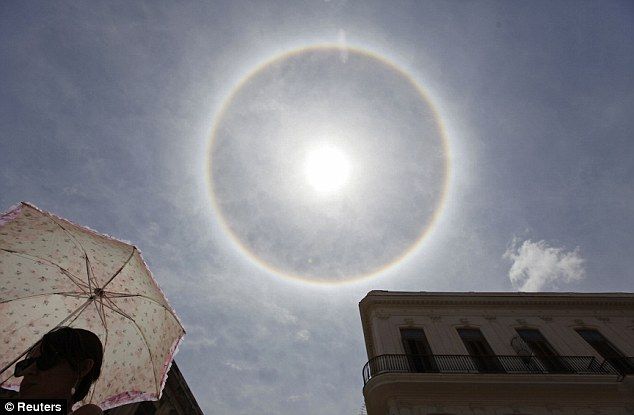
For above the newly-refurbished and somewhat iconic bar, high in the sky occurred an atmospheric phenomenon known as a 'sun dog'.

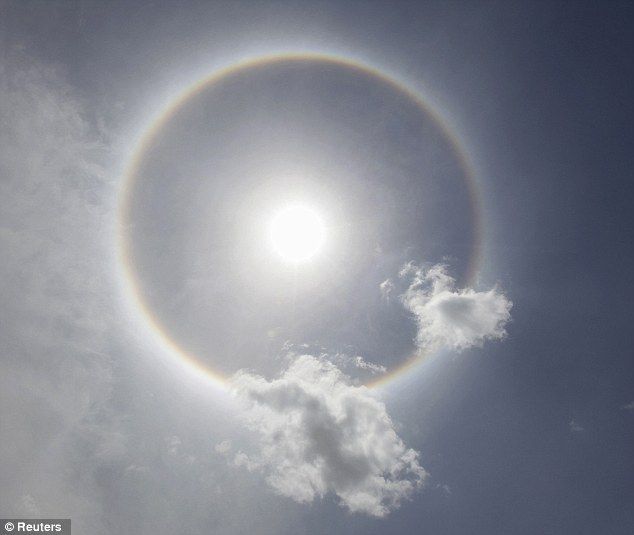
The sun was surrounded by a bright ring, caused by a refraction of sunlight by small ice crystal in the atmosphere.
Image
Bright spark: An atmospheric phenomenon known as a 'sun dog' is seen in the sky over Sloppy Joe's Bar, Havana, Cuba
Image
Put down your pint: The rare halo around the sun is caused by the refraction of sunlight by small ice crystals in the atmosphere

Comment: It's actually a sun halo; a sun dog is something like this.

So sun halos around the sun are appearing in Cuba now? Well that rules out the earlier 'explanation' that they were the result of ice crystals forming in cold environments such as the Arctic Circle.

In fact, they have appeared in the UK and Russia recently.

This is more evidence that the upper layers of Earth's atmosphere have rapidly cooled in recent years.


Attention

Dead dolphins and shrimp with no eyes found after BP clean-up

Chemicals used to disperse Gulf of Mexico spill blamed for marine deaths and human illness
Image
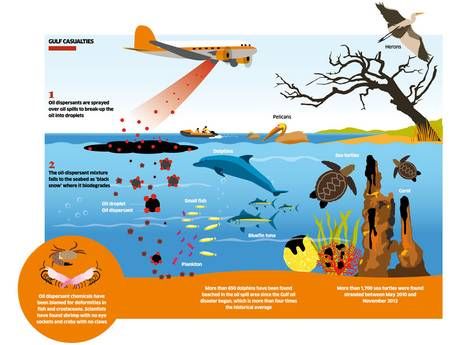
Hundreds of beached dolphin carcasses, shrimp with no eyes, contaminated fish, ancient corals caked in oil and some seriously unwell people are among the legacies that scientists are still uncovering in the wake of BP's Deepwater Horizon spill.

This week it will be three years since the first of 4.9 billion barrels of crude oil gushed into the Gulf of Mexico, in what is now considered the largest marine oil spill in the history of the petroleum industry. As the scale of the ecological disaster unfolds, BP is appearing daily in a New Orleans federal court to battle over the extent of compensation it owes to the region.

Infant dolphins were found dead at six times average rates in January and February of 2013. More than 650 dolphins have been found beached in the oil spill area since the disaster began, which is more than four times the historical average. Sea turtles were also affected, with more than 1,700 found stranded between May 2010 and November 2012 - the last date for which information is available. On average, the number stranded annually in the region is 240.

Contact with oil may also have reduced the number of juvenile bluefin tuna produced in 2010 by 20 per cent, with a potential reduction in future populations of about 4 per cent. Contamination of smaller fish also means that toxic chemicals could make their way up the food chain after scientists found the spill had affected the cellular function of killifish, a common bait fish at the base of the food chain.

Deep sea coral, some of which is thousands of years old, has been found coated in oil after the dispersed droplets settled on the sea's bottom. A recent laboratory study found that the mixture of oil and dispersant affected the ability of some coral species to build new parts of a reef.

Bizarro Earth

USGS: Earthquake Magnitude 6.6 - WSW of Panguna, Papua New Guinea

PNG Quake_140413
© USGS
Event Time
2013-04-14 01:32:27 UTC
2013-04-14 11:32:27 UTC+10:00 at epicenter

Location
6.504°S 154.548°E depth=64.3km (40.0mi)

Nearby Cities
105km (65mi) WSW of Panguna, Papua New Guinea
114km (71mi) WSW of Arawa, Papua New Guinea
347km (216mi) SE of Kokopo, Papua New Guinea
498km (309mi) ESE of Kimbe, Papua New Guinea
677km (421mi) WNW of Honiara, Solomon Islands

Technical Details

Question

Different species of birds found dead in Trinidad shortly after mysterious mass vulture deaths

Dead birds found in Marabella

EMA puzzled


Two days after more than 100 dead and sick corbeaux were found at the heliport in Chaguaramas, dead birds have turned up near the shoreline at Marabella.

Judith Lewis, of Bayshore, said several dead doves, pigeons and blackbirds were found underneath and in front of her house Thursday and yesterday.

Sixty-year-old Lewis said: "(Thursday) morning I got up and saw a pigeon under my house. Then my grandson came later in the evening and said there were two blackbirds under my house. When I looked around I saw four of them. This morning I saw a dove under the house and a pigeon dead by the neighbour. Another neighbour said she got four birds dead under the dog kennel. Now look four more birds dead by the shore."
Image
© INNIS FRANCISMORE DEAD: Marabella resident Junior Calliste turns over one of several dead birds which were found in Bayshore, Marabella yesterday.

Igloo

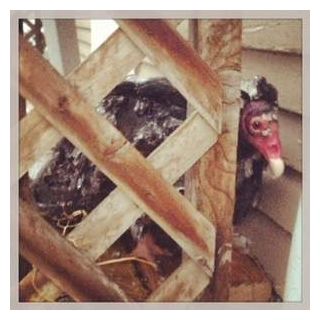
Turkey vulture freezes, falls from sky, lands on Sioux Falls, South Dakota deck

Frozen Vulture
© Adam WeberA large turkey vulture dropped out of the sky on the deck of the home of Adam Weber, taking shelter under the table.
On top of the rain, sleet and snow that fell from the sky yesterday, birds are also dropping, as one Sioux Falls resident found out.

A large turkey vulture dropped out of the sky on the deck of the home of Adam Weber, taking shelter under the table.

"My wife was making breakfast, and she suddenly yelled, 'Adam! A large bird just fell out of the sky!'," said Weber, who lives two blocks north of McKennan Park.

"That was the last thing I expected to see when I looked out on the deck yesterday."

Weber, who is a pastor at Embrace Church, said the bird was completely iced over and sat straight upright under the table on the deck. The bird moved around a bit, letting Weber know it was still alive, and allowed him to get close to it to take a photo.

The turkey vulture spent all day under the table, Weber said, and left at some point during the night, as he looked all around the house and didn't see it.

Question

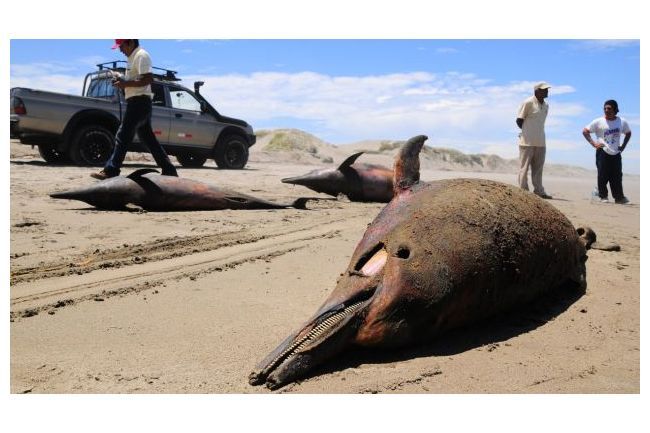
Peru: 10 Dolphins found dead in northern beaches

Dead dolphins continue to wash up on Peru's northern shores, Peru21 reported on Thursday.

According to the daily, over 10 dolphins have been found dead on various beaches in the Lambayeque region, over the past 15 days.

Francisco Niquen, head of Lambayeque's Fishermen's Association, said the group had reported the incident to Peru's Sea Institute (Imarpe), but said the agency had not been to the site.
Image
© Peru21/Reference

Bizarro Earth

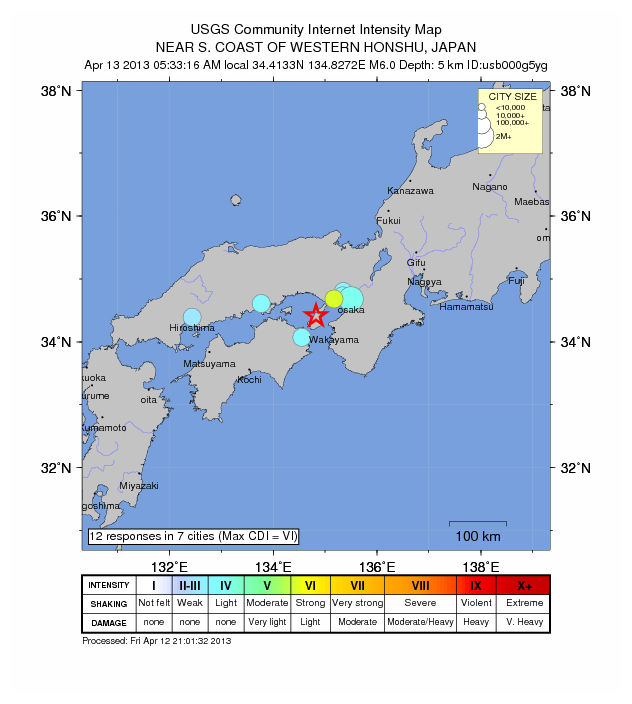
USGS: Earthquake Magnitude 6.0 - NW of Sumoto, Japan

Japan Quake_120413
© USGS
Event Time
2013-04-12 20:33:16 UTC
2013-04-13 05:33:16 UTC+09:00 at epicenter

Location
34.413°N 134.827°E depth=5.3km (3.3mi)

Nearby Cities
9km (6mi) NW of Sumoto, Japan
20km (12mi) NNE of Fukura, Japan
28km (17mi) SSW of Akashi, Japan
32km (20mi) NE of Naruto, Japan
465km (289mi) WSW of Tokyo, Japan

Technical Details

Fish

Scientists baffled by how Japanese fish survive 5,000-mile trip across Pacific in tsunami boat

Scientists are baffled as to how a group of small fish native to Japan survived a journey across the Pacific after they were found on a boat swept away by the 2011 tsunami and washed up last month on the coast of Washington state. The batch of striped beak fish - five in all - were discovered submerged in the hold of the 20-foot-long fishing skiff, dubbed the Sai-shou-maru, on Long Beach in southwestern Washington.

The vessel, found beached right-side-up, was confirmed this week to have originated from the region of northern Japan devastated in the immense tidal surge generated by the March 2011 Fukushima earthquake. Other boats carried away by the tsunami have previously washed up along the U.S. Pacific Northwest and Alaska, as have chunks of piers and large quantities of other debris. But the fish found aboard the Sai-shou-maru are the first vertebrates - animals with backbones - known to have made the voyage.

Marine biologists studying the phenomenon are puzzled over precisely how striped beak fish, natural denizens of warmer, shallow southern Japanese waters, ended up as live stowaways in the well of the boat, and how they endured a two-year journey across the ocean.