Earth ChangesS


Snow Globe

Snow storm: Sheep death toll reaches 20,000 in Northern Ireland

More than 20,000 sheep were lost in the recent snow blizzard, and it may be next month before all the dead animals are found and counted.

Image
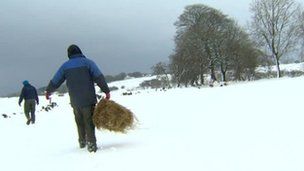
Many farmers faced serious dangers as they tried to reach their animals
The news emerged at a meeting of the agriculture committee at Stormont.

It is estimated that almost 800 farms were affected by the severe snow storm.

With snow still lying in some high parts of Northern Ireland, dead animals are still being recovered, but the committee heard that one sheep was found alive 25 days after the blizzard.

An official from the Department of Agriculture told the committee that as of 14: BST on Tuesday, the number of dead animals collected was:

20,179 sheep (including 15,195 lambs)
603 cattle

Snow Globe

Bird jams: Long winter sends migratory flocks into tailspin in Germany

Image
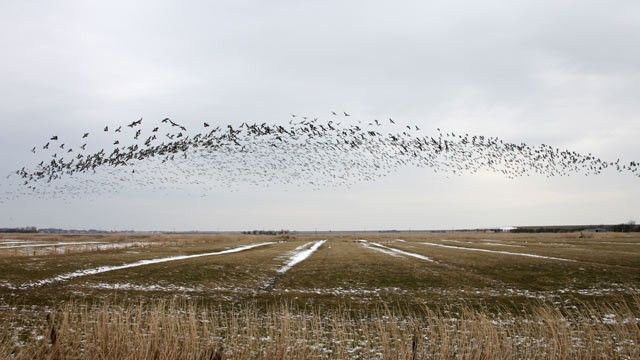
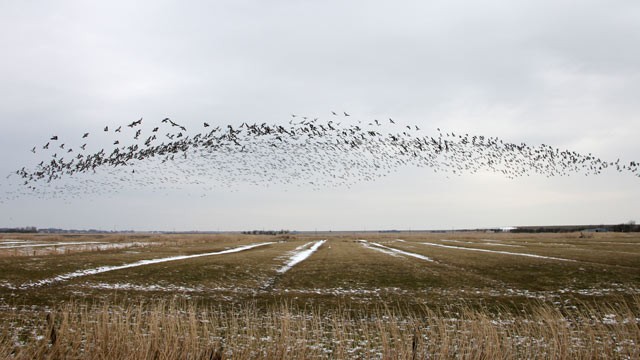
© dpa/picture-alliance/NewscomBarnacle Geese fly over a field near St. Peter Ording, Germany, March 17, 2013. In spring and autumn every year, thousands of these Artic birds stop-over in the Wadden Sea during migration.
Weak and exhausted birds flying to their breeding grounds in Northern Europe have made an unpleasant discovery: Winter isn't over yet. The result has been a difficult search for food as well as huge gatherings of migratory birds in milder parts of Germany.

They say the early bird gets the worm, but this year in Germany, those that have already returned for spring breeding are actually struggling to find enough food.

Though spring technically began last month and Easter has come and gone, winter continues to drag on in Germany. In some places, this March was the coldest in 130 years, and snow still covers many parts of the country. This has put residents in a surly mood, but the unseasonable weather has been much harder on migratory birds, whose return usually heralds warmer weather to come.

Local news reports across the country in recent days have detailed "bird jams," or locations where huge flocks of migratory birds have gathered to weather the cold before reaching their final breeding grounds.

"Because of the snow still covering the ground in many places, they are struggling to find enough food to make it the final stretch, particularly to the breeding grounds that are further north," says Eric Neuling, an ornithologist at the Nature and Biodiversity Conservation Union (NABU) in Berlin. "So they are staying as long as possible in places where the weather is milder to some degree, where they can find enough food to refuel."

Bizarro Earth

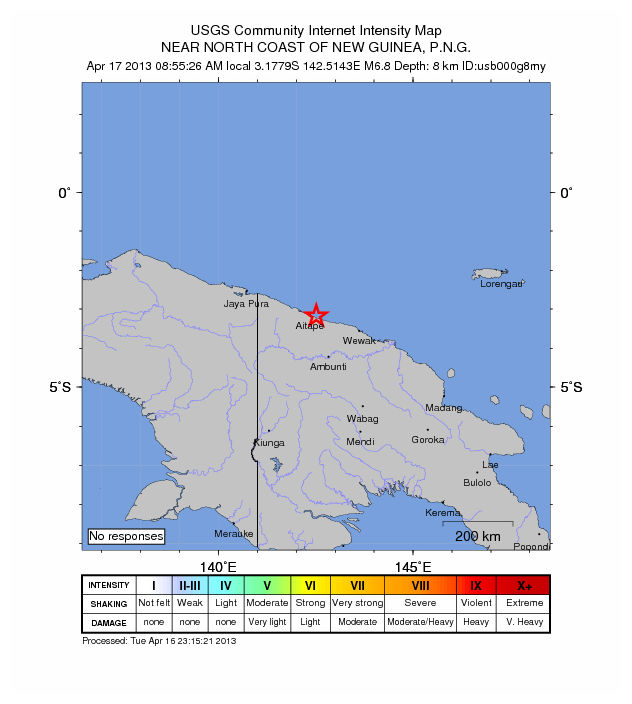
USGS: Earthquake Magnitude 6.8 - ESE of Aitape, Papua New Guinea

PNG Quake_160413
© USGS
Event Time
2013-04-16 22:55:26 UTC
2013-04-17 08:55:26 UTC+10:00 at epicenter

Location
3.178°S 142.514°E depth=8.0km (5.0mi)

Nearby Cities
19km (12mi) ESE of Aitape, Papua New Guinea
130km (81mi) WNW of Wewak, Papua New Guinea
145km (90mi) ESE of Vanimo, Papua New Guinea
213km (132mi) ESE of Jayapura, Indonesia
863km (536mi) NW of Port Moresby, Papua New GuineaTechnical Details

Bizarro Earth

Iran's massive 7.8 magnitude earthquake explained

Image
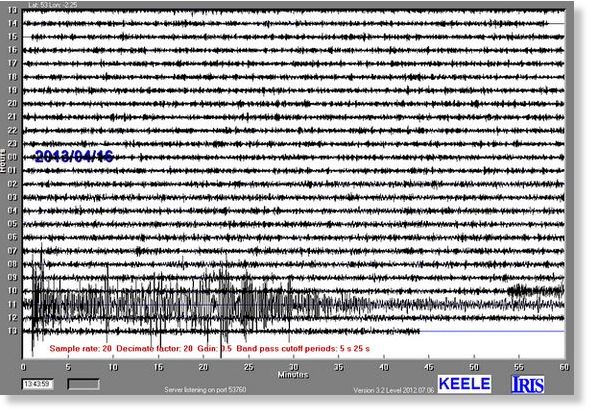
The Iran earthquake arriving on a seismometer at Keele University in the UK.
The strongest earthquake to hit Iran in more than 50 years was a subduction-zone quake - the same tectonic setting underlying deadly temblors in Japan, Chile and Indonesia.

The magnitude-7.8 Khash earthquake struck 51 miles (82 kilometers) beneath the Earth's surface, where the Arabian Plate dives under the massive Eurasian Plate, the U.S. Geological Survey (USGS) reported. The quake hit today (April 16) at 3:14 p.m. local time (6:44 a.m. EDT). Shaking was felt from New Delhi to Dubai, and dozens of people have been reported killed by collapsed structures, according to news reports. The USGS said that there will be more than a 47 percent chance of more than 1,000 fatalities.

Known as the Makran subduction zone, the plate boundary has produced some of the Middle East's biggest and deadliest earthquakes. For example, in November 1945, a magnitude-8.0 earthquake in Pakistan triggered a tsunami within the Gulf of Oman and the Arabian Sea, killing more than 4,000 people.

Considering subduction-zone earthquakes can strike nearly 435 miles (700 km) deep in the Earth, today's quake was likely within the Arabian Plate itself, not along the zone where the two massive slabs meet, said Bill Barnhart, a research geophysicist with the USGS in Denver.

Ambulance

At least 34 dead as Pakistan jolted by powerful Iran quake

Image
© Agence France-Presse/Assif HassanPakistanis are pictured outside after evacuating nearby buildings following tremors in Karachi on April 16, 2013
At least 34 people were killed in southwestern Pakistan on Tuesday when it was hit by tremors from a 7.8 magnitude earthquake in neighboring Iran, Pakistani officials said.

The epicenter was located in southeast Iran in an area of mountains and desert, about 200 km (125 miles) southeast of Zahedan and 250 km northwest of Turbat in Pakistan, the US Geological Survey said, Reuters reported.

Three women and two children were killed when their mud house collapsed in the district of Panjgur in the Pakistani province of Baluchistan.

"The earthquake has killed at least five people in Panjgur," said Ali Imran, an official of the Provincial Control Room, a government disaster-response unit in Quetta, the main city in the region.

Bizarro Earth

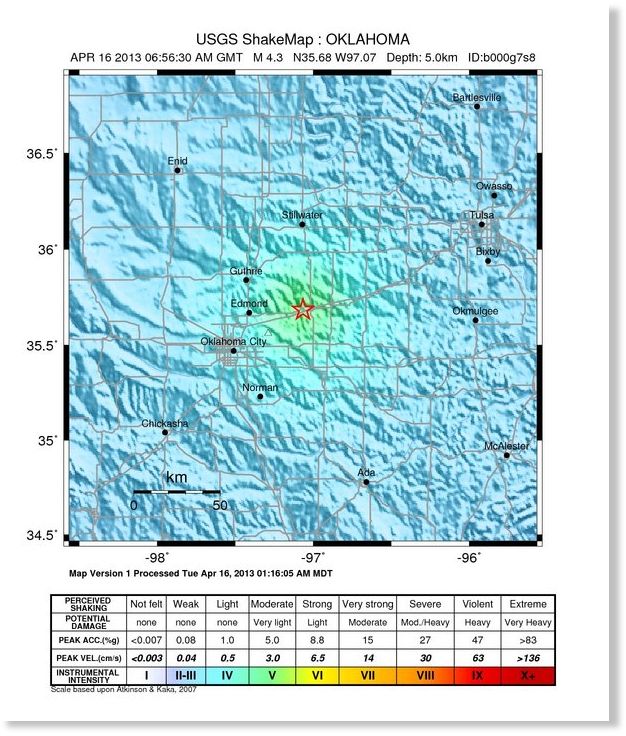
USGS: Earthquake Magnitude 4.3- 12km ENE of Luther, Oklahoma

Image
© USGS
Event Time:
2013-04-16 06:56:30 UTC
2013-04-16 01:56:30 UTC-05:00 at epicenter

Location:
35.685°N 97.066°W depth=5.0km (3.1mi)

Nearby Cities:
12km (7mi) ENE of Luther, Oklahoma
27km (17mi) NE of Choctaw, Oklahoma
37km (23mi) E of Edmond, Oklahoma
39km (24mi) NE of Midwest City, Oklahoma
47km (29mi) ENE of Oklahoma City, Oklahoma

Technical Data

Bizarro Earth

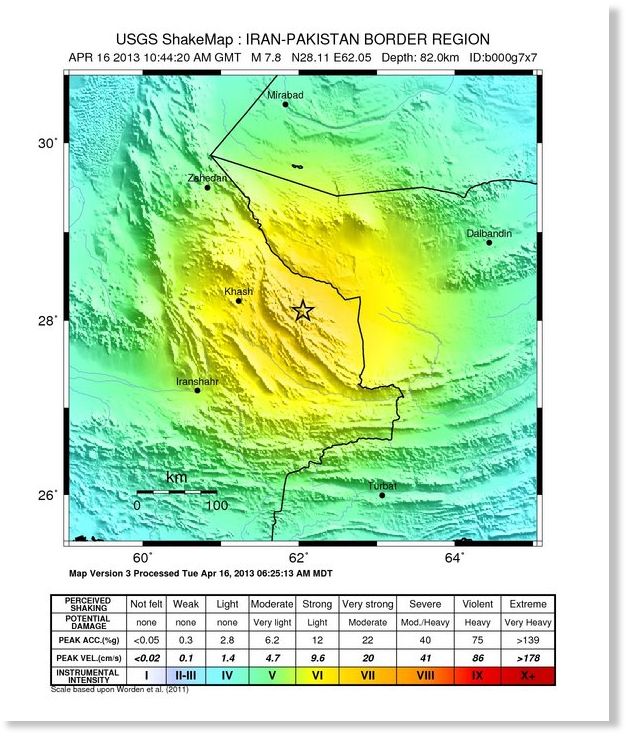
USGS: Earthquake Magnitude 7.8 - 83km E of Khash, Iran

Image
© USGS
Event Time:
2013-04-16 10:44:20 UTC
2013-04-16 15:14:20 UTC+04:30 at epicenter

Location:
28.107°N 62.053°E depth=82.0km (51.0mi)

Nearby Cities:
83km (52mi) E of Khash, Iran
168km (104mi) NE of Iranshahr, Iran
192km (119mi) SE of Zahedan, Iran
232km (144mi) SSW of Rudbar, Afghanistan
606km (377mi) NE of Muscat, Oman

Technical Data

Snow Globe

British bluebells fail to bloom

Bluebells blanketing woodlands this time last year fail to show as chilly conditions prompt stalks to grow more slowly

Image
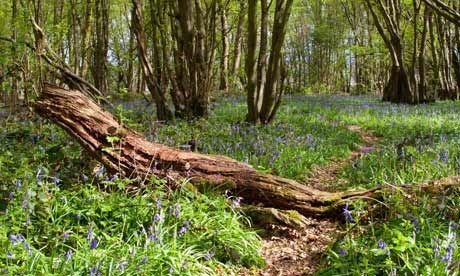
© Judith Parry/Woodland Trust/PABluebells abloom in Heartwood Forest, near St Albans, Hertfordshire, this time last year.
People desperate for the arrival of spring may have to wait another few weeks for one of the key signs of the season - bluebell blooming.

The cold weather means the bluebells normally carpeting woodlands at this time of year are weeks late, as the chilly conditions have caused the stalks to grow more slowly, the National Trust said.

Bluebell flowering is predicted to be three to four weeks away, and the peak could be delayed until mid May or later.

The late arrival of bluebells after the coldest March since 1962 contrasts with last year, when one of the warmest and driest Marches on record saw the flowers peak by this time.

Sherlock

Horse Hockey: Medieval warmth at the northern Tibetan Plateau casts doubt on Michael Mann's renowned 'hockey stick'

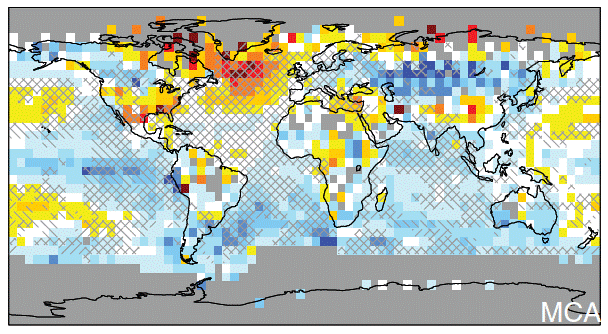
In 2009 the inventor of the renowned hockey stick graph Michael Mann and his colleagues published a paper in the journal Science where they attempted to refute the global significance of the Medieval Warm Period. The idea behind the paper was to show that the warmth in some areas was offset by cold in other parts of the world. To show this the authors searched out places that were colder than normal 1000 years ago.

The problem was the Atlantic region, which had an excellent amount of data to support the Medieval warmth. Here the temperatures stood at least at today's levels. Therefore Michael Mann searched around for other regions where far less data was available and found the Central Eurasian region would do just fine. The scarcity of available data left lots of room for interpretation. This is how the authors plotted a huge region of cold over a large swath of Central Eurasia during the Medieval Warm Period, which supposedly offset the inconvenient Atlantic warmth.

Mann map
© Mann et al 2009 / Journal of ScienceFigure 1: Temperature anomalies during the Medieval Warm Period 1000 years ago as to Mann et al. (2009). In Central Eurasia the authors interpreted a pronounced cold zone.
A Chinese team of scientists led by He YuXin of the University of Hong Kong, however, took a very close look at Mann's liberally interpreted data and his postulated Central Eurasian cold zone. Using sediment cores extracted from two different lakes and using the so-called alkenone method, the Chinese scientists reconstructed the temperature development over the past 2000 years for the northern Tibetan Plateau, which according to Mann was significantly colder 1000 years ago.

The surprise was big when the new, hard data showed the opposite was in fact true. It turns out that the region of the theoretical cold in the northern Tibetan Plateau during the Medieval Warm Period was indeed not colder but was warmer than today, see Science Bulletin.

Monkey Wrench

An Inconvenient Truth: Tibetan temperature reconstruction shows Medieval Warm Period was warmer than today!

Tibetan Plateau
© Ksiom
A team of scientists led by HE YuXin of the Department of Earth Sciences at the University of Hong Kong examined two lake cores extracted from the Tibetan Plateau in order to reconstruct the past temperature development.

The two cores coming from two different lakes go back 2600 and 2200 years respectively.

Here's the paper's abstract (my emphasis):
Considerable efforts have been made to extend temperature records beyond the instrumental period through proxy reconstructions, in order to further understand the mechanisms of past climate variability. Yet, the global coverage of existing temperature records is still limited, especially for some key regions like the Tibetan Plateau and for earlier times including the Medieval Warm Period (MWP). Here we present decadally-resolved, alkenone-based, temperature records from two lakes on the northern Tibetan Plateau. Characterized by marked temperature variability, our records provide evidence that temperatures during the MWP were slightly higher than the modern period in this region. Further, our temperature reconstructions, within age uncertainty, can be well correlated with solar irradiance changes, suggesting a possible link between solar forcing and natural climate variability, at least on the northern Tibetan Plateau.
You can downnload or read the entire paper here.