Earth ChangesS


Bizarro Earth

Deadly quake strikes China's Sichuan province


Bizarro Earth

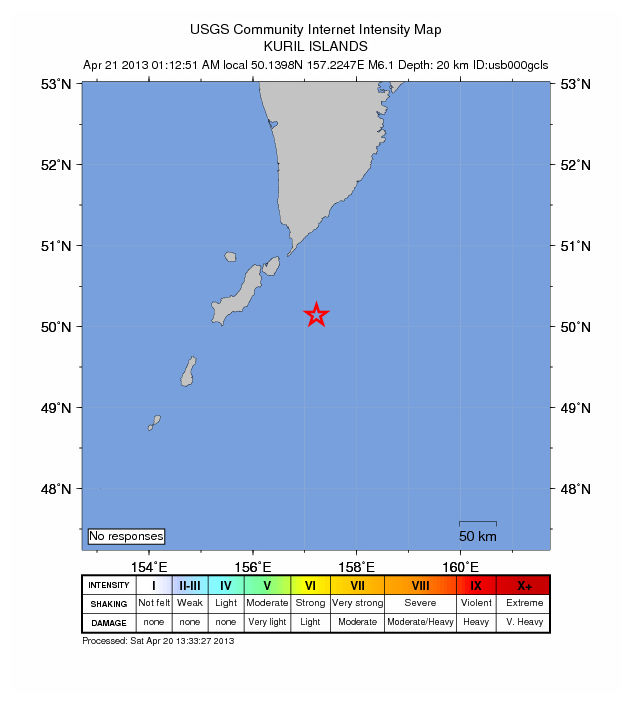
USGS: Earthquake Magnitude 6.1 - SE of Severo-Kuril'sk, Russia

Russia Quake_200413
© USGS
Event Time
2013-04-20 13:12:51 UTC
2013-04-20 23:12:51 UTC+10:00 at epicenter

Location
50.140°N 157.225°E depth=20.2km (12.5mi)

Nearby Cities
98km (61mi) SE of Severo-Kuril'sk, Russia
321km (199mi) SSW of Vilyuchinsk, Russia
337km (209mi) SSW of Petropavlovsk-Kamchatskiy, Russia
348km (216mi) SSW of Yelizovo, Russia
2140km (1330mi) NE of Tokyo, JapanTechnical Details

Bizarro Earth

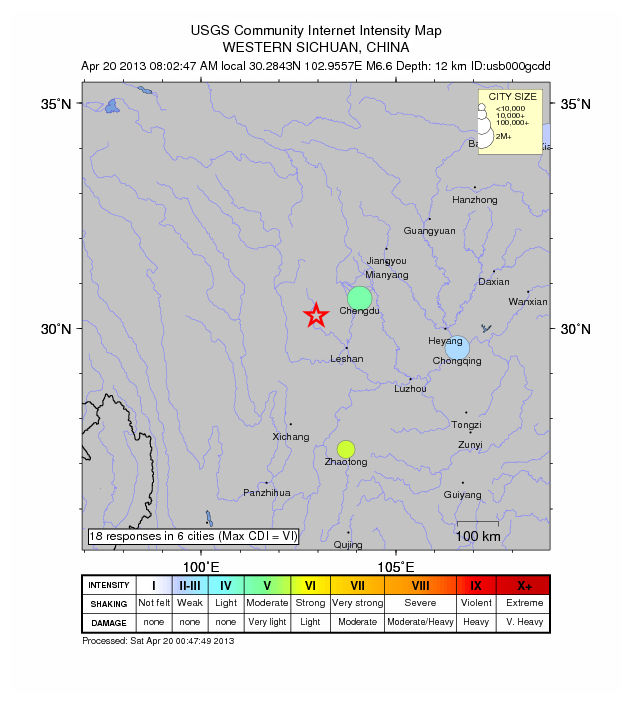
USGS: Earthquake Magnitude 6.6 - WSW of Linqiong, China

China Quake_200413
© USGS
Event Time
2013-04-20 00:02:47 UTC
2013-04-20 08:02:47 UTC+08:00 at epicenter

Location
30.284°N 102.956°E depth=12.3km (7.6mi)

Nearby Cities
50km (31mi) WSW of Linqiong, China
99km (62mi) ENE of Kangding, China
111km (69mi) NW of Leshan, China
114km (71mi) WSW of Chengdu, China
1065km (662mi) NNW of Ha Noi, Vietnam

Technical Details

Snow Globe

Canada: Reports of many deer dead along Saskatchewan highways

Search for food leads to carnage after long winter

It's always a good idea to keep an eye out for animals such as deer and moose along Saskatchewan highways.

At this time of year the animals are hungry after a long winter of deep snow, and the winter has been longer and harsher than usual this year.

With the snow starting to melt, deer are finding some grass in ditches along the roads.

That is leading to carnage, according to many reports on social media. Drivers say they have spotted unusually high numbers of dead deer in ditches along Saskatchewan's highways.

[View the story "Deer dying in ditches across Saskatchewan " on Storify]

Bizarro Earth

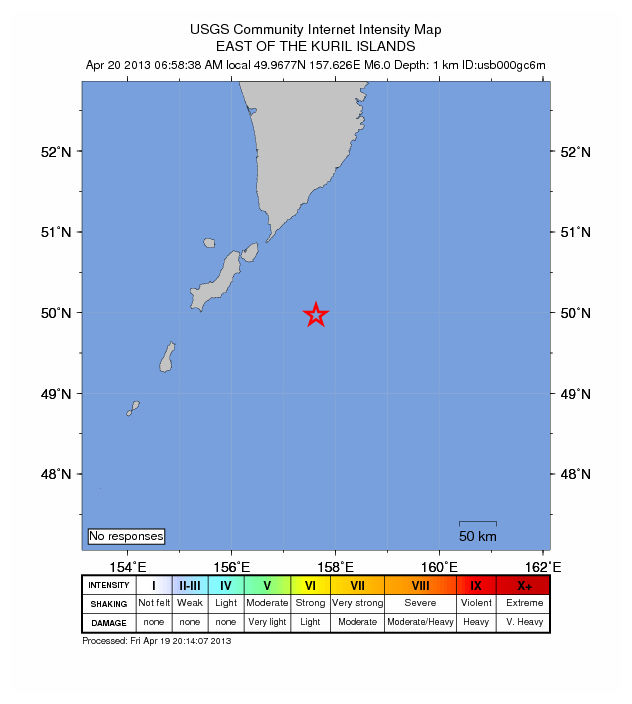
USGS: Earthquake Magnitude 6.0 - SE of Severo-Kuril'sk, Russia

Russia Quake_190413
© USGS
Event Time
2013-04-19 19:58:38 UTC
2013-04-20 06:58:38 UTC+11:00 at epicenter

Location
49.968°N 157.626°E depth=1.0km (0.6mi)

Nearby Cities
132km (82mi) SE of Severo-Kuril'sk, Russia
334km (208mi) S of Vilyuchinsk, Russia
349km (217mi) SSW of Petropavlovsk-Kamchatskiy, Russia
362km (225mi) S of Yelizovo, Russia
2148km (1335mi) NE of Tokyo, Japan

Technical Details

Bizarro Earth

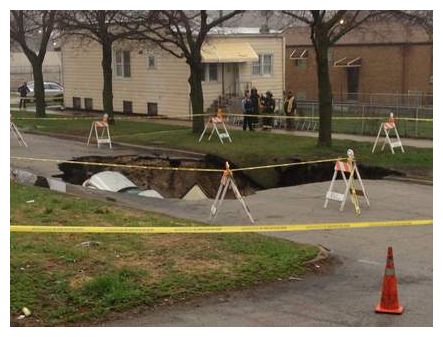
Three vehicles swallowed by sinkhole in Glenview, Illinois

Sinkhole
© Brian Jackson/Sun-TimesA large sinkhole in the 9600 block of South Houston swallowed three cars following strong overnight storms.
All Olaide Giwa could do was watch helplessly as her new 2013 Dodge Charger plopped into the sinkhole.

The 57-year-old nurse was heading to work in Glenview and had just walked out of her son's home in the 9600 block of South Houston about 5:20 a.m. Thursday when she saw a silver truck whose driver appeared to be having trouble steering.

And then she saw the truck sink into the road, swallowed by a sinkhole that had grown to a 30-foot diameter by early morning.

"I see the car going inside. I say, 'Wait a minute. What's going on?'" she said.

Soon after, the sinkhole swallowed her brother's car, too.

Frantic, Giwa wanted to move her Charger, now on the edge of the sinkhole, but firefighters wouldn't let her.

"I wanted to back up my own car. They say, 'You can't do that. The third one is going in at any time,'" she said.

"Then it went fast. Boom."

Road Cone

Massive geyser erupts in Russian parking lot

Russia geyser
Cameras in Russia seem to capture everything from fiery meteors to crazy crashes. The latest video comes from a camera mounted high above the main square in Smolensk, overlooking a busy parking lot on what appears to be a nice sunny day.

It takes but seconds for a small cloud of steam, appearing harmless at first, to erupt into a hot water geyser rivaling Old Faithful. What you don't see from the video are the brick-sized chunks of pavement and rocks that were launched into the air and onto the surrounding vehicles. Within minutes, a large flow of water has flooded the parking area as the natural geyser continues to spew water and steam hundreds of feet into the air.

If this happened in our backyard, we would hightail it out of town fearing another eruption of Vesuvian magnitude - yet the locals in Smolensk seem only slightly disrupted, continuing to seek open spots in the parking lot despite the odd chaos mere yards away.


Question

Australia: Oyster crop hit by unknown disease

An unknown flesh-eating disease has killed millions of dollars worth of Pacific oysters in Port Stephens, and has caused financial devastation for many growers.

The Department of Primary Industries said yesterday it was also investigating mysterious deaths of previously unaffected Sydney rock oysters.

The department's scientists are trying to identify the disease to curtail any further damage to the industry.
Image
© news.net
There is concern the incident at Port Stephens, along with the recent Hawkesbury River oyster deaths, may result in an oyster shortage in NSW.

Many growers told the Newcastle Herald the disease, which first emerged in January, had ruined their 2013 winter crop as well as next year's crop.

"It's pretty much wiped me out - it's had a massive impact on the industry," Lemon Tree Passage grower Paul Merrick said.

He has lost 80 per cent of this year's crop, worth $200,000.

Snow Globe

Enduring winter tough on migratory birds in Great Plains

A rare sequence of spring snowstorms across the northern Great Plains is causing difficulties and even starvation for some migratory birds.
Image
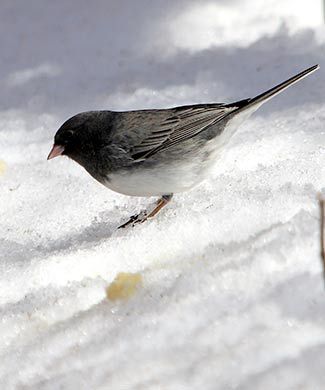
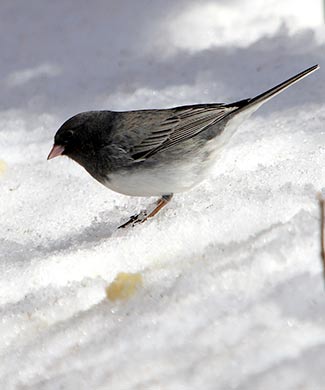
© Eric Landwehr, South Dakota State UniversityBirds that normally winter in the Dakotas, like this Junco hyemalis, are having a tough time scavenging for food as winter refuses to end, even in April.
While it's not unusual to get a single snowstorm in April, the weekly storms during late March and the first half of April are taking their toll on wildlife, according to bird expert Kent Jensen of South Dakota State University.

He and others beneath North America's Central and Mississippi migratory "flyways" have found dead robins in their backyards, with the birds emaciated and even having burned up their breast muscles for nutrition in a last-ditch effort to survive.

"The ground to the north in North Dakota and Canada is still frozen, and we're only getting occasional thaws that allow the birds to feed from the ground here in eastern South Dakota," Jensen tells Earthweek.

He said many species are holding back far to the south, but the early-arriving robins have been forced to eat the wax coating of cedar berries to keep their fat supplies up.

Frozen lakes are also holding back migratory waterfowl, which could mean they are using up energy during their unplanned layover that they need for successful breeding this summer, Jensen says.

The fat supplies those birds need for laying eggs high in the Arctic is also being depleted as the birds hold back to the south, waiting for spring to finally arrive.
Bizarro Earth

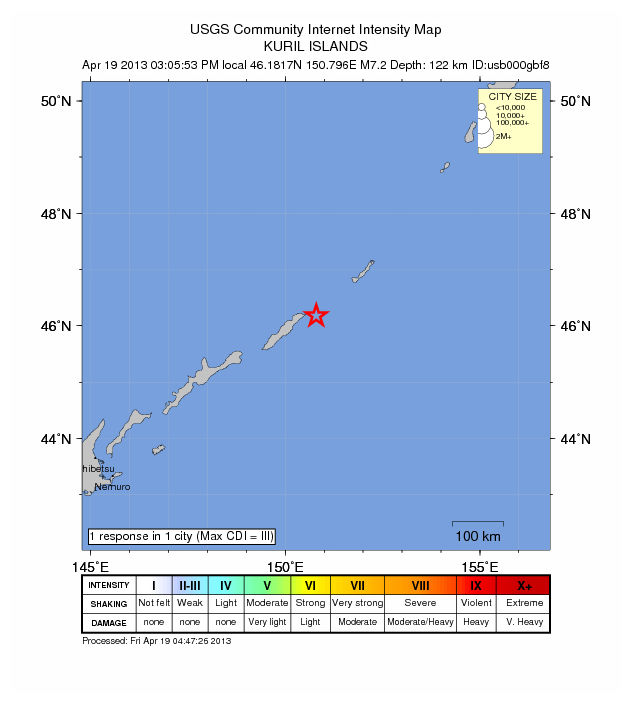
USGS: Earthquake Magnitude 7.2 - ENE of Kuril'sk, Russia

Russia Quake_190413
© USGS
Event Time
2013-04-19 03:05:53 UTC
2013-04-19 15:05:53 UTC+12:00 at epicenter

Location
46.182°N 150.796°E depth=122.3km (76.0mi)

Nearby Cities
250km (155mi) ENE of Kuril'sk, Russia
521km (324mi) NE of Nemuro, Japan
527km (327mi) NE of Shibetsu, Japan
566km (352mi) ENE of Abashiri, Japan
1490km (926mi) NE of Tokyo, Japan

Technical Details