Earth ChangesS


Snowflake

Michigan still almost 40 percent covered in snow, and it's nearly May

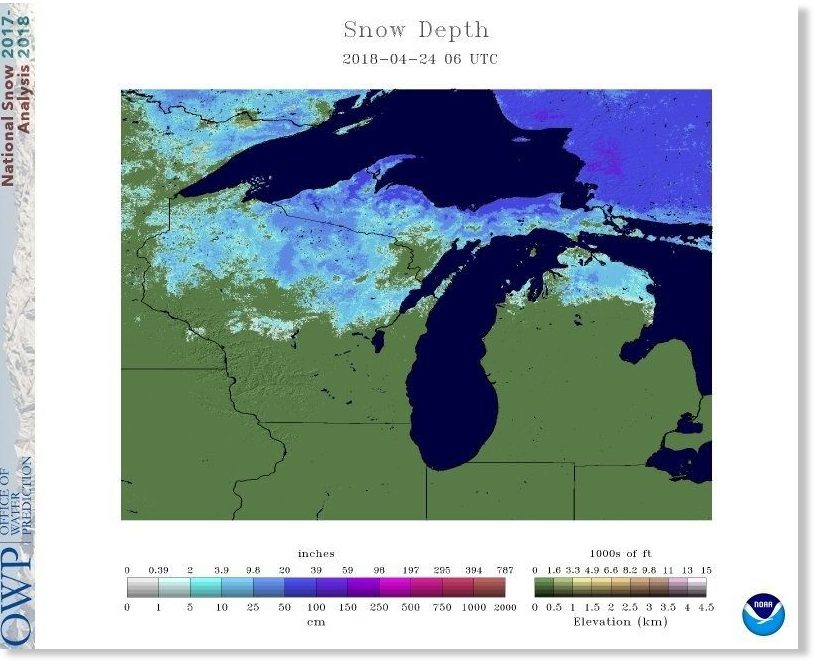
Snow cover on April 24, 2018
© National Snow AnalysisSnow cover on April 24, 2018
After a fully wintry three weeks in April, Michigan still has a significant amount of land covered in snow. One area still has almost three feet of snow on the ground.

Michigan has 37 percent of our ground still covered with snow on April 24, 2018. That's down from 49 percent on March 24, 2018.

The snow is melting fast. The average snow depth at locations with snow is only 2.9 inches. However, there are places that have much more snow on the ground.

Cloud Precipitation

Heavy rainfall and landslides kill 18 in Rwanda

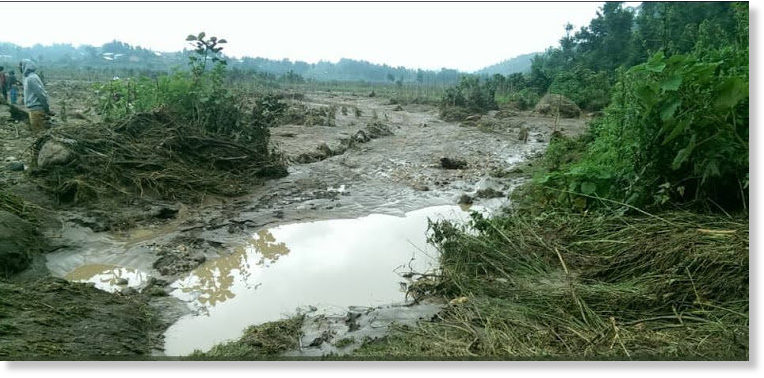
The damage from heavy rain and landslides in Rwanda.
© Ministry of Disaster Management and RefugeesThe damage from heavy rain and landslides in Rwanda.
Eighteen people died overnight on Monday when heavy rains ripped through several parts of Rwanda, causing landslides, the government said.

The East African nation, dubbed a country of a thousand hills, has recently been affected by landslides as a result of heavy downpours flattening houses on mountain slopes.

"Eighteen people passed on due to disasters caused by heavy rains in the night of 23rd April," Rwanda's ministry in charge of disaster management said on Twitter.


Windsock

Extreme winter storms and wave heights have been increasing over the last 70 years in the Western Europe

wave crash
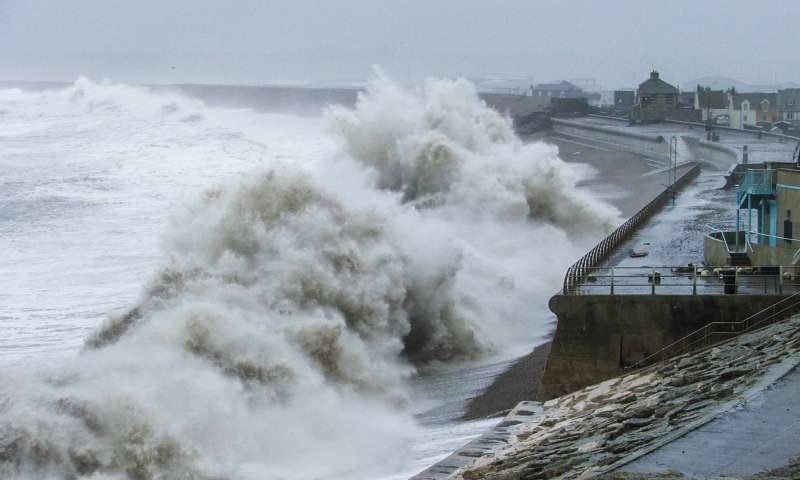
© Tim Poate/University of PlymouthWaves crashing onto Chesil Beach in Dorset during the winter of 2013/14.
Average winter wave heights along the Atlantic coast of Western Europe have been rising for almost seven decades, according to new research.

The coastlines of Scotland and Ireland have seen the largest increases, with the average height of winter waves more than 10mm/year (more than 0.7metres in total) higher than in 1948.

That has also led to increased wave heights during extreme weather conditions, with levels off the Irish coast increasing 25mm/year during the past 70 years, representing an average increase of 1.7m.

Comment: And it's not just the coastlines that are being affected: Also check out SOTT radio's: Behind the Headlines: Earth changes in an electric universe: Is climate change really man-made?


Attention

Lava lake at Kilauea volcano in Hawaii overflows

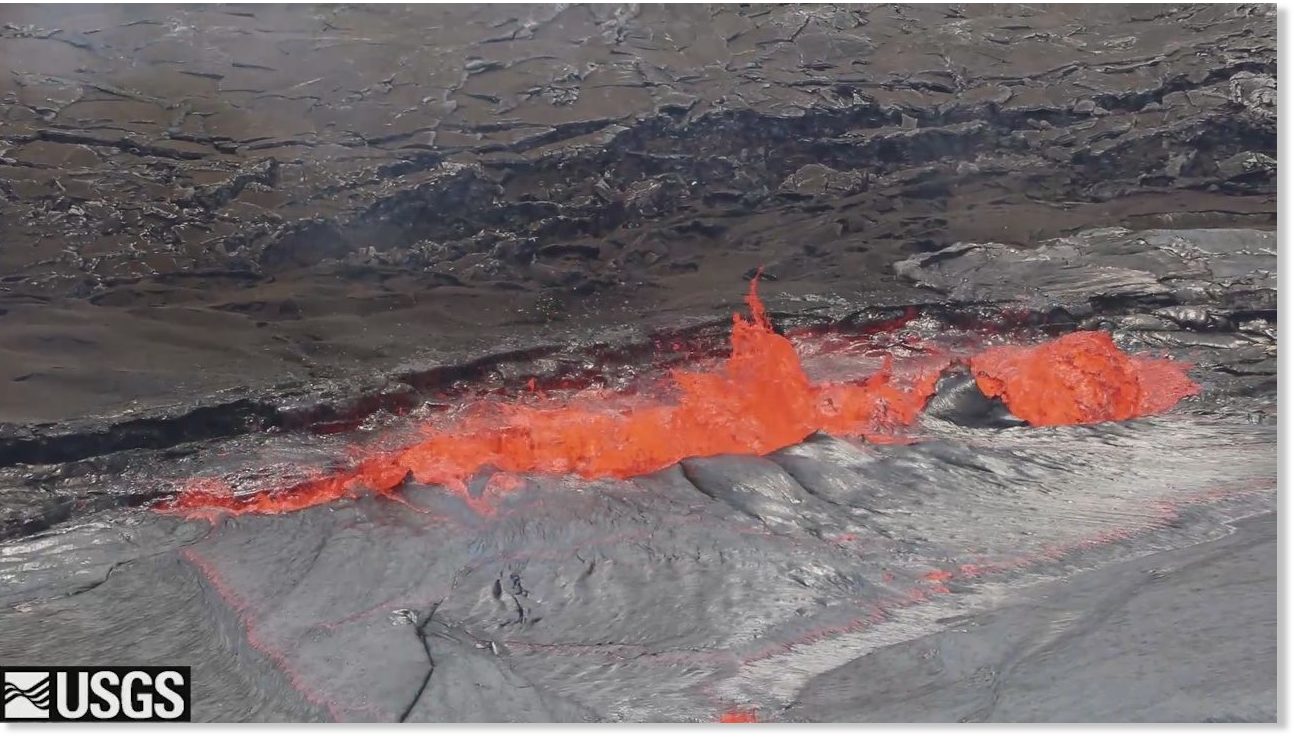
USGS photo shows spattering at on the margin of the Halema'uma'u Crater lava lake margin on Sunday, April 22.
Lava from Hawaii's Kilauea volcano spilled over the banks of the summit lava lake overnight on April 22, according to the USGS's Hawaiian Volcano Observatory (HVO).

Lava could be seen spilling onto the floor of the Halemaumau Crater in photographs and videos from the HVO team taken on April 22 and 23. The level of lava has since fallen back below to the level of the rim, according to the HVO update from April 23. "The lower lake level reflected the switch from inflation to deflation at the summit of Kilauea," HVO said in a statement posted on its website.


Attention

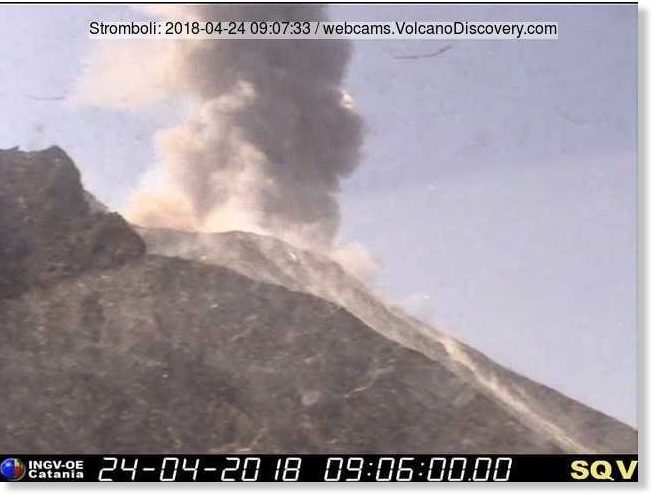
Series of stronger eruptions at Stromboli volcano in Italy

Stromboli volcano
A series of stronger explosions occurred yesterday (24 April) morning at 11:05 local time from the southernmost vent of the central crater area, ejecting glowing bombs to approx 250 m and generating a dense ash plume that rose a few hundred meters.

Attention

Threat remains from 6 active volcanoes on Vanuatu islands

Ash from the eruption of the volcano on the Vanuatu island of Ambae has smothered crops.
© Penama ProvincialAsh from the eruption of the volcano on the Vanuatu island of Ambae has smothered crops.
As Vanuatu's government prepares to evacuate Ambae Island after volcanic activity intensified, volcanoes on other islands remain in a state of unrest.

Ambae's Manaro Voui crater is at alert level three of five, posing a threat to the health of the island's 11,000 inhabitants, who are being encouraged by the government to evacuate.

Nearby, a level two alert is in place on Ambrym, according to the Geohazards Department, with exclusion zones around the erupting Benbow and Marum craters.

A geohazards analyst Melinda Haru said the main threat for the people of Ambrym outside those zones was gas emitted by the volcano.

Seismograph

M5.2 earthquake hits Turkey, significant damage reported with dozens injured

turkey earthquake April 2018
A strong and damaging M 5.2 earthquake struck near Samsat, Turkey at 00:34 UTC (03:34 local time) on April 24, 2018, causing significant damage and injuring at least 39 people. The earthquake was registered by the USGS as M5.2 and the agency is reporting a depth of 10 km (6.2 miles). EMSC is reporting M5.2 at a depth of 10 km (6.2 miles). According to USGS, the epicenter of the earthquake is 4 km (2.5 miles) NE of Samsat, Turkey which has a population of 9 308 people.

According to Turkish officials, dozens of people were injured after the earthquake. Samsat district governor Sedat Sezik said the earthquake was felt in neighboring cities, adding that search and rescue activities have begun in the province as AFAD teams are reaching the quake site, according to Anadolu news agency.

Turkey's health minister Ahmet Demircan said that 35 were still receiving treatment. The regional governor said the injuries were caused as people fled their homes in panic.

Comment: Were seeing an increase in extreme Earth movements and their associated effects. Scientists have been predicting Earthquakes would be on the rise as the rotation of our planet slows down - but why is it slowing down? For more information, check out SOTT radio's: Behind the Headlines: Earth changes in an electric universe: Is climate change really man-made?


Fire

Seven Southwest US states suffering "exceptional" drought conditions

drought fire southwest US
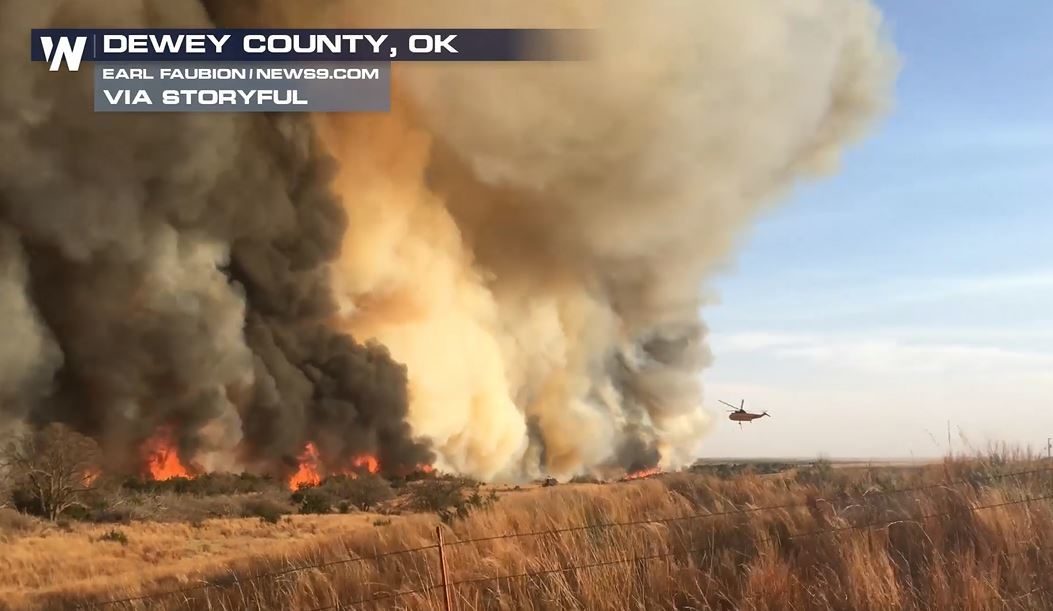
The changing of the seasons from winter to spring has brought an unwelcome worsening of drought across the U.S. Southwest and Southern Plains. The animation below shows drought conditions becoming more intense and widespread between the start of the animation on January 9 and the final frame on April 17.

At the start of the year, only a few small areas of extreme drought existed in the contiguous United States, the largest of them in Oklahoma and South Dakota. As the season advanced, extreme drought conditions expanded from Oklahoma into Texas and Kansas, with detached pockets also appearing in Arizona and New Mexico by mid-February.

By mid-March, drought in the panhandle of Oklahoma had reached "exceptional" status, and severe drought had pushed northward from Arizona and New Mexico into Utah and Colorado. As of mid-April, parts of seven Southwest states had progressed into exceptional drought.

Comment: After one of the harshest winters on record, the US is now seeing drought and fire risks much earlier in the season than is usual.

With the sun dipping to its lowest activity in hundreds of years, erratic weather patterns are to be expected; the jet streams are meandering and the Atlantic Ocean circulation is the weakest in over 1000 years, and these are all clues that we are entering an ice age:


Attention

Adapt 2030 Ice Age Report: New internet laws to limit your ability to share crop losses and food price rises?

hail
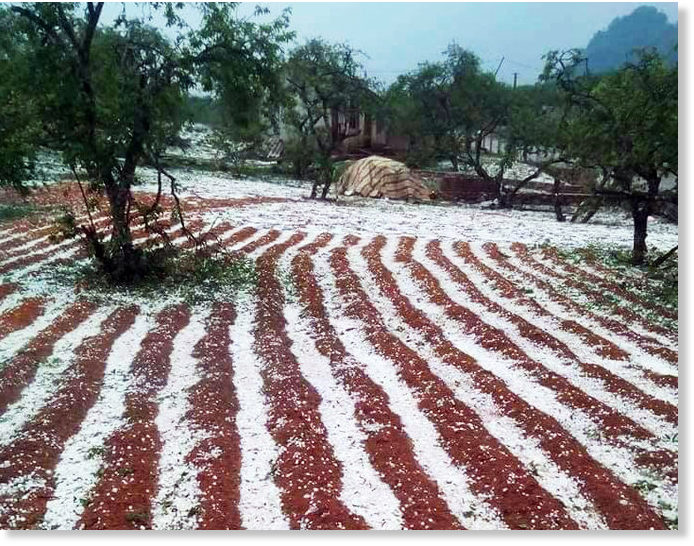
With China enacting the most stringent laws ever in the country against social media news sharing, now following on the heels of FB and Twitter filtering, Asia is in a full push to limit self fed news. You need to ask yourself if this is to do with the ever mounting global crop losses and food price increases. Its to the point now where most countries on our planet are experiencing weather related agriculture damage. Incredible lightning Moscow and UK, hail storm level crops in Vietnam.


Sources

Sun

Heat index over 41 degrees Celsius in several areas in the Philippines

heatwave
Filipinos across the country are at risk of heat exhaustion and even heat stroke as the heat index spiked to over 41 degrees Celsius in several areas.

According to data released by PAGASA, the heat index rose past 41°C in at least 14 areas in the country on Sunday, April 22, rising to a high of 47.7°C in Sangley Point in Cavite.

The heat index is the measure of the temperature that a person feels, and is essentially the "apparent temperature" felt by the human body, which is computed by factoring in the humidity as well as the ambient dry bulb temperature (what we usually think of as air temperature in general).