Science of the SpiritS


Info

Massive study suggests dreams are really continuations of reality

Dream Study
© Alex Blăjan/Unsplash
Where do dreams come from? It's an age-old question, something people have been wondering and theorising about for millennia.

Whereas ancient civilisations may have interpreted dreams as having supernatural or spiritual origins, in modern society, we're more likely to analyse our dreams in terms of our waking life, looking for meaningful connections linking the content of dreams with lived experiences from our day-to-day existence.

"Research has repeatedly provided strong support for what sleep scientists refer to as the 'continuity hypothesis of dreams': most dreams are a continuation of what is happening in everyday life," researchers led by computer scientist Alessandro Fogli from Roma Tre University in Italy explain in a new study.

"It turns out that everyday life impacts dreaming (e.g. anxiety in life leads to dreams with negative affect) and vice versa (e.g. dreaming impacts problem-solving skills)."

These psychological theories date back to the work of Sigmund Freud and others in the 20th century, who spearheaded the notion that the hidden meanings of dreams could be unlocked when examined within the context of a person's real-world experiences.

In contemporary dream analysis, therapists attempt to help patients interpret their dreams, via the use of dream reports, looking for clues, symbols, and structures that might correspond with other parts of the dreamer's life.

SOTT Logo Radio

SOTT Focus: MindMatters: Dark Triad Politics: The Psychology of the Far Left and Alt Right

DARK TRIAD
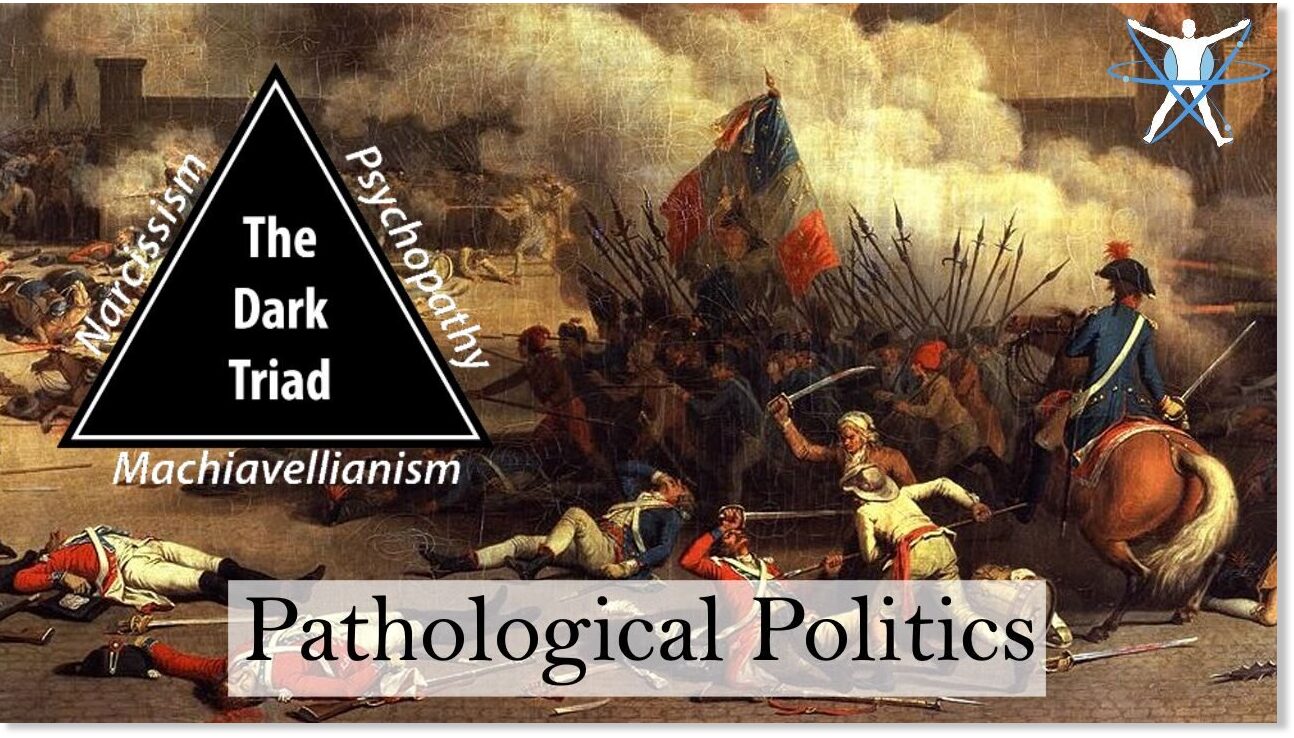
Narcissism, machiavellianism and psychopathy are the three components of what psychologists and social scientists call the 'Dark Triad' - personality traits that inform how one thinks and what one does. And dark they are because these personality features represent some of the very worst that humanity has to offer itself. As we continue to see the chaos and destruction being savaged on Western society by far left groups who claim to be fighting for justice and equality, some new studies go to show that their "liberal" sentiments belie a deeper pathology. What these activists are actually doing is acting out their Dark Triad tendencies - which fly in the face of the very values they claim to espouse and closely resemble their supposed political 'enemies' on the far right.

This week on MindMatters we delve into the world of extremist politics and entitlement to examine what really lies behind the righteous curtain of political ideology on the left and the right, and how more moderate voices are co-opted and exploited by their more radical confrères. 'Politically correct liberals', 'politically correct authoritarians', 'white identitarians': whatever the ideological mask, the root problem is the psychopathic element who influence and distort every type of belief system. When we realize that, perhaps we'll be able to get somewhere.

For the paper discussed, see here.


Running Time: 01:08:18

Download: MP3 — 62.5 MB


Eye 1

What personality traits predict psychopathy and sex drive?

silhouette kiss
© Hoang Loc from Pexels
New research examines the link the "Dark Tetrad" and other characteristics.

It's a fine line between sanity and insanity, or so they say. But what about personality? How big is the difference between traits such as psychopathy and more common and socially approved ones?

New research published in the European Journal of Psychological Assessment may hold an answer. A team of psychologists led by Delroy Paulhus of the University of British Columbia conducted a study in which they sought to map the four aspects of what is referred to as the "Dark Tetrad" to the five best-known and most widely researched dimensions of personality — that is, extraversion, openness to experience, emotional stability, conscientiousness, and agreeableness.

Comment: See also:


Info

New guidance on brain death

Brain Death Redefined
© SUDOK1/ISTOCK/GETTY IMAGES PLUSAs part of the World Brain Death Project, an international group of doctors has written guidelines that help identify whether a person’s brain no longer functions, completely and irreversibly. That information can be used to determine when to take a patient off life support.
When your brain stops working — completely and irreversibly — you're dead. But drawing the line between life and brain death isn't always easy. A new report attempts to clarify that distinction, perhaps helping to ease the anguish of family members with a loved one whose brain has died but whose heart still beats.

Brain death has been a recognized concept in medicine for decades. But there's a lot of variation in how people define it, says Gene Sung, a neurocritical care physician at the University of Southern California in Los Angeles. "Showing that there is some worldwide consensus, understanding and agreement at this time will hopefully help minimize misunderstanding of what brain death is," Sung says.

As part of the World Brain Death Project, Sung and his colleagues convened doctors from professional societies around the world to forge a consensus on how to identify brain death. This group, including experts in critical care, neurology and neurosurgery, reviewed the existing research on brain death (which was slim) and used their clinical expertise to write the recommendations, published August 3 in JAMA. In addition to the main guidelines, the final product included 17 supplements that address legal and religious aspects, provide checklists and flowcharts, and even trace the history of relevant medical advances. "Basically, we wrote a book," Sung says.

The minimum requirement for determining brain death is "a good, thorough clinical examination," Sung says. Before the exam even occurs, doctors ought to verify that a person has experienced a neurological injury or condition that could cause brain death. Next, clinicians should look for other explanations, conditions that could mimic brain death but are actually reversible. Cooling the body, a procedure for treating heart attacks, can cause brain function to temporarily disappear, the report points out. So can certain drugs, alcohol and other toxins.

Eye 1

Dark Triad traits and entitlement linked to both authoritarian political correctness and white nationalist beliefs

socialist protesters berkley
© Thomas Hawk
People with "dark" personality characteristics, such as psychopathy, as well as people with a greater sense of entitlement are more likely to be adherents of White Identitarianism or politically correct authoritarianism, according to new research that appears in the journal Heliyon. The findings suggest that those on the far-left and those on the far-right share some common personality dispositions.

"I became interested in the topic during my undergraduate degree. In the social psychology courses I took, it was clear that there were things you were 'allowed' to say and things you were not," said study author Jordan Moss, a medical student at Sydney Medical School.

"For instance, the blank-slate hypothesis was maintained, and any comments appreciating the genetic contribution to individual or group differences were met with incredible resistance. At the time, I became aware of Jordan Peterson in his opposition to Bill C-16, and examples of 'controversial' speakers getting 'cancelled' at university campuses were becoming more frequent."

Comment: See also:


SOTT Logo Radio

SOTT Focus: MindMatters: First Sight, Polyvagal Theory, and Contemplative Practices

vagus nerve
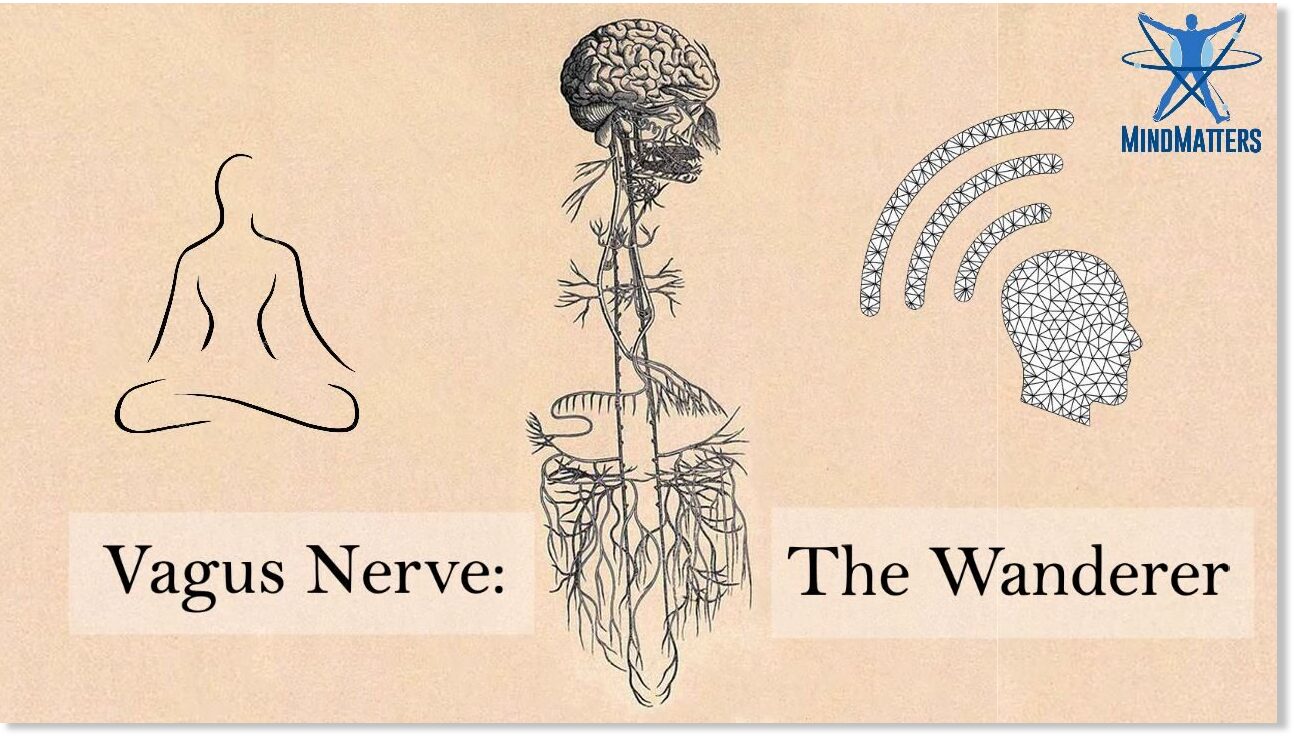
What does meditation or contemplation have to do with our physiology? And what is the possible connection between our autonomic nervous system and a coherent theory of psi? Today on MindMatters we bring together three topics: contemplative practice (see our interviews with Fr. Joseph Azize), first sight theory (see our interview with Dr. Jim Carpenter), and Stephen Porges's polyvagal theory, as discussed in a recent book by Stanley Rosenberg, Accessing the Healing Power of the Vagus Nerve.

Porges's work on the two branches of the vagus nerve, and the states of consciousness they are involved in, has important implications for physical and mental health. But the connections may go even further than that, into areas considered spiritual or even paranormal. The states facilitated by ventral vagus nerve activation have a lot in common with the conditions most conducive to eliciting psi, both in the lab and in everyday life. And together they may explain certain features of contemplative states and practices.


Running Time: 01:11:32

Download: MP3 — 65.5 MB


TV

Best of the Web: John Waters: On escaping viral entrancement

lockdown covid social isolation propaganda
There is an ancient principle of the common law, whereby it is held that the people may do everything except that which they have expressly forbidden, and the state may do nothing except that which the people have expressly permitted. How did this principle come to be unstitched and reversed in the past three months? How did the people come to agree to its reversal?

In a search of answers, I have been reflecting a lot on a phrase I transcribed into a notebook years ago from Martin Amis's Koba the Dread: " . . . a contagion of selective incuriosity, a mindgame begun in self-hypnosis and maintained by mass hysteria."

While not discounting the impact of short-term welfare payments (buying the people's freedom with their own money) I have gotten to thinking that the answer maybe includes, as a primary factor, something along the lines of mass hypnosis — the viral entrancement of entire populations.

Comment: Waters has exposed the outline of the psychological operation the elite are running on the world's population, fronted by puppets Bill Gates and Anthony Fauci. The isolation, social distance rules and interminable disruption of daily life is taking a severe toll on the world's mental health. This is by design. The population is being worn down so the Gates/Fauci vaccine will be accepted with a minimum of fuss, all in the name of getting back even a little of one's previous life. The more you know . . . . For more on Le Bon's book, The Crowd see:

The Truth Perspective: Herd Behavior: What Gustav Le Bon's Classic Book Can Teach Us About 'The Crowd'


Book

A mutilation of young lives: How the radical transgender bandwagon is wrecking girls' bodies and destroying their mental health

Irreversible Damage
© Blackstone Publishing, 2020Abigail Shrier "Irreversible Damage: The Transgender Craze Seducing Our Daughters"
A new book, Irreversible Damage, reveals how teenage girls are being duped into believing they want to be male, and are pushed into taking puberty blockers, cross-sex hormones, and undergoing double mastectomies.

Whether it is a statement or a question, the title of this book conveys the necessary urgency of this desperately sad story. Amid the trans debate, seemingly a battle between grown adults, vulnerable children are prey to a malevolent ideology that survivors call a cult.

In a superb piece of investigative journalism, Abigail Shrier focusses on teenage girls - most with no history of gender dysphoria - who become captivated by the belief that they are transgender. Behind the glittery exterior portrayed in the media, she encounters damaged children - many alienated from their families - in poor mental health and facing the prospect of infertility and medication for life.

Shrier, a writer with the Wall Street Journal, pulls no punches when describing phalloplasty, the construction of an artificial penis. The complications can be horrific. She reports the experience of one nineteen-year-old, "whose phalloplasty resulted in gangrene and loss of the appendage." On the cusp of adulthood, that young person has been left without normal genitalia, for either sex, and tethered to a catheter.

I am a transgender person, but I transitioned as an adult when I could understand the implications on my body and my relationship with society. Besides, by then I'd had my own children. Yet children too young to even give consent for a tattoo are being corralled into making truly life-changing decisions.

Comment: Se also:


Info

New theory of why we dream

Bruno Dreams
© Image courtesy of FoxBruno dreams of an infinity beyond the classical universe.
Why do we dream? Psychologists and neuroscientists have been debating the function of dreams for centuries, but there is still no accepted answer.

Now, David M. Eagleman​​ and Don A. Vaughn​ have proposed a new theory. Their preprint article, which has not yet been peer reviewed, is called The Defensive Activation theory: Dreaming as a mechanism to prevent takeover of the visual cortex.

To my mind, it's a highly original and creative theory, but I'm not convinced by it.

Here's Eagleman​​ and Vaughn​'s theory in nutshell: The role of dreams is to ensure that the brain's visual cortex is stimulated during sleep. Otherwise, if the visual system were deprived of input all night long, the visual cortex's function might degrade.

We know that the visual cortex, in the brain's occipital lobe, can start to respond to non-visual signals if it is deprived of visual input. In blind people, for instance, the occipital lobe strongly responds to touch. This rewiring or repurposing of under-utilized brain areas is a form of neuroplasticity.

Neuroplasticity is generally considered a good thing. But Eagleman​​ and Vaughn point out that for the visual system, neuroplasticity could actually pose a threat, because vision — unlike our other senses — isn't active all the time.

If we are in a dark place, or it's night, we get little or no visual input. So — in theory — our visual cortex would be vulnerable to 'takeover' by other senses, every single night. Dreams, on this view, are our brain's way of defending the integrity of our visual system by keeping it active.

Books

Reading printed books to children more beneficial to child's development than e-books - study

Reading books with children
Picking what book to read isn't the only choice families now make at story time - they must also decide between the print or electronic version.

But traditional print books may have an edge over e-books when it comes to quality time shared between parents and their children, a new study suggests.

The research, led by University of Michigan C.S. Mott Children's Hospital and involving 37 parent-toddler pairs, found that parents and children verbalized and interacted less with e-books than with print books. The findings appear in journal Pediatrics, which is published by the American Academy of Pediatrics.

"Shared reading promotes children's language development, literacy and bonding with parents. We wanted to learn how electronics might change this experience," says lead author Tiffany Munzer, M.D., a fellow in developmental behavioral pediatrics at Mott.

"We found that when parents and children read print books, they talked more frequently and the quality of their interactions were better."

Comment: See also: