Science of the SpiritS


NPC

How addressing so-called 'unconscious bias' and 'unwitting racism' could be the first step to brainwashing

black white people
© Getty Images / fizkes
The idea that all white people are unconsciously racist and need training to correct this has gained momentum. But doesn't this colonisation of thought processes take us into dangerous territory?

These days we are told that, unless you can prove otherwise, you are presumed to be a racist. This is why Labour Party leader Sir Keir Starmer announced that he was going to introduce unconscious bias training for all the officials in his party.

And just to demonstrate that he meant business, Starmer declared, "I'm going to lead from the top on this and do that training first." No doubt Harry and Meghan - otherwise known as the Prince and Princess of Sussex - would approve of Starmer's actions. Not long ago, the royal couple gave a little sermon about the need to uncover your unconscious bias to a carefully selected 'discussion group'.

Meghan explained that your upbringing can shape your unconscious bias and that this is where "racism... lies and thrives." Harry added that "once you start to realize that there is bias there, then you need to acknowledge it, you need to do the work to become more aware". Harry concluded his lecture with a word of hope: "Unconscious bias must be acknowledged without blame to create a better world for all of you."

Undertaking 'unconscious bias training' has become a therapy of salvation widely promoted by leading members of the Anglo-American establishment. At dinner tables, members of the elite now exchange pleasantries about how they managed to get trained out of their bias.

SOTT Logo Radio

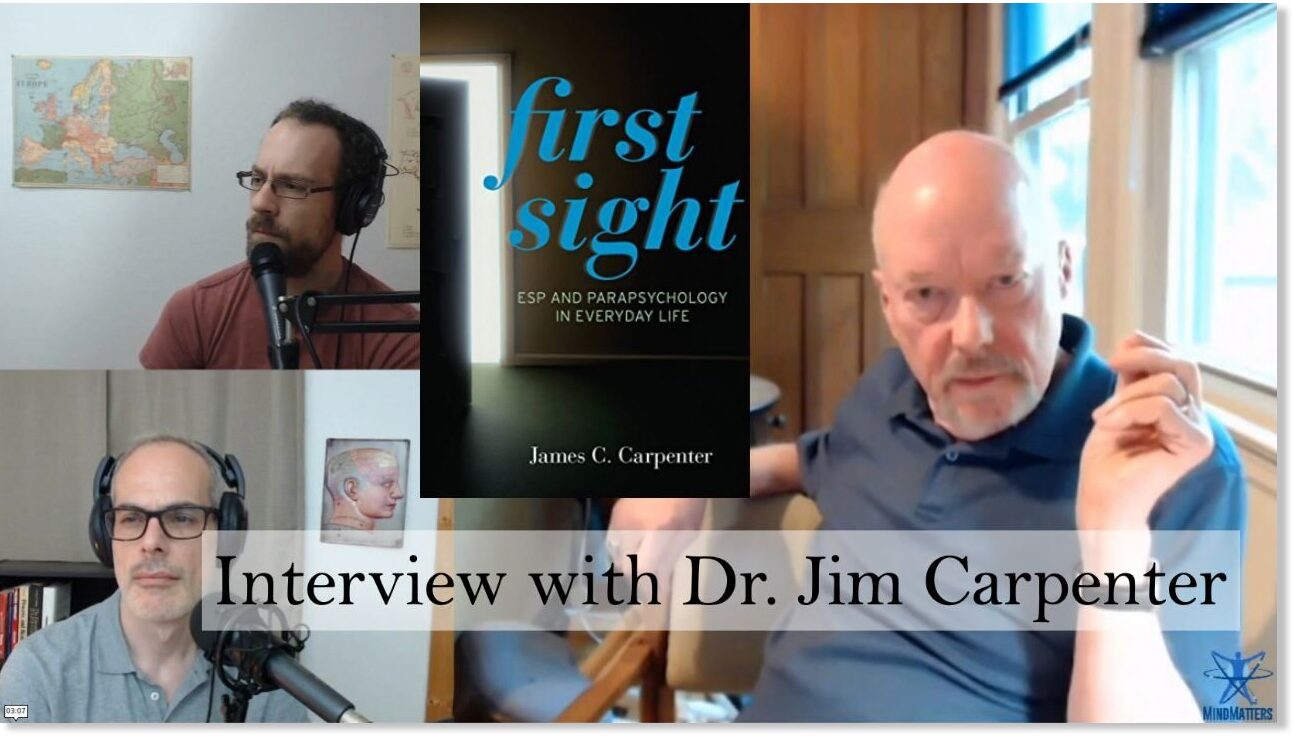
SOTT Focus: MindMatters: Interview with James Carpenter: First Sight, Psi, and Consciousness

james carpenter
What is the nature of psi? How does it relate to consciousness? Today on MindMatters we interview Dr. Jim Carpenter about his "first sight" theory, the subject of his revolutionary book by the same name. Carpenter's theory not only accounts for all the experimental data relating to psi; it also integrates current psychological research and a wider understanding of consciousness as a whole. Psi is not an anomaly or a special ability - it is fundamental to mind itself.

Dr. Jim Carpenter is both a clinical psychologist and a research parapsychologist. He is a Diplomate in Clinical Psychology, ABPP, and a Fellow in the American Academy of Clinical Psychology He formerly taught at the University of North Caroline in the departments of psychology and psychiatry. He has been active in the governance of several professional organizations, and carries on an active private practice.

Dr. Carpenter has published widely in psychology and parapsychology, with many research articles, book chapters and more popularly oriented pieces. For many years he has provided pro bono clinical consultation for persons who seek help with unpleasant experiences that they think of as psychic. His most substantial parapsychological contribution is a book developing a theory of psi, called First Sight: ESP and Parapsychology in Everyday Life (firstsightbook.com), published by Rowman & Littlefield. A more recent book contains a chapter summarizing some central ideas in the theory, along with another chapter placing the theory in the context of the philosophy of Alfred North Whitehead: Rethinking Consciousness: Extraordinary Challenges for Contemporary Science, edited by Buchanan and Aanstoos. His current research involves the prediction of the implicit contribution of psi information to the formation of ordinary preference judgments, using theoretically specified variables, thus shedding some light on how psi participates as "first sight" in everyday experience that people are not experiencing as "psychic.


Running Time: 01:41:52

Download: MP3 — 93.3 MB


SOTT Logo Radio

SOTT Focus: MindMatters: Try Not To Lie: The Value Of Honesty With The Self And Others

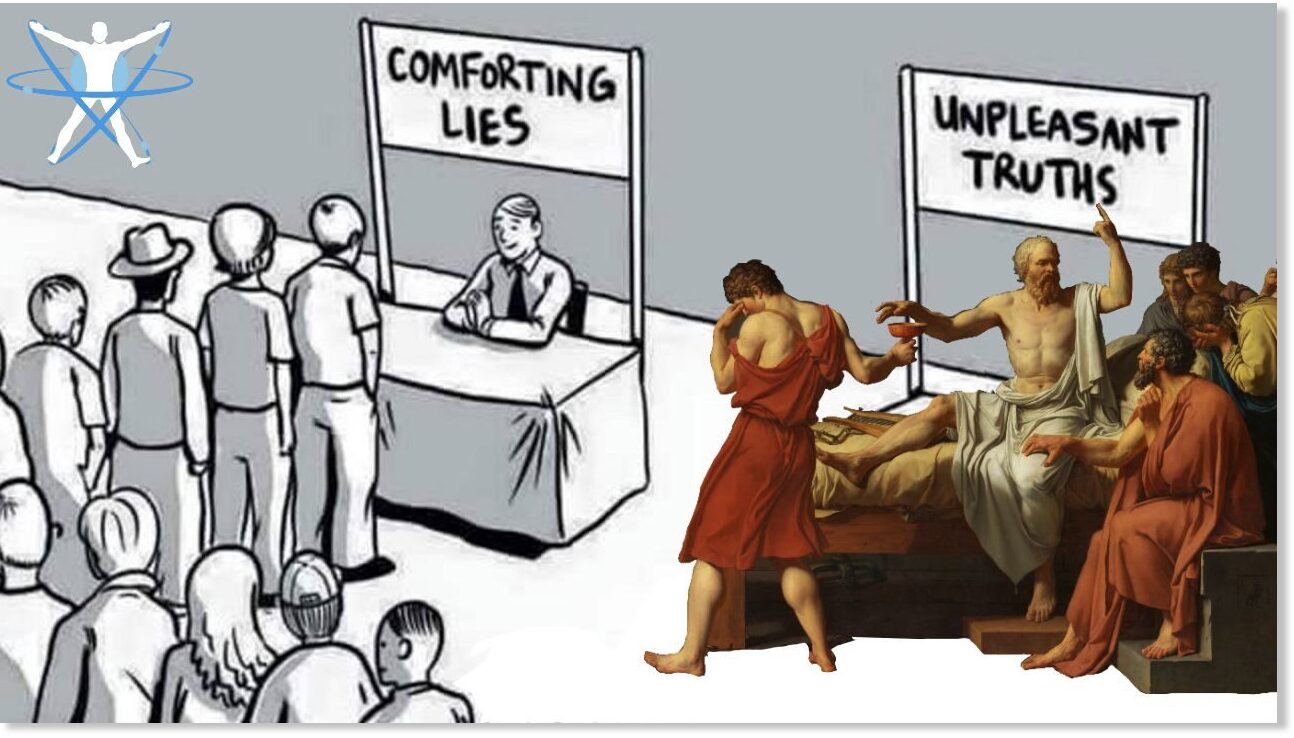
unpleasant truths
As the old adage goes, "The truth shall set you free." But if that's true then why do we quite often have such a difficult time of being honest with ourselves? And just as importantly, why do we struggle so much in being honest with others? Programmed or wired to deny that we have personal shortcomings - or fearing the consequences of honest communication about others' failings - we quite often opt for the easy out, keeping things to ourselves and attempting to avoid the potential pain and discord that may come of telling it like it is. Like a festering wound, the lies we tell ourselves and accept from others infects the very quality and well being of our selves and the lives of those around us.

On this week's MindMatters we discuss why one should have less fear of truthful communication - and a greater willingness to be honest. While there is always a risk of hurt, the uncertainty of misunderstanding, and the discomfort of vulnerability - what is easily overlooked is the greater meaning, understanding, and intimacy that may be added to one's life and relationships - if we were only more honest (assuming the people around you share this value). At at time in human existence when we are struggling to make sense of complex and rapidly occurring world-changing events, how can we achieve a semblance of true understanding when, at square one, we are dishonest with ourselves and the souls immediately surrounding us?


Running Time: 01:04:02

Download: MP3 — 61.3 MB


Mr. Potato

Internet trolls: The motivations of malcontents

Internet troll
© Alexander Pavlov/Shutterstock

Disruption is reinforcing to trolls


Internet trolling can be thought of as a deliberate behaviour to produce conflict or distress, or both, by posting material that is discourteous, provocative, inflammatory, or intimidating. The prevalence of trolling behaviour is hard to estimate, but at least 1% of social media users have experienced this personally over the last year. This figure can be as high as 70%, depending on the study consulted, and the methods used to collect these data.

Trolling used to be conceptualised as an activity in which an individual was engaged, being targeted from one person usually to another; however, increasingly we are seeing a rise in what might be termed "societal trolling" — disruptive tactics targeted from one group to another, often in a political context.

The questions that arise are: Why is trolling done? Are the motivations the same in individual and societal trolling? Are there similarities between online trolling and mass-disruptive actions conducted in the real world?

Comment: See also:


Blue Pill

SOTT Focus: Does Not Complying With Social Distancing Rules Mean You're a Psychopath? The Answer is Obvious

cough sneeze
© ShutterstockBioterrorism?
Here's another junk psychology paper to add to the heap. It follows a trend common in academia, but especially in the field of psychology. That trend is to come up with some dull and patently obvious hypothesis that anyone's grandmother would already know to be true, design a "scientific study" to demonstrate it, then claim victory when your prediction is supported. You know the drill, something along the lines of "new study shows people don't like it much when they're punched in the face", "...99% children choose cake over boiled vegetables every time", "...loud noises startle babies".

Not only are such studies idiotic to begin with; pop science blogs then either misrepresent the actual studies or hype the results in headlines way out of proportion. The result is a populace dumber than it was to begin with, despite the best intentions of "science educators" - otherwise known as mama's and papa's boys who just repeat in a dumbed-down form what they are told by actual scientists - who are themselves mama's and papa's boys with little actual insight or creativity.

PsyPost has a writeup of the paper in question under the title: Psychopathic traits linked to non-compliance with social distancing guidelines amid the coronavirus pandemic. Let's take a look.

Brain

Turns out brain scans aren't as useful as scientists thought

brain scans
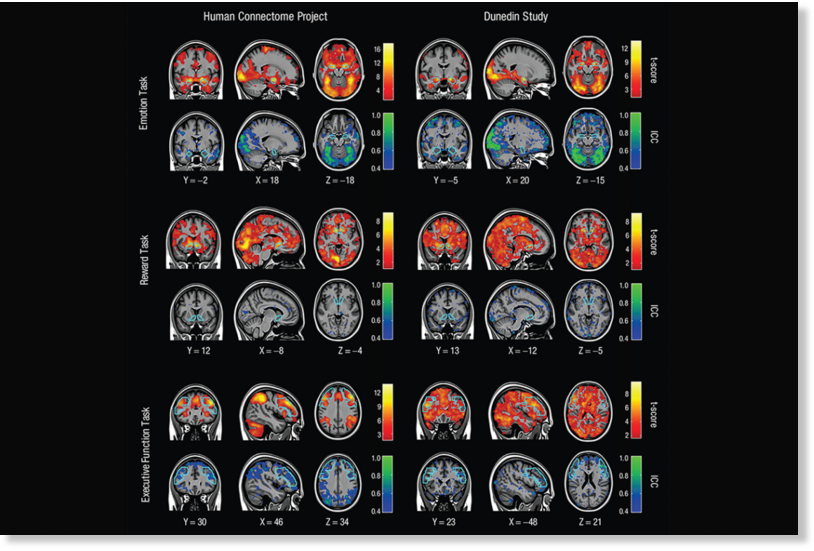
© Annchen KnodtBrain scans showing MRI mapping for 3 tasks across 2 different days. Warm colors show the consistency of activation levels across a group of people. Cool colors represent how poorly unique patterns of activity can be reliably measured.
Hundreds of published studies over the last decade have claimed it's possible to predict an individual's patterns of thoughts and feelings by scanning their brain in an MRI machine as they perform some mental tasks.

But a new analysis by some of the researchers who have done the most work in this area finds that those measurements are highly suspect when it comes to drawing conclusions about any individual person's brain.

Watching the brain through a functional MRI machine (fMRI) is still great for finding the general brain structures involved in a given task across a group of people, said Ahmad Hariri, a professor of psychology and neuroscience at Duke University who led the reanalysis.

"Scanning 50 people is going to accurately reveal what parts of the brain, on average, are more active during a mental task, like counting or remembering names," Hariri said

Functional MRI measures blood flow as a proxy for brain activity. It shows where blood is being sent in the brain, presumably because neurons in that area are more active during a mental task.

The problem is that the level of activity for any given person probably won't be the same twice, and a measure that changes every time it is collected cannot be applied to predict anyone's future mental health or behavior.

Cross

SOTT Focus: Archbishop Breaks Ranks to Support Trump: 'Covid-19 Emergency And Riots an Infernal Deception by Children of Darkness'

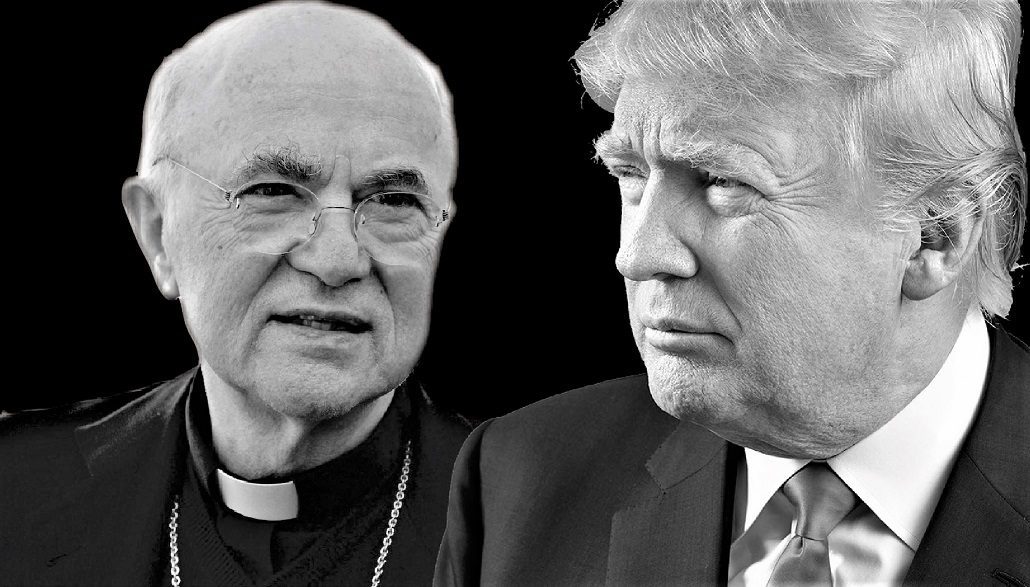
Life Site News editor's note: Archbishop Carlo Maria Viganò has released this powerful letter today to President Trump warning him that the current crises over the coronavirus pandemic and the George Floyd riots are a part of the eternal spiritual struggle between the forces of good and evil. He encourages the president to continue the fight on behalf of the "children of light." Read the letter in PDF form here.
archbishop vigano trump letter
June 7, 2020

Holy Trinity Sunday

Mr. President,

In recent months we have been witnessing the formation of two opposing sides that I would call Biblical: the children of light and the children of darkness. The children of light constitute the most conspicuous part of humanity, while the children of darkness represent an absolute minority. And yet the former are the object of a sort of discrimination which places them in a situation of moral inferiority with respect to their adversaries, who often hold strategic positions in government, in politics, in the economy and in the media. In an apparently inexplicable way, the good are held hostage by the wicked and by those who help them either out of self-interest or fearfulness.

These two sides, which have a Biblical nature, follow the clear separation between the offspring of the Woman and the offspring of the Serpent. On the one hand there are those who, although they have a thousand defects and weaknesses, are motivated by the desire to do good, to be honest, to raise a family, to engage in work, to give prosperity to their homeland, to help the needy, and, in obedience to the Law of God, to merit the Kingdom of Heaven. On the other hand, there are those who serve themselves, who do not hold any moral principles, who want to demolish the family and the nation, exploit workers to make themselves unduly wealthy, foment internal divisions and wars, and accumulate power and money: for them the fallacious illusion of temporal well-being will one day - if they do not repent - yield to the terrible fate that awaits them, far from God, in eternal damnation.

Comment: Life Site News have also published this accompanying video:


Archbishop Vigano persistently sought to expose corruption and sexual abuse within the Vatican and Catholic hierarchy, for which he was 'transferred' a decade ago, and more recently 'retired'. Even going by his Wikipedia page and his long track-record of calling out corruption and evil within the Church, it's clear this man is worthy of the honorific 'His Excellency'.

The above is also not the first time he has spoken out against the 'Covid-19 pandemic', which he sees as "a pretext to deprive citizens around the world of their fundamental freedoms and to promote a one world government."

Here is his letter hosted on Scribd:


This year, 2020, the eschatology of the 'Parable of the Tares' finally began making sense to a lot of people...
Then Jesus sent the multitudes away, and went into the house. His disciples came to him, saying, "Explain to us the parable of the darnel weeds of the field." He answered them, "He who sows the good seed is the Son of Man, the field is the world; and the good seed, these are the children of the Kingdom; and the darnel weeds are the children of the evil one. The enemy who sowed them is the devil. The harvest is the end of the age, and the reapers are angels. As therefore the darnel weeds are gathered up and burned with fire; so will it be at the end of this age. The Son of Man will send out his angels, and they will gather out of his Kingdom all things that cause stumbling, and those who do iniquity, and will cast them into the furnace of fire. There will be weeping and the gnashing of teeth. Then the righteous will shine forth like the sun in the Kingdom of their Father. He who has ears to hear, let him hear.

~ Matthew 13:36-43


Megaphone

Flashback Best of the Web: Moral Outrage is Actually Self-Serving, NOT Altruistic, Say Psychologists

Perpetually raging about the world's injustices? You're probably overcompensating
black lives matter
It makes you *look* like you care, but really, you only care about yourself and your more immediate in-group
When people publicly rage about perceived injustices that don't affect them personally, we tend to assume this expression is rooted in altruism — a "disinterested and selfless concern for the well-being of others." But new research suggests that professing such third-party concern — what social scientists refer to as "moral outrage" — is often a function of self-interest, wielded to assuage feelings of personal culpability for societal harms or reinforce (to the self and others) one's own status as a Very Good Person.

Outrage expressed "on behalf of the victim of [a perceived] moral violation" is often thought of as "a prosocial emotion" rooted in "a desire to restore justice by fighting on behalf of the victimized," explain Bowdoin psychology professor Zachary Rothschild and University of Southern Mississippi psychology professor Lucas A. Keefer in the latest edition of Motivation and Emotion. Yet this conventional construction — moral outrage as the purview of the especially righteous — is "called into question" by research on guilt, they say.
Feelings of guilt are a direct threat to one's sense that they are a moral person and, accordingly, research on guilt finds that this emotion elicits strategies aimed at alleviating guilt that do not always involve undoing one's actions. Furthermore, research shows that individuals respond to reminders of their group's moral culpability with feelings of outrage at third-party harm-doing. These findings suggest that feelings of moral outrage, long thought to be grounded solely in concerns with maintaining justice, may sometimes reflect efforts to maintain a moral identity.

Comment: This is why conservatives, who tend to have more moral taste buds than liberals/lefties, just don't scream and holler on the streets as much. They do care about issues, but they're not as narcissistic and have too little time on their hands because they're busy actually doing caring things for friends, family, community and so on.

See also:


Wedding Rings

Why evolutionary psychologists are wrong about COVID-19 leading women to cheat

sad wife holding wedding band
© Adobe
Is it really true that, as a recent column in a psychology magazine claims, women are more likely to cheat during the COVID-19 crisis? An evolutionary psychologist thinks so; let's explore this a bit.

Subrena E. Smith
First, philosopher Subrena E. Smith (right) has recently pointed out that evolutionary psychology (EP) is a doubtful enterprise in science, maybe an "impossible" one.

EP's basis is modern folklore: The claim that we inherited modules from the Stone Age that govern our behavior with respect to "predator avoidance, mate selection, and cheater detection" — which sold paperbacks in the 1980s — do not correlate with neuroscience findings about the human brain. We have not found any such modules. We have no way of knowing whether the neural correlates of our behavior are the same as those of humans who lived under very different circumstances 50,000 years ago. Neuroplasticity (the tendency of brains to change with types of use) raises doubts. Brains don't fossilize. Smith calls this lack of clear correlation the "Matching Problem."

No similar problem exists for understanding the behavior of, say, gorillas. We have no reason to believe that they behave differently today from the way they did in the human Stone Age. Humans, by contrast, have a detailed and varied history since then, which includes trips to the Moon. Something happened to us that did not happen to them.

Smith makes an important contribution to the debate by identifying the "subpersonal" approach of evolutionary psychology, an approach that deforms and misdirects discussions. The evolutionary psychologist melds what humans can obviously know and what animals can obviously know into a huge, confusing mess. Explicitly, EP seems to deny the assumption that abstract thinking makes any difference to human behavior. But of course it does and it must.

Consider, as noted earlier, issues around "fatherhood." Perhaps the gorilla is driven by some (so far unidentified) inner force to spread his selfish genes. That might explain why gorillas continue to exist. Very well, but many factors play a role in why gorillas continue to exist, including the fact that they are now protected by humans from other humans.

Heart

SOTT Focus: The World Desperately Needs The Wisdom of Bobby Kennedy, Now More Than Ever

RFK robert kennedy
Robert Francis Kennedy, assassinated 5 June 1968
Today's fires which have spread across America in the wake of George Floyd's murder at the knee of Minnesota police officer Derick Chauvin has presented America with the chance to do some serious soul-searching. It has also presented certain Deep State opportunists, color revolutionaries and anarchism-financing billionaires a chance to unleash what some are calling an "America's Maidan" in the hopes of accomplishing what four years of Russiagate failed to do.

The fact that these riots have occurred at a moment when America finds itself seriously reviving the spirit of JFK's space vision is an irony that in many ways parallels the earlier "pregnant moment" of 1968. (In case you are not aware, NASA has officially revived manned space launches on May 28 for the first time since Obama killed the Saturn rocket program in 2011, establishing a new program to return to the Moon before going to Mars under the Artemis Program established in 2017. The Artemis Accords of May 15 lay out the framework for international cooperation in space closely dovetailing similar commitments made by Russia and China).

Comment: It didn't have to be this way, and it doesn't have to be this way.

Alas, here we are.

Only one thing is going to get 'us' out of this: love.

But it is down to each to choose.

The environment - that is, the planet's climate and the even the near-Earth cosmic environment - will be helping us choose in the coming months and years.

Watch as weather becomes significantly more extreme, in reflection of the increasing suffering brought on by terror and confusion of the species as a whole. There may also be an astronomical surprise or two to drive home the point to people.

As RFK learned,
"He who learns must suffer, and, even in our sleep, pain that cannot forget falls drop by drop upon the heart, and in our own despair, against our will, comes wisdom to us by the awful grace of God." (Aeschylus)
Perhaps then, united in suffering, people will stop hating, fighting, and learn to truly love one another.