Science of the SpiritS


Hearts

Young children with pet dogs seen having fewer social interaction problems than other kids

Child playing with puppy
© fizkes - stock.adobe.com
There's no doubt that dogs can bring a whole lot of joy to a household. Our canine companions are loyal, caring, and offer unconditional love to every member of the family. Now, an interesting new study finds that a pet dog may also offer improved social and emotional well-being for children.

In a nutshell, the study concludes that young children living with at least one dog at home display far stronger emotional and social development than kids with no pups at home.

The research, conducted at the University of Western Australia in collaboration with the Telethon Kids Institute, includes 1,646 households (42%, or 686, of which own a dog) with at least one child between the ages of two and five. Each family was given a questionnaire to fill out.

Best friends with benefits

To start, a number of additional factors were considered for each child, including age, gender, sleep routine, parents' education, and usual daily screen time. Using this data, researchers say that kids with a pet dog were 23% less likely to have problems with their emotions or social interactions with others than children with no dog at home.

Nebula

Blindsight: A strange neurological condition that could help explain consciousness

Plant Consciousness
© YouTube/Unsplash
Imagine being completely blind but still being able to see. Does that sound impossible? Well, it happens. A few years ago, a man (let's call him Barry) suffered two strokes in quick succession. As a result, Barry was completely blind, and he walked with a stick.

One day, some psychologists placed Barry in a corridor full of obstacles like boxes and chairs. They took away his walking stick and told him to walk down the corridor. The result of this simple experiment would prove dramatic for our understanding of consciousness. Barry was able to navigate around the obstacles without tripping over a single one.

Barry has blindsight, an extremely rare condition that is as paradoxical as it sounds. People with blindsight consistently deny awareness of items in front of them, but they are capable of amazing feats, which demonstrate that, in some sense, they must be able to see them.

Comment: For more on the study of consciousness, check out SOTT radio's:


SOTT Logo Radio

SOTT Focus: MindMatters: The Ideal And Value of Beauty

beauty
From time to time we are struck with something we may deem "beautiful". We see a work of art, a landscape, or a face that speaks to an almost ephemeral ideal which demands our attention, acknowledgement and contemplation. But why does this occur? What is it that we, as individuals, are perceiving as beautiful? And what exactly is beauty anyway? In exploring this largely taken for granted dimension to human experience we ask: What place should it hold in our lives, and what value do we hold for it - and it for us?

This week on MindMatters we explore and expand on some common conceptions of things beautiful - from the mundane to the sublime. And we see how noticing and arranging things to be beautiful can be an invocation of our greatest ideals and values. In a time and place where we are surrounded by ugliness, the gifts and astonishment that may be found in beauty may be one more key in connecting to the highest part of the Universe, and to ourselves.


Running Time: 01:04:28

Download: MP3 — 59 MB


Donut

'Sweet tooth' cells identified in brain

FGF21
© Potthoff Illustration

New research has identified the specific brain cells that control how much sugar you eat and how much you crave sweet tasting food.


Most people enjoy a sweet treat every now and then. But an unchecked "sweet tooth" can lead to overconsumption of sugary foods and chronic health issues like obesity and type 2 diabetes. Understanding the biological mechanisms that control sugar intake and preference for sweet taste could have important implications for managing and preventing these health problems.

The new study, led by Matthew Potthoff, PhD, associate professor of neuroscience and pharmacology in the University of Iowa Carver College of Medicine, and Matthew Gillum, PhD, at the University of Copenhagen in Denmark, focuses on actions of a hormone called fibroblast growth factor 21 (FGF21). This hormone is known to play a role in energy balance, body weight control, and insulin sensitivity.

"This is the first study that's really identified where this hormone is acting in the brain and that has provided some very cool insights to how it's regulating sugar intake," says Potthoff, who also is a member of the Fraternal Order of Eagles Diabetes Research Center at the UI and the Iowa Neuroscience Institute.

Bullseye

SOTT Focus: Stoicism, Materialism and the Search for Divinity

Stoicism
Confined indoors due to the coronavirus and the lockdowns, I had a lot of time to think, to read and to watch videos on YouTube. I'd like to take you on a little journey, to show you what I found and what I learned, and how I think that all this connects to what is happening in the world today.

Covid-19 has sent people into a frenzy. Despite the low mortality, a lot of people fear for their lives. There is a big disconnect between the actual numbers of deaths and the fear of death that this crisis has elicited in people. There seem to be a number of reasons for that.

First and most obvious is the relentless pounding of the populace with images of apocalyptic scenarios. Switch on the television, and you will be flooded 24 hours per day with stories of doom, gloom and death. Quite illuminating in this regard is the bellicose language - the current health crisis is compared to and described as a war. Terms like "a battle between life and death", "battling the virus" and "front-line workers" are testament to that.

But if you look at the numbers - even recognizing that they are entirely manipulated and fabricated - they talk another language. The latest numbers suggest that between 5 and 20% of the population has had contact with the virus. At least half of those get infected but don't develop any symptoms at all. Of those infected, most only experience mild symptoms, analogous to what a majority of people experience during any flu season. Only a small minority fall gravely ill, and still many fewer die.

SOTT Logo Radio

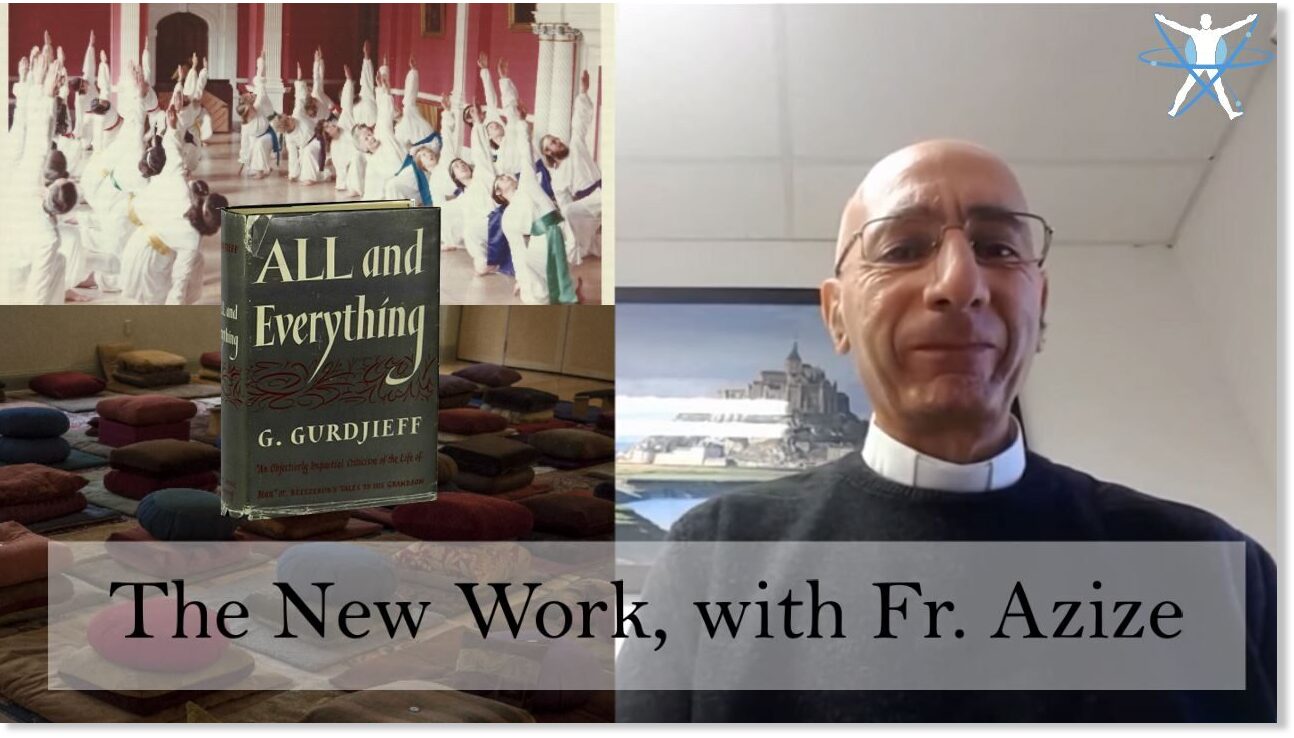
SOTT Focus: MindMatters: Father Joseph Azize Interview: Gurdjieff's Legacy and the 'New Work'

azize
Few scholars and writers in the world today have the experience and in-depth knowledge that Father Joseph Azize has of G.I. Gurdjieff's Fourth Way work. In this new interview with the author of Gurdjieff: Mysticism, Contemplation and Exercises, we explore a range of issues : Have students and organizations based on Gurdjieff's work watered down and distorted what the great teacher wrote and instructed? At what point do ideas - in an attempt to make them more "accessible" - lose their power and potency altogether? And by contrast, what does it look like when integrity is maintained?

This week on MindMatters we discuss these issues as well as some more of the specially designed exercises Gurdjieff prescribed for his pupils that we began to explore with Fr. Azize in our first interview. Looking specifically at the mystic's "Second Assisting" and "Web" exercises we examine what they were intended to do for the practitioner - as well as what the larger implications and possible benefits that such work had, and has, for humanity as a whole. Join us as Joseph Azize gives a number of very nuanced and informed explications of Gurdjieff's ideas, and what value they hold for those seeking to climb the staircase of one's own being.


Running Time: 01:52:54

Download: MP3 — 103 MB


Megaphone

The need to belong, not facts, is what draws people to Black Lives Matter

black lives matter blm march
People often think of peer pressure as something teenagers experience. In fact, peer pressure is just as prevalent among adults. It's the reason ideas spread like wildfire. People jump on board with what everyone else is doing or thinking for one simple reason: They want to belong.

Have you ever wondered how Adolf Hitler managed to convince so many people to commit evil acts? Or how cult leaders such as Charles Manson or David Koresh could get so many people to do what they told them to do and to believe what they told them to believe? The need to belong is just that fierce and strong, particularly for vulnerable folks who feel lonely or misunderstood.

It's happening right now with the Black Lives Matter movement. It's not about the fact that black lives matter, with which no sane person would disagree. A simple search of their own website will tell you its goals: to "disrupt the Western-prescribed nuclear family structure" and to "foster a queer‐affirming network."

Comment: See also:


Black Cat

Best of the Web: Narcissists, psychopaths, and manipulators are more likely to engage in 'virtuous victim signaling' - study

Virtue signaling
© Stefan Boness/Ipon/SIPA/Newscom
New study links virtue signaling to "Dark Triad" traits. Being accused of "virtue signaling" might sound nice to the uninitiated, but spend much time on social media and you know that it's actually an accusation of insincerity. Virtue signalers are, essentially, phonies and showoffs — folks who adopt opinions and postures solely to garner praise and sympathy or whose good deeds are tainted by their need for everyone to see just how good they are. Combined with a culture that says only victimhood confers a right to comment on certain issues, it's a big factor in online pile-ons and one that certainly contributes to social media platforms being such a bummer sometimes.

So: Here's some fun new research looking at "the consequences and predictors of emitting signals of victimhood and virtue," published in the Journal of Personality and Social Psychology. The paper — from University of British Columbia researchers Ekin Ok, Yi Qian, Brendan Strejcek, and Karl Aquino — details multiple studies the authors conducted on the subject.

Their conclusion? Psychopathic, manipulative, and narcissistic people are more frequent signalers of "virtuous victimhood."

Comment: Dr. Stanton Samenow also writes about this in different terms in "Inside the Criminal Mind". The criminal minded create a persona or image that basically protects their ability to manipulate others. A predator who preys on the elderly might go out of his way to help his elderly neighbor cross the street. One who targets children may also be found teaching kids, and so on. Several of the principle features of the criminal mind are claiming victimhood and seeing themselves as essentially good, but underlying all this is an indulged drive to have power and control over others.


Calendar

How does aging shape our narrative identity?

woman half old
© Encyclopaedia Britannica, Inc/KJN
It's not just our flesh and bones that change as we get older.

In 2010, Dan McAdams wrote a biography about George W. Bush analyzing the former American president using the tools of personality psychology. It was, in his own words, a flop. "I probably had three readers," McAdams laughs. But an editor from The Atlantic happened to read it, and asked McAdams to write a similar piece analyzing Donald Trump. It was a hit, attracting 3.5 million readers.

"So something good came out of it," McAdams tells me. He used the case in class. And, he explains, he has always been interested in politics anyways. "I'm kind of a political junkie going back into the '60s. That's my autobiographical reasoning."

Autobiographical reasoning gets far more sophisticated as you age.

By autobiographical reasoning, McAdams means finding and attaching meaning using your own life history. It's how he has come to interpret the time he spent writing his book, and it's part of how all of us build our broader narrative identity — the story of who we are and where we're going. In his work as a professor of psychology at Northwestern University. McAdams has thought deeply about how we build that identity and how it changes with age.

Comment: Self-reflection, as long as it is as honest as can be, is a useful tool to guide and redefine oneself. As many have learned, we do not always see ourselves as others do. If we pay attention to our own details and experiences with a critical eye for faults and options to improve, our narrative in later years should be an accurate version of our personal journey - its meaning intrinsic.


Bulb

Discovering the link between gender identity and peer contagion

transgender
The following is excerpted, with permission, from Abigail Shrier's newly published book, Irreversible Damage: The Transgender Craze Seducing Our Daughters, Regnery Publishing (June 30, 2020) 276 pages.

In 2016, Lisa Littman, ob-gyn turned public health researcher, and mother of two, was scrolling through social media when she noticed a statistical peculiarity: Several adolescents, most of them girls, from her small town in Rhode Island had come out as transgender — all from within the same friend group. "With the first two announcements, I thought, 'Wow, that's great,'" Dr. Littman said, a light New Jersey accent tweaking her vowels. Then came announcements three, four, five, and six.

Dr. Littman knew almost nothing about gender dysphoria — her research interests had been confined to reproductive health: abortion stigma and contraception. But she knew enough to recognize that the numbers were much higher than prevalence data would have predicted. "I studied epidemiology... and when you see numbers that greatly exceed your expectations, it's worth it to look at what might be causing it. Maybe it's a difference of how you're counting. It could be a lot of things. But you know, those were high numbers."

In fact, they turned out to be unprecedented. In America and across the Western world, adolescents were reporting a sudden spike in gender dysphoria — the medical condition associated with the social designation "transgender." Between 2016 and 2017, the number of gender surgeries for natal females in the United States quadrupled, with biological women suddenly accounting for — as we have seen — 70 percent of all gender surgeries. In 2018, the UK reported a 4,400 percent rise over the previous decade in teenage girls seeking gender treatments. In Canada, Sweden, Finland, and the UK, clinicians and gender therapists began reporting a sudden and dramatic shift in the demographics of those presenting with gender dysphoria — from predominately preschool-aged boys to predominately adolescent girls.