Science of the SpiritS


Star

Covid-19 infecting our DREAMS, says study - and researchers claim it hints at 'some form of SHARED MINDSCAPE'

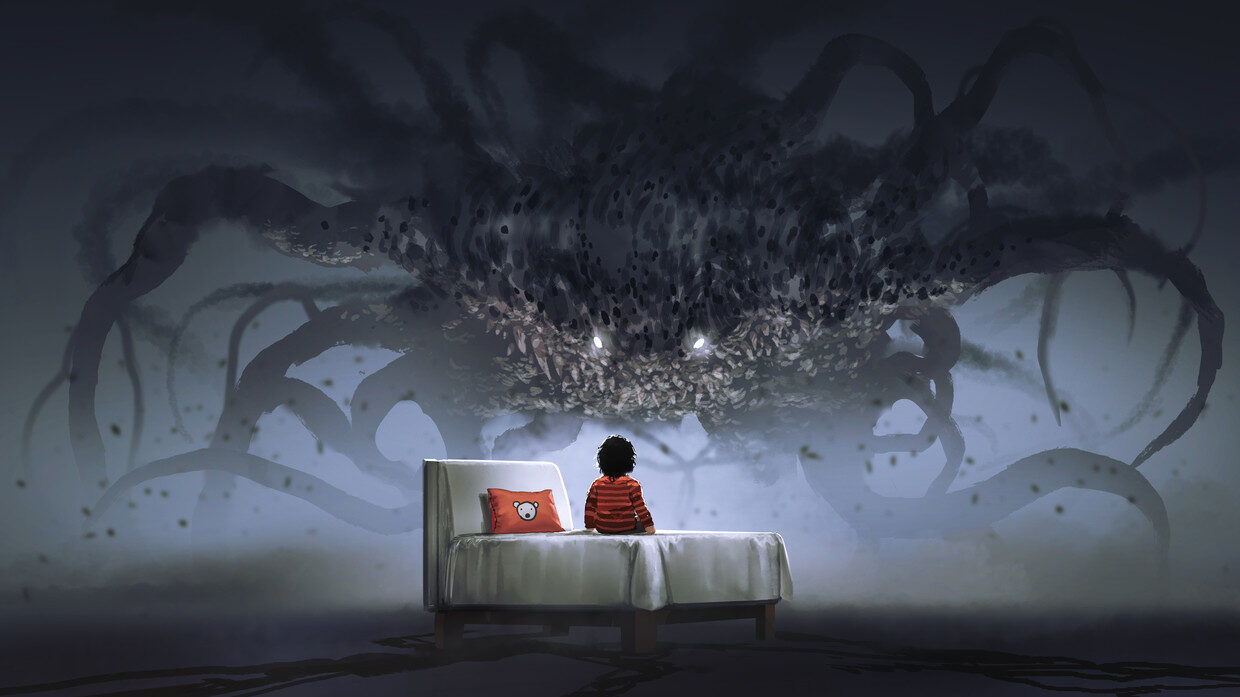
nightmare monster sleep dream
© Getty Images / Grandfailure
Many of us consider it a living nightmare and, now, new research proves the Covid-19 pandemic is invading our dreams too. Moreover, it concludes that the similar themes of its test subjects' dreams point to a "shared" mindscape.

Researchers in Finland used artificial intelligence (AI) to analyze the recent dreams of several hundred people, details of which had been recorded on a database. They found that Covid-19 had 'infected' over half the dreams that the participants described as 'bad'. The resulting paper, titled 'Pandemic Dreams: Network Analysis of Dream Content During the COVID-19 Lockdown', was published on the online open-access journal Frontiers in Psychology.

To carry out their study, the researchers crowdsourced sleep and stress data from a pool of some 4,000 participants during the sixth week of lockdown in Finland, 800 of whom also gave detailed information about and descriptions of their dreams.


Comment: It's hardly surprising that the current state of the world is giving people nightmares. But it does present a unique opportunity to see how collectively our dreams are shaped by the world around us.

See also:


SOTT Logo Radio

SOTT Focus: MindMatters: The Allure and Contagion of the Criminal Mind

criminal mind
In such works as Inside the Criminal Mind and The Myth of the Out of Character Crime criminologist Dr. Stanton E. Samenow conceptualized and gave credence to the specific traits and behaviors of the 'criminal mind'. Such works not only show the thinking processes involved in law-breaking and antisocial behavior, but also (however unintentionally) instruct the more normally oriented of us of the self-entitlement one can and should be wary of - within our own character structure.

Making use of the above, and as a point of departure, we look at how historical and current cultural landscapes have, and do still, feed the criminal mind. Through political indoctrination and ideology this sickness glorifies, popularizes and normalizes pathological thinking - and, like a virus, is emulated and adopted across all strata of society.

Join us this week on MindMatters as we take a gander at the criminal minds at work all around us; from popular culture, Mao's China, and the hallowed halls of government, to the streets of Portland, the boardrooms of multi-national corporations, and your next-door neighbor. Criminal minds and thinking are all around us - but we can learn to see the signs of them lest we get infected by their poison.


Running Time: 01:14:05

Download: MP3 — 67.8 MB


Life Preserver

Actions to take when you dislike yourself and your life

Negative Self Talk
Be-gone!
Most of us have experienced that pivotal peak of pain, anger or frustration in which we want to scream "I hate my life." Yet, the feeling that a dark cloud has specifically settled over us and our experiences can feel pretty isolating. The truth is, no matter how singled out or overwhelmed we feel, and no matter what area we are struggling in, we are not alone. More than half of U.S. workers are unhappy with their job. One in 10 Americans struggles with depression. All of us have moments of utter despair. Escaping from this hopeless-seeming state may feel impossible. Yet, in reality, we are not doomed, and we are not powerless. No matter what our circumstances, we can all learn tools to help us emerge from the darkest moments in our lives.

In his 35 years of research, Dr. Salvatore Maddi of The Hardiness Institute has discovered that what predicts how well we will do in life, our relationships, careers, and so on is NOT how much money we have or even how many struggles we face. It's a matter of how hardy or emotionally resilient we are. We can all learn to become more resilient. We can implement tools that help shape how we see and experience the world around us. We can uncover what's at the root of our unhappiness and create a life that has personal meaning to us, a life that reflects our unique goals and desires.

Comment: There are a number of different terms used to describe this 'foreign installation'. Elan Golomb called it the Negative Introject, Carlos Castaneda the Flyers Mind. The false personality, etc. What becomes apparent is that the messages and beliefs it inculcates into human beings is damaging and prevents people from moving forward in life or actualizing their true potential. There are a number of different ways of reclaiming your sovereignty. Here are a few:


Galaxy

Extraordinary cases of children remembering their past lives and proving it

Children Remembering Their Past Lives
Reincarnation is a fascinating subject that has remained on the fringe of scientific study for too long. Fortunately, it has recently begun to attract serious interest from the scientific community. Decades ago, American astronomer and astrobiologist Carl Sagan stated that "there are three claims in the [parapsychology] field which, in my opinion, deserve serious study," with one being "that young children sometimes report details of a previous life, which upon checking turn out to be accurate and which they could not have known about in any other way than reincarnation." Fast forward to today, and amazing discoveries have been made, as multiple researchers have taken it upon themselves to study this intriguing and inexplicable — at least from a materialist scientific worldview — phenomenon. Subjects like reincarnation belong to the non-material sciences, an area of research that deserves more attention. As Nikola Tesla himself said, "the day science begins to study non-physical phenomena, it will make more progress in one decade than in all the previous centuries of its existence."

University of Virginia psychiatrist Jim Tucker is arguably the world's leading researcher on this topic, and in 2008, he published a review of cases that were suggestive of reincarnation in the journal Explore.

Comment: See also:


Brain

Personality traits are associated with cognitive resilience in older adults

brain pathway light model
Our aging brains collect tangles and sticky plaques that can interfere in our cognition and memory. But some older adults with this neuropathology have more cognitive resilience than others, reports a new Northwestern Medicine study.

The reason: their personalities.

Personality traits were associated with cognitive resilience, which is the ability to better live with the neuropathology in the brain that causes dementia. Individuals with a greater tendency toward self-discipline, organization, diligence, high achievement and motivation -- a trait known as higher conscientiousness -- were associated with greater resilience.

Comment: What if, instead of intervening with medications in people with particular personality traits, people with disordered personality traits were given therapies to help change them, thereby avoiding the resulting disease state altogether?

See also:


Info

Astrocytes may hold the key to why, how we sleep

Astrocytes in Brain
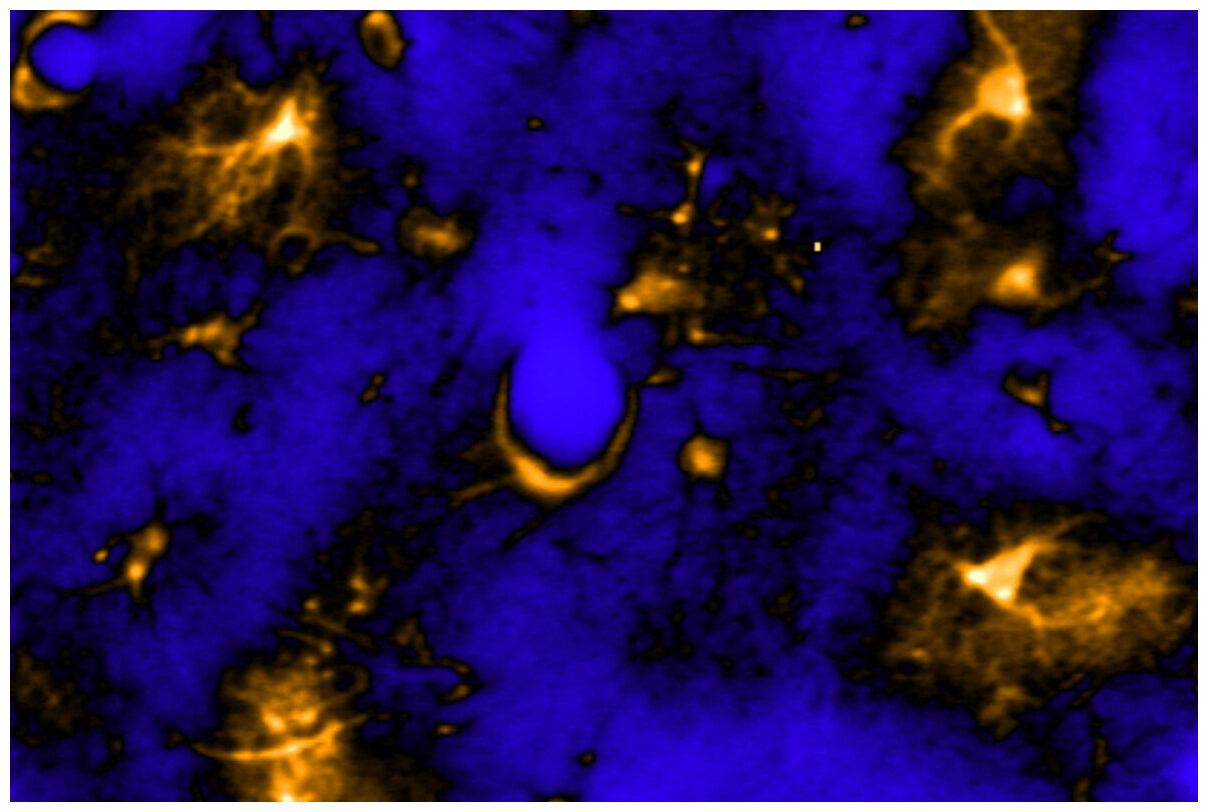
© Ashley Ingiosi, courtesy of Current BiologyAstrocytes in the brain expressing a fluorescent calcium indicator captured with a two-photon microscope.
Spokane, Wash. - A new study published today in the journal Current Biology suggests that star-shaped brain cells known as astrocytes could be as important to the regulation of sleep as neurons, the brain's nerve cells.

Led by researchers at Washington State University's Elson S. Floyd College of Medicine, the study builds new momentum toward ultimately solving the mystery of why we sleep and how sleep works in the brain. The discovery may also set the stage for potential future treatment strategies for sleep disorders and neurological diseases and other conditions associated with troubled sleep, such as PTSD, depression, Alzheimer's disease, and autism spectrum disorder.

"What we know about sleep has been based largely on neurons," said lead author and postdoctoral research associate Ashley Ingiosi. Neurons, she explained, communicate through electrical signals that can be readily captured through electroencephalography (EEG). Astrocytes — a type of glial (or "glue") cell that interacts with neurons — do not use electrical signals and instead use a process known as calcium signaling to control their activity.

It was long thought that astrocytes — which can outnumber neurons by five to one — merely served a supportive role, without any direct involvement in behaviors and processes. Neuroscientists have only recently started to take a closer look at their potential role in various processes. And while a few studies have hinted that astrocytes may play a role in sleep, solid scientific tools to study their calcium activity have not been available until recently, Ingiosi said.

SOTT Logo Radio

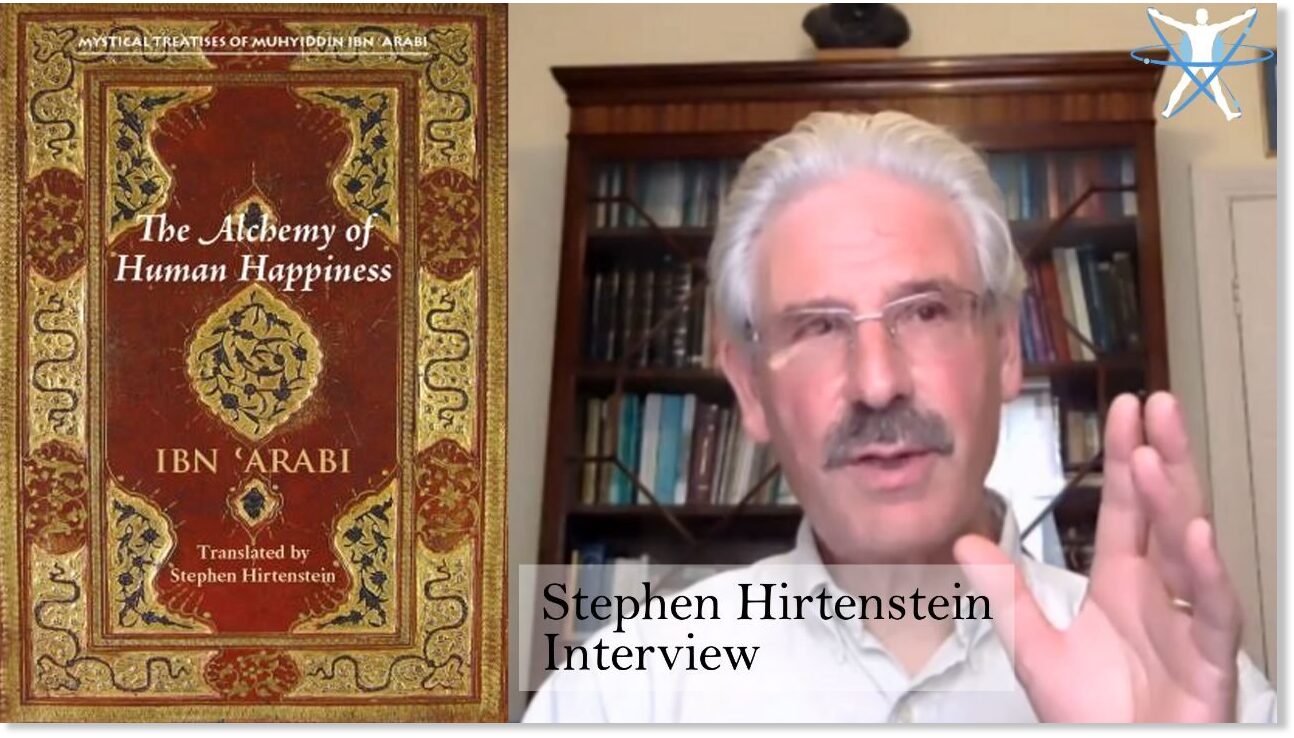
SOTT Focus: MindMatters: Ibn 'Arabi's Alchemy of Human Happiness: Interview with Stephen Hirtenstein

hirtenstein
The philosophy and practice of alchemy, in one form or another, has been around for millennia and espoused by many different cultures, the idea centering around the chemical and physical transformation of some common ore to its highest most valuable state, gold. Modern chemistry naturally discounts this view as outdated and simply not true. But what if that is to miss the point? What if the true alchemical process has little to do with base and precious metals and everything to do man's inner state of being - and the state of his soul?

One of the most important sections of Ibn Arabi's prolific Futūḥāt, the 167th chapter called 'The Alchemy of Human Happiness', focuses on this very subject. Joining us this week on MindMatters we again have the opportunity to discuss the wisdom of the Sufi master Ibn Arabi with Prof Stephen Hirtenstein and his own translation from the original Arabic of the chapter in question.

Can self-perfection bring happiness? Are there paths by which this happiness may be attained? And can personal fulfillment be a byproduct of such a path? Join us as we ask these questions and examine the text that may bring the alchemical process much closer to the everyday work of self growth than one might otherwise imagine.


Running Time: 01:39:33

Download: MP3 — 91.1 MB


Family

At what point in its development can a human being feel pain?

planned parenthood


Editor's note
: See also Dr. Wells's earlier article, "Why Should a Baby Live?"

This is Part Two of a two-part series about abortion. This part focuses on the second question I raised in Part One: At what point in its development can a human being feel pain? I will attempt to answer the question scientifically, as a developmental biologist. By "scientific" I mean based on evidence, not on materialistic story-telling or the current "scientific consensus." I will conclude with a brief personal reflection.

The title of my first essay was "Why Should a Baby Live?" It was adapted from a 2012 article by Alberto Giubilini and Francesca Minerva, "After-birth abortion: why should the baby live?" That article cites a 1985 book co-authored by Peter Singer titled Should the Baby Live? Ten years before, Singer had published his seminal work, Animal Liberation. In that book he wrote: "The Darwinian revolution was genuinely revolutionary. Human beings now knew that they were not the special creation of God, made in the divine image and set apart from the animals; on the contrary, human beings came to realize that they were animals themselves." (p. 214) Singer argued that animals, like humans, deserve protection because of their ability to suffer. The fact that they cannot speak is irrelevant. We cannot refuse "to attribute pain to those who do not have language... Human infants and young children are unable to use language. Are we to deny that a year-old child can suffer? If not, language cannot be crucial." (p. 15)

Giubilini and Minerva flipped the logic of the Catholic belief that "fetuses and newborns share the same moral status" to argue that because "abortion is largely accepted," newborns (like fetuses) do not have a right to life. But I would flip Peter Singer's logic: If we cannot deny that a year-old child can feel pain, how are we to deny that a fetus can feel pain?

Comment: See also:


Brain

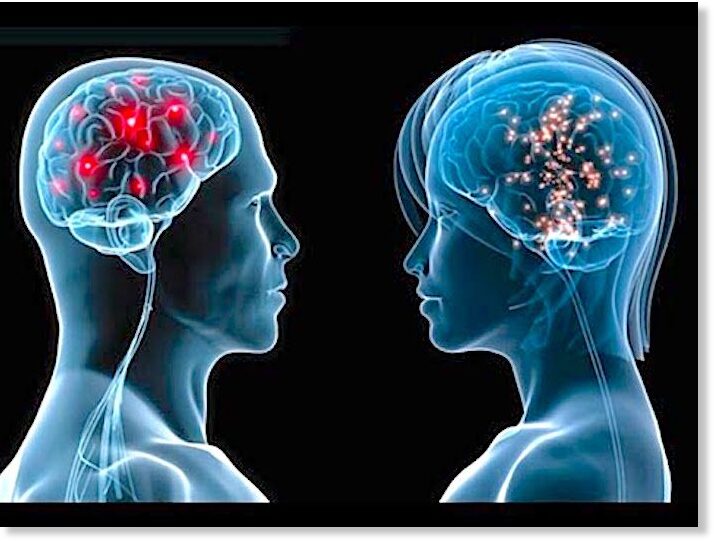
Scientists say your mind isn't confined to your brain, or even your body

Male/Female brain
© YouTube
You might wonder, at some point today, what's going on in another person's mind. You may compliment someone's great mind, or say they are out of their mind. You may even try to expand or free your own mind.

But what is a mind? Defining the concept is a surprisingly slippery task. The mind is the seat of consciousness, the essence of your being. Without a mind, you cannot be considered meaningfully alive. So what exactly, and where precisely, is it?

Traditionally, scientists have tried to define the mind as the product of brain activity: The brain is the physical substance, and the mind is the conscious product of those firing neurons, according to the classic argument. But growing evidence shows that the mind goes far beyond the physical workings of your brain.

No doubt, the brain plays an incredibly important role. But our mind cannot be confined to what's inside our skull, or even our body, according to a definition first put forward by Dan Siegel, a professor of psychiatry at UCLA School of Medicine and the author of the 2016 book, Mind: A Journey to the Heart of Being Human.

He first came up with the definition more than two decades ago, at a meeting of 40 scientists across disciplines, including neuroscientists, physicists, sociologists, and anthropologists. The aim was to come to an understanding of the mind that would appeal to common ground and satisfy those wrestling with the question across these fields.

Family

Face-to-face connectedness, oxytocin and your vagus nerve

Social connectedness
© www.gethealthystayhealthy.com
This Psychology Today blog post is phase three of a nine-part series called "The Vagus Nerve Survival Guide." The nine vagal maneuvers featured in each of these blog posts are designed to help you stimulate your vagus nerve — which can reduce stress, anxiety, anger, and inflammation by activating the "relaxation response" mechanisms of your parasympathetic nervous system.

Face-to-face social connectedness fortifies the "tend-and-befriend" parasympathetic response and engages your vagus nerve. This improves vagal tone and counteracts stress responses associated with "fight-or-flight" mechanisms. Social connectedness has also been clinically proven to improve heart rate variability (HRV), which is the measurement of variations within beat-to-beat intervals and indicates a healthy heart.

As I described in the introduction to this series, your vagus nerve is the prime driving force of the parasympathetic nervous system which regulates your "rest-and-digest" or "tend-and-befriend" responses. On the flip side, to maintain homeostasis, the sympathetic nervous system drives your "fight-or-flight" responses. Ideally, within your autonomic nervous system, the ongoing tug of war between these two polar opposite mechanisms creates a "yin-yang" type of harmony marked by homeostatic balance.

Comment: To reap the benefits of stimulating the vagus nerve, try the Éiriú Eolas breathing and meditation program online for free.

See also: