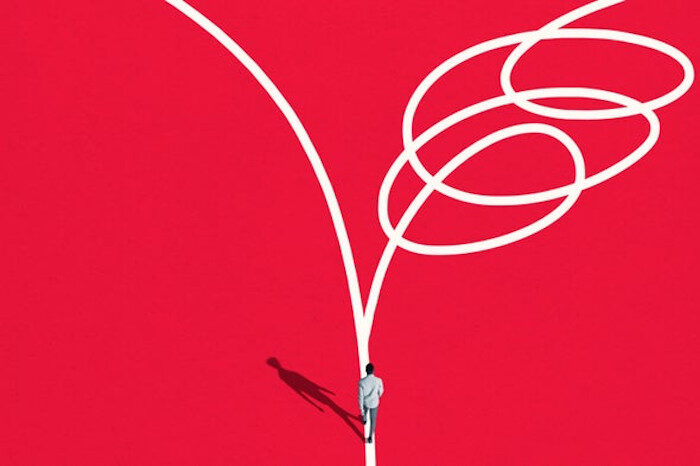
© Klaus Vedfelt Getty Images
In a perfect world, we would learn from success and failure alike. Both hold instructive lessons and provide needed reality checks that may safeguard our decisions from bad information or biased advice.
But, alas, our brain doesn't work this way. Unlike an impartial outcome-weighing machine an engineer might design,
it learns more from some experiences than others. A few of these biases may already sound familiar: A positivity bias causes us to weigh rewards more heavily than punishments. And a confirmation bias makes us take to heart outcomes that confirm what we thought was true to begin with but discount those that show we were wrong. A new study, however, peels away these biases to find a role for choice at their core.
A bias related to the choices we make explains all the others, says Stefano Palminteri of the French National Institute for Health and Medical Research (INSERM), who conducted a study published in
Nature Human Behaviour in August
that examines this tendency. "In a sense we have been perfecting our understanding of this bias," he says.
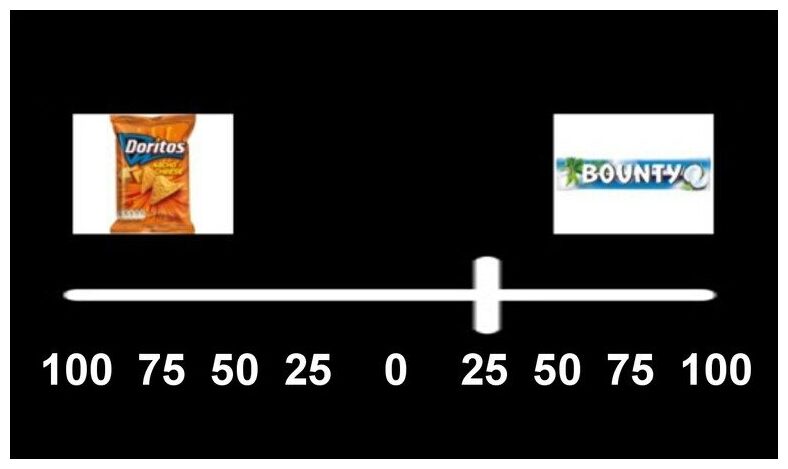
Using disarmingly simple tasks, Palminteri's team found choice had a clear influence on decision-making. Participants in the study observed two symbols on a screen and then selected one with the press of a key to learn, through trial and error, which image gave the most points. At the end of the experiment, the subjects cashed in their points for money. By careful design, the results ruled out competing interpretations. For example, when freely choosing between the two options,
people learned more quickly from the symbols associated with greater reward than those associated with punishment, which removed points. Though that finding resembled a positivity bias, this interpretation was ruled out by trials that demonstrated participants could also learn from negative outcomes. In trials that showed the outcomes for both symbols after a choice was made, subjects learned more from their chosen symbol when it gave a higher reward and when the unchosen one would deduct a point. That is, in this free-choice situation, they learned well from obtained gains and avoided losses.












Comment: See also: