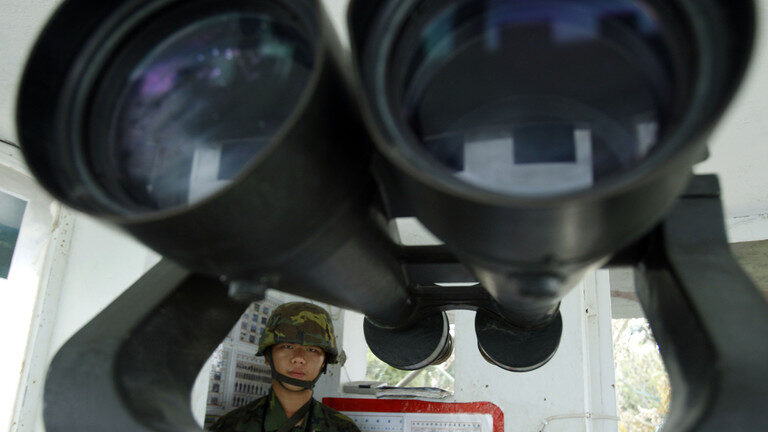
© AP / Wally SantanaFILE PHOTO: A Taiwanese soldier stands in a frontline military installation just 1.8 kilometers (0.7 miles) off the coast of China, on Kinmen island, Taiwan.
Nearly half of the Australians surveyed in a recent poll said they would support sending military forces to "defend Taiwan" in the event of a Chinese attack, according to The Guardian, which obtained the polling results ahead of their release.
Of 1,068 Australians asked,
46% said they agreed or strongly agreed that their country should deploy troops "to help the United States defend Taiwan," the outlet
reported on Monday, citing a yet-to-be-published survey conducted by the US Studies Centre at the University of Sydney. The complete results are set to be released on Wednesday.
About one-quarter of respondents said they disagreed with the idea, 9% of which said they 'strongly' opposed military intervention - just half the percentage of those who 'strongly' supported it.The polling indicates more enthusiastic support for such a policy among Australians than among American or Japanese citizens. In Japan, 35% of respondents said they would approve sending the Japanese military to Taiwan's defense, while just 33% of Americans said they would support a US intervention. Similar percentages in both countries said they would disagree with a military deployment, suggesting opinion is more evenly divided there.



















Comment: RT reported that the suspended RT host is under federal investigation: