
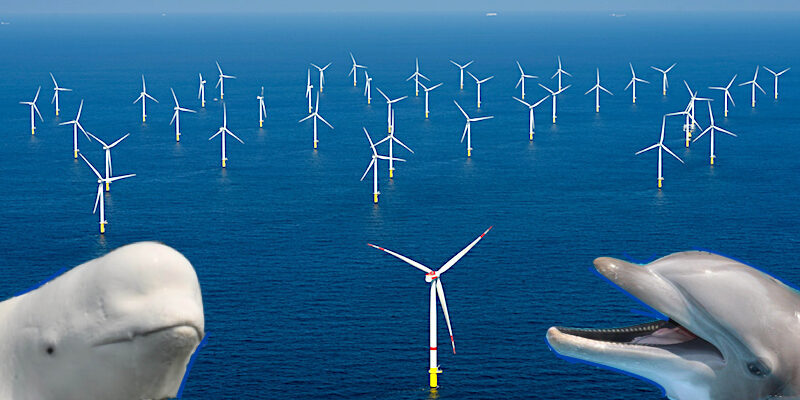
© Daily Sceptic/KJNWind farm • Bottlenose Dolphin • Beluga Whale
The Vineyard Wind project is only a small part of the planned industrialisation of America's eastern coastal waters, as the Biden Administration ramps up a commitment to so-called green energy. Of course it is not green, and many now argue that it is becoming increasingly clear that the most valuable economic transfers gained from wind are the subsidies it attracts from electricity consumers.
The Vineyard Wind project will take about a year to complete and will include sonar surveying, massive pile-driving and considerable disturbance of the sea bed. All these activities are likely to harm or injure marine life. Dr. Patrick Moore helped found Greenpeace around 50 years ago and was heavily involved in the campaign to ban commercial whaling. Since 2016, he notes, when sonar surveying started for a planned 1,500 wind turbines on the U.S. Atlantic coast, 174 humpback whales have washed up dead on the shore, an increase of 400% from previous years.















Comment: The war on concerned, involved parents continues.