Society's ChildS


Heart - Black

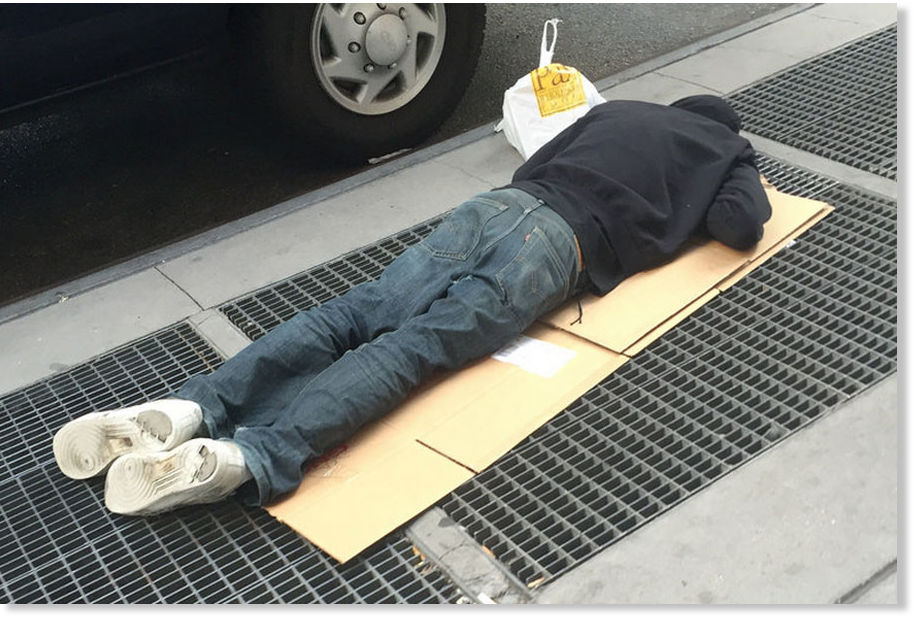
Heartless: NYPD humiliating homeless by showing pictures breaking quality of life laws

Image
© sbanyc / Flickr
The New York Police Department union has launched an effort to shame the city's homeless population. The Sergeants Benevolent Association (SBA) is posting photos online of vagrants urinating in public and otherwise breaking quality-of-life laws.

In an email to union members, SBA President Ed Mullins urged off-duty officers to snap pictures of quality-of-life scofflaws to document what he calls "a city in decline."

"As you travel about the city of New York, please utilize your smartphones to photograph the homeless lying in our streets, aggressive panhandlers, people urinating in public or engaging in open-air drug activity, and quality-of-life offenses of every type," Mullins wrote in a letter quoted by several local news organizations.

The union will then "will notify our public officials in writing of what is being observed," he said. "We will refer issues to the proper agencies, and we will help create accountability across the board."

Law enforcement officers are not allowed to take photos of the public while on duty, Mullins reminded the SBA members, but he added that "photos may be taken while traveling to and from work or any time off duty."
Image
© sbanyc / Flickr

Comment: These photos SHOULD shame the society - and its government - that allows such conditions to develop and persist. Shame on NY for not doing enough for the homeless.


Family

People Power! Cincinnati's experiment with an economy that works for everyone

cincinnati peoples market
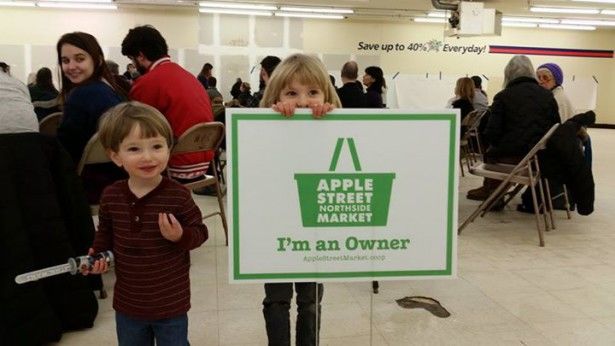
© Facebook / Apple Street MarketCommunity members gathered for an owners meeting at Apple Street Market in February.
With the 2016 presidential campaigns underway, economic populism has taken center stage. Bernie Sanders, calling for a $1 trillion investment in a sustainable infrastructure jobs program along with publically funded health care and college education, has forced Hillary Clinton to offer vague support for similar measures, while even some Republican candidates, like Marco Rubio, have asserted the need to stop the "fall of the [American] worker." Not content to wait for national politicians to follow through on non-binding proposals, 1worker1vote — a joint venture launched in 2009 by the United Steelworkers, or USW, and Mondragon USA — has been pursing a grassroots agenda to move populist discontent beyond protest and toward the building of new institutions.

The 1worker1vote network has developed and is beginning to implement a "union co-op" model, which calls for a business structure that combines worker, and sometimes community, ownership with union representation. With the model, 1worker1vote hopes to demonstrate the viability of a democratic economy, both in terms of ownership and management, capable of eventually replacing the corporate-managed economy that generates astounding wealth for those at the top while leaving nearly a quarter of the country living in poverty and half the population stuck in a debt trap with zero net assets.

"Profit should be for people, not for profit's sake, and capital, while important, is subordinate to labor," explained Ellen Vera, a founding member of both 1worker1vote and one of its member coops, the Cincinnati Union Cooperative Initiative, or CUCI.

The claim conjures images of the clashes between labor and capital of a bygone era, and, more recently, growing grassroots protest for a democratic global economy that began in 1994 with the Zapatistas in Chiapas, Mexico and have continued during the first years of the new millennium with the global justice and Occupy movements. Although protest can bring people together and demonstrate popular support for addressing problems, only new, or reformed, institutions can deliver lasting solutions. Situated within a broader movement for a "new economy," the CUCI and 1worker1vote are beginning to move beyond rhetoric and protest to explore what can and should happen after the protesters inevitably return home.


Comment: Businesses run by the people, for the people. What a concept!


Bulb

Best of the Web: Do Not Vote for Jeremy Corbyn! Ten Perfectly 'Reasonable' Reasons

Image
The big political story in the UK this summer is undoubtedly 'Corbynmania'. How a 66-year-old antiwar activist and socialist has gone from being the rank 200-1 outsider in the Labour leadership contest election to be the red-hot favorite.

Jeremy Corbyn, a modest, unassuming man who wears an open necked shirt and slacks instead of the usual politician's suit and tie, has really proved a big hit with the public, who have grown tired of slick politicians who are always 'on message', and who don't seem at all sincere in what they're saying. Large crowds have turned out to hear Corbyn speak: last week he had to give his speech from the top of a fire engine as an election rally spilled out into the street.

Not everyone though has welcomed Corbyn's advance. One man who has made repeated warnings about the 'dangers' of Jeremy Corbyn is Cyril Waugh-Monger, a 'Very Important' newspaper columnist for the NeoCon Daily, a patron of the Senator Joe McCarthy Appreciation Society and the author of 'Why the Iraq War was a Brilliant Idea', as well as 'The Humanitarian Case for Bombing Syria'.

Gold Seal

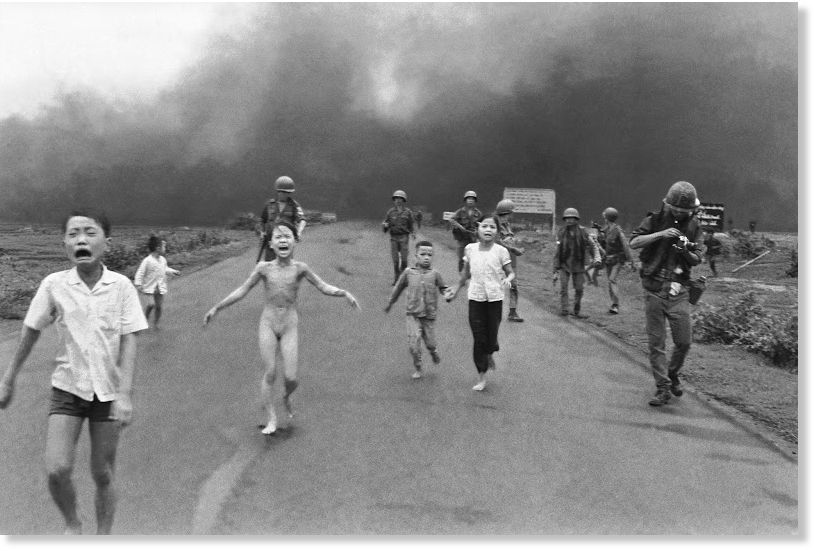
Disappearance of the antiwar movement: What it means when you kill people on the other side of the planet and no one notices

Image
© Nick Ut
Let me tell you a story about a moment in my life I'm not likely to forget even if, with the passage of years, so much around it has grown fuzzy. It involves a broken-down TV, movies from my childhood, and a war that only seemed to come closer as time passed.

My best guess: it was the summer of 1969. I had dropped out of graduate school where I had been studying to become a China scholar and was then working as a "movement" printer -- that is, in a print shop that produced radical literature, strike posters, and other materials for activists. It was, of course, "the Sixties," though I didn't know it then. Still, I had somehow been swept into a new world remarkably unrelated to my expected life trajectory -- and a large part of the reason for that was the Vietnam War.

Don't get me wrong. I wasn't particularly early to protest it. I think I signed my first antiwar petition in 1965 while still in college, but as late as 1968 -- people forget the confusion of that era -- while I had become firmly antiwar, I still wanted to serve my country abroad. Being a diplomat had been a dream of mine, the kind of citizenly duty I had been taught to admire, and the urge to act in such a fashion, to be of service, was deeply embedded in me. (That I was already doing so in protesting the grim war my government was prosecuting in Southeast Asia didn't cross my mind.) I actually applied to the State Department, but it turned out to have no dreams of Tom Engelhardt. On the other hand, the U.S. Information Agency, a propaganda outfit, couldn't have been more interested.

Only one problem: they weren't about to guarantee that they wouldn't send a guy who had studied Chinese, knew something of Asia, and could read French to Saigon. However, by the time they had vetted me -- it took government-issue months and months to do so -- I had grown far angrier about the war, so when they offered me a job, I didn't think twice about saying no.

Comment: The sanitization of what the American military is doing is no doubt deliberate. Americans are inundated with gadgets, gizmos, new cellphones and tablets every year, and they all exist primarily to distract people from what is happening in the world, specifically what the U.S. government is doing to other countries in their name. The Powers That Be learned their lessons from Vietnam and the 60s, and now we are living in the "scientific dictatorship" which keeps us all hopelessly ignorant and distracted by bread and circuses.


Arrow Down

Thousands of Japanese protest against planned restart of Sendai nuclear reactor

Protests restarting Sendai nuclear power station
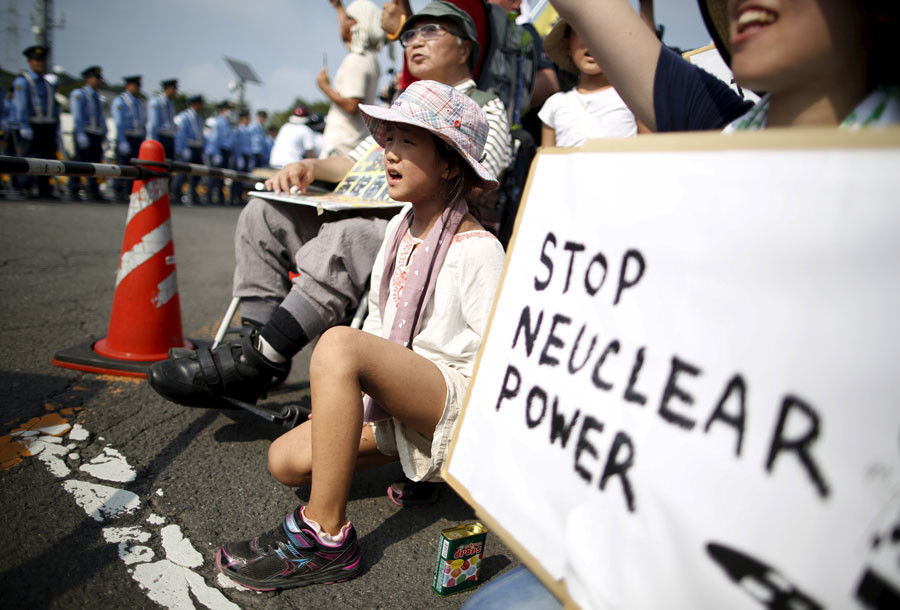
© Issei Kato / Reuters People shout slogans during a rally against the restarting of Kyushu Electric Power's Sendai nuclear power station in Satsumasendai, Kagoshima prefecture, Japan, August 9, 2015. © Issei Kato / Reuters
Protesters rallied outside Japan's Sendai nuclear plant and its company's headquarters to demonstrate against the planned restarting of operations, over four years after the Fukushima disaster that left the entire world horrified. One major concern about the resumption is that no evacuation plans - in case of a Fukushima-style catastrophe - have been disclosed to locals.

"There are schools and hospitals near the plant, but no one has told us how children and the elderly would be evacuated," Yoshitaka Mukohara, a prominent Japanese anti-nuclear activist leading the protest, told the Guardian as the demonstration gathered in front of the Kyushu Electric Power Co. headquarters.

Comment: These people have every reason to be outraged. The Fukushima crisis is ongoing, with devastating health and environmental repercussions. There is little evidence that safety can be guaranteed or that the public will be kept informed of safety issues. In a country prone to earthquakes and at a time when seismic and volcanic activity is increasing worldwide, restarting the reactors is not just misguided, it is insanity.


Pistol

Domestic military outfit NYPD to spend $4.5 million on tasers

Image
© Christinne Muschi / Reuters
The New York Police Department will spend some $4.5 million to buy a host of new Tasers for its officers, the New York Post reported.

Officials at NYPD said they want to give police officers more options in terms of non-lethal force, and so the move to significantly augment their stock of stun guns was portrayed as a way to make confrontations with residents less deadly.

Only patrol sergeants and Emergency Service Units are currently allowed to use Tasers, but training has already begun for other officers, and field training officers will also be taught how to use the weapons.

"The patrol sergeant supervisors have been trained on them. We're going to expand that. We're going to try to get all supervisors on patrol to get Tasers," an NYPD spokesman told the Post.

Eye 2

Ex-employees claim youth support charity Kids Company failed to act upon sex abuse allegations

Image
© Stefan Wermuth / ReutersFounder and Director of Kids Company Camila Batmanghelidjh
Kids Company failed to act upon allegations of older men attending the charity's classes and sexually abusing teenage girls, former employees have claimed.

The charity's founder, Camila Batmanghelidjh, dismissed the accusations, saying she had "absolutely no awareness of it."

Kids Company, which provided educational support to deprived young people in London, Liverpool and Bristol, was forced to close down this week.

Ministers said they wanted to recover a £3-million grant awarded to the charity. The Cabinet Office believes the conditions attached to the use of the money had "not been met."

But Batmanghelidjh says there are individuals in government who were eager to see the charity "disappear." Speaking to BBC Newsnight, a former charity employee claimed girls aged 16 to 18 were pressured into sex by men in their 20s.

Airplane

So much for public safety: FAA kept knowledge of air traffic controller's chronic fatigue under wraps for 4 years

flight control tower
© Gonzalo Fuentes / Reuters
An inter-agency study conducted by NASA for the Federal Aviation Administration (FAA) to assess fatigue in air traffic controllers was reportedly kept under wraps for four years. The study found work schedules often led to chronic fatigue.

The FAA released the 270-page study online on Monday, but only after the Associated Press reported the findings of a draft copy they obtained that was dated from 2011, and only after the agency had declined to release a copy to the news agency. The FAA's report is dated from 2012, although the AP says the findings are nearly identical.

A NASA spokesman had also refused to release the study, saying in an email to the AP that since the report had been created at the FAA's request, "they own the rights to decide its release."

The study found the controllers' work schedules often led to chronic fatigue, making them less alert and a safety risk to the national air traffic system.

Comment: Interesting in light of the constant bombardment by the PTB regarding their concern for public safety. Their 'concern' only seems to manifest itself when it furthers their agenda of control, apparently not when it really matters.


Take 2

Hurray! TV anchor walks off live set after refusing to report (again) on Kardashians

How many people do you know that would agree with the following statement? "I've had enough of the Kardashians...I'm sick of this family! (They're) a non-story!" I believe most of us, including myself, would shout "amen" at the top of their lungs like it's a Sunday in the South if we heard someone in the media utter those words. Well, get ready to holler.

The above exclamations are actually direct quotes spoken by Orlando-area news anchor John Brown during a live broadcast of "Good Day Orlando" on Friday.


Comment: One can only hope that this will become a new and growing trend.


Smoking

Pay smokers to quit: Danish health activists say

Smoker
© Aly Song / Reuters
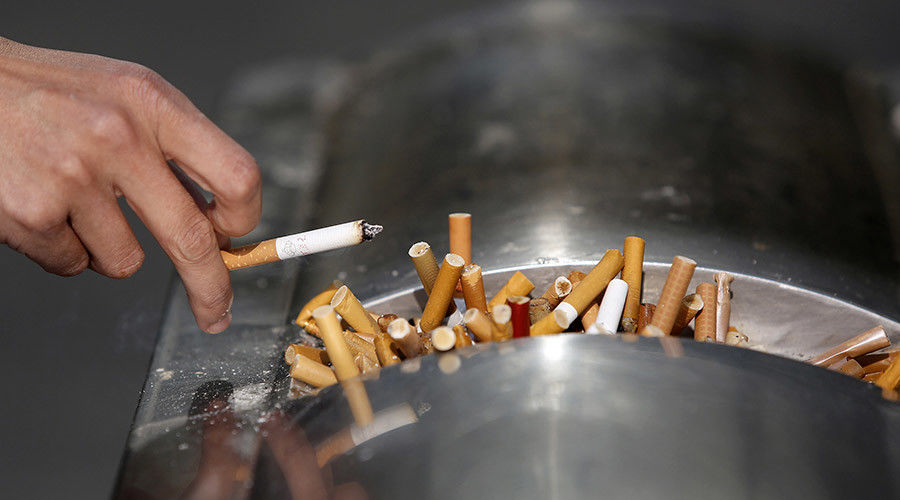
Anti-smoking groups in Denmark want to help tobacco-dependent citizens to kick the habit by offering them financial rewards for quitting. Despite American success with similar programs, the Danish government does not fancy the idea of public spending.
Foundation TrygFonden - the company behind the idea - has received the backing of the Denmark's national Cancer Society (Kræftens Bekæmpelse).

The plan is to copy American efforts that used financial incentives to encourage people to quit smoking. Back in May, the two programs that used money to get the American firm CVS Caremark's employees to quit smoking were described in the New England Journal of Medicine.

In one instance, workers had to deposit $150 in order to enter the program. If successful, they would get their money back as well as an additional $650. In the second case, smokers were awarded $800 for success without requiring a deposit. According to the findings, with the first program 52 percent of the participants were able to stop smoking for at least six months. Meanwhile, the second option requiring no deposit could only boast a 17 percent success rate.

The journal concluded the results showed that people are "loss averse.""They tend to dislike losses more than they like corresponding gains," author Cass Sunstein wrote in an editorial 'Nudging Smokers'.

Comment: Health Minister Sophie Lohde managed to twist the issue: she doesn't want people to get better at all, because Big Pharma would go broke if it couldn't sell drugs. Big Pharma aims to cash in on people quitting smoking selling them nicotine patches, nicotine gums, and the rest. Smokers quitting will probably get more sick, because the beneficial effects of smoking will no longer be there, requiring people to pay more for drugs, lining the pockets of pharmaceutical corporations.

See also: