OF THE
TIMES
Witnesses told the Ma'an News Agency that 10 Israeli army vehicles had surrounded the building before carrying out the search.
Several doors and editing rooms were damaged while some computers and other property were taken away.
An Israeli army spokesperson told Ma'an that Israeli forces had "seized media equipment and documents used for incitement" from a media office in Ramallah, though did not say which agency they were specifically targeting.
The satellite channel Al-Quds said the search was directed at them.
The Palestinian Union of Journalists condemned the raid, which it said had led to "the destruction of property and the theft of equipment, computers and archival materials belonging to the satellite channel Al-Quds," adding, that it was "an obvious attempt to drown out the voice of the Palestinians and make the Palestinian narrative invisible."
The Palestinian Ministry of Information also released a statement denouncing the raid, saying, that targeting the media "proves Israel's intentions to prevent the guardians of truth from continuing their media, national, and ethical role of transferring the message of our people's desired freedom."
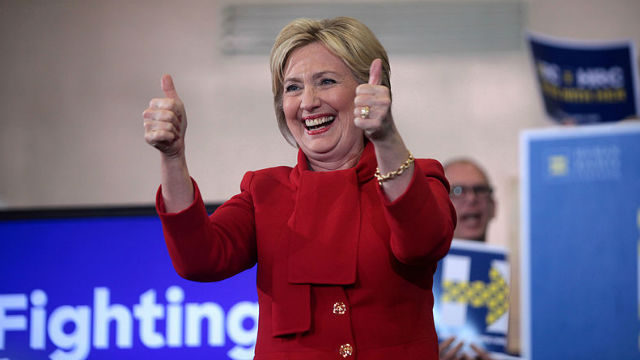
America has been at war continuously for over 15 years, but few Americans seem to notice. This is because the vast majority of citizens have no direct connection to those soldiers fighting, dying, and returning wounded from combat. Increasingly, a divide is emerging between communities whose young people are dying to defend the country, and those communities whose young people are not. In this paper we empirically explore whether this divide-the casualty gap-contributed to Donald Trump's surprise victory in November 2016. The data analysis presented in this working paper finds that indeed, in the 2016 election Trump was speaking to this forgotten part of America. Even controlling in a statistical model for many other alternative explanations, we find that there is a significant and meaningful relationship between a community's rate of military sacrifice and its support for Trump. Our statistical model suggests that if three states key to Trump's victory - Pennsylvania, Michigan, and Wisconsin - had suffered even a modestly lower casualty rate, all three could have flipped from red to blue and sent Hillary Clinton to the White House. There are many implications of our findings, but none as important as what this means for Trump's foreign policy. If Trump wants to win again in 2020, his electoral fate may well rest on the administration's approach to the human costs of war. Trump should remain highly sensitive to American combat casualties, lest he become yet another politician who overlooks the invisible inequality of military sacrifice. More broadly, the findings suggest that politicians from both parties would do well to more directly recognize and address the needs of those communities whose young women and men are making the ultimate sacrifice for the country.

Comment: Suggestion: Stay Healthy!