OF THE
TIMES


Any student of history and human nature would recognize that these are the classic symptoms of collective hysteria. Hysteria is contagious. This nation is turning itself inside out as we, thanks to the media, are exaggerating the threat and not stopping to ask if the cure is worse than the disease.And many will sorely regret their cries for their freedom to be taken away, because they won't get them back as easily:
[...]
When societies lose their freedom, it is not ordinarily because autocrats or tyrants have forcibly taken it away. It is usually the result of the population willingly surrendering their freedom in return for protection against an external threat. While the threat is oftentimes real, it is invariably exaggerated.
Coronavirus: How woman 'loitering' at train station was wrongfully convicted in shambolic caseSo essentially, the police could have hauled her in, but they charged her under the wrong act. Very reassuring. They probably won't make this mistake again, so UK citizens can look forward to people being arrested for the 'crime' of leaving their house.
Lizzie Dearden April 2, 2020
No one knows why Marie Dinou was "loitering between platforms" at Newcastle Central railway station on Saturday morning.
She did not tell the police who questioned her, the lawyer who saw her in custody, or the court that found her guilty of an offence under new coronavirus laws.
The 41-year-old is not believed to have spoken a word between the moment of her arrest and the moment she was fined £660 in the first known case of its kind.
Her conviction is to be quashed after police admitted that the wrong law was used to prosecute her, and the case "shouldn't have happened".
The Independent has learned that Ms Dinou was not even in the courtroom when a judge found the offence proven after reading statements from British Transport Police (BTP) on Monday.
She was in the cells of North Tyneside Magistrates' Court as punishment for refusing to give her name and address, after spending two days in police custody.
Ms Dinou is not known to have undergone a mental health assessment, and a nurse was not present at court because of coronavirus.
The court made to formal effort to confirm that she spoke English.
"Defendant refuses to identify herself, sent back to cells and proved in absence," read a short official account of the hearing.
Ms Dinou was convicted of committing an offence under Schedule 21 of the Coronavirus Act 2020.
Despite having no record of her income or means, the judge fined her £660 and ordered her to pay a £66 victim surcharge and £85 in costs.
The charge sheet said Ms Dinou had "failed to provide BTP officers with [her] identity or reasons for [her] journey", and "failed to comply with a requirement" under the new law.
"Officers approached Ms Dinou and engaged with her in an attempt to understand her reasons for essential travel, but following several more attempts by officers to explain and encourage she refused to speak to officers," a BTP press release said on Wednesday.
"Having explored all options, Ms Dinou was arrested on suspicion of breaching the restrictions imposed under the Coronavirus Act 2020."
But official guidance issued to officers by the College of Policing and National Police Chiefs' Council states that "there is no power to 'stop and account'" under the new laws.
New guidance on the Coronavirus Act 2020 is to be published on Friday.
It came into force on 25 March and had been drafted at a time when the threat was perceived to mainly come from people entering the UK from abroad.
The law enables health officials to direct people to hospitals or testing centres, and gives powers for police to enforce their instructions.
Schedule 21 creates an offence of "failing without reasonable excuse to comply with any direction, reasonable instruction, requirement or restriction" imposed as part of the act.
But the law can only apply to "potentially infectious persons" and is separate to the newer Health Protection Regulations that allow police to enforce the UK lockdown.
Matthew Scott, a criminal barrister at Pump Court Chambers, told The Independent that both the charge and court procedure may have been unlawful.
"I do not understand how they can say that she has committed an offence under the Coronavirus Act because that act doesn't require somebody to give their details to a police officer, and doesn't require them to state the purpose of their journey," he added.
Mr Scott questioned why police could not have fined Ms Dinou for being away from home without a reasonable excuse under the Health Protection Regulations.
"If the district judge decided the case on the basis of written statements because she refused to say anything in court, that on my view is procedurally irregular and incorrect, particularly on a first appearance."
More than half the court buildings in England and Wales have been closed because of coronavirus, and those still operating are only dealing with urgent matters including remand hearings and coronavirus-related cases.
Police have been instructed to use enforcement as a last resort as they grapple with the rapidly drawn up new laws, which underwent little parliamentary scrutiny.
A legal firm routinely instructed by police forces, 5 Essex Court, said in its guidance that the Coronavirus Act only creates a criminal offence if people refuse a direction to a "place suitable for screening and assessment".
The document says that officers identifying a "potentially infectious person" must have regard to public health guidance on symptoms - which Dinou did not have - or contact with infected people.
On Thursday evening, BTP said it had conducted a review with the Crown Prosecution Service (CPS) that "established that Marie Dinou was charged under the incorrect section of the Coronavirus Act 2020".
In response to questions from The Independent, the force said it had asked North Tyneside Magistrates' Court for the case to be relisted and the conviction to be set aside.
"Having reassessed the matter, BTP will not pursue any alternative prosecution," a spokesperson said.
Ms Dinou had been suspected of a railway ticket offence, but the Coronavirus Act was used to prosecute her instead.
Deputy Chief Constable Adrian Hanstock said: "There will be understandable concern that our interpretation of this new legislation has resulted in an ineffective prosecution.
"This was in circumstances where officers were properly dealing with someone who was behaving suspiciously in the station, and who staff believed to be travelling without a valid ticket. Officers were rightfully challenging her unnecessary travel.
"Regardless, we fully accept that this shouldn't have happened and we apologise. It is highly unusual that a case can pass through a number of controls in the criminal justice process and fail in this way."
The senior officer added: "BTP and the CPS will undertake a more detailed review of the case to ensure that any lessons to be learned are integrated into our shared justice processes."
BTP said it has shared official guidance on how to enforce the new laws with officers "to help them interpret the new legislation".
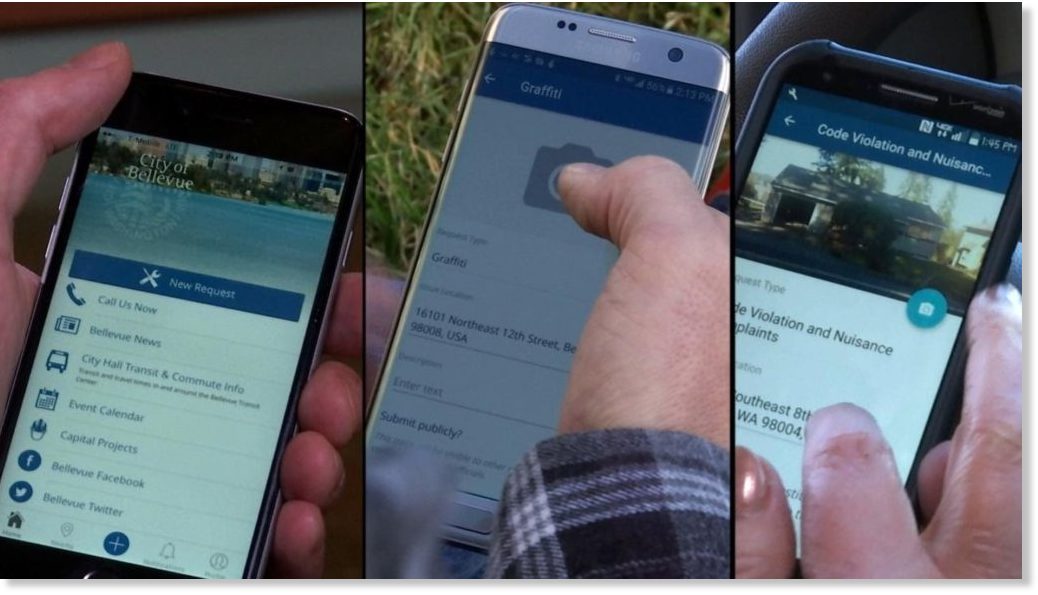
Snitches are emerging as enthusiastic allies as cities, states and countries work to enforce directives meant to limit person-to-person contact amid the virus pandemic that has claimed tens of thousands of lives worldwide. They're phoning police and municipal hotlines, complaining to elected officials and shaming perceived scofflaws on social media."In some places, investigators are patrolling the streets, looking for violators," AP notes. "In some cases, residents are turning on neighbors."
A recent Associated Press article revealed that people are all to happy to report on their neighbors."Police in Bellevue, Wash., are asking residents to report violations of the state's "stay home" order online in an effort to clear up 911 lines for emergencies."
"Snitches are emerging as enthusiastic allies as cities, states and countries work to enforce directives meant to limit person-to-person contact amid the virus pandemic that has claimed tens of thousands of lives worldwide. They're phoning police and municipal hotlines, complaining to elected officials and shaming perceived scofflaws on social media."
Comment: On the elusive Ms. Maxwell who is unaccountably, still at large.