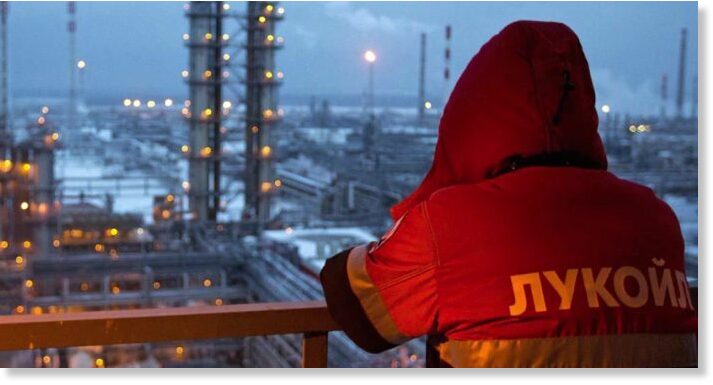
An embargo on Russian oil will not stop the war or save any lives in Ukraine, a European Parliament member from Ireland, Clare Daly, has said.
"Not because I'm sorry for Russia, not because I'm on the Putin payroll, but because sanctions don't work. They have never stopped a war," Daly said in a speech on Friday, as quoted by the
Irish Independent.Daly, who is a member of the left-wing Independents 4 Change party, argued that "not a single Ukrainian life will be saved" by the EU's embargo on Russian oil."If Europe isn't buying it, someone else will.
The ordinary people of Europe will be paying that price."
The EU proposed this week to phase out Russian oil by the end of this year. Brussels has reportedly carved out
exemptions for Hungary and Slovakia, whose economies heavily rely on Russian energy supplies.
Daly said Russia "unambiguously" bears responsibility for deaths in Ukraine and the wave of refugees from the country. At the same time, she argued that
the West has also contributed to the conflict.
"But we cannot ignore the part played by the EU and the US. That's not to excuse Russia. It's simply to explain,
because you cannot solve a problem if you don't understand the root of it."
Comment: Zelensky
agrees: "You know, Russia - when they get some sanctions, each day they are finding a way to circumvent [them]," he said.
Hungary continues to
block new EU sanctions on Russian oil, despite the above-mentioned concession. The EU as a whole receives around 25% of its oil imports from Russia. Additionally: 'The proposed ban on providing vessels and services needed to transfer Russian oil to third countries has raised eyebrows in Greece and Cyprus which, according to Bloomberg, are "still holding up" this portion of the package.'
According to Swiss analyst Norbert Rucker, the proposed ban will only further
raise Russian oil revenues. Commerzbank CEO Manfred Knof says Germany will face a wave of
bankruptcies due to anti-Russian sanctions.
"The energy supply in Germany is at risk, supply chains are breaking down, we have high inflation," Knof was quoted by the Handelsblatt daily as saying.
According to the executive, almost a third of Germany's foreign trade has been impacted, forcing companies to navigate complex issues with customers, including surging commodity prices and supply-chain bottlenecks.
"We shouldn't delude ourselves: the number of insolvencies in our markets will probably increase and the risk provisions of the banks with it," Knof said.
Germany is already feeling the
effects:
German industrial production dropped more than expected in March, data released on Friday by the country's statistics office shows. According to Destatis, Covid-related supply chain issues have been exacerbated by the conflict in Ukraine.
Production slid by 3.9% last month following a 0.1% increase in February, far outstripping expectations of a one-percent decline. On an annual basis, industrial output slumped by 3.5% in March following a 3.1% jump the month before.
Manufacturing production lost 4.6% in March and energy production was down 11.4%, while construction output gained 1.1%, according to the data. On Thursday, it was reported that manufacturing orders logged a 4.7% month-on-month decline in March.
The largest drop was recorded for capital goods, used by businesses in production, which tumbled by 8.3%.
Over in the U.S., around two thirds of American vehicle owners have
limited their driving in response to rising gas prices.















Comment: Zelensky agrees: "You know, Russia - when they get some sanctions, each day they are finding a way to circumvent [them]," he said.
Hungary continues to block new EU sanctions on Russian oil, despite the above-mentioned concession. The EU as a whole receives around 25% of its oil imports from Russia. Additionally: 'The proposed ban on providing vessels and services needed to transfer Russian oil to third countries has raised eyebrows in Greece and Cyprus which, according to Bloomberg, are "still holding up" this portion of the package.'
According to Swiss analyst Norbert Rucker, the proposed ban will only further raise Russian oil revenues. Commerzbank CEO Manfred Knof says Germany will face a wave of bankruptcies due to anti-Russian sanctions. Germany is already feeling the effects: Over in the U.S., around two thirds of American vehicle owners have limited their driving in response to rising gas prices.