
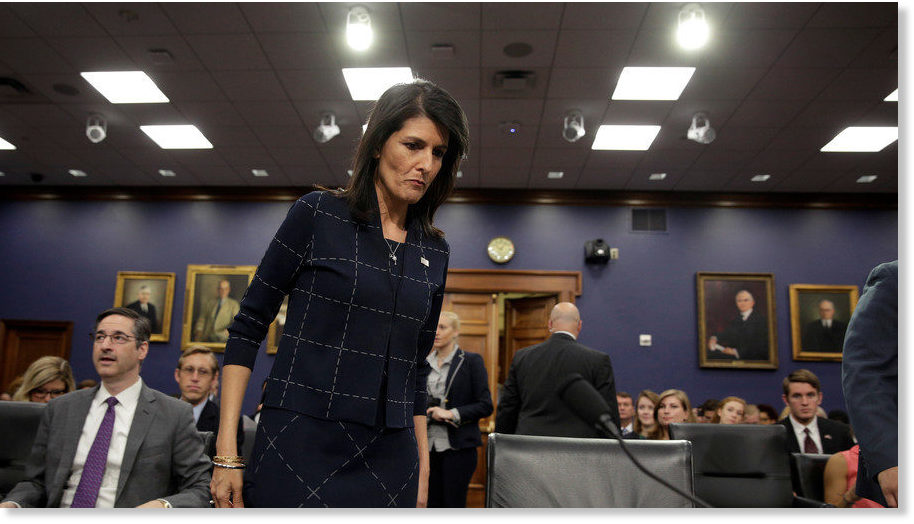
© Joshua Roberts / Reuters
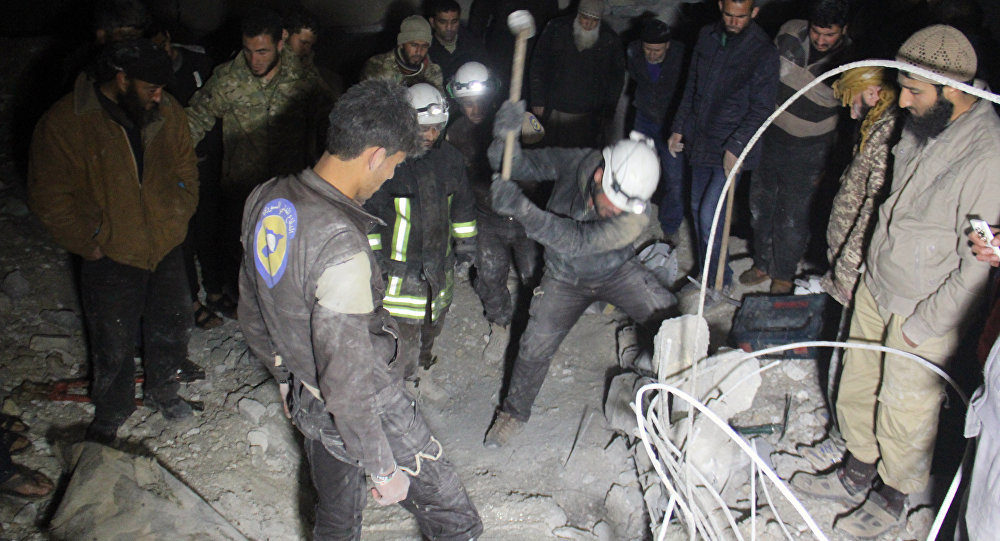
The US has struck Syria twice after claims of chemical weapons use by the government in Damascus, Haley said on Wednesday in a Fox News interview.
"Don't test us again," she said, addressing the Syrian government and its allies Russia and Iran.
Washington and its allies have also warned Syria that they will act not just in case of chemical weapons being used, but against any attack on the province, the US envoy to the UN said.
"Any offensive on the civilian people in Idlib was going to be dealt with," Haley told Fox News' Bret Baier.












Comment: One might wonder at the nature of the persuasion (coercion) that motivated the country's decision at this point in time...