RTFri, 04 Jan 2019 09:58 UTC
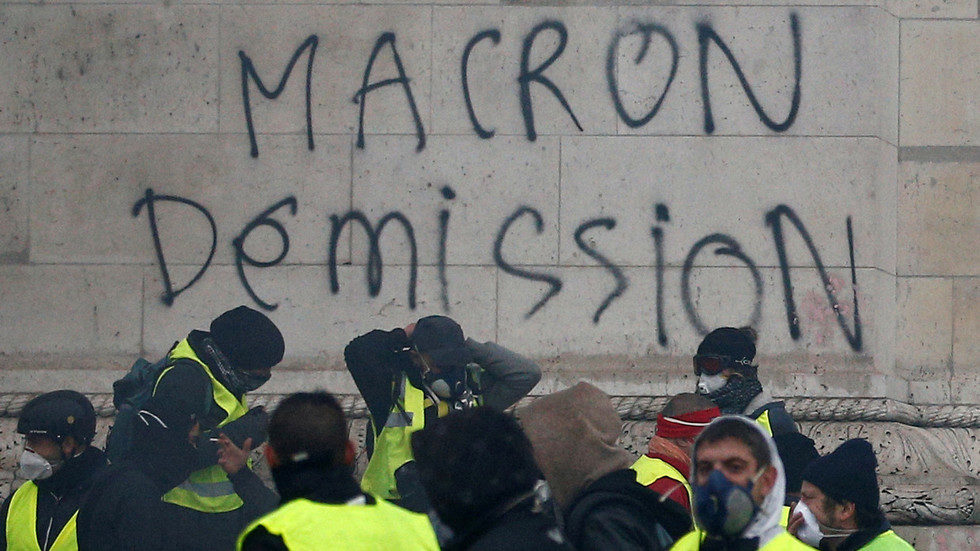
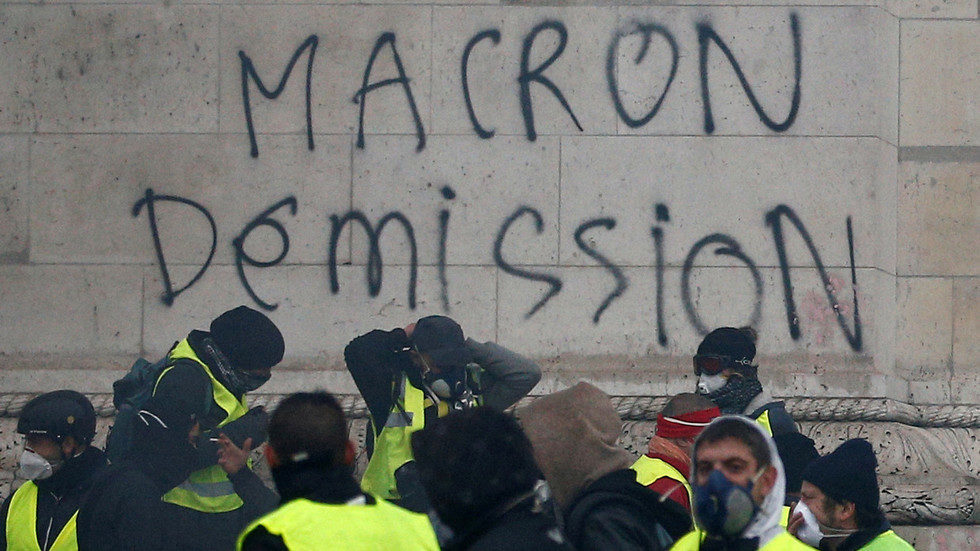
© REUTERS / Stephane MaheA 'Macron Resign' slogan was painted on the Arc de Triomphe amid 'Yellow Vest' rallies in Paris
Three-quarters of the French are dissatisfied with President Emmanuel Macron's policies and have appallingly little trust in his ministers, a new poll by Odexa has revealed.
Just 25 percent of the people surveyed by Odoxa and Dentsu Consulting for
France Info and Le Figaro said they were happy with the way the government is running the protest-plagued country, while 75 percent disapprove of Macron and the ministers in his cabinet.
This indicates a dramatic loss of popularity for Macron compared to the 59 percent of unhappy citizens in April 2018, according to France Info. The current poll included 1,004 people across the country and was carried out in early January.Interestingly, the least favorable opinions came not only from low-paid workers and farmers,
but also the upper-middle income class.
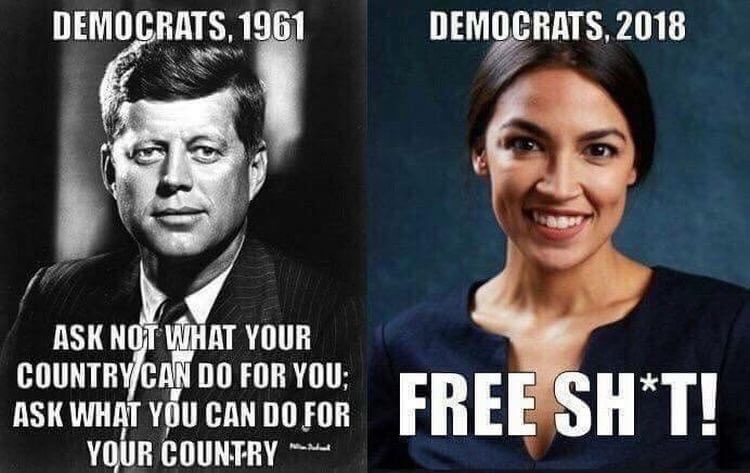
Incoming New York Rep. Alexandria Ocasio-Cortez brings with her a massive online following, influence she says she'll deploy only in support of candidates and politicians who support her plan for a "Green New Deal."
"The Green New Deal" is something Ocasio-Cortez invokes frequently in media appearances and rallies.
So what's actually in it?
Her office recently released the
text of a proposed House rules change outlining the plan.
The proposed rule change for the upcoming 116th Congress would require the creation of a "Select Committee for a Green Deal" that would be responsible for creating the plan by January 1, 2020, with corresponding draft legislation soon after. The text of the rule change lays out the committee's jurisdiction and required areas of action.
Its scope and mandate for legislative authority amounts to a radical grant of power to Washington over Americans' lives, homes, businesses, travel, banking, and more.
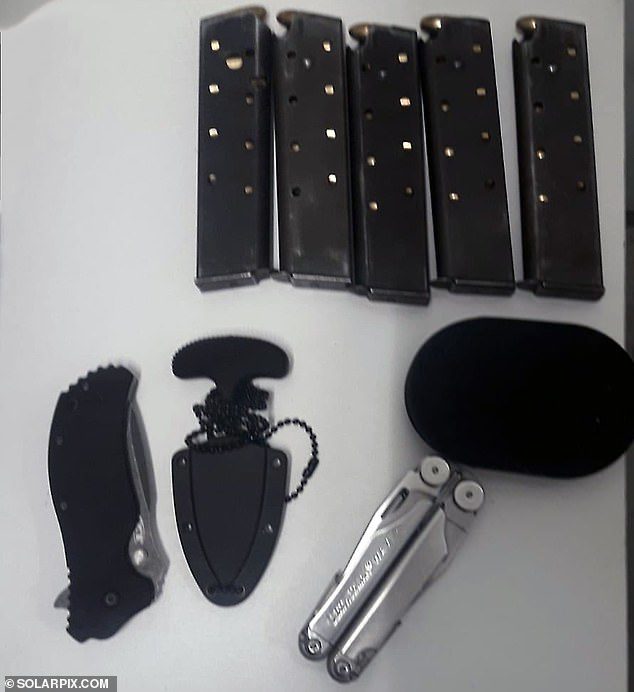
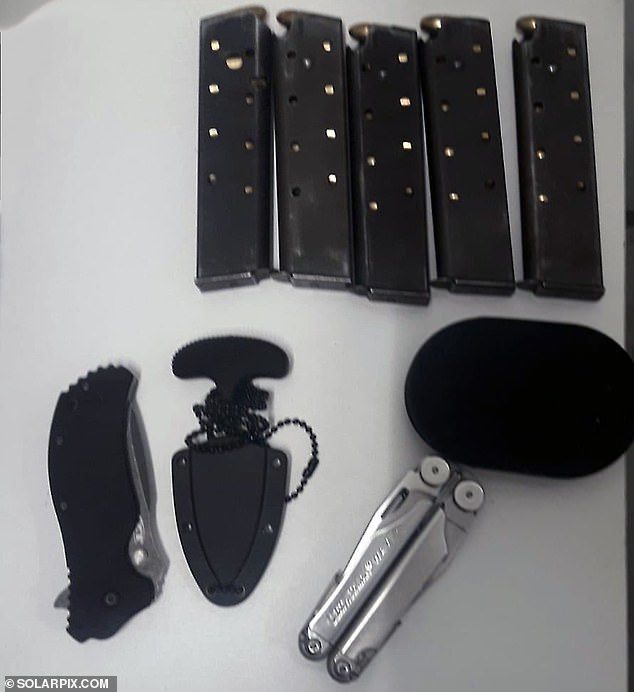
The man was found with five handgun magazines for a 9mm pistol as well as a small dagger
A Frenchman has been arrested after sparking a terror scare at Barcelona's Sagrada Familia when he was
caught carrying five handgun magazines for a 9mm pistol.
A small dagger is also thought to have been discovered in a rucksack he was carrying when he tried to get into the city centre temple.
Police are said to have found
a weapon with its series number erased in his car, which was parked nearby.
The man, understood to be a soldier, was being held this morning in police cells ahead of
a behind-closed-doors court appearance. The arrest happened just before 5.30pm yesterday.
Comment: So the US State Department knew in advance... and either it or some other organization tipped off Spanish police to catch this French soldier in the middle of carrying out something, likely terror-related.
And that after
a string of German soldiers were arrested in 2017 for planning terror attacks disguised as 'jihadists'.
And after
a French cop was caught running through a busy Paris train station with bombs on Christmas Eve.
Hopefully, by now,
Everybody Knows Where Terror Comes From
RTThu, 03 Jan 2019 13:12 UTC
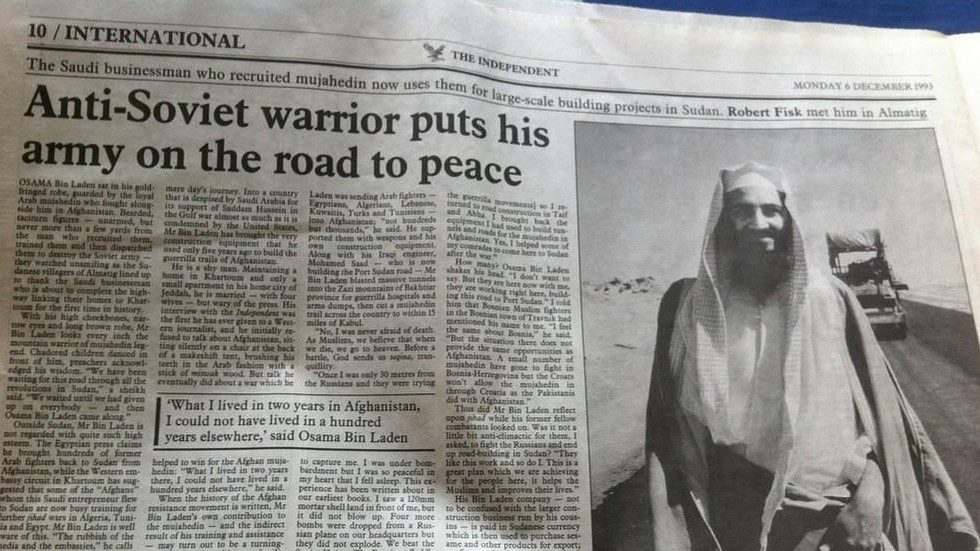
The good old days of (explicitly-sanctioned-by-the-West) Islamic jihad
Offering an explanation of why US should withdraw from Afghanistan, President Donald Trump appeared to endorse the Soviet intervention there in the 1980s and by extension, disavow US support for jihadist insurgents.
"
Russia used to be the Soviet Union. Afghanistan made it Russia, because they went bankrupt fighting in Afghanistan," Trump told reporters on Wednesday, following a cabinet meeting at the White House.
Arguing that Russia, India and Pakistan were all in Afghanistan's neighborhood and should fight terrorism there rather than expecting the US to, Trump offered an impromptu history lesson.
"The reason Russia was in Afghanistan was because terrorists were going into Russia. They were right to be there," he said. "The problem is, it was a tough fight. And literally, they went bankrupt."
Comment: Of course not. What's a few billion agitated people when total world domination at a time of rapid development for the non-Western majority is your goal?
RT has, naturally, homed in Trump's statements about the USSR in Afghanistan, but there's a more significant point behind Trump's statements:
"India is there. Russia is there. Pakistan is there. They should be fighting..."
He trailed off at that point, but what he implied was that
these geographically-proximate countries should be left alone to deal with 'ISIS' and the Taliban and whatever other fundamentalist nut-jobs remain in Afghanistan and northern Pakistan.
Clearly, Trump is using the narrative of justifying US military presence in Afghanistan on the basis of terrorists being there
to present the opposite policy to the deep state and permanent government: US military withdrawal.
Just the fact that he emphasizes that these other countries are physically, geographically
there, and that the US - by obvious implication - is not, is anathema to the exceptionalists who HATE the man for doing his part to wake people from the spell of 'saving the world'.
Here's what Trump said at the same press conference about the US military presence in Syria. This time, he flips the narrative on the exceptionalists by claiming that the US 'killing ISIS' in Syria is helping Russia, Iran and Assad, sworn enemies of the deep state!
He's very smart. Maybe not Putin-smart in his execution, but his counter-manipulation of the manipulations the deep staters use through the terror narrative is the strongest indication yet that he's serious about ending this 'endless war', and by itself largely accounts for the elites' hatred of him.
RTThu, 03 Jan 2019 16:35 UTC
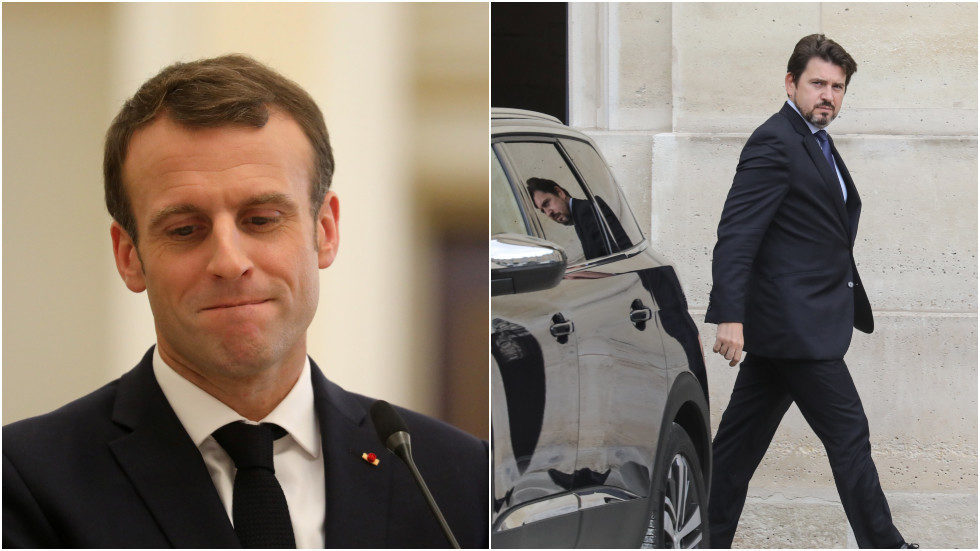
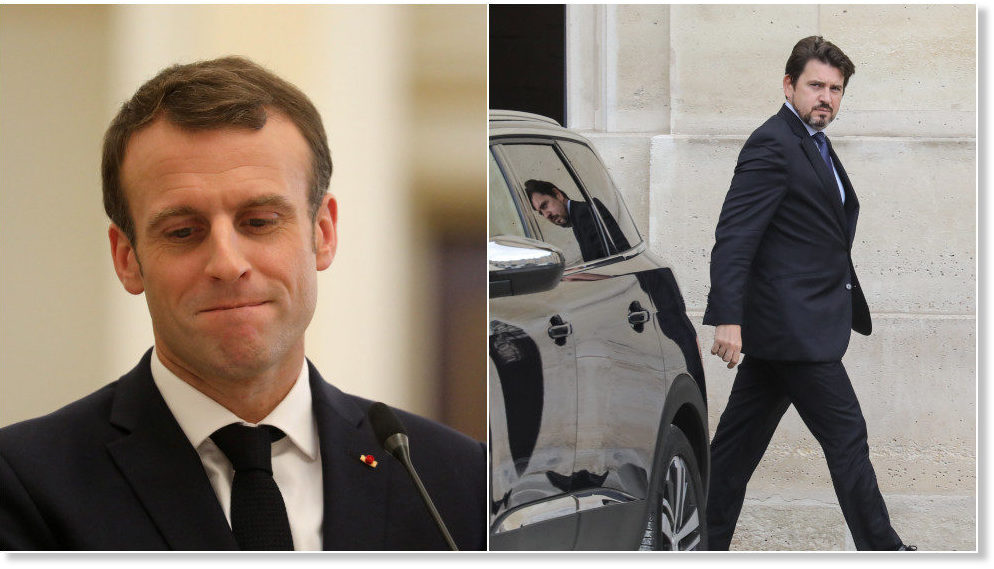
© AFP / Ludovic Marin (L / R)File Photo: French President Emmanuel Macron (L) and spin doctor Sylvain Fort (R)
Emmanuel Macron's communications director, who shaped the presidential campaign message, has resigned.
It is yet another high-profile departure, with the president's ratings down after several scandals and nationwide protests.Citing personal reasons for the resignation, Sylvain Fort said on Thursday that he would leave the job at the end of January, telling France Info radio station that he had informed the president of the decision several weeks ago.
"After two years and a half of relentless work serving the candidate and later our president, I wish to pursue other professional and personal projects, and above all dedicate more time to my family," he told AFP in a statement.
His resignation
follows that of former Interior Minister Gerard Collomb, who left his post in October, following a dip in relations with the president.
Comment: More on Macron's growing difficulties being France's 'Jupiter':
Richard Falk, Daniel Falcone
CounterpunchTue, 01 Jan 2019 00:00 UTC
© The Free Thought Project
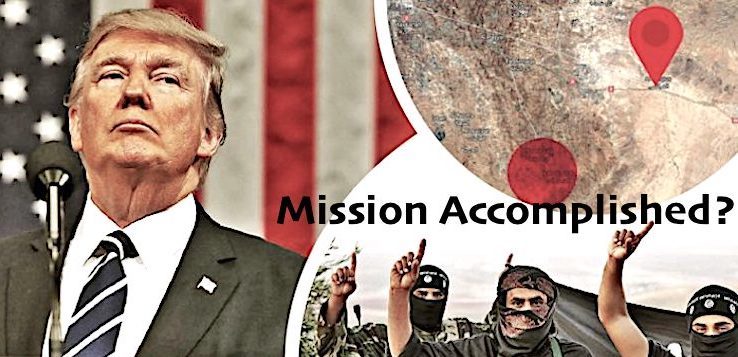
Of course, with Trump we never know either the real motivation for an abrupt decision of this sort or whether in the next day or so it might be reversed in an equally abrupt manner. It all depends on how the winds of his imperial ego are blowing. And this is not a reassuring awareness in the
nuclear age.
We do know that such an inflammatory decision shifts attention away, at least briefly, from the Mueller developments that seem more threatening to Trump's comfort zone day by day. Beyond these explanations,
Trump can accurately claim that he is fulfilling one of his most emphatic pledges of his 2016 presidential campaign, namely, offering scathing criticism of costly interventions in the Middle East as the basis for his commitment to bring American troops home very soon. Such a pledge made a great deal of sense as the
American experience with military interventions was a record of unacknowledged failure with a learning curve that hovered around zero.
Phil Stewart, Idrees Ali
ReutersWed, 02 Jan 2019 22:22 UTC
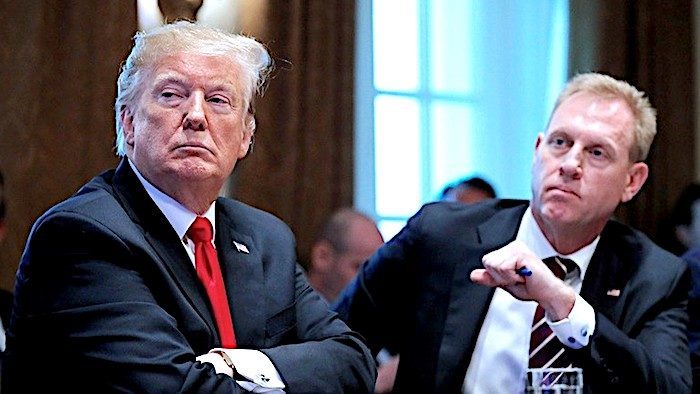
© Business InsiderPresident Donald Trump • Acting Defense Secretary Patrick Shanahan
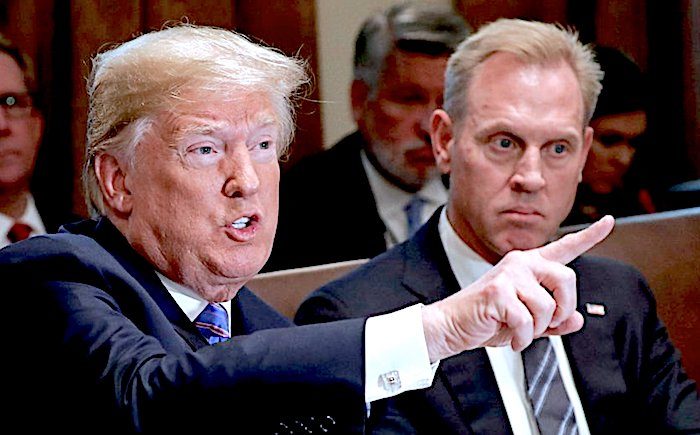
Acting U.S. Defense Secretary Patrick Shanahan told civilian leaders of the U.S. military on Wednesday to focus on "China, China, China," even as America fights militants in Syria and Afghanistan, a U.S. defense official said.
The comments came during Shanahan's first meeting with secretaries of the U.S. military branches since taking over for Jim Mattis, who left office on Monday after resigning as defense secretary over policy differences with President Donald Trump.
The U.S. official, who spoke on condition of anonymity, did not elaborate on Shanahan's views on China or what other guidance he gave during the meeting.
Other officials have described Shanahan as an advocate of the Pentagon's toughening stance toward Beijing. The 2018 National Defense Strategy here. branded China as a strategic competitor.The Pentagon has said
he played a critical role in developing the strategy, which singled out China and Russia as top threats, saying they wanted to "shape a world consistent with their authoritarian model."
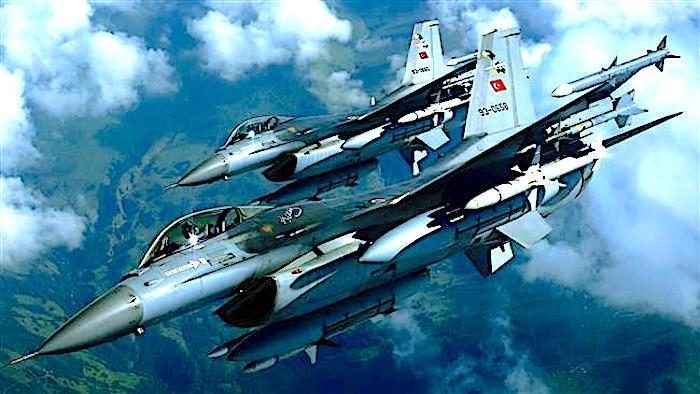
© UnknownTurkish fighter jets
If you asked me what was the top lesson Turkey learned from its two major operations in Syria -
Euphrates Shield and
Olive Branch - my answer without hesitation would be,
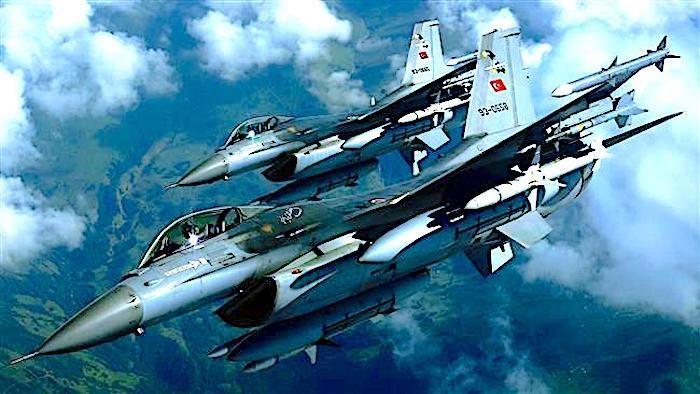
"Don't enter Syria unless you are sure of air superiority." Both operations taught Ankara that close air support provided by F-16s, armed drones and attack helicopters to protect Turkish forces on the ground and to maintain the operational tempo are vital against enemy elements equipped with well-fortified posts, tunnels, anti-tank missiles, improvised explosive devices, snipers, conventional armor and massive indirect fire support with howitzers and multiple rocket launchers.
Turkey is well aware that
a military operation in northeast Syria for Turkish soldiers to hold their ground and then advance requires, from time to time, opening Syrian airspace to the Turkish air force. During Operation
Olive Branch, Ankara received substantial support from Russia involving airspace. Moscow was able to regulate the pace of the
Olive Branch operation by occasionally closing Syrian airspace to the Turkish air force. Moscow's closure of Afrin airspace to Turkish planes between March 18-24 allowed Kurdish People's Protection Units (YPG) elements to withdraw from Afrin to Tel Rifaat without being targeted by the Turkish air force.
In other words,
Moscow's permission for Ankara to use Syrian airspace enables Russia to set the pace and duration of Turkish military operations inside Syria.
RFE/RLWed, 02 Jan 2019 20:17 UTC
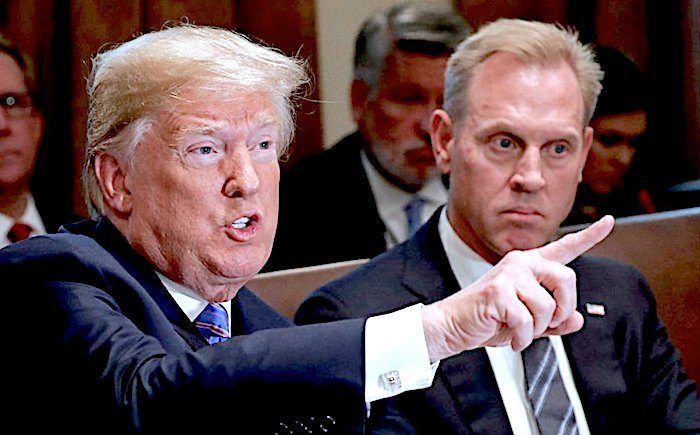
© Reuters/Jim YoungPresident Donald Trump and acting Secretary of Defense Patrick Shanahan during a January 2, 2019 cabinet meeting.
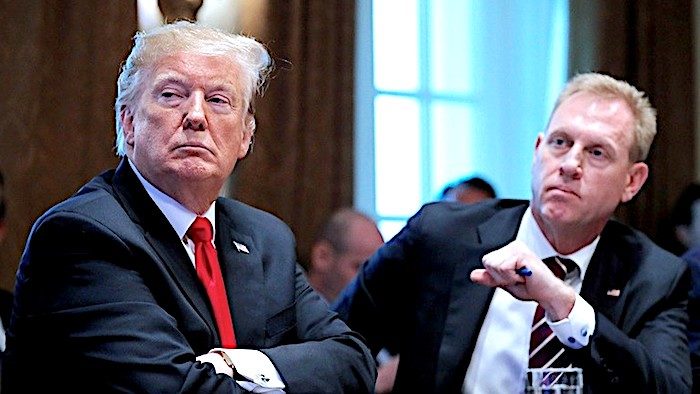
U.S. President Donald Trump has said U.S. forces will withdraw from Syria "over a period of time," insisting he wants to protect U.S.-backed Kurdish fighters battling the Islamic State (IS) extremist group.
Trump did not provide a timetable for the planned withdrawal of roughly 2,000 U.S. troops in Syria, which he announced last month against the advice of many top security advisers and reportedly without consulting lawmakers or U.S. allies involved in operations against IS militants.
During a Cabinet meeting at the White House in front of reporters on January 2,
Trump said he had never discussed a reported four-month timetable for the withdrawal of U.S. troops.In recent days, Trump has backed down from a rushed pullout and said that the withdrawal would be gradual. "We're slowly sending our troops back home to be with their families,
while at the same time fighting Isis [Islamic State] remnants," he said on Twitter on December 31.
Republican Senator Lindsey Graham told reporters that
Trump was committed to making sure Turkey did not clash with the U.S.-backed Kurdish YPG forces once U.S. troops leave Syria. Graham also said
Trump had assured Ankara that it would have a buffer zone inside Syria to help protect its own interests.
Comment: More from
RT:
The president announced the pullout from Syria on Christmas Eve, leaving Turkish forces to "eradicate whatever is left of ISIS" there. Following the announcement, the New York Times reported on Monday that Trump would give the military four months to extricate itself from Syria completely.
Speaking at a cabinet meeting on Wednesday, Trump denied giving the military a concrete timeline. "I never said fast or slow" he told reporters. "Somebody said four months, but I never said that either," the president added.
Trump's abrupt pullout - which was criticized by a raft of current and former officials from both parties - fueled speculation that Kurdish fighters in Syria would be left at the mercy of the Turkish military, with whom some of them have been fighting a low-intensity conflict for decades. Dozens of Turkish tanks are currently waiting at the country's southern border, as the country prepares for a major offensive into Syria.
The Pentagon reportedly mulled allowing Kurdish fighters to keep their US-supplied weapons after the pullout, but Trump announced on Wednesday that US forces would remain there to protect the Kurds for some time to come.
"We want to protect the Kurds, but I don't want to be in Syria forever," Trump said, adding that the country is "sand and it's death."
Despite the vague timeline, some US troops have begun the journey home from Syria. Turkish media reports over the weekend claimed that some 50 US soldiers abandoned a base in the north-east of the country, leaving the 400-square-meter compound completely empty.
Putting an end to the US' military adventures in the Middle East was a key promise Trump made while on the campaign trail. At Wednesday's meeting, Trump also touched on his planned withdrawal of some US troops from Afghanistan, where they have been fighting Taliban militants for 17 years. "It's the craziest thing I've ever seen," Trump said, adding that the US should pull out and let Islamic State (IS, formerly ISIS) and the Taliban fight each other. "Why isn't India there? Pakistan? Russia?" Trump asked. "Why do we have to be?"
Frank Konkel
NextgovThu, 03 Jan 2019 10:30 UTC

© Shutterstock/Carlos Amarillo
The software allows the FBI to go through video surveillance footage much faster than agents can. The FBI is piloting Amazon's facial matching software - Amazon Rekognition - as a means to sift through mountains of video surveillance footage the agency routinely collects during investigations.
The pilot kicked off in early 2018 following a string of high-profile counterterrorism investigations that tested the limits of the FBI's technological capabilities, according to FBI officials.
For example,
in the 2017 mass shooting in Las Vegas carried out by Stephen Paddock, the law enforcement agency collected a petabyte worth of data, much of it video from cellphones and surveillance cameras."We had agents and analysts, eight per shift, working 24/7 for three weeks going through the video footage of everywhere Stephen Paddock was the month leading up to him coming and doing the shooting," said FBI Deputy Assistant Director for Counterterrorism Christine Halvorsen.
Halvorsen made those remarks in November at the Amazon Web Services re:Invent conference in Las Vegas, where she described how the FBI is using Amazon's cloud platforms to carry out counterterrorism investigations. She said
Amazon Rekognition could have gone through the same trove of data from the Las Vegas shooting "in 24 hours" - or three weeks faster than it took human FBI agents to find every instance of Paddock's face in the mountain of video.













Comment: See also: