Puppet MastersS


Clipboard

China is removed from US currency manipulator list ahead of trade deal signing

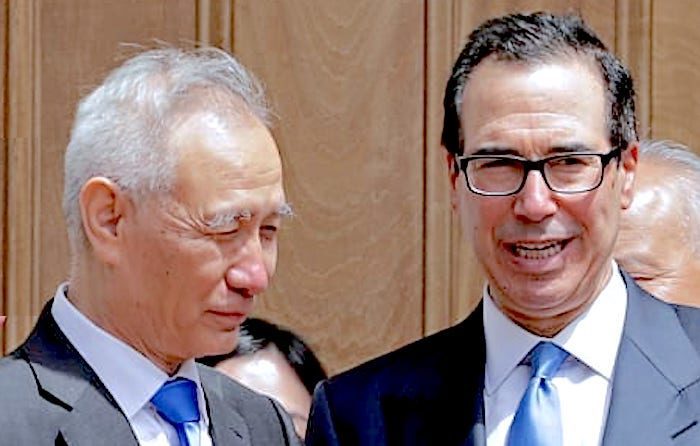
Liu He/Mnuchin
© Getty Images/Chip SomodervillaChinese Vice Premier Liu He • U.S. Treasury Secretary Steven Mnuchin
The United States removed China from a list of countries considered currency manipulators just two days before top trade negotiators for Washington and Beijing sign a key "phase one" trade deal, the Treasury Department announced Monday.

The decision to strike China from the currency manipulator list comes more than five months after the Treasury Department formally made the designation. President Donald Trump and China Vice Premier Liu He are scheduled to sign a preliminary trade agreement in Washington on Wednesday. China is now on a "monitoring list" for currency practices along with nine other countries, including Germany, Italy and Japan.

Treasury Secretary Steven Mnuchin said in a statement:
"The Treasury Department has helped secure a significant Phase One agreement with China that will lead to greater economic growth and opportunity for American workers and businesses. China has made enforceable commitments to refrain from competitive devaluation, while promoting transparency and accountability."
CNBC reported earlier on Monday that the U.S. would make the move, citing a person familiar with the matter. The S&P 500 rose to a record high after reports from that the Treasury Department will no longer list China as a manipulator.

Telephone

'I'd like to see them call me': Trump used encrypted Swiss fax machine to defuse Iran crisis

Rouhani/Leitner
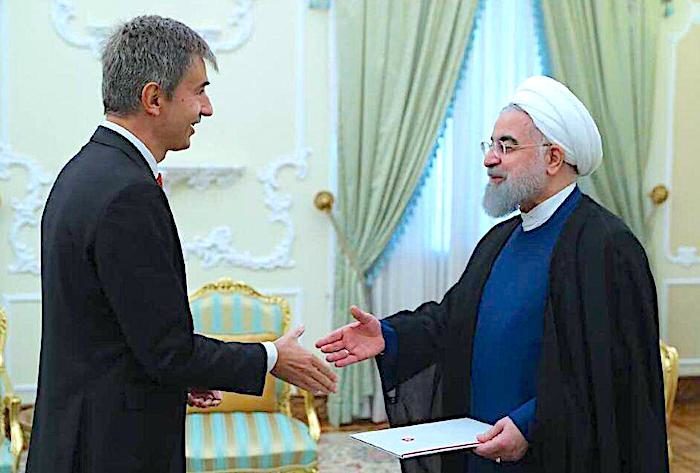
© Swiss embassyIranian President Hassan Rouhani meets with Swiss Ambassador to Iran, Markus Leitner
Even as Trump was rage-tweeting on Jan 4, two days after the killing of Iran's top military leader Qassem Soleimani, that he would hit 52 targets including Iranian heritage sites for potential retaliation if America suffered losses following an Iranian attack, warning that "those targets, and Iran itself, WILL BE HIT VERY FAST AND VERY HARD", the US president was busy, secretly using an encrypted back-channel to bring the world back from the brink of war.

As the WSJ reports, just hours after the U.S. strike which killed Iranian Maj. Gen. Qassem Soleimani, the Trump administration sent an urgent back channel message to Tehran: "Don't escalate." The encrypted fax message was sent via the Swiss Embassy in Iran, one of the few means of direct, confidential communication between the two sides, U.S. officials told the WSJ. Then, in frantic attempts to de-escalate even as top US and Iranian leaders were stirring patriotic sentiment and nationalistic fervor, the White House and Iranian leaders exchanged further messages in the days that followed, which officials in both countries described as far more measured than the fiery rhetoric traded publicly by politicians.

Comment: No doubt there are private channels between countries for this sort of emergency and a defined protocol to engage it. That said, if this particular secretive backchannel scenario is what the article claims it is, why is it being aired publicly by the WSJ and who are the 'US officials' that spilled it?


Briefcase

Is alleged CIA misbehavior grounds to set Julian Assange free?

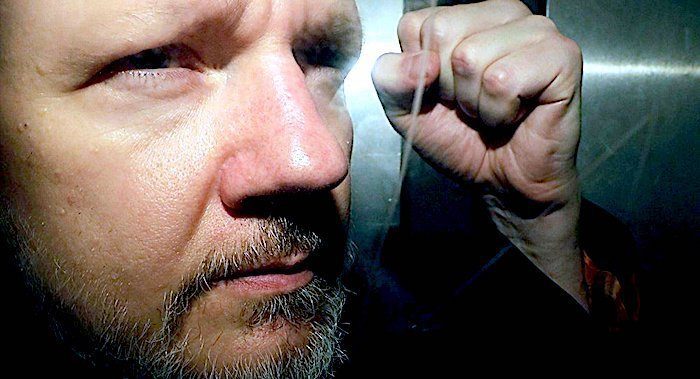
Assange
© AP/Matt DunhamJulian Assange
A few days before Christmas, Julian Assange testified to a Spanish court that a Spanish security company, UC Global S.L., acting in coordination with the CIA, illegally recorded all his actions and conversations, including with his lawyers, and streamed them back in real time to the CIA. He will, at the end of February, make a similar complaint to a British extradition court about the CIA's alleged misbehavior.

Will such misbehavior, if proven, set Assange free?

The Daniel Ellsberg case may be instructive. You may recall that after the U.S. Supreme Court's decision in the "Pentagon Papers" case, Ellsberg was indicted under the Espionage Act for leaking Pentagon documents to The New York Times and The Washington Post.

After the trial commenced in San Francisco, it was brought to the judge's attention that the "White House plumbers" broke into the office of Ellsberg's psychiatrist. Based on that information and other complaints of government misbehavior, including the FBI's interception of Ellsberg's telephone conversations with a government official, Judge William Matthew Byrne decided that the case should be dismissed with prejudice because the government acted outrageously.

For similar reasons, the case against Assange should be dismissed, if it reaches the U.S. courts.

Comment: We will never see the CIA stand trial for its long list of crimes. Calling its modus operandi 'misbehavior' is an absurd, gross and insulting misrepresentation of its intent and actions.


Bad Guys

Beijing reiterates 'One China' principle after pro-independence Tsai's landslide win

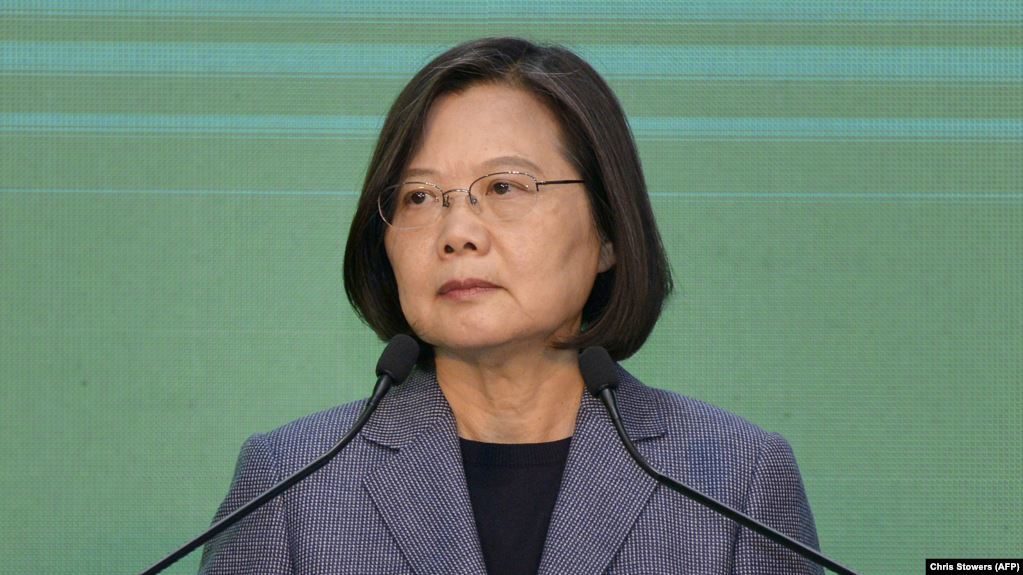
President Tsai Ing
Taiwanese President Tsai Ing-wen attends a press conference in Taipei where she declared victory in the general election on January 11.
Officials in Beijing have reiterated the "one China" principle after voters in Taiwan reelected President Tsai Ing-wen, who says Taiwan is an independent country.

In a blow to the Chinese government, Tsai, 63, won a landslide victory in voting over the weekend, underscoring the island of 23 million people's animosity toward mainland leadership similar to that in Hong Kong, which has been rocked by pro-democracy protests since last June.

In a strongly worded response to Tsai's win, State Councillor Wang Yi, China's foreign minister, said on January 13 that the "one China" principle had become de facto "consensus" among the international community.

"This consensus won't alter a bit because of a local election on Taiwan, and will not be shaken because of the wrong words and actions of certain Western politicians," Wang said on January 13 while on an official trip through Africa.

Dollar

It is a fact Europe needs China's billions, but does it know the price?

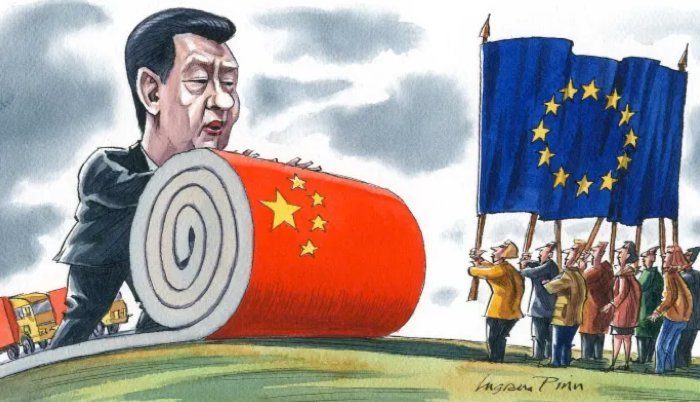
Cartoon
© Ingram Pinn
The Yiwu-to-London train pulls into the DB Eurohub terminus in Barking, east London, 18 days after leaving the Chinese city, a trading centre south of Shanghai. Over the course of its 7,500-mile (12,000km) journey to Europe, the train has wound its way through Kazakhstan, Russia, Belarus, Poland, Germany, Belgium and France, following part of the old east-west Silk Road.

This freight-rail link is just one of many new routes that, along with roads and ports, form China's Belt and Road Initiative. Whether the branding is an elaborate PR exercise or a new version of the Silk Road, what is real is that as China globalises, its investment is being gratefully sought across Europe. From ports to power stations, football clubs to financial companies, from the Norwegian city of Kirkenes to the Greek port of Piraeus and the Portuguese national grid, Chinese investment has become indispensable to the European economy. However, the country's rise as a global economic power poses a strategic dilemma for European governments. The French president, Emmanuel Macron, warned in March that the "period of European naivety" about China had to end.

Comment: Are Chinese investments in European companies partnerships or a soft-takeover with strings attached? Europe has to decide.


Attention

Democrat insiders say Bloomberg is 'dream candidate' to defeat Trump, has $1B to do it. Buyer beware!

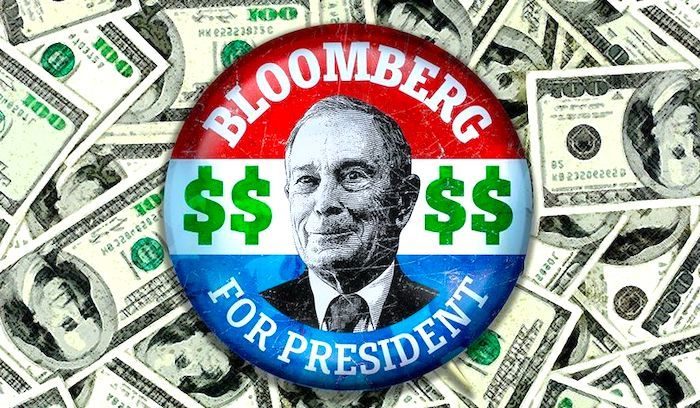
Bloomberg/$
© Greg Groesch/The Washington TimesBloomberg's America: 'Red, white, blue and green'
Michael Bloomberg plans to do whatever it takes "to get rid of Trump." As president, he'd push for a 'regressive tax' to save us from ourselves. His candidacy is toxic to the Democratic Party, and will be rejected by Americans.

The former mayor of New York is aiming to become the Democratic challenger in November's election, but whether he wins the nomination or not, he will have an enormous impact on the coming presidential election.

By itself, Bloomberg's money stash - he has a net worth of $50 billion and has already outspent his rivals who started their campaigns many months earlier - makes him a formidable candidate for US president.

Comment: See also:
Republican AGs: Bloomberg embeds anti-Trump attorneys in state offices to go after energy companies


Arrow Down

Johnson rejects Sturgeon's call for Scotland to hold second independence referendum

Demonstrators/Scotland
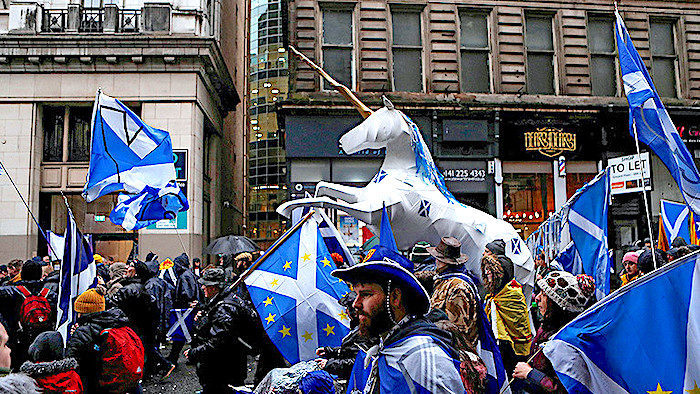
© Reuters/Russell CheyneDemonstrators march for Scottish Independence through Glasgow City centre, Scotland, Britain January 11, 2020.
Boris Johnson has formally rejected a call for a second independence referendum in Scotland, claiming such a vote would result in "political stagnation".

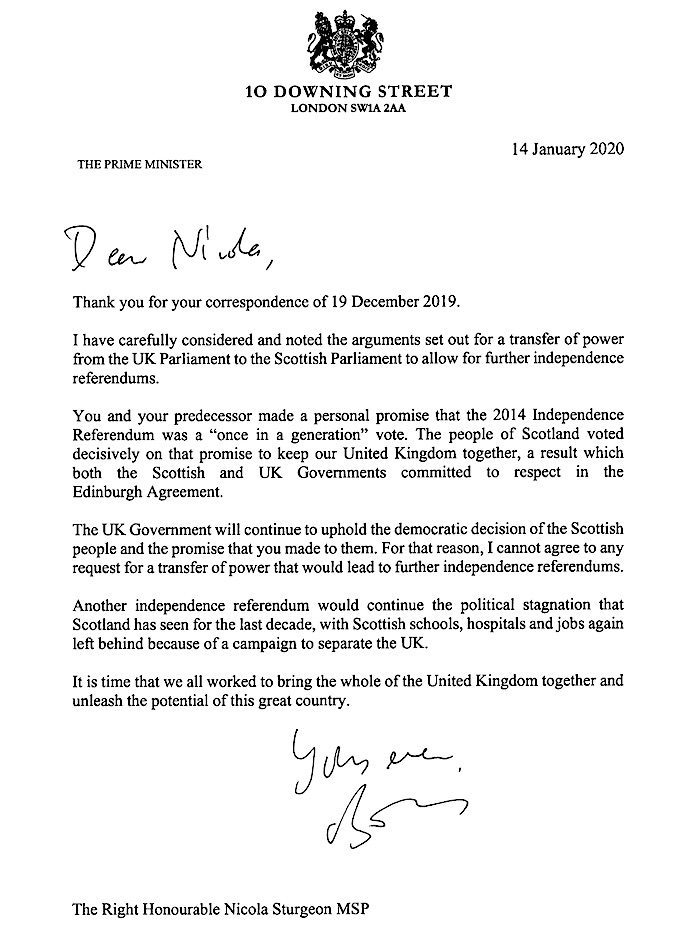
Revealing a letter to Nicola Sturgeon, the prime minister said he had "carefully considered" the case she had made for powers to be transferred to Holyrood that would allow it to hold a vote on Scotland's future. But he said both the SNP leader and her predecessor, Alex Salmond, had made a "personal promise" that the referendum in 2014 was a "once in generation" event. He said:
"The UK government will continue to uphold the democratic decision of the Scottish people and the promise that you made to them. For that reason I cannot agree to any request for a transfer of power that would lead to further independence referendums.

"Another independence referendum would continue the political stagnation that Scotland has seen for the last decade, with Scottish schools, hospitals and jobs again left behind because of a campaign to separate the UK.

"It is time that we all worked to bring the whole of the United Kingdom together and unleash the potential of this great country."
Responding, Ms Sturgeon, whose party won 48 of the 59 Scottish seats at the general election, said the Conservatives were "terrified" of offering the people of Scotland "the right to choose our future".

Comment: RT, 14/1/2020: George Galloway's commentary on the Scottish request
Prime Minister Boris Johnson is wrong to reject SNP leader Nicola Sturgeon's request for a second Scottish independence referendum, and his decision could even lead to more trouble for London, George Galloway says.

"The inalienable right of the Scottish people to self-determination means that they have every right to hold another referendum."

He noted that while it may be unrealistic to try to hold a referendum in 2020, Scotland should be allowed to go to the polls "any time that it chooses."

Describing the union between England and Scotland as a "marriage," Galloway noted that "denying the rights of one partner can only lead to even bigger trouble down the road."

The move to leave the European Union is deeply unpopular in Scotland, and the SNP views impending Brexit as a mandate for a second independence vote.
The Brussels Times, 14/1/2020: Call for second referendum rejected
Nicola Sturgeon@NicolaSturgeon
1/ Tories are terrified of Scotland's right to choose - because they know that when given the choice we'll choose independence. Tories have no positive case for the union - so all they can do is attempt to deny democracy. It will not stand.

Boris Johnson's letter to Nicola Sturgeon:
Johnson letter
© BBC


Chess

China defends Iran trade as US cranks up pressure

Iran trade
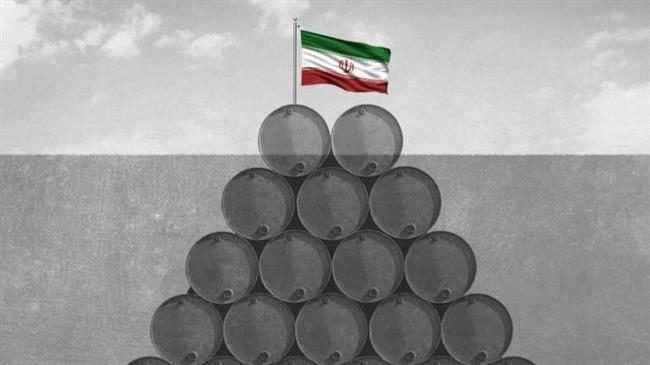
Iran's oil shipments have continued to reach major customers despite US pledges to bring them down to zero.
US officials are working behind the scenes to pressure China into halting all its oil and condensate imports from Iran, oil pricing agency S&P Global Platts reports.

The officials, speaking to the agency, claimed that China's imports of Iranian oil and condensate stood at 200,000 barrels per day which Washington wanted to eliminate.

The Trump administration has pledged to bring Iran's oil exports down to zero, but the shipments have continued to reach major customers, especially in Asia.

"Just because we haven't seen sanctions rain down on shippers and importers and the independent refiners moving that last 200,000 barrels per day yet, doesn't mean it's not coming," Elizabeth Rosenberg, director of the energy program at the Center for a New American Security, told Platts.

Bad Guys

Shedding 'crocodile tears' and 'dishonoring' Persian language: Iranian officials blast Trump's Farsi tweets

demonstrator Iranian
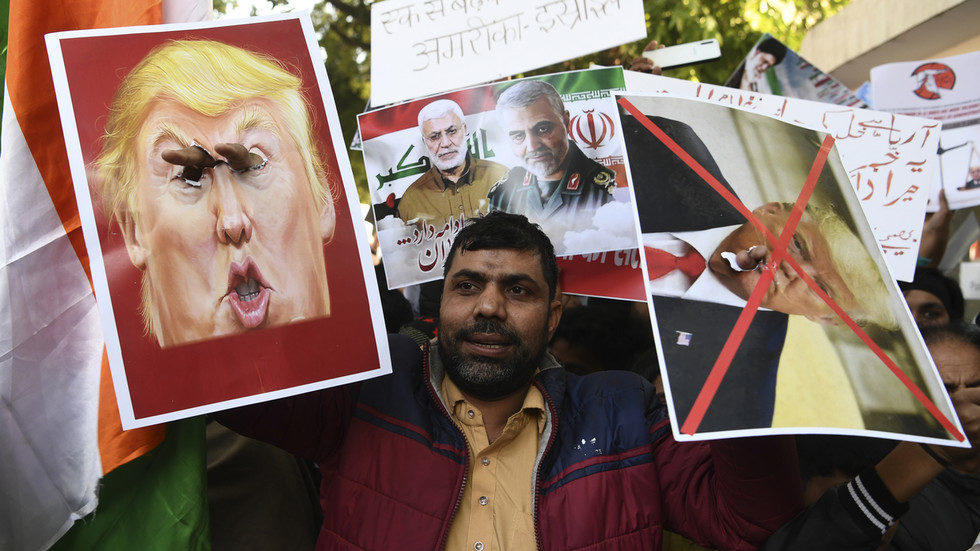
© AFP / Sajjad HussainA demonstrator protesting the US drone strike that killed top Iranian General Qassem Soleimani in Iraq, at a rally in New Delhi on January 12, 2020.
Officials in Tehran slammed both the language and the message of US President Donald Trump's tweets in Farsi, in which he backed anti-government protesters in the country and claimed to be standing up for ordinary Iranians.

"Hands and tongues smeared with threatening, sanctioning and terrorizing the #Iranian nation, are not entitled to dishonor the ancient #Persian language," Iranian Foreign Ministry spokesperson Abbas Mousavi tweeted on Monday.

"By the way, are you actually 'standing by' millions of Iranians whose hero you just assassinated or 'standing against' them?!"


Bullseye

Iran's top judge says Tehran will take Trump to International Court for Soleimani's assassination

Iran military base
© Fotolia / Borna_MirThe Iranian Army ended large-scale military drills Wednesday with a massive naval parade hosted by the country's President Hassan Rouhani
Qasem Soleimani, commander of the Islamic Revolutionary Guard Corp's Quds Force, died in Baghdad on January 3 when the vehicle he was traveling in was struck by a missile launched by a US drone. Soleimani's death brought relations between Iran and the US to a new low.

The Iranian government will seek to prosecute US President Donald Trump for the assassination of Maj. Gen. Soleimani, Iranian Chief Justice Ebrahim Raisi has said.

"We should collar the American president as the first defendant. He should be prosecuted and taken to court in front of the world," Raisi said Monday during a meeting of judiciary officials, his remarks cited by the Fars News Agency.

Comment: It seems Tehran may have a case:
US President Donald Trump approved the assassination of Iranian Quds Force commander Qasem Soleimani seven months ago, NBC News reported on Monday, citing five current and former senior administration officials.

The president first issued the directive to kill Soleimani in June, after Iran shot down a US drone, the report said.

The order authorised the assassination in response to any Iranian attacks resulted in the death of American citizens, the report said, adding that Trump's directive came with the condition that he would have the final authority to sign off on the operation.

Trump gave his final approval for the assassination after the storming of the embassy in Baghdad on 31 December, according to the report.

The reported timing of the presidential order appears to undermine Trump's assertion that he authorised the assassination after learning that Soleimani was planning "imminent" attacks on US embassies in the Middle East.
Israel (unsurprisingly) should be called to account too:
According to an NBC News report late Friday, the Jewish state was involved in the January 3 operation, handing the Americans key intelligence details.

The information helped confirm intelligence provided by informants at a Syrian airport that Soleimani had been on a nighttime flight from Damascus to Baghdad, the report said, quoting two sources with direct knowledge of the operation and other US officials briefed on it.

After his plane landed, it was a simple matter of using drones to track him exiting the aircraft and entering a car, which was later targeted with four missiles.

Israeli media reported the day after the strike that US Secretary of State Mike Pompeo had briefed Prime Minister Benjamin Netanyahu ahead of time about the US plans to kill Soleimani.

The Reuters news agency reported Thursday that a series of Syrian and Iraqi informants are suspected of providing the US with the information that led to Soleimani's killing.

The suspected informants — two security employees at Baghdad airport and two workers in private Syrian airline Cham Wings — gave the intelligence about Soleimani's secret flight from Damascus to Baghdad, the report said, quoting security officials, Baghdad airport employees and Cham Wings employees.
Trump maintains he was right to order the assassination:
The president claimed in tweets marred with misspellings that it does not matter if Soleimani presented an imminent threat to the US, something he had said previously to defend the assassination, because of the general's "horrible past."

Trump also accused the media of trying to portray "terrorist Soleimani" as a "wonderful guy."

Though the president has claimed the January 3 assassination of Soleimani was due to the general planning attacks against US forces and embassies, his own defense secretary admitted on Sunday that he "didn't see" any specific evidence to suggest those attacks were imminent.

Secretary of State Mike Pompeo also struggled in a recent press conference to define the "imminent" threat Soleimani presented to the US. He claimed the US "got it right" with their decision to kill the general.
Some have pointed to the hypocritical about-face made by the Trump administration with regard to Soleimani: