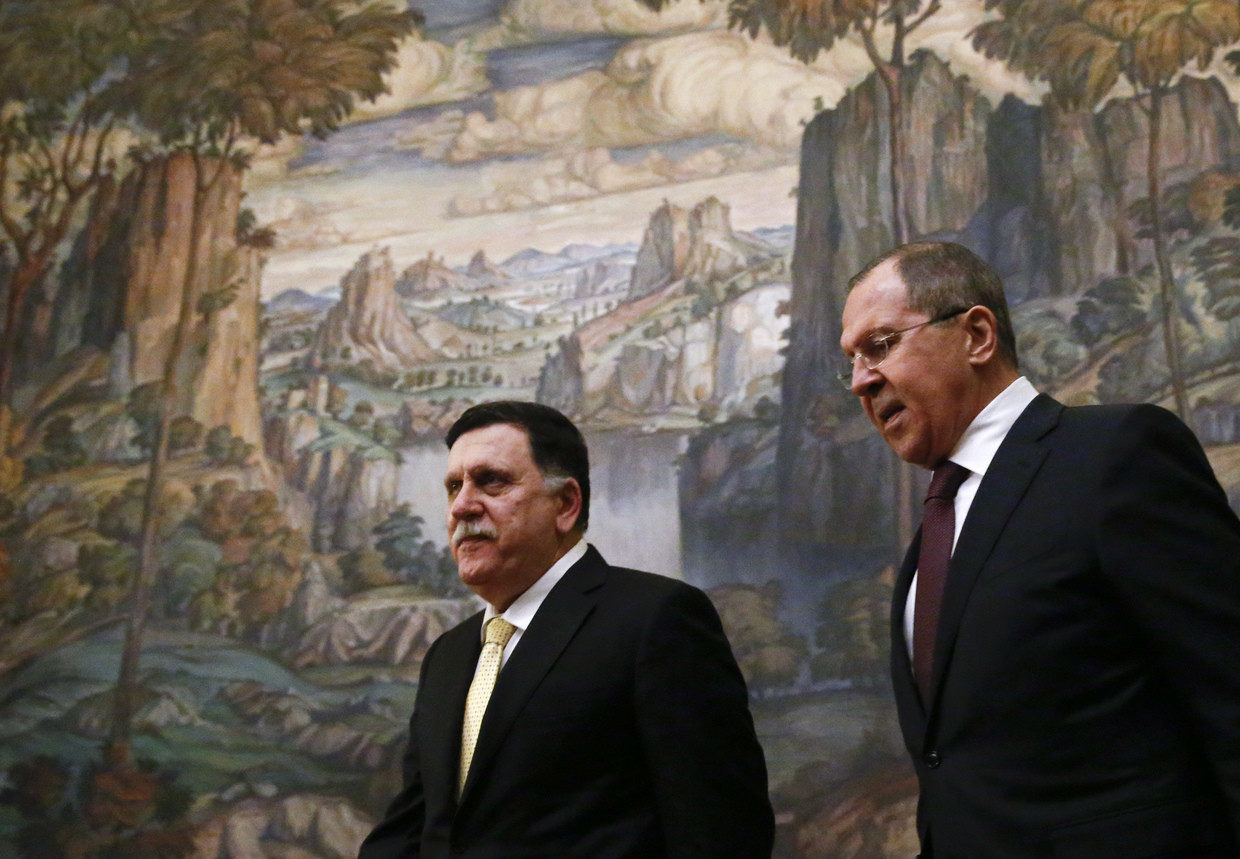
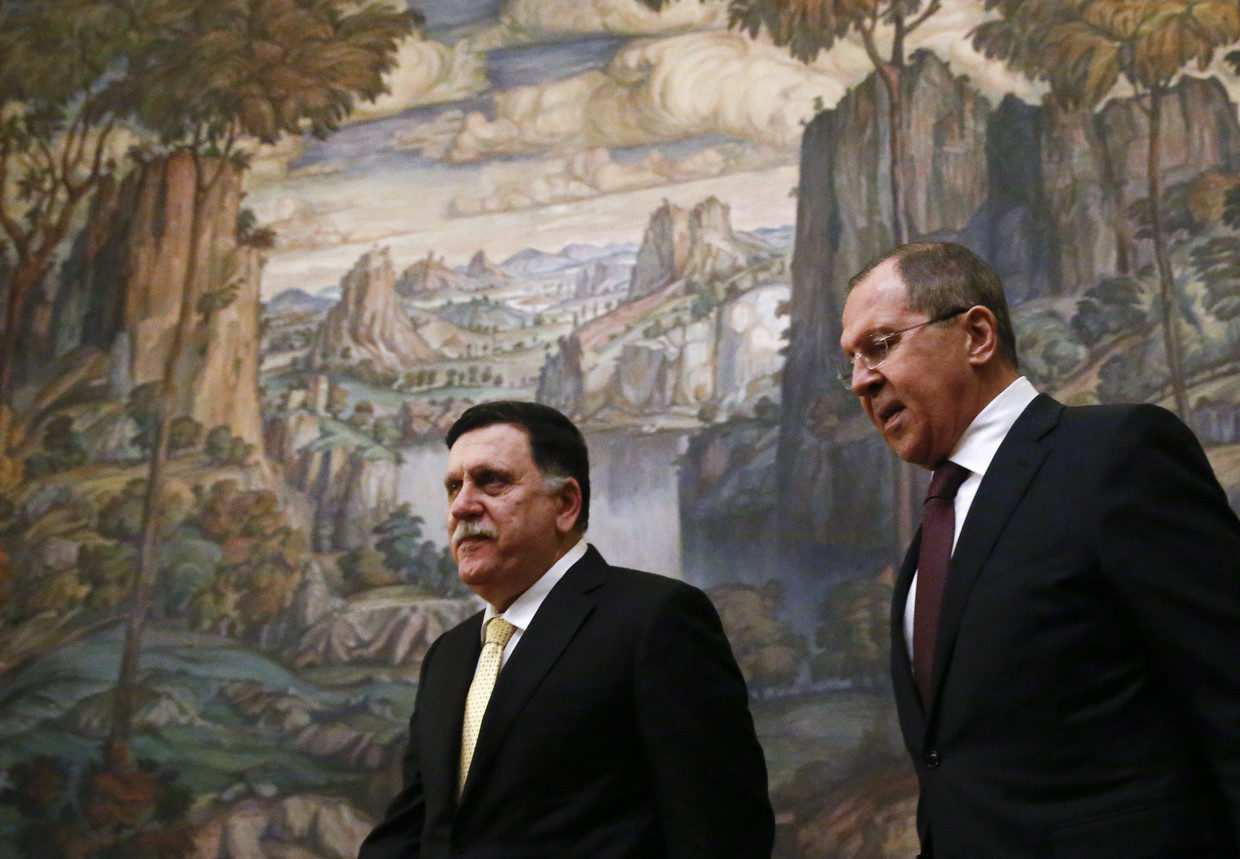
© Reuters / Sergei KarpukhinRussian Foreign Minister Lavrov meets with Libyan Prime Minister Seraj in Moscow
Peace talks in Moscow bringing together the leaders of Libya's warring parties were a serious step forward in attempts to put an end to a brutal civil war sparked by NATO's disastrous 2011 military intervention.
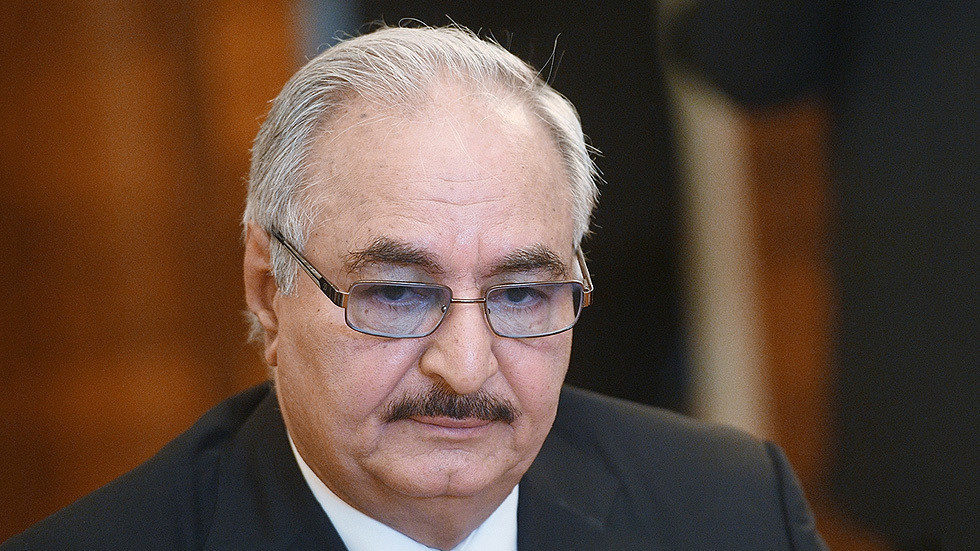
Fayez al-Sarraj, who heads the UN-backed Government of National Accord (GNA) in Tripoli and Khalifa Haftar, who commands the rival Libyan National Army (LNA) forces, spent six hours in closed-door discussions mediated by Russia and Turkey. The meeting came as a bit of a surprise as Haftar previously snubbed the ceasefire suggested by Moscow and Ankara.
By Monday evening Moscow time, a draft agreement between Haftar and al-Sarraj said that both sides supported an "unconditional open-ended" ceasefire, but
only GNA representatives signed the deal, while Haftar asked to have till Tuesday morning to consider the agreement, which also called for a "military commission to determine a contact line" between the warring parties. Russian media reported that while the two men were in the same building,
al-Sarraj refused to engage in direct talks with Haftar. While unsurprisingly no major breakthrough was made Monday, the Moscow talks were an important step and were intended to pave the way for another summit to be held in Berlin later this month. A spokesperson for German Chancellor Angela Merkel said Monday that the planned Berlin talks would be the start of a "longer process."
The Libya sit-down came as something of a surprise to many.
"Few - particularly in Europe - saw this coming," tweeted Libya researcher and journalist Mary Fitzgerald. With Hafter's LNA looking poised to close in on Tripoli, the situation in Libya had been left to fester and looked to be at a point of major escalation before the Russian and Turkish intervention.
Comment: Once again, Russia moves into the diplomatic vacuum created by U.S. geopolitics. One of these days it will be nice if the U.S. stops creating messes for Russia to fix, but until then, at least there's someone willing and able to do it.
Praise for the development is coming in
from all over:
European Commission President Ursula von der Leyen welcomed the initiative of Russia and Turkey and praised the temporary truce as an important step but said that said that Libya needs a complex process of "consolidation," which, according to her, should be supervised by the UN.
"A ceasefire, yes it is a first step in the right direction, but what you need is a process for consolidation, for reconstruction and a government of unity. There is a long way to go. This has to be a UN-led process," she told reporters after a meeting with Luxembourg Prime Minister Xavier Bettel.
Germany's Foreign Minister Heiko Maas also called the ceasefire "a positive signal," adding that his nation also plans to contribute to the political process in Libya by hosting a Libya summit later in January. "We currently have a good chance of making progress here," he said.
African Union Commissioner for Peace and Security, Smail Chergui, emphasized Putin's role in encouraging both warring parties to come to the negotiating table.
"I welcome this step as well as the efforts taken by President Putin," he said, adding that "signing a ceasefire agreement should be the first step to complying with the UN Security Council's arms embargo and putting an end to any outside interference into Libya."
For details and previous updates on the ceasefire talks, see:











Comment: Erdogan's response: More from RT: