
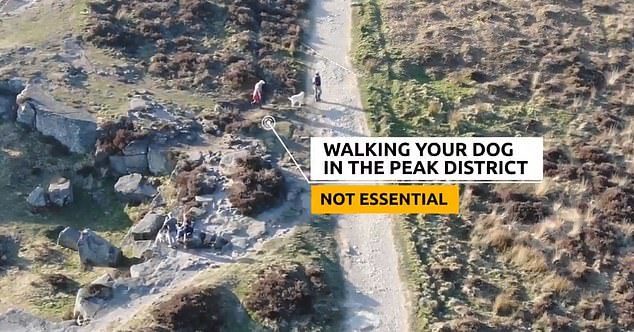
Many will have seen the films, pictured, taken by Derbyshire (UK) police drones, of lonely walkers on the remote, empty hills, publicly pillorying them for not obeying the regulations. It is genuinely hard to see what damage these walkers have done.
All Americans, not be just those with first-hand experience dealing with World War II and its aftermath or living in Eastern Europe under iron boot of the Soviet Union or escaping the Communist/socialist hellholes of Cuba, Southeast Asia or Venezuela, should view these actions with considerable trepidation.
When societies lose their freedom, it is not ordinarily because autocrats or tyrants have forcibly taken it away. It is usually the result of the population willingly surrendering their freedom in return for protection against an external threat. While the threat is oftentimes real, it is invariably exaggerated.











Comment: See also: Coronavirus as a substitute for world war