
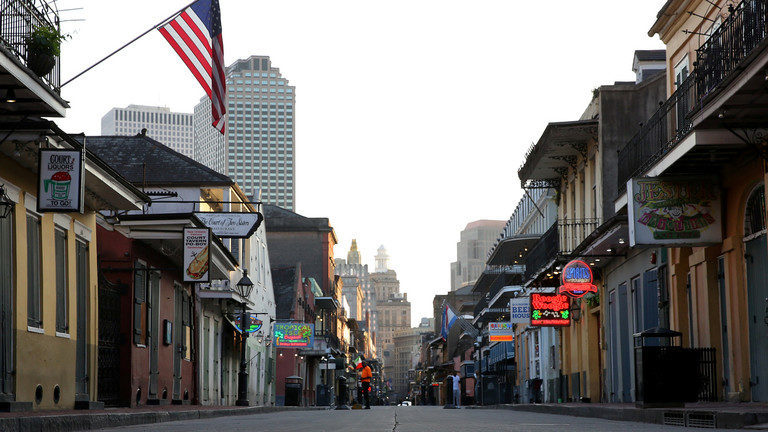
© Reuters / Jonathan BachmanThere's no business like no business. New Orleans, Louisiana
Thousands of banks expected to participate in the Trump administration's coronavirus stimulus loan program for small businesses are getting cold feet at the eleventh hour, representatives from those banks told a handful of media outlets on Thursday. If they pull out, the entire future of the program is uncertain - and with it the future of millions of American small businesses that employ half the country's workforce and are facing utter economic devastation if the lifeline promised by their government doesn't arrive soon.
With applications for the loans due to open at midnight on Friday, time is running out for the Paycheck Protection Program to pull itself together. The $350 billion segment of the $2 trillion coronavirus fiscal stimulus package signed into law last month was designed to give the small and medium-sized enterprises a nice low-interest (0.5 percent) loan to tide them through the crisis. Applicants can ask for as much as 2.5 times their average monthly payroll and won't even have to pay back the money if they use it to keep their business running.












Comment: The situation is the same in the UK, and it's not like governments couldn't have foreseen it happening because it is simply a repeat of 2008: UK banks not lending government backed emergency loans to small businesses, up to a million may go under