OF THE
TIMES


It's probable that by the end of 2020, like every year, a flu epidemic will emerge. This virus will, conveniently, be deemed a close relative to SARS-CoV-2, maybe with 'extra terrifying features'.Here we are 7 months later. As suspected, new variants have appeared, manufactured COVID-19 deaths are 'piling up', the vaccine passport has already been adopted by several countries and vaccination campaigns have been launched around the world.
But there will be no need to despair because, by this time, the authorities will have prepared a vaccine. That's one of the reasons why hydroxycholoroquine was lambasted and banned. If a safe and effective treatment already exists, who is going to accept a rushed and unknown vaccine? A vaccine that will allegedly protect people against COVID-20, but will in reality be designed to 'cancel' the beneficial changes induced by the mutated strain of SARS-CoV-2. [...]
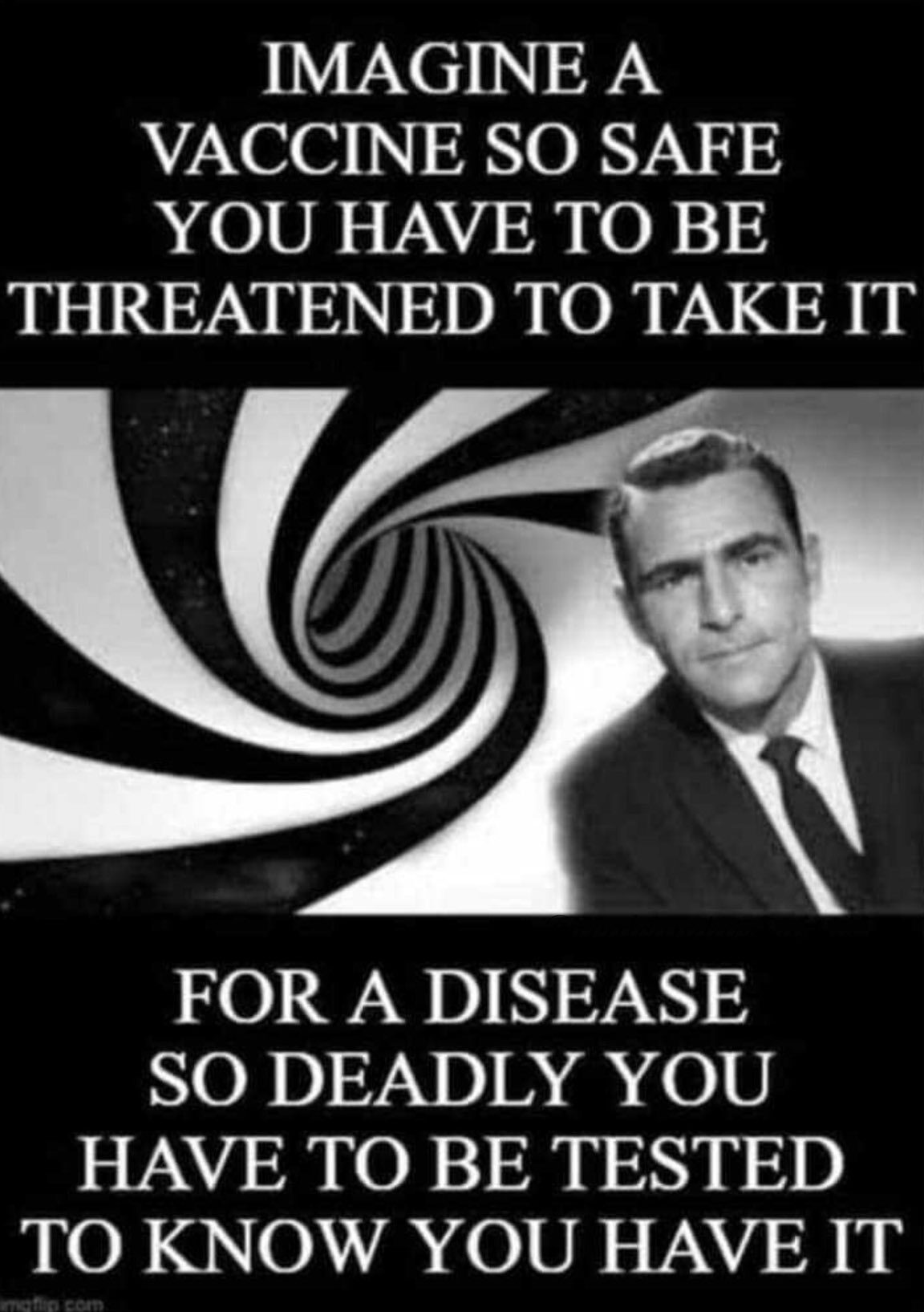
It's probable that the vaccination won't be mandatory. Remember that the authorities are now "kinder and gentler". Instead of brute force, the authorities are more likely to use moral blackmail - "Get vaccinated to protect others!" - combined with social blackmail - "No vaccine = no job, no shopping, no travel, no socializing!" Basically, you're free to choose between the vaccine passport or a life sentence in an isolated cell.
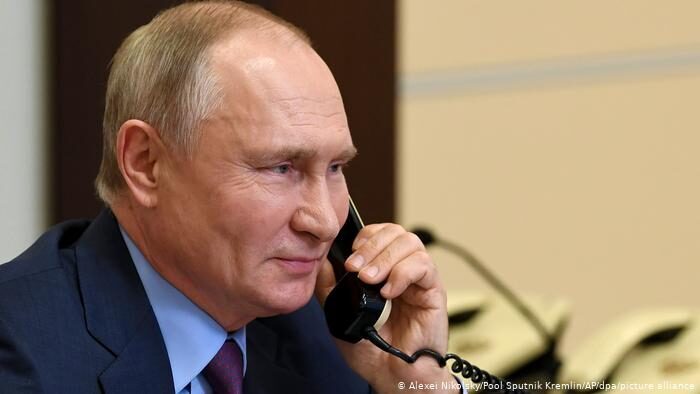
Russian President Vladimir Putin has warned against the danger of repeating the mistakes leading up to World War II, noting that the modern world might break down as it struggles with the battle of "everyone against everyone."As usual, Putin is one of the few world leaders speaking the truth, because we are indeed looking at a dystopic future up ahead if those pushing their totalitarian agenda upon us remain in power:
Putin was speaking at the Davos World Economic Forum, held remotely this year, in his first appearance at the prestigious meeting since 2009.
Putin also warned against the "destruction" of traditional values, as well as the right to choose and the right to a private life.
"The social and values crisis is already having negative demographic consequences, from which mankind is at risk of losing entire civilizational and cultural continents," he said, stressing that it is a global responsibility to avoid this "gloomy dystopia."
On the 76th anniversary of the liberation of Auschwitz, the Russian president also noted that the "inability and unwillingness" to resolve problems in the 20th century led the world to a catastrophe, before expressing his hope that a "hot conflict" is "basically impossible" nowadays."I really hope so - it would mean the end of civilization," he said.
In particular, Putin drew parallels between the the modern world and that of the 1930s, noting that "the scale and complex systemic nature of the challenges" in international relations pose similar threats.
In his opinion, existing economic models are causing a "sharp polarization" in views, leading to both populism and radicalism."International institutions are weakening, regional conflicts are multiplying, and the global security system is degrading," he noted.
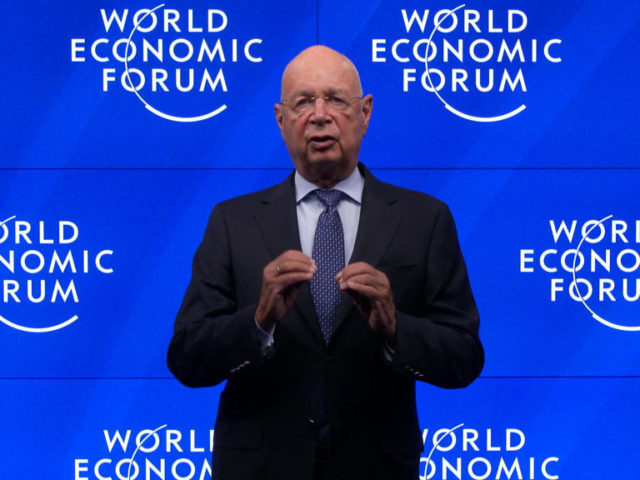
The World Economic Forum is an annual meeting of business leaders, political figures and economists, usually hosted in Switzerland. This year, due to Covid-19, it is being hosted in Singapore, with most speakers appearing virtually. 2021 marks the first time Putin has spoken at the event since 2009, when he was Russia's Prime Minister.
It's not surprising that people who've been disenfranchised by a broken system and pushed even further by the pandemic will suspect global leaders of conspiracy.

Speaking on Tuesday, vaccines minister Nadhim Zahawi, told Sky News the government was carefully reviewing its border policy to prevent new Covid-19 variants coming into England.The UK's housing minister revealed on TalkRadio that it may lockdown next winter:
"I can only say to you that as we vaccinate more of the adult population, if there are new variants, we need to be very careful. It's important we continue to review our announcement," Zahawi said.
"Countries have to review their borders. We did this in January and tightened up on pre-departure testing," he noted, adding that a new variant could undermine the progress made in the vaccination campaign.
When flights in and out of Britain have essentially continued throughout the last year of lockdowns with little restrictions it's clear that these measures are farcical.
Asked whether Britons could think about booking a summer holiday soon, Zahawi said: "Absolutely not."
"It's far too early. There are currently 37,000 people in hospital with Covid. It's far too early to think about summer."
The vaccines minister said an announcement was likely to be made today as to whether people entering England would be required to quarantine in a designated hotel. On Monday, Prime Minister Boris Johnson said the idea of so-called quarantine hotels was something the government was "definitely looking at".
"We have to realise there is at least the theoretical risk of a new variant that is a vaccine-busting variant coming in, and we've got to be able to keep that under control," Johnson told reporters.
There has long been concern that travellers arriving from overseas are not adhering to the country's self-isolation rules.
Compared to its European neighbours, the UK has made good progress in vaccinating people against Covid-19. As of Monday, more than 6.5 million people across Britain had been vaccinated.
"At some point in time the pandemic will pass, but it may take four to five years before we finally see the end of the pandemic and the start of a post-COVID normal. What will this new post-COVID world look like? No one can tell," he said.For insight into just what's going on, check out SOTT radio's NewsReal #34: Covid By Numbers:
We can make an educated guess that it will feature totalitarian government, limited freedoms, violation of health and privacy, and mass unemployment.
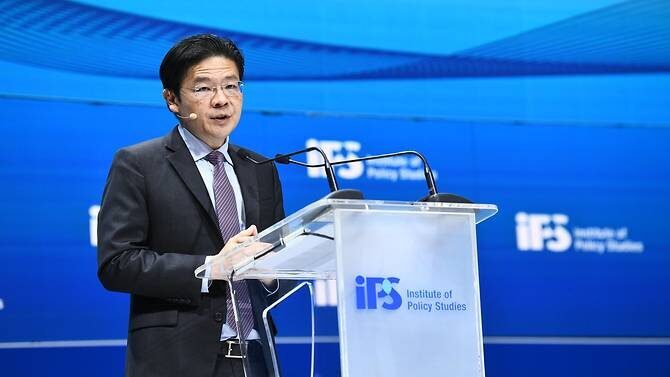
Mr Wong, who co-chairs the COVID-19 multi-ministry taskforce, was speaking at the Singapore Perspectives 2021 conference hosted by the Institute of Policy Studies (IPS).In a 30-minute speech on the final day of the four-day conference, the minister highlighted how there are still many uncertainties to contend with in the next few years, while sharing his hopes about how the future can be "reset" once the pandemic is over.© Jacky Ho for IPSEducation Minister Lawrence Wong speaks at the Institute of Policy Studies Singapore Perspectives Conference on Jan 25, 2021.
"Reset" was the theme of the hybrid conference, held online and in-person at the Sands Expo and Convention Centre, which sought to imagine how Singapore could look like in 2030.
Did the world need a 'reset' after a real pandemic like the Spanish flu? If not, why do we need one now? Isn't it more likely that politicians like Wong are actually using the manufactured crisis as cover to push another agenda?
Mr Wong said there was still "great uncertainty" about how the coronavirus will shape society in the coming years. Adhering to safe management measures like mask-wearing and avoiding crowds will continue for this year and "maybe a good part of next year", he said.
"Beyond that, the availability of COVID-19 vaccinations will progressively restart global travel, but getting the world vaccinated won't be quick or easy," he added.
If one follows the mainstream narrative, then vaccinations as the key to world travel doesn't make sense, because they claim that they don't stop viral transmission and they aren't designed to deal with the mutations, so it seems we'll have restrictions, vaccines and mandatory ID cards but the (harmless) virus will still be ever present.
The Government has planned for everyone in Singapore to be vaccinated by the third quarter of this year, but Mr Wong said that there could still be "bumps along the way".
He noted that the current vaccines may not be so effective against new mutant strains of the virus, and will have to be modified to counter them.
"In the positive scenario, this means the vaccine becomes a bit like an annual flu jab ... or perhaps we develop a vaccine that works for all strains. But in the worst case, we end up always a step behind an evolving virus, and you will not be able to catch up in time," he said.
"So there are still tremendous uncertainties ahead of us. And the bottom line is that we live in a shared world and no one is safe until everyone is safe."
When asked later by moderator Straits Times editor Warren Fernandez on whether 2021 will be a re-run, a sequel or a re-make of 2020, Mr Wong said there are important differences between the situation now and last year - mainly that Singapore is better prepared to fight the virus and that there are now vaccines available.
"What we need to do really is to tide through now until the point where everyone in Singapore is vaccinated, maybe the third quarter of the year. Perhaps at the end of the year, there is a solution."
"REBOOT" FOR THE FUTURE
Looking ahead to the post-pandemic future, Mr Wong said the current crisis can set the stage for a "software update" or a "reboot" of Singapore after the damage inflicted by the virus.
"We must reset our social compact to emerge as a fairer and more equal society. The pandemic may be indiscriminate about who it infects but its impact is anything but equal. It has, in fact, widened the gulf between the haves and the have-nots," he said.
He said that Singapore started to prioritise reducing inequality a decade ago, and that last year, many emergency measures were introduced to help lower-income groups. But this year, the temporary measures will have to "taper down" as the economy improves.
However, he foresees that Singaporeans will need more assurance and support in a more uncertain and volatile world.
"The impact of the pandemic has created an added impetus to strengthen our social support system. There will be a permanent shift towards further strengthening of our social safety nets in Singapore to protect the disadvantaged and vulnerable," he said, adding that it will have to be done in a "sustainable manner over the long term".
The minister added that meritocracy in Singapore should not "ossify into a hereditary system".
"We start by intervening early and uplifting our children from birth. That's a key focus and priority for me in the Ministry of Education - that's why we're making significant investments in pre-school," said Mr Wong, who took over the education portfolio this year after the General Election in July.
Every dictator knew that you had to get the children when young.
Expanding on his outlook for Singapore's education system, he said the country is making "fundamental shifts" in its model to facilitate education for life.
"We want to have multiple entry points across the age distribution and across the entire skill spectrum. And thereby enable everyone to reskill, upgrade and continuously improve to be the best possible version of themselves," he said.
GREENER, MORE UNITED SINGAPORE
Mr Wong said that the pandemic has also thrown a spotlight on the unequal value society places on different types of workers, and added that this needs to change.
"Merit has become narrowly defined by academic and cognitive abilities but there's a wide range of abilities and aptitudes needed for societies to thrive," he said.
"We've come to better appreciate the contributions of our essential workers ... We must honour them for their work and accord them the dignity and respect they deserve. We must ensure they receive fair remuneration for the important work they do."
Mr Wong highlighted two more ways Singapore can "reset" - to become greener and to strengthen solidarity among its people.
The green agenda as the establishments way to claw ever more power for themselves: The Greta Reset: Welcome to the UK 2030 - the no petrol, no transport, no freedom of movement Net Zero future
He said that the pandemic led to a temporary fall in carbon emissions when human activity came to a standstill, and the natural world began to heal.
"We cannot go back to the status quo ante ... climate change will be the existential emergency of our time. So we must build a greener economy and society that's more environmentally sustainable."
He said that while the pandemic sharpened divisions in some counties, it has brought Singaporeans together.
"I am confident that we will prevail and emerge stronger from this crucible, and I do not say this lightly. I speak from my own conviction of seeing the best of Singaporeans over the past year in the face of adversity and very tough conditions," he said.
A renewed sense of solidarity is important as it will help Singapore build a better society, said the minister.
"My hope is for Singapore to emerge as a fairer, greener and more equal country with a much stronger spirit of solidarity and shared purpose," he said.
Comment: Return to The Deal or not, Biden is a product of the Obama era when war was the option most consistently taken. Given the new administration may prove a fallback to those times, the bidding war has begun: See also: