
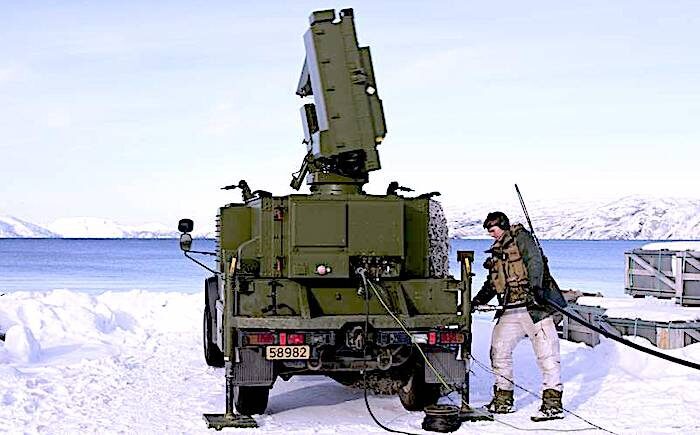
© UnknownA Norwegian soldier fuels up a vehicle carrying radar to a NASAMS air-defense system during winter exercise Joint Viking 2017 in Finnmark, Norway.
The contract is part of the fifth Ukraine Security Assistance Initiative package and includes training and logistical support to Ukraine's military and security forces, the Army said in a a Nov. 30 statement.
Raytheon, the world's second-largest defense contractor, won a contract in August to deliver to NASAMS batteries to Ukraine as part of the third USAI package. The new contract is a follow-on.
The first two NASAMS batteries, capable of firing AIM-120 Advanced Medium-Range Air-to-Air Missiles, have been delivered and deployed and "have successfully demonstrated the effectiveness of the systems against the threat," according to the Army.
















Comment: Bottom line (literally): All we need to know is who funded the article.