Science & TechnologyS


Fireball 5

The deepening mystery of the March fireballs

If you love a good mystery, look no further than the night sky in March 2026. There were no major meteor showers scheduled for March, yet suddenly fireballs started appearing everywhere.

"During the month of March, reports of very bright fireballs to the American Meteor Society (AMS) suddenly doubled," says Mike Hankey, who manages the AMS's fireball reporting system. "Many of them were visible in broad daylight and created loud sonic booms."
March 2026 Fireballs
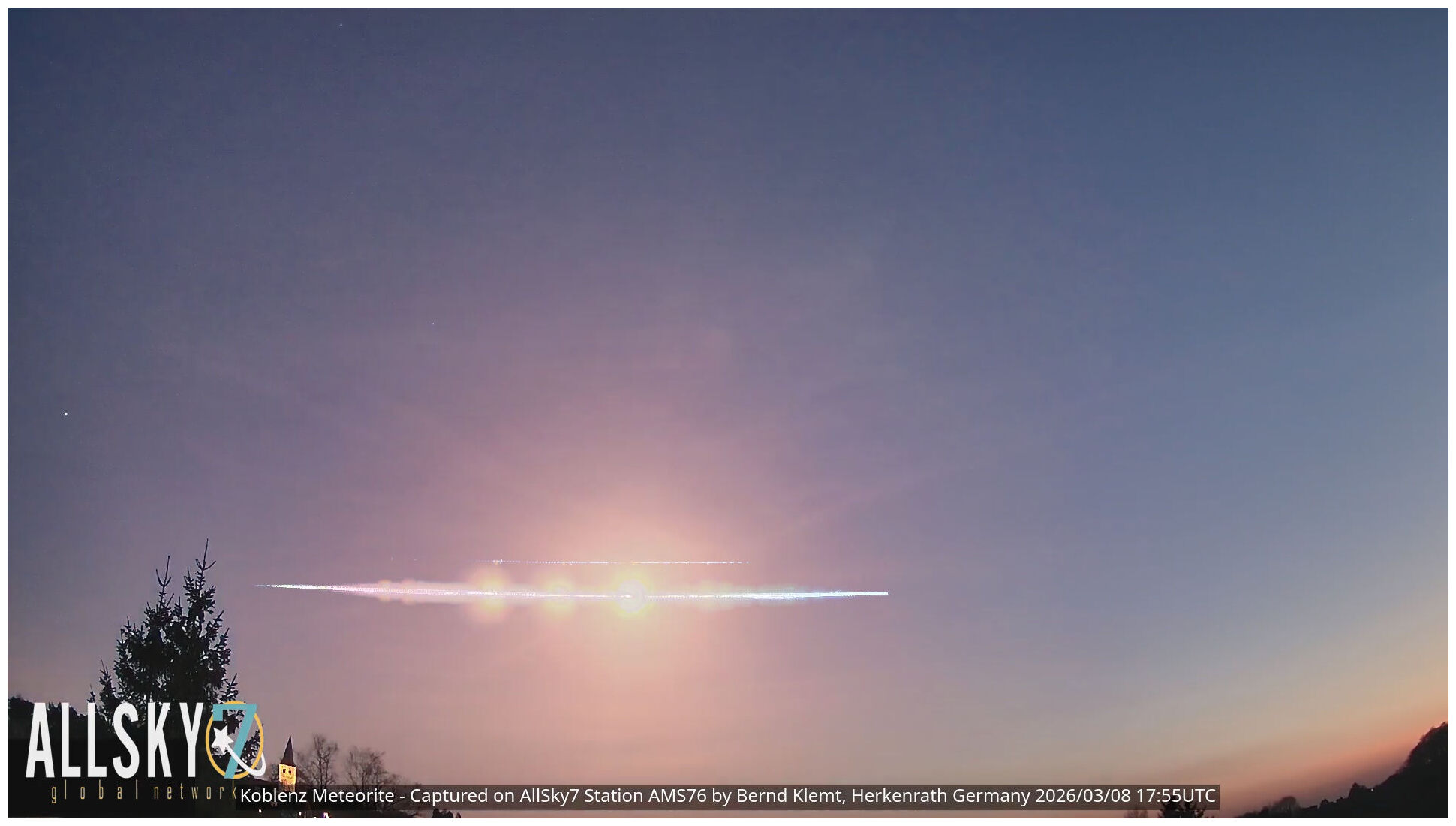
© SpaceWeather.comAbove: The fireball over Koblenz, Germany, that started the "March Madness." [movie].
A daytime fireball over Western Europe on March 8th drew more than 3,200 witness reports. Nine days later, a 7-ton asteroid exploded over Ohio with the force of 250 tons of TNT. On March 21st, a fireball broke apart above Houston, sending a fragment through the roof of a house. And those were just the headliners.

Hankey has been running the fireball reporting system for nearly 15 years (indeed, he wrote much of the software himself), so he knew something unusual was happening. When the reports kept piling up, he dove into the data -- and what he found is genuinely puzzling.

"The total number of fireballs people saw was not dramatically unusual," Hankey explains. "But the fraction of big fireballs really surged."

Fireball 5

Rubin observatory announces 11,000 new asteroids

The Vera C. Rubin Observatory will discover up to half a million solar system objects every year. It's already starting to deliver on that promise.
New Asteroids
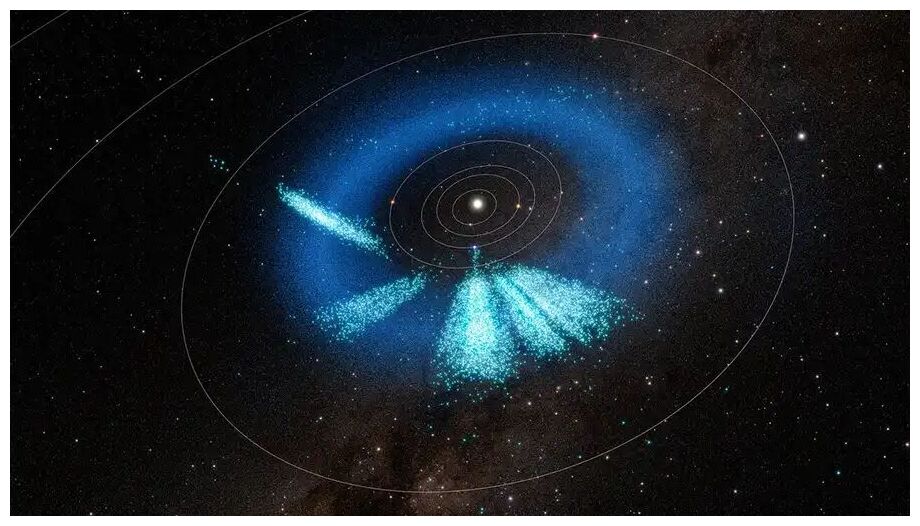
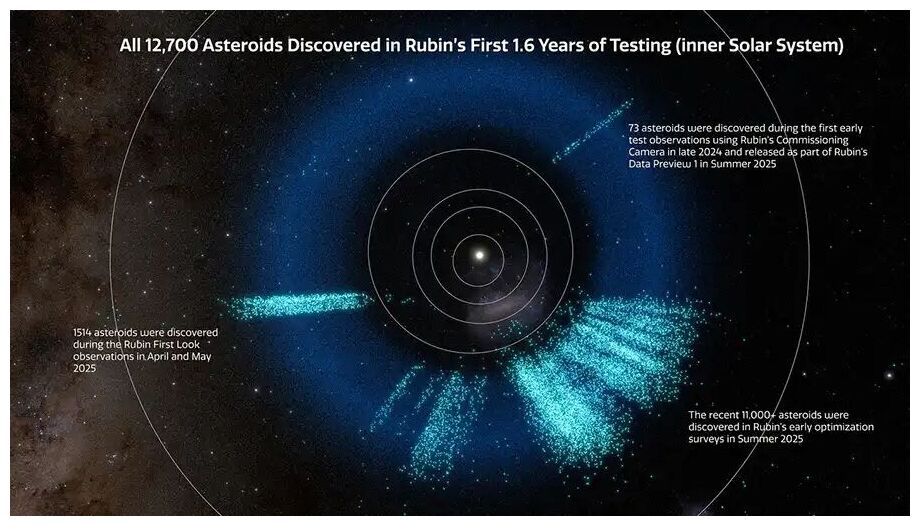
© NSF–DOE Vera C. Rubin Observatory / NOIRLab / SLAC / AURA / R. Proctor; Star map: NASA GSFC SVS; Gaia DR2: ESA / Gaia / DPAC Image processing: M. Zamani (NSF NOIRLab)The model shows a total of almost 12,700 asteroids that were discovered with Rubin over the span of 1.6 years (light teal). Known asteroids are dark blue. These are the August 2025 locations of the discovered objects.
The Vera C. Rubin Observatory promised to discover up to half a million new solar system objects each year of operation. It isn't fully operational yet, and it's already delivering on that promise.

Last week, the International Astronomical Union's Minor Planet Center confirmed the discovery of more than 11,000 new asteroids captured by Rubin during a 1½-month observation period. That period wasn't even part of its planned Legacy Survey of Space and Time (LSST), just a test run to check systems and optimize observations. Still, it was enough for Rubin's powerful 8.4-meter Simonyi Survey Telescope to make thousands of discoveries. While most of them are in the main asteroid belt, the list includes 380 trans-Neptunian objects (TNOs) that orbit beyond Neptune, and 33 previously unknown near-Earth objects.

This latest submission to the Minor Planet Center (MPC) included approximately 1 million individual observations that tracked about 90,000 objects, of which 80,000 were already known. This tally includes several "lost" objects that were discovered at some point but with orbits too uncertain to keep track of them. By reverting these orbits back in time, researchers at the MPC could backtrack their location at the time of discovery, confirming that they were the same objects. All of these numbers are additional to the 1,500 or so other asteroids identified during Rubin's "First Look" observation campaign, from when the observatory went online last year.
locations of objects
© NSF–DOE Vera C. Rubin Observatory / NOIRLab / SLAC / AURA / R. Proctor; Star map: NASA GSFC SVS; Gaia DR2: ESA / Gaia / DPAC Image processing: M. Zamani (NSF NOIRLab)This diagram shows the locations of objects at the time of each object’s discovery, labeled by date.
"The significance of this is that Rubin is just starting," says Mario Jurić (University of Washington), leader of Rubin's solar system team. Currently, there are about 1.5 million asteroids known in our solar system. At that discovery rate, the observatory is expected to bump that number by fivefold in less than a decade, well into the 6 million range. "So, this is a 'it's here, it's working, it's coming' type of demonstration," Jurić adds.

Network

Tests suggests Google's AI Overviews tell millions of lies per hour

google artificial intelligence logo ai
© GoogleGoogle's Gemini
Is 90 percent accuracy good enough for a search robot?

Google doesn't much like this test. Google spokesperson Ned Adriance tells the Times that Google believes SimpleQA contains incorrect information. Its model evaluations often rely on a similar test called SimpleQA Verified, which uses a smaller set of questions that have been more thoroughly vetted. "This study has serious holes," Adriance told the Times. "It doesn't reflect what people are actually searching on Google."

Benchmark problems

Evaluating new AI models sometimes feels more like art than science, which is part of the problem. Every company has its own preferred way of demonstrating what a model can do, and the non-deterministic nature of gen AI can make it hard to verify anything. These robots can get a factual question right and then completely miss it if you rerun the query immediately. Oumi even uses AI tools to run its assessments, and those models can hallucinate, too.

Comment: As the author recommends, one could exert their brain, search for pages on the needed, then read and synthesize. Voila! Actual learning. AI is really just a soup-ed up search engine, as even Google acknowledges.


Info

Super magma reservoirs discovered beneath Tuscany

A Swiss-Italian team has discovered 6,000 km³ of magma beneath Tuscany.
magma reservoirs
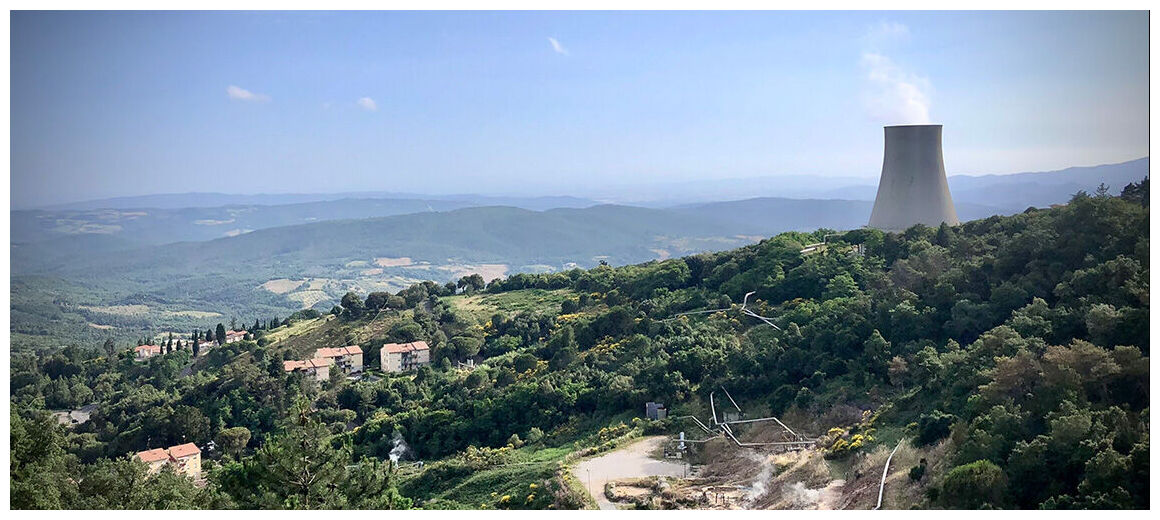
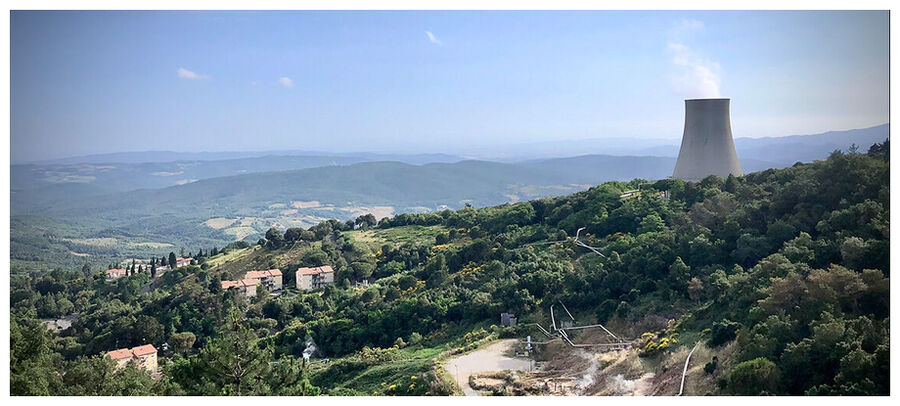
© Matteo LupiRenowned for its geothermal activity (here, the Larderello power plant, the oldest in the world), Tuscany also hides vast magma reservoirs beneath its landscapes, similar to those found at Yellowstone in the United States.
How can magma buried 5, 10, or even 15 km underground be detected without any surface indicators? The answer lies in ambient noise tomography, a technique that analyses natural ground vibrations with high precision. A team from the University of Geneva (UNIGE), the Institute of Geosciences and Earth Resources (CNR-IGG), and the National Institute of Geophysics and Volcanology (INGV) has identified a vast reservoir containing approximately 6,000 km3 of magma beneath Tuscany. Beyond its scientific significance, this breakthrough paves the way for faster and more cost-effective exploration methods to locate resources such as geothermal reservoirs, lithium, and rare earth elements, whose formation is closely linked to deep magmatic systems. The study was published in the journal Communications Earth & Environment.

Yellowstone National Park in the United States, Lake Toba in Indonesia, or Lake Taupo in New Zealand: these iconic volcanic sites harbor immense magma reservoirs measuring several thousand km3 beneath their surfaces. Their presence has been revealed through surface evidence such as eruptive deposits, craters, ground deformation, and gas emissions. However, in the absence of such signals, large volumes of magma can remain hidden and unsuspected deep within the Earth's crust.
These results are important both for fundamental research and for practical applications, such as locating geothermal reservoirs or deposits rich in lithium and rare earth elements.
This was precisely the case in Tuscany, where reservoirs containing approximately 6,000 km3 of volcanic fluids at depths of 8-15 km within the continental crust were discovered by a team from the UNIGE, with contributions from researchers at the Institute of Geosciences and Earth Resources (IGG-CNR) and the National Institute of Geophysics and Volcanology (INGV).

Although this magma body could, in theory, contribute to the formation of a supervolcano over geological timescales, it currently poses no threat. "We knew that this region, which extends from north to south across Tuscany, is geothermally active, but we did not realize it contained such a large volume of magma, comparable to that of supervolcanic systems such as Yellowstone," explains Matteo Lupi, associate professor in the Department of Earth Sciences at UNIGE's Faculty of Science, who led the study.

Igloo

Cold Kills — New huge US study links colder months to 40 times as many deaths as warmer ones

We are killing people by making energy expensive

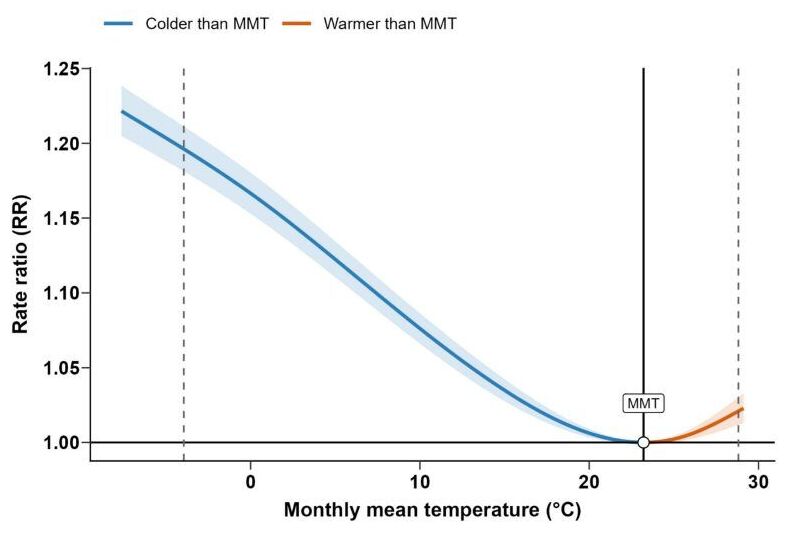
Researchers followed 80% of the US population for two decades, and found that cold temperatures contributed to a whopping 800,000 deaths while hot temperatures were linked to only 2,000.

They were looking at monthly temperature data in 819 locations across the US. Then they checked the cardiovascular death rates and found the burden of excess deaths is "quite substantial".

During cold periods our blood vessels contract to reduce heat loss, which is why our skin looks slightly bluer or whiter in colder weather. But even a small reduction in volume makes our blood pressure rise. So it is not surprising that colder months are linked to significantly higher death rates from heart attacks, strokes, and coronary artery disease compared to milder periods. As the population ages and kidney disease and diabetes get worse, the

Nearly every dollar we pour into preventing heat deaths will end up killing more people than it saves. It's time Climate Ministry's put more accurate costings on any policy aiming to reduce global temperature. We want numbers, and during cold months the people need oil to keep them warmer.

Look at the shape of the curve. Wow!.
Cold Temperature
The ideal temperature for homo sapiens, at least to avoid a cardiovascular death, is apparently 23°C (or 74°F) .

Bulb

US lab unlocks secrets of superconductors that ensure no energy is lost during electricity flow

superconductor breakthough
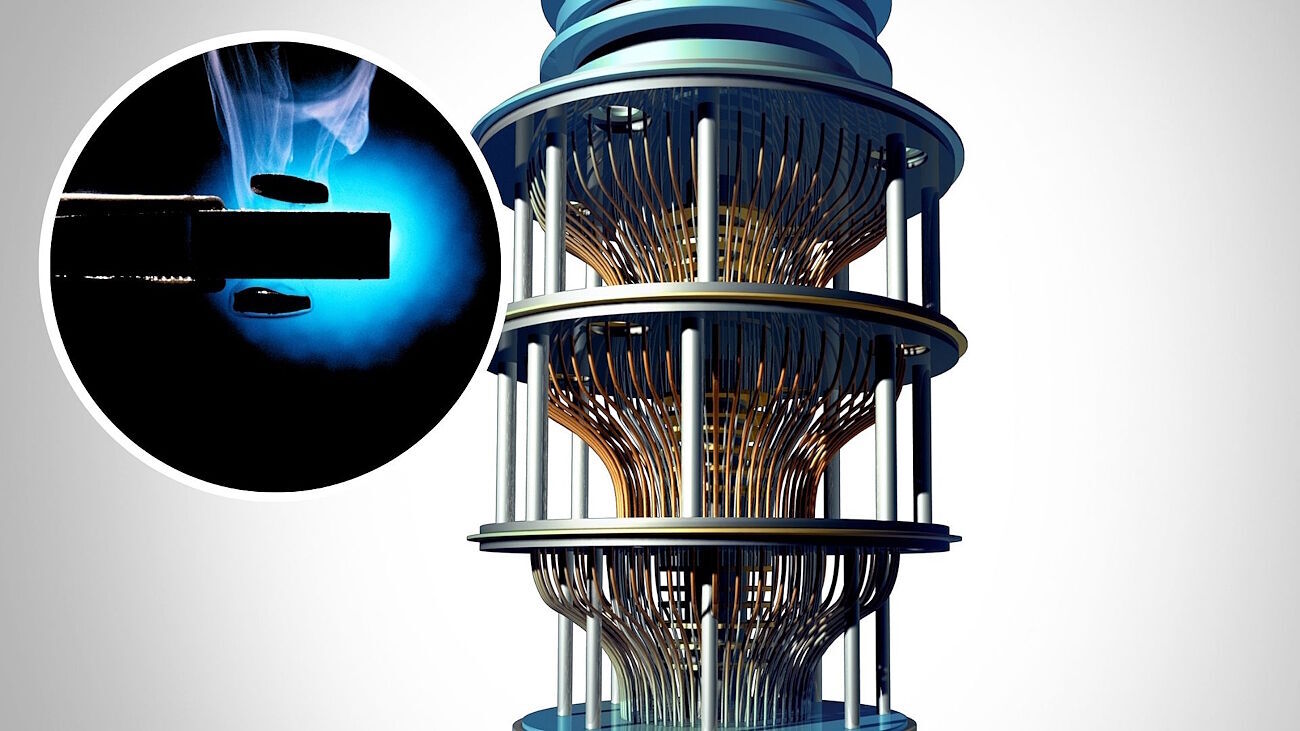
© Representational image/Wildpixel/CharlesSmall differences in how atoms are arranged in a crystalline lattice can strongly affect superconductivity.
Superconductors allow electricity to flow without resistance, meaning no energy is lost as heat.

Researchers in the United States have unlocked secrets of high-temperature superconductors.

Researchers at the U.S. Department of Energy's (DOE) Argonne National Laboratory have discovered how tiny changes in superhydride structure enable superconductivity at near room temperatures but extreme pressure — offering clues for designing more practical superconductors.

"These experiments show what the upgraded APS can do. We can now study atomic-level structures with unprecedented detail in materials under extreme pressure," said Maddury Somayazulu, Argonne physicist.

Comment: Further reading:


Moon

Artemis II performs closest moon flyby amid communication loss

Moon flyby
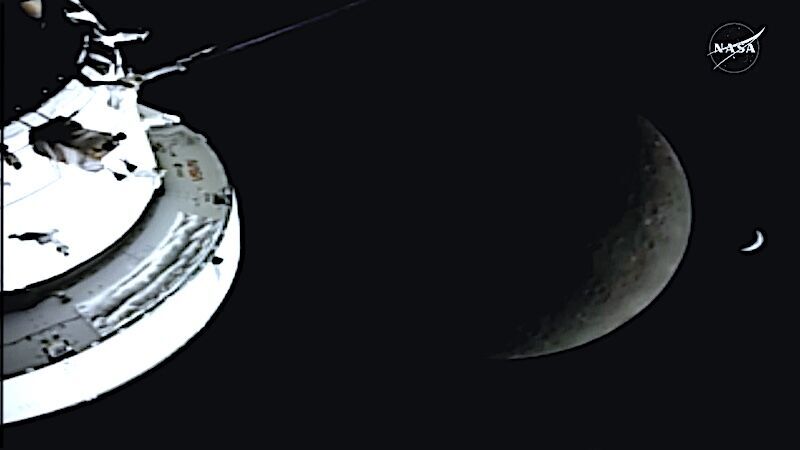
© NASA/AP1 The Orion Spacecraft, the Earth and the Moon are seen from a camera as the Artemis II crew and spacecraft travel farther into Space • Monday, April 6, 2026
The four astronauts of NASA's Artemis II mission have ventured farther from Earth than any humans before them.

The Orion spacecraft, carrying three NASA astronauts and a Canadian Space Agency astronaut, performed its long-awaited lunar flyby, coming within roughly 4,070 miles (6,550 km) of the lunar surface and entering the Moon's gravitational sphere of influence.

In a planned and highly anticipated phase of the journey, Mission Control in Houston lost contact with the crew at around 6:43pm ET for approximately 40 minutes. The communication blackout occurred as the Moon's body blocked radio and laser signals between the Earth-based Deep Space Network and the Orion spacecraft.

While out of contact, NASA astronauts Reid Wiseman, Victor Glover, and Christina Koch, along with Canadian Space Agency (CSA) astronaut Jeremy Hansen, focused on their scientific objectives, photographing and observing the lunar far side - including the 600-mile-wide Orientale basin.

Moon

Best of the Web: Right as Artemis II astronauts passed behind Moon, multiple meteoroids hit it!

screen capture
© NASAScreen capture from NASA's Artemis II Live Views
Artemis II were giddy (their words!) on the evening of April 6th when they witnessed explosions on the lunar surface. Meteoroids were hitting the Moon. "We saw at least five," reported mission commander Reid Wiseman.

The meteors appeared in middle of a solar eclipse. About an hour after the crew made their closest approach to the farside of the Moon, the sun disappeared behind the lunar disk, giving the astronauts a chance to view the first solar eclipse ever seen by humans from behind the Moon.

Comment: In line with the increasing trend of meteors, fireballs and impact craters, not to mention the 11,000-plus new asteroids in our solar system, which is only the tip of the iceberg. For crucial information, see:


Galaxy

The most pristine star yet found in the known universe

pristine star magellanic cloud
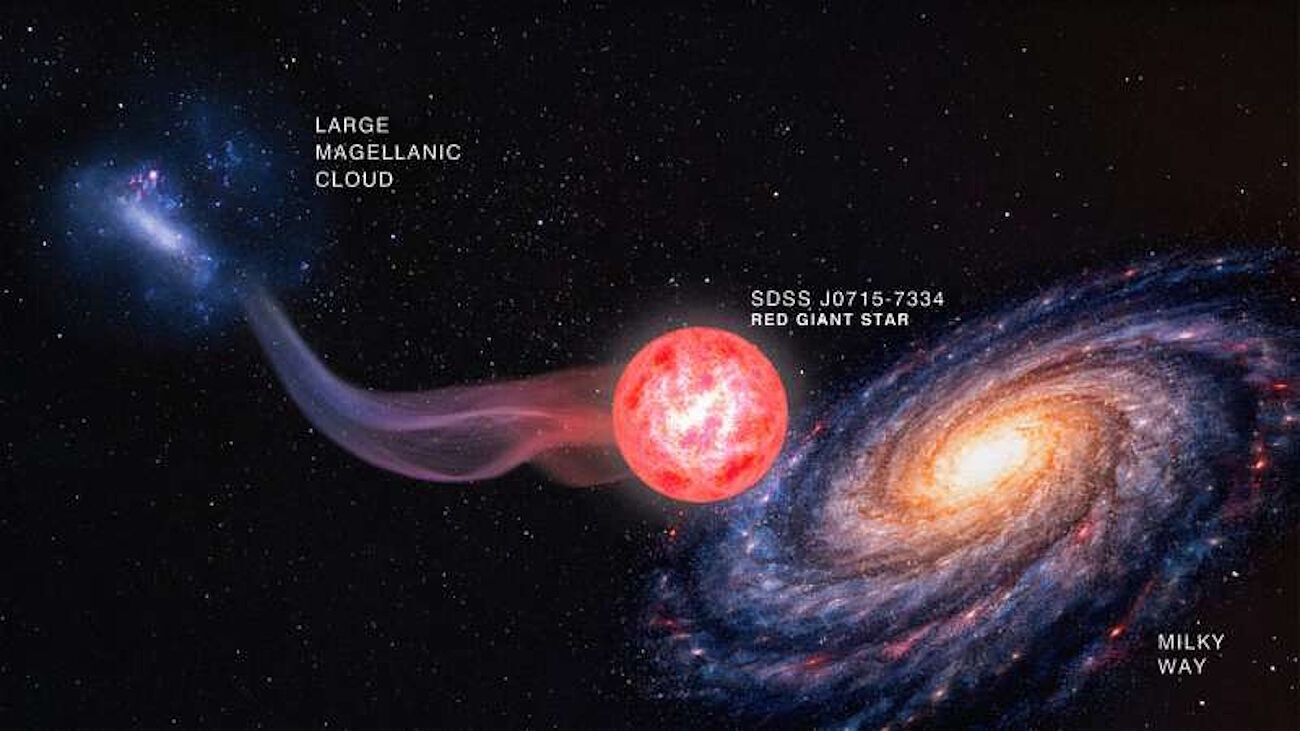
© Navid Marvi/Carnegie ScienceAn ancient immigrant: an artist's conception (not to scale) of the red giant SDSS J0915-7334, which was born near the Large Magellanic Cloud and has now journeyed to reside in the Milky Way.
An unusual team of astronomers used Sloan Digital Sky Survey-V (SDSS-V) data and observations on the Magellan telescopes at Carnegie Science's Las Campanas Observatory in Chile to discover the most pristine star in the known universe, called SDSS J0715-7334. Their work is published in Nature Astronomy.

Hunting for the universe's earliest stars

Led by the University of Chicago's Alexander Ji — a former Carnegie Observatories postdoctoral fellow — and including Carnegie astrophysicist Juna Kollmeier — who leads SDSS, now in its fifth generation — the research team identified a star from just the second generation of celestial objects in the cosmos, which formed just a few billion years after the universe began.

"These pristine stars are windows into the dawn of stars and galaxies in the universe," Ji explained. Several of his and Kollmeier's co-authors on the paper are undergraduate students from UChicago, whom Ji brought to Las Campanas on an observing trip for spring break last year. "My first visit to LCO is where I really fell in love with astronomy, and it was special to share such a formative experience with my students."

Info

DNA reveals a mysterious human lineage no one knew existed in Asia

AI-generated illustrative image
© AI-generated illustrative image
A genetic study has uncovered a previously unknown human lineage that survived the end of the last Ice Age, challenging long-held assumptions about how ancient populations evolved and interacted during one of the most transformative periods in human history.

The discovery, published in the journal Current Biology, centers on ancient human remains unearthed at the Donghulin archaeological site near modern-day Beijing. By analyzing DNA extracted from these remains, scientists have revealed a complex and surprisingly resilient human story — one in which multiple lineages coexisted, adapted, and sometimes disappeared without leaving a lasting genetic trace.

A Hidden Branch of Humanity Emerges

At the heart of the discovery is an approximately 11,000-year-old individual whose genetic profile does not match any previously identified human population. Researchers, led by Qiaomei Fu, found that this individual belonged to a deeply divergent northern East Asian lineage that likely split from other human groups tens of thousands of years earlier.

This lineage persisted well beyond the end of the Ice Age, a period marked by dramatic climate warming and sweeping cultural change. Rather than being replaced outright by newer populations — as seen in parts of Europe — the evidence suggests that ancient human diversity in East Asia was far more enduring and complex.

According to the study, this early-diverged lineage "may represent a previously unrecognized ancestry," highlighting how little is still known about human population structures in prehistoric Asia.