Science & TechnologyS

Cloud Lightning

Doctors discover electrical charge can reshape living tissue

electricity tissue
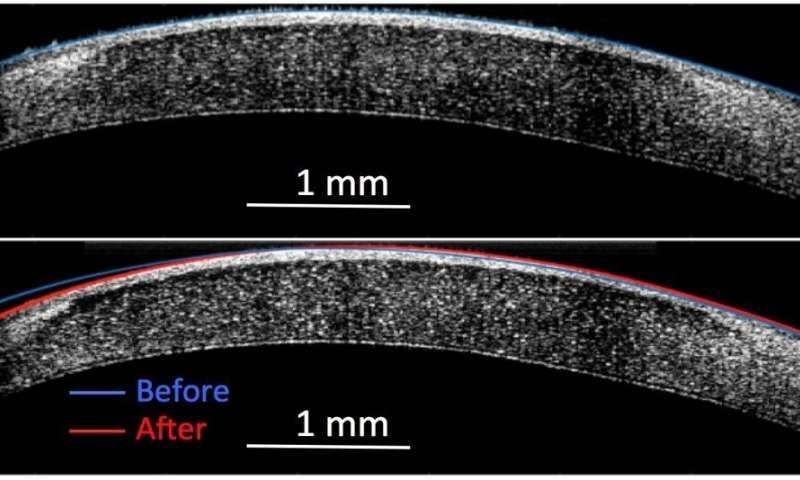
© Rachel Qu, Anna Stokolosa, Charlotte CullipA new noninvasive process can alter the curve of a cornea from that seen in blue in a) to the new position seen in red in b) to fix vision problems.
A new type of medical procedure could help replace some kinds of painful, invasive surgeries.

By using electrical current and 3D-printed molds, doctors figured out how to soften and re-shape cartilage without making a single incision - a development that could significantly shorten the recovery time for medical procedures and make the whole process less painful.

Surgery Shocker

The research, described in an American Chemical Society (ACS) press release, was presented Tuesday at the ACS' 2019 Spring national meeting. The research describes how cartilage, which shapes our noses and other features, can be made more malleable after being subjected to an electrical current.

Comment: See also:


Camera

Hell Creek fossils may provide snapshot of the day the dinosaurs died

Hell Creek
© Danita Delimont / Alamy Stock PhotoLayers of rock in the western U.S. known as the Hell Creek Formation preserve the final millennia of the age of dinosaurs. A nearby site in North Dakota called Tanis may hold sediments laid down within minutes to hours of the asteroid impact that set off this mass extinction 66 million years ago.
These fossils may capture the day the dinosaurs died. Here's what you should know. Reports about a stunning site in North Dakota are making waves among paleontologists, who are eager to see more.

Mere minutes after a miles-wide asteroid slammed into Earth 66 million years ago, a hailstorm of tiny glass beads rained down on a flooding estuary in what's now North Dakota. As seismic waves from the impact thrashed the water, plants and animals were jumbled up and buried in the shifting sediments, which preserved the aftermath for millennia.

Now, researchers say this site-newly described in a paper in the Proceedings of the National Academy of Sciences-represents an exceedingly rare snapshot of the moment that marked the dinosaurs' demise. Handfuls of fossils have been found before at other places that also capture this moment in the geologic record, known as the K-Pg boundary. But the North Dakota site potentially represents an entire ecosystem affected by the catastrophe.

"Essentially, what we've got there is the geologic equivalent of high-speed film of the very first moments after the impact," says lead study author Robert DePalma, a Ph.D. student at the University of Kansas and a curator at the Palm Beach Museum of Natural History.

Comment: It should be noted that extinction wasn't immediate for all creatures and in fact we still don't know why the reign of the dinosaurs ended:

See also:


Family

Ancient teeth point to mysterious human relative

China gorge
© NOVARC IMAGES/ ALAMYThe gorges of Guizhou Province glimmer in the sunlight in China. Fossil teeth found in this province suggest that millions of years ago, a cave here was home to a mysterious branch of the human family tree.
Four teeth found in a cave in the Tongzi county of southern China have scientists scratching their heads.

In 1972 and 1983, researchers extracted the roughly 200,000-year-old teeth from the silty sediments of the Yanhui cave floor, initially labeling them as Homo erectus, the upright-walking hominins thought to be the first to leave Africa. Later analysis suggested they didn't quite fit with Homo erectus, but that's where the story paused for nearly two decades.

Now, a study published in the Journal of Human Evolution takes a fresh look at these ancient teeth, using modern methods to examine the curious remains. The new analysis excludes the possibility that the teeth could come from Homo erectus or the more advanced Neanderthals, but the elusive owner remains unknown.


HUMAN ORIGINS 101: The story of human evolution began about 7 million years ago, when the lineages that lead to Homo sapiens and chimpanzees separated. Learn about the over 20 early human species that belong in our family tree and how the natural selection of certain physical and behavioral traits defined what it means to be human.

Brain

Transgenic monkeys carrying human gene show human-like brain development

cloned monjeys
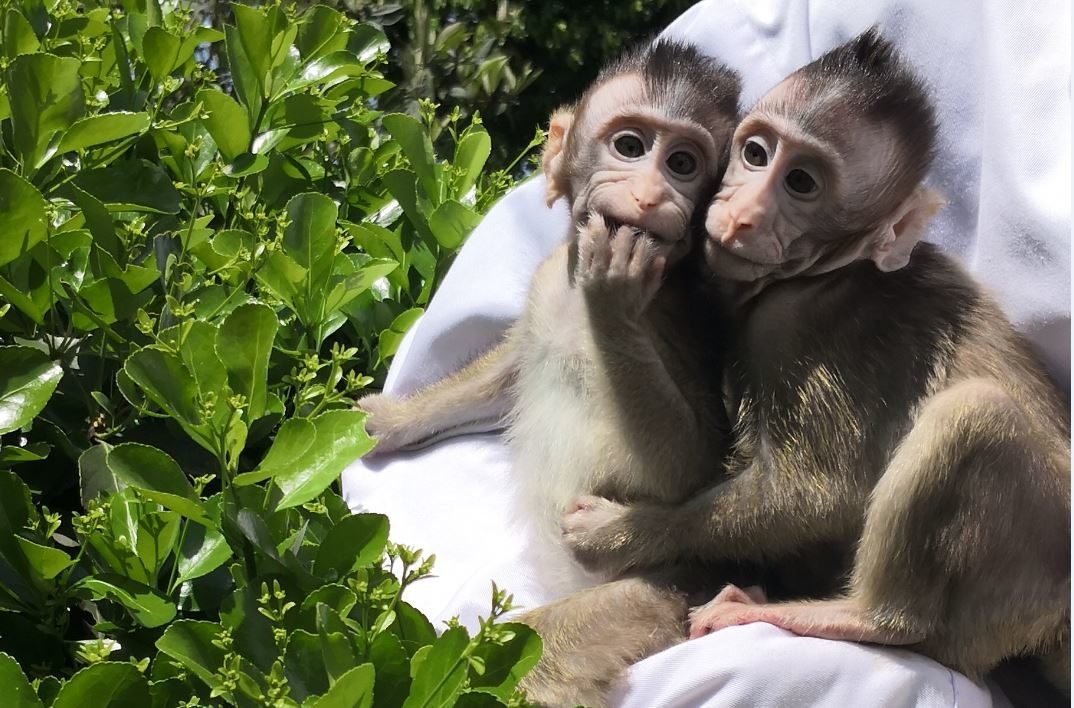
Zhongzhong and Huahua, the world's first monkeys cloned by using somatic cells, are taken outside to bask in the sun in Shanghai.
Researchers from China and the United States have created transgenic monkeys carrying a human gene that is important for brain development, and the monkeys showed human-like brain development.

Scientists have identified several genes that are linked to primate brain size. MCPH1 is a gene that is expressed during fetal brain development. Mutations in MCPH1 can lead to microcephaly, a developmental disorder characterized by a small brain.

In the study published in the Beijing-based National Science Review, researchers from the Kunming Institute of Zoology, Chinese Academy of Sciences, the University of North Carolina in the United States and other research institutions reported that they successfully created 11 transgenic rhesus monkeys (eight first-generation and three second-generation) carrying human copies of MCPH1.

Rose

New research shows plants turn out to have a 'nervous system'

Arabidopsis thaliana
It's constructed differently from an animal one.

Summary and Abstract:
Rapid, long-distance signaling in plants: A plant injured on one leaf by a nibbling insect can alert its other leaves to begin anticipatory defense responses. Working in the model plant Arabidopsis, Toyota et al. show that this systemic signal begins with the release of glutamate, which is perceived by glutamate receptor-like ion channels (see the Perspective by Muday and Brown-Harding). The ion channels then set off a cascade of changes in calcium ion concentration that propagate through the phloem vasculature and through intercellular channels called plasmodesmata. This glutamate-based long-distance signaling is rapid: Within minutes, an undamaged leaf can respond to the fate of a distant leaf.

Abstract

Animals require rapid, long-range molecular signaling networks to integrate sensing and response throughout their bodies. The amino acid glutamate acts as an excitatory neurotransmitter in the vertebrate central nervous system, facilitating long-range information exchange via activation of glutamate receptor channels. Similarly, plants sense local signals, such as herbivore attack, and transmit this information throughout the plant body to rapidly activate defense responses in undamaged parts. Here we show that glutamate is a wound signal in plants. Ion channels of the GLUTAMATE RECEPTOR-LIKE family act as sensors that convert this signal into an increase in intracellular calcium ion concentration that propagates to distant organs, where defense responses are then induced. --Masatsugu Toyota, Dirk Spencer, Satoe Sawai-Toyota, Wang Jiaqi, Tong Zhang, Abraham J. Koo, Gregg A. Howe ... , "Glutamate triggers long-distance, calcium-based plant defense signaling" at Science (paywall)

Microscope 2

Should Quantum Anomalies Make Us Rethink Reality?

Quantum image
© ShutterstockDifferent observations of the same reality (in photons) may both be correct, according to quantum mechanics.
Every generation tends to believe that its views on the nature of reality are either true or quite close to the truth. We are no exception to this: although we know that the ideas of earlier generations were each time supplanted by those of a later one, we still believe that this time we got it right. Our ancestors were naรฏve and superstitious, but we are objective-or so we tell ourselves. We know that matter/energy, outside and independent of mind, is the fundamental stuff of nature, everything else being derived from it-or do we?

In fact, studies have shown that there is an intimate relationship between the world we perceive and the conceptual categories encoded in the language we speak. We don't perceive a purely objective world out there, but one subliminally pre-partitioned and pre-interpreted according to culture-bound categories. For instance, "color words in a given language shape human perception of color." A brain imaging study suggests that language processing areas are directly involved even in the simplest discriminations of basic colors. Moreover, this kind of "categorical perception is a phenomenon that has been reported not only for color, but for other perceptual continua, such as phonemes, musical tones and facial expressions." In an important sense, we see what our unexamined cultural categories teach us to see, which may help explain why every generation is so confident in their own worldview. Allow me to elaborate.


Comment: Indeed, there seem to be several layers of perception, each built on top of the other. For instance, there is conscious perception (which Alfred Whitehead called 'perception in the mode of symbolic reference', because of the memories and concepts involved, which Kastrup references above). That is built on what might be called basic sensation ('perception in the mode of presentational immediacy'), which are the 'pure' sense data before they are interpreted by reference to symbols. That's where thinkers like Descartes and Locke stopped. Whitehead added a third, more fundamental type: perception in the mode of causal efficacy, the direct experience of causation, without reference to the specifics of sense data or the concepts with which those data are interpreted.


Microscope 1

Responding to Skeptic Magazine: Does the T-urf13 gene really refute irreducible complexity?

Drought. Corn suffering.
© Pixabay.com
Biologist Arthur Hunt is a professor in Department of Plant and Soil Sciences at the University of Kentucky. Since 2007 he has been claiming to have refuted Michael Behe's thesis that irreducible complexity cannot arise by mindless evolutionary processes. Specifically, he points to an example that he maintains is an instance of an irreducibly complex system arising from scratch. The example is a mitochondrial gene called T-urf13, which encodes an ion-gated channel called URF13 that is specific to the mitochondria of maize (the corn plant Zea mays L). In January of this year, Hunt published a revised article online, which can be accessed and downloaded here. And now in a review of Behe's new book, Darwin Devolves, published in Skeptic Magazine, biologist Nathan Lents at John Jay College, drawing on Hunt's article, confidently proclaims that T-urf13 is a "clear example of random tinkering accomplishing exactly what [Behe] claims it cannot." Is that so?

Hunt's article begins:
There has been a spate of interest in the blogosphere recently in the matter of protein evolution, and in particular the proposition that new protein function can evolve. The original version of this essay followed a review of this subject by Long et al. Briefly, the various mechanisms discussed in the review include exon shuffling, gene duplication, retroposition, recruitment of mobile element sequences, lateral gene transfer, gene fusion, and de novo origination. Of all of these, the mechanism that received the least attention was the last - the de novo appearance of new protein-coding genes basically "from scratch". A few examples are mentioned (such as antifreeze proteins, or AFGPs), and long-time followers of ev/cre discussions will recognize the players. However, what I would argue is the most impressive of such examples is not mentioned by Long et al.
The Nature Reviews Genetics article Hunt cites, authored by Manyuan Long and his colleagues back in 2003 (Long et al., 2003), has already been discussed here and refuted at length, as well as in Stephen Meyer's 2013 book Darwin's Doubt (Meyer, 2013).

Info

Blue light could soon be used to treat superbug infections

Mohamed Seleem, a professor of microbiology
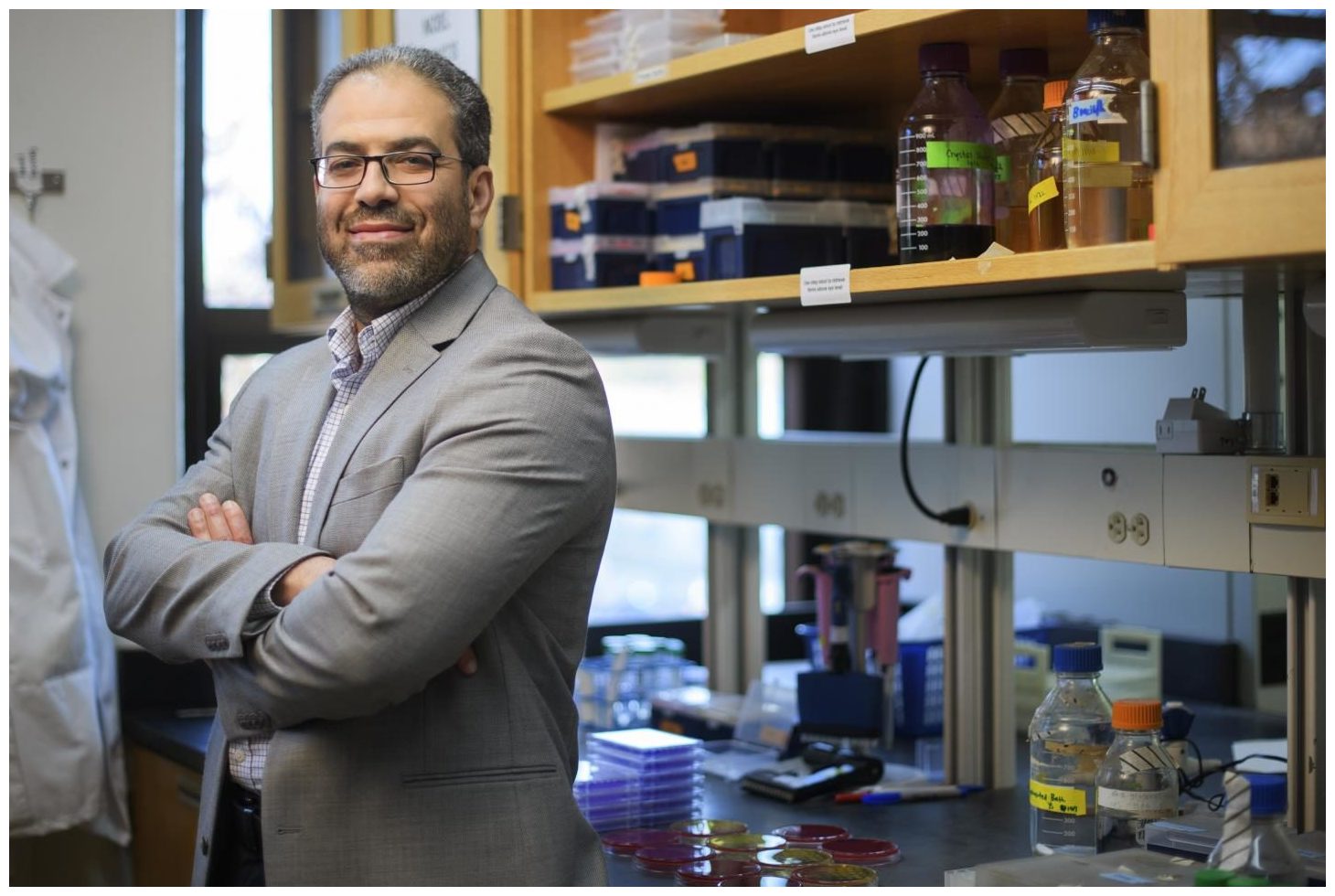
© Purdue University/Rebecca WilcoxMohamed Seleem, a professor of microbiology in Purdue's College of Veterinary Medicine, researches antimicrobial resistance and infectious disease.
Methicillin-resistant Staphylococcus aureus (MRSA), a bacterium that causes infection in various parts of the body, is often called a "superbug" thanks to its ability to dodge many common antibiotics. Although most MRSA infections aren't serious, some can be life-threatening, sometimes resulting in amputation of the infected appendage.

Rather than rolling the dice with a multi-drug combination or wasting precious time trying to determine which medicine to prescribe, doctors could soon use a new method for disarming the superbugs: light therapy.

Researchers at Purdue University and Boston University have discovered that exposing the bug to blue light can render it defenseless against antiseptics as mild as hydrogen peroxide. The findings were published in the journal Advanced Science.

"This new tool can treat any superficial wound infected with MRSA, which are typically very difficult to treat," said Mohamed Seleem, a professor of microbiology at Purdue's College of Veterinary Medicine. "The device itself is very small and easy to use. We're hoping that in the next few years, anyone could carry it around in their purse."

V

Chinese hackers make Tesla drive into oncoming traffic

tesla
© REUTERS / Alexandria Sage
Researchers from Keen Labs in China, one of the most widely respected cybersecurity research groups in the world, have successfully hacked a Tesla Model S autopilot system and forced the car to drive into an oncoming lane.

The wiley white hat hackers developed different forms of attack to confuse and disrupt the Tesla autopilot lane recognition system.

In the first method, Keen researchers added a large number of patches to the dividing line on the road itself to blur it. While it did fool the autopilot, the researchers deemed it too conspicuous to be of any practical, if malicious, use in the real world.

However, a more subtle approach proved far more effective: using just three strategically placed stickers, the researchers were able to create a "fake lane."

For instance, when the stickers were placed at an intersection, hackers could fool the Tesla into thinking the lane continued into what was actually the oncoming lane.

Satellite

Military analyst: New spy satellite to give India 'considerable advantage' over China and Pakistan

IndiaSatellite
© EMISAT/ISRO
The EMISAT radar imaging reconnaissance satellite will allow India to "easily" unveil the electronic warfare capabilities of potential adversaries, thus giving it an edge over Pakistan and China, a military analyst told RT.

"A leading space power - and India is aspiring to be one - simply has to have all types of space reconnaissance in its possession," Mikhail Khodarenok, military analyst and retired colonel in the Russian missile defense forces, told RT.

The EMISAT satellite, which was delivered to orbit by the Indian-made PSLV C-45 on Monday, is a counterpart of the American Lacrosse/Onyx spy satellite. Radar imaging reconnaissance satellites like these "intercept radio signals and identify which radio-electronic systems are used in the designated area," establishing their location, schedule of operations, and the frequencies they use, Khodarenok explained. "They're designed to unveil potential enemies' radars, anti-aircraft missile shield capabilities and air traffic controls."