Science & TechnologyS


Galaxy

Tsunami-like rampaging quasars can rip their host galaxies to shreds, new study reveals

quasar
© Flickr / European Southern Observatory
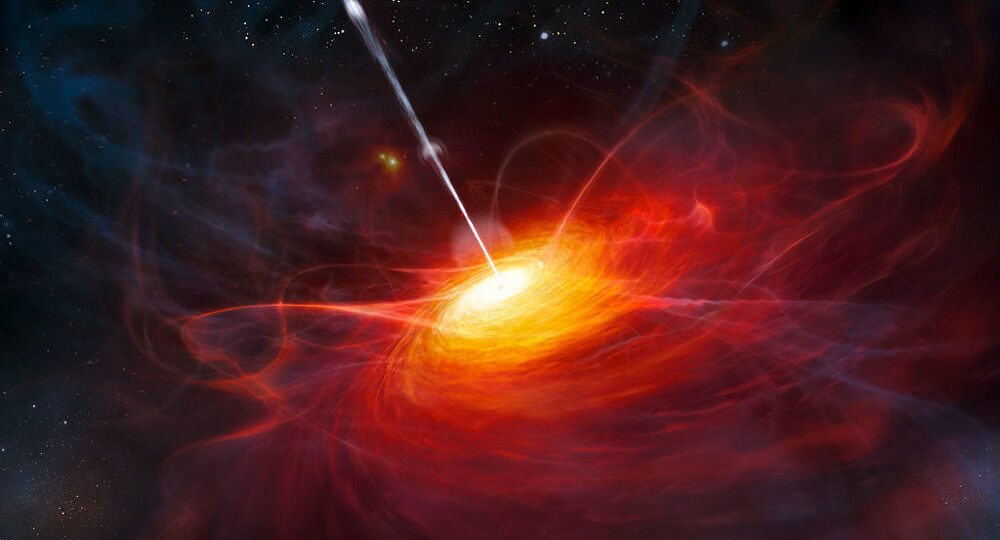
A supermassive black hole lies at the heart of almost every galaxy in the universe, swallowing matter and emitting large amounts of radiation, with the most voracious ones called quasars - objects that when observed through most telescopes look like bright stars.

Some of the most "energetic" objects of the universe are likely preventing the biggest galaxies from bulking up even more, according to new research.

Quasars - extremely bright quasi-stellar objects powered by black holes a billion times as massive as our Sun - have fascinated astronomers since their discovery half a century ago.

In a spate of six studies that were published on 16 March in a special edition of The Astrophysical Journal Supplement Series, astronomers state the case that the very same radiation that is emitted by the voracious objects as they swallow matter may be ripping apart their host galaxies.

Comment: See also:


Bulb

Australia found a way to save water from plastic pollution and we can start doing the same

Water pollution
Plastic is everywhere around us polluting every corner of our planet affecting our life, health and well-being. Our oceans are packed with plastic endangering the existence of marine life.

The National Geographic states the following:
"Each year, an estimated 18 billion pounds of plastic waste enters the world's ocean from coastal regions. That's about equivalent to five grocery bags of plastic trash piled up on every foot of coastline on the planet".
Furthermore, it reports the devastating state of the oceans including the environment. The coral reefs are smothered in bags, turtles gagging on straws, whales and seabirds starving their bodies as due to the bits of plastic there is not enough place for real food, and so on.

The plastic that is discarded mainly comes from single-item use and around 40% of it ends in the oceans. Many companies are recycling the plastic, but that is less than a fifth of all plastic, so there is the need for new innovative solutions to improve this condition.

Attention

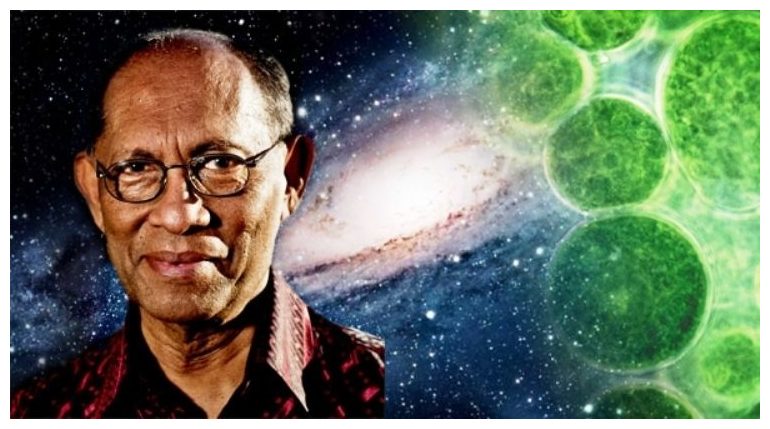
Coronavirus and disease from outer space - Q & A with Dr. Wickramasinghe

Chandra Wickramasinghe
© When Worlds Collide

Q: Dr. C, thank you for joining us here at the Tusk. Do you believe person-to-person viral transmission occurs with Coronavirus or other viruses? If the infection comes from space, how do you account for the "close quarters" effect where infection rates run so much higher on cruise ships and such?


It appears that this new virus can be infective only on very close contact. The many cases occurring simultaneously on cruise ships or chalets in ski resorts can be explained if clouds carrying the virus come down in local regions. As for freak "superspreaders" this is a myth based on ignorance. If a group of people were exposed to a cloud of the virus and became simultaneously infected from a non-human environmental source of any kind, there would be a dispersion in the times before illness shows up. That is to say the incubation period would have statistical spread, so one case will appear first. To crown him/her a superspreader with a mysterious power is akin to a medieval myth (explained in the attached article.)

This idea was first discussed scientifically by the late Sir Fred Hoyle and me in two books - Diseases from Space (1979) and Evolution from Space (1980). Here we introduced the theory that comets carry bacteria and viruses and that impacts by comets were important for both the beginning of life on Earth and for its further evolution. The first point to make is that the standard view that life originates spontaneously on Earth in a primordial soup or in deep sea thermal vents has no evidence whatsoever to support it. Every experiment that has been done to demonstrate this possibility has been a dismal failure over more than 50 years. The molecular complexity of life - the information content of life - is of an exceedingly specific kind and is superastronomical in quantity, and so the origin of life could not have happened on Earth.

A few years ago the very oldest evidence of microbial life on Earth was discovered in rocks dated 4300 million years ago - and this was at a time when the Earth was being relentlessly pounded by comet and asteroid impacts. So there is little doubt now that life on Earth came from impacting comets, and the subsequent evolution of life happened against the backdrop of new bacteria and viruses being introduced via comets, adding new potential for evolution. It is this potential for evolution with new cosmic genes against which Darwinian evolution takes place. So there is no doubt cosmic viruses are in our genes. And this is the reason that new viruses coming from space today can relate to evolved life forms like ourselves.

Info

Sleep inconsistency may increase risk to cardiovascular health

Bedtime
© University of Notre Dame
Despite increasing awareness of how critical sleep is to our health, getting a good night's rest remains increasingly difficult in a world that's always "on" — responding to emails at all hours, news cycles that change with every tweet and staring endlessly into the blue light of cell phone, tablet and computers screens.

Scientists have stressed the importance of healthy sleep habits, recommending at least seven hours each night, and have linked lack of sleep to an increased risk in numerous health conditions, including diabetes, stroke and cardiovascular disease.

Now a new study shows whether or not you go to bed on time could also have an effect on your health. Researchers at the University of Notre Dame studied the correlation between bedtime regularity and resting heart rate (RHR) and found that individuals going to bed even 30 minutes later than their usual bedtime presented a significantly higher resting heart rate that lasted into the following day.

"We already know an increase in resting heart rate means an increased risk to cardiovascular health," said Nitesh Chawla, the Frank M. Freimann professor of Computer Science and Engineering at Notre Dame, director of the Center for Network and Data Science and a lead author of the study. "Through our study, we found that even if you get seven hours of sleep a night, if you're not going to bed at the same time each night, not only does your resting heart rate increase while you sleep, it carries over into the next day."

Microscope 2

Scientists 'reset' the age of stem cells from a supercentenarian who lived to 114

Embryonic stem cells
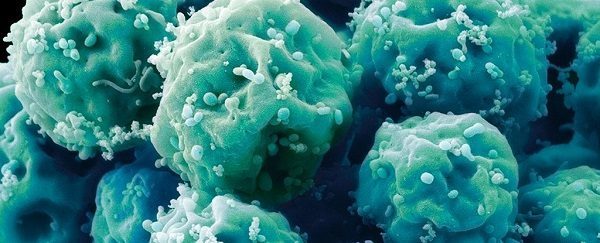
© Science Photo Library/Steve Gschmeissner/Getty ImagesEmbryonic stem cells (ESCs), coloured scanning electron micrograph.
For the first time, scientists have reprogrammed the stem cells of a 114-year-old woman, the oldest donor to date.

After first transforming cells from her blood sample into induced pluripotent stem cells (iPSCs), the researchers then generated mesenchymal stem cells, which help to maintain and repair tissues like bone, cartilage and fat.

"We set out to answer a big question: Can you reprogram cells this old?" says stem cell biologist Evan Snyder at Sanford Burnham Prebys Medical Discovery Institute in California.

"Now we have shown it can be done, and we have a valuable tool for finding the genes and other factors that slow down the aging process."

Stem cells are sometimes called "cellular Rosetta stones", because they allow us to study disease, cancer, ageing and regeneration like never before.

Beaker

Finally, an origin-of-life scientist debates evolution skeptic James Tour

Prof. Lee Cronin
© University of GlasgowProf. Lee Cronin engaged in debate with intelligent design proponent James Tour
Justin Brierley is a very thoughtful radio and video debate host in the U.K. His program, Unbelievable?, recently hosted a conversation on the origin of life that included University of Glasgow chemist Lee Cronin. As Brierley reports, he was flooded with requests afterward for a rematch, this time with skeptical synthetic organic chemist James Tour at Rice University.

Readers of Evolution News will be familiar with Tour, who spoke last year at Discovery Institute's Dallas Conference on Science & Faith and who contributed a chapter to the new updated and expanded book from Discovery Institute Press, The Mystery of Life's Origin: The Continuing Controversy. Now Brierley has brought together Tour and Cronin for a debate that is substantive, combative, and enlightening:

Info

Squids can edit their own genes

Giant Axon in Squid
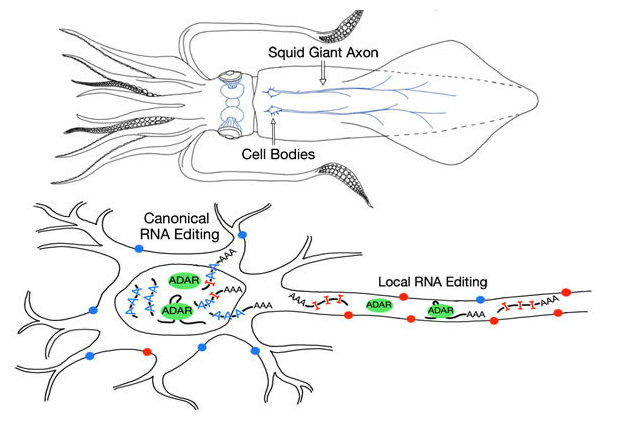
© Vallecillo-Viejo et al, Nucl. Acids Res., 2020.Top, schematic of squid anatomy showing the location of the “giant axon,” an unusually large neural projection that partly controls the squid’s jet propulsion system, used for very fast movement, attacks and escapes. Below, schematic of a neuron, showing the location of the nucleus where all RNA editing was previously thought to occur, and the axon, where local RNA editing was identified in squid.
Woods Hole, Mass. - Revealing yet another super-power in the skillful squid, scientists have discovered that squid massively edit their own genetic instructions not only within the nucleus of their neurons, but also within the axon — the long, slender neural projections that transmit electrical impulses to other neurons. This is the first time that edits to genetic information have been observed outside of the nucleus of an animal cell.

The study, led by Isabel C. Vallecillo-Viejo and Joshua Rosenthal at the Marine Biological Laboratory (MBL), Woods Hole, is published this week in Nucleic Acids Research.

The discovery provides another jolt to the central dogma of molecular biology, which states that genetic information is passed faithfully from DNA to messenger RNA to the synthesis of proteins. In 2015, Rosenthal and colleagues discovered that squid "edit" their messenger RNA instructions to an extraordinary degree - orders of magnitude more than humans do — allowing them to fine-tune the type of proteins that will be produced in the nervous system.

Comet 2

The size of Comet ATLAS

Comet C/2019 Y4 ATLAS
© Michael JägerComet C/2019 Y4 ATLAS on March 18, 2020 @ Weißenkirchen, Austria
No one knows how big the icy core of Comet ATLAS (C/2019 Y4) might be--possibly no wider than a few kilometers. One thing's for sure, though, the comet's atmosphere is huge. New images from amateur astronomers around the world show that ATLAS's gaseous envelope has ballooned in diameter to ~720,000 km--about half as wide as the sun.

"Comet ATLAS's coma (atmosphere) is approximately 15 arcminutes in diameter," reports Michael Jäger of Weißenkirchen, Austria, who took the picture, above, on March 18th. "Its newly-formed tail is about the same size."

Other astronomers are getting similar results. 15 arcminutes = a quarter of a degree. Given Comet ATLAS's distance of 1.1 AU on March 18th, that angle corresponds to a physical size of 720,000 km.

On the scale of big things in the solar system, Comet ATLAS falls somewhere between the sun (1,392,000 km diameter) and Jupiter (139,820 km). It's not unusual for comets to grow so large. While their icy solid cores are typically mere kilometers in diameter, they can spew prodigious amounts of gas and dust into space, filling enormous volumes. In the fall of 2007, Comet 17P/Holmes partially exploded and, for a while, had an atmosphere even larger than the sun. The Great Comet of 1811 also had a sun-sized coma. Whether Comet ATLAS will eventually rival those behemoths of the past remains to be seen.

Comment: Comet Y4 ATLAS brightening, could become naked-eye bright by spring


Violin

Ancestor of all animals identified in Australian fossils

Ikaria wariootia
© Sohail Wasif/UCRArtist's rendering of Ikaria wariootia.
A team led by UC Riverside geologists has discovered the first ancestor on the family tree that contains most familiar animals today, including humans.

The tiny, wormlike creature, named Ikaria wariootia, is the earliest bilaterian, or organism with a front and back, two symmetrical sides, and openings at either end connected by a gut. The paper is published today in Proceedings of the National Academy of Sciences.

The earliest multicellular organisms, such as sponges and algal mats, had variable shapes. Collectively known as the Ediacaran Biota, this group contains the oldest fossils of complex, multicellular organisms. However, most of these are not directly related to animals around today, including lily pad-shaped creatures known as Dickinsonia that lack basic features of most animals, such as a mouth or gut.

The development of bilateral symmetry was a critical step in the evolution of animal life, giving organisms the ability to move purposefully and a common, yet successful way to organize their bodies. A multitude of animals, from worms to insects to dinosaurs to humans, are organized around this same basic bilaterian body plan.

Comment: See also: And check out SOTT radio's:


Life Preserver

Forget the woolly mammoth—let's resurrect some extinct plants

Extinct plant
© GizmodoIllustration: Angelica Alzona
From Jesus to "Jurassic Park," people dream of resurrection, cheating death, defying nature, and uncovering the mysteries of the past. We debate the ethics of reviving extinct species like the passenger pigeon or woolly mammoth, with scientists clamoring to make some poor, hairy proboscidean clone baby take its first awkward steps out onto the ice. Yet somehow, the idea of resurrecting long-lost plants never really caught on in the public imagination. Maybe that's because most people probably couldn't even name an extinct plant, let alone one they'd want to smell, see, or study, though Rachel Meyer, an assistant professor of ecology and evolutionary biology at the University of California, Santa Cruz, has a hard time picking just one.

She likes silphium, a mysterious herb prized by ancient Romans as a food, perfume, and aphrodisiac that, according to the BBC, was "overharvested and overgrazed" to extinction almost 2,000 years ago. But if she could actually resurrect any now-extinct flora, "I'd probably just opt to bring back some of the melon diversity that was lost," she told Gizmodo. She cites bygone melon varieties eaten by ancient Egyptians, and others that, according to legend, were so good a Renaissance-era pope died after overdosing on the sweet, pulpy fruit.

"There are a lot of delicious ancient things," Meyer said, "and I'm like 'man, how did we lose that?'" Meyer rhapsodizes about "eggplant varieties in ancient ayurvedic texts" and extinct varieties of carrots "of beautiful different colors, flavors, and aromas," used not just as food, but "in ceremony, and as medicines, and in embalming." There's a broad, storied slate of lost plant species and varieties "that have been sort of forgotten that maybe we want again," she said, and it's looking increasingly likely that "we could bring these things back."

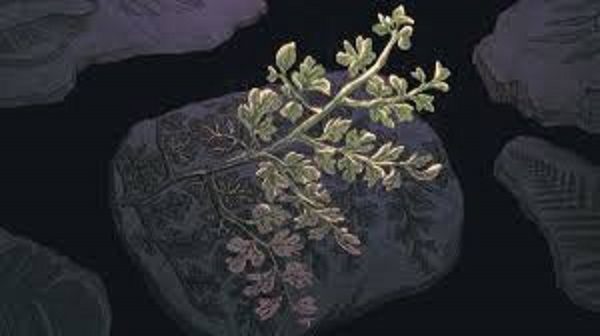
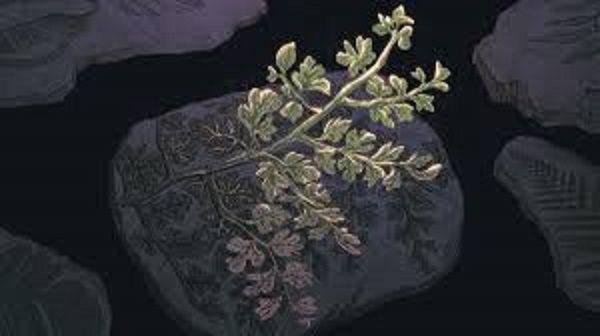
True, an island of prehistoric ferns probably wouldn't have the same cinematic appeal as a T. rex, but in theory, the ability to bring a plant back from nonexistence could be a boon to conservationists, a way to restore long-lost wild biodiversity or traits that helped ancient crops endure harsh conditions. More than 99 percent of all species that have ever existed are now extinct, there has to be some good stuff hidden in the genetic compost pile — what might we find if we start pawing through botanical history for forgotten foods or medicines? Now, gene-editing technology and advances in recovering DNA have opened up the possibilities for plucking treasures from the past, but there are already a few cases in which humans have brought back plant life, ages after it completely disappeared from the planet.