Science & TechnologyS


Chart Pie

Best of the Web: How to understand - and report - figures for 'Covid deaths'

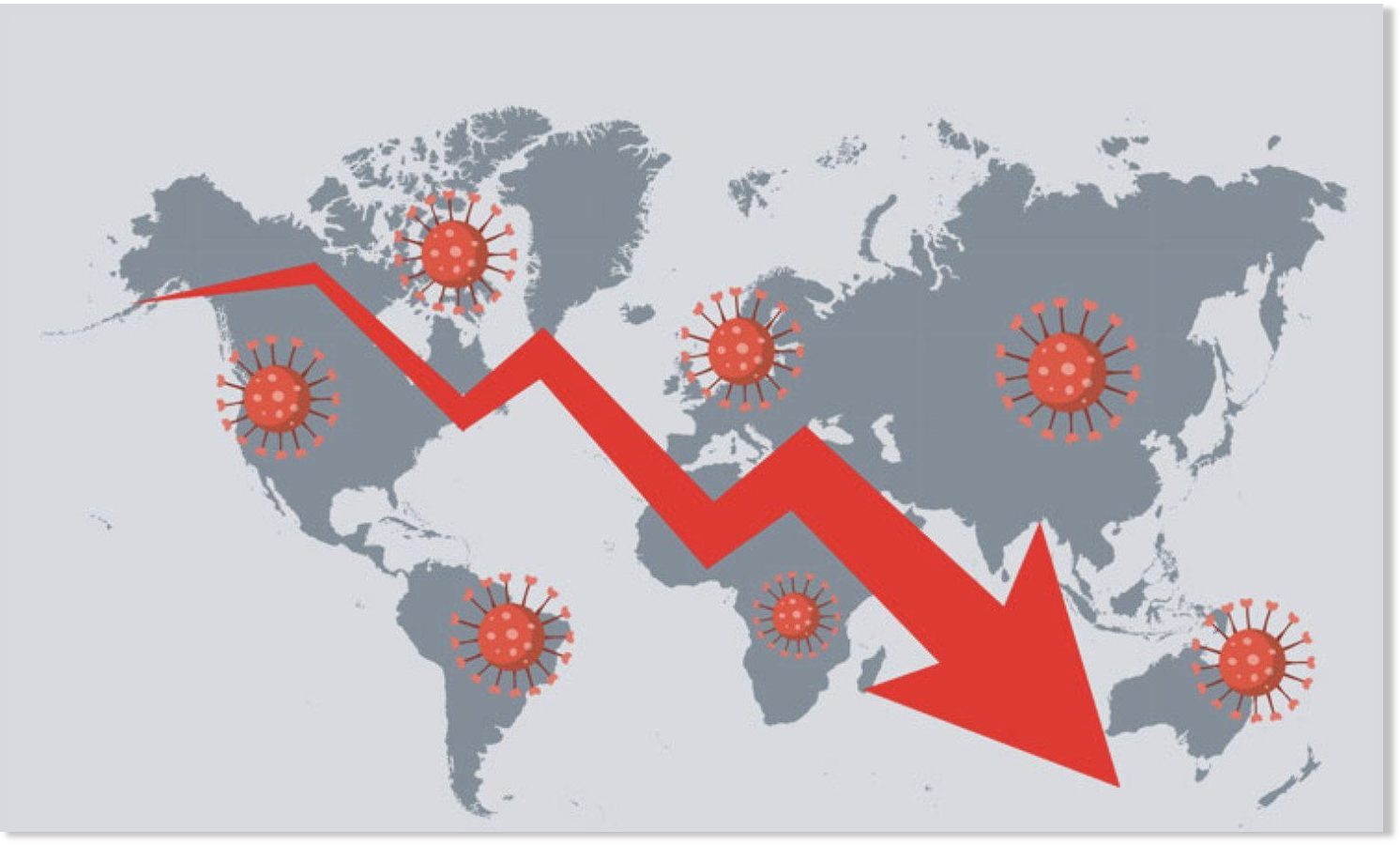
coronavirus world map
Every day, now, we are seeing figures for 'Covid deaths'. These numbers are often expressed on graphs showing an exponential rise. But care must be taken when reading (and reporting) these figures. Given the extraordinary response to the emergence of this virus, it's vital to have a clear-eyed view of its progress and what the figures mean. The world of disease reporting has its own dynamics, ones that are worth understanding. How accurate, or comparable, are these figures comparing Covid-19 deaths in various countries?

We often see a ratio expressed: deaths, as a proportion of cases. The figure is taken as a sign of how lethal Covid-19 is, but the ratios vary wildly. In the US, 1.8 per cent (2,191 deaths in 124,686 confirmed cases), Italy 10.8 per cent, Spain 8.2 per cent, Germany 0.8 per cent, France 6.1 per cent, UK 6.0 per cent. A fifteen-fold difference in death rate for the same disease seems odd amongst such similar countries: all developed, all with good healthcare systems. All tackling the same disease.

You might think it would be easy to calculate death rates. Death is a stark and easy-to-measure end point. In my working life (I'm a retired pathology professor) I usually come across studies that express it comparably and as a ratio: the number of deaths in a given period of time in an area, divided by that area's population. For example, 10 deaths per 1,000 population per year. So just three numbers:
  1. The population who have contracted the disease
  2. The number dying of disease
  3. The relevant time period
The trouble is that in the Covid-19 crisis each one of these numbers is unclear.

Comment: Two other clear-headed reports by Dr. John Lee can be read here:


Info

Researchers create a 'funnel' of light

Physicists of the University of Würzburg, in a joint collaboration with colleagues from the University of Rostock, have developed a light funnel apparatus. It could serve as a new platform for hypersensitive optical detectors.
Light Funnel
© Universität Rostock / Alexander SzameitThe figure shows how light is caught through the light funnel.
Professor Ronny Thomale holds a chair for theoretical condensed matter physics, the TP1, at the Julius-Maximilian University of Würzburg. The discovery and theoretical description of new quantum states of matter is a prime objective of his research. "Developing a theory for a new physical phenomenon which then inspires new experiments seeking after this effect is one of the biggest moments in a theoretical physicist's practice", so he says. In an ideal case, such an effect would even unlock unexpected technological potential.

All this has come together with a recent project which Thomale pursued together with the optical experimental group of Professor Alexander Szameit at the University of Rostock the results of which have now been published in the Science magazine.

Beaker

DNA riddle: how cells access data from 'genetic cotton reels'

human dna
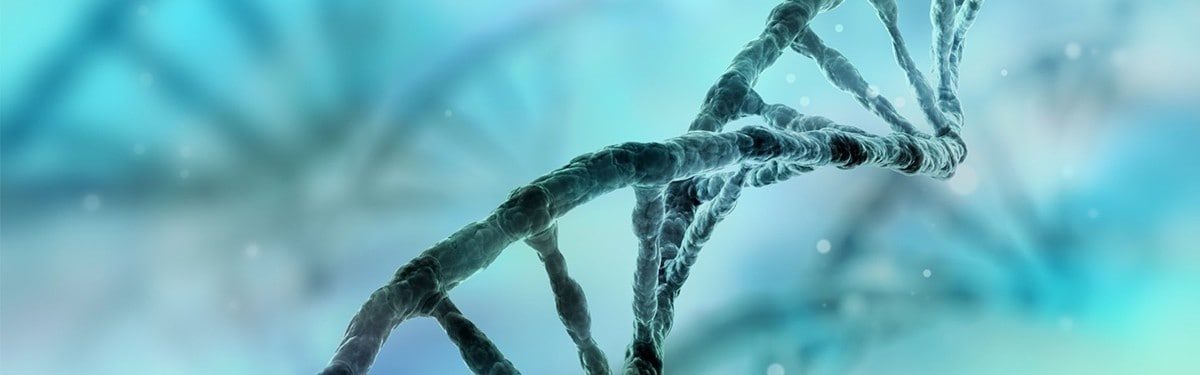
Research has revealed the role played by motor protein CHD4 that allows the DNA to remodel when information is needed - and it will help us understand diseases connected to when that process goes wrong.

Australian scientists have unravelled part of the mystery about how nature can usefully access genetic information in cells despite it being so tightly packed away.

The discovery helps solve what is effectively an 'input/output' problem caused by the need for cells to pack metres of DNA into a space just millionths of a metre across - but at the same time read, copy and repair the information held in the DNA. It also helps provide pathways to understand how defects in this process contribute to disease such as schizophrenia and cancer.

Led by Professor Joel Mackay in the School of Life and Environmental Sciences, the biochemists have revealed that a particular motor protein, CHD4, is used to access genetic information tightly spooled onto what can be imagined as 'genetic cotton reels'.

Comment: See also:


Better Earth

Planetary defenders: Asteroid deflection code validated

6 pic fragment asteroids
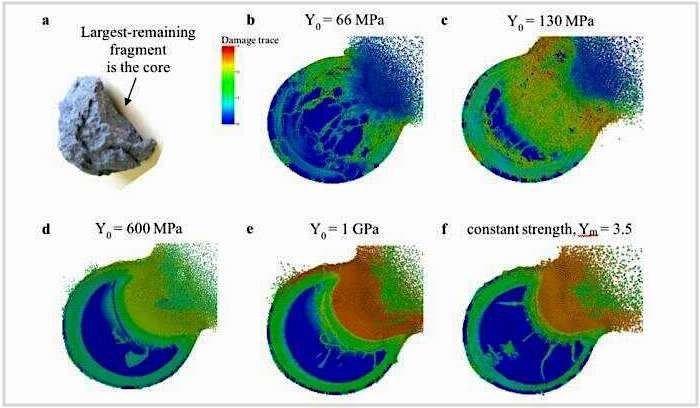
© Lawrence Livermore National LaboratoryLawrence Livermore researchers compared results of asteroid deflection simulations to experimental data and found that the strength model has a substantial effect on momentum transferred.
Planetary defense researchers at Lawrence Livermore National Laboratory (LLNL) continue to validate their ability to accurately simulate how they might deflect an Earth-bound asteroid in a study that will be published in the April issue of the American Geophysical Union journal Earth and Space Science.

The study, led by LLNL physicist Tané Remington, also identified sensitivities in the code parameters that can help researchers working to design a modeling plan for the Double Asteroid Redirection Test (DART) mission in 2021, which will be the first-ever kinetic impact deflection demonstration on a near-Earth asteroid.

Brain

Has your brain evolved to hoard supplies and shame others for doing the same?

stockpile
© AP Photo/Ted S. WarrenIn scary and uncertain times, having a stockpile can feel soothing.
The media is replete with COVID-19 stories about people clearing supermarket shelves - and the backlash against them. Have people gone mad? How can one individual be overfilling his own cart, while shaming others who are doing the same?

As a behavioral neuroscientist who has studied hoarding behavior for 25 years, I can tell you that this is all normal and expected. People are acting the way evolution has wired them.

Stockpiling provisions

The word "hoarding" might bring to mind relatives or neighbors whose houses are overfilled with junk. A small percentage of people do suffer from what psychologists call "hoarding disorder," keeping excessive goods to the point of distress and impairment.

But hoarding is actually a totally normal and adaptive behavior that kicks in any time there is an uneven supply of resources. Everyone hoards, even during the best of times, without even thinking about it. People like to have beans in the pantry, money in savings and chocolates hidden from the children. These are all hoards.

Microscope 1

Genomic studies yield more hints of higher-level order in our DNA

Caulobacter crescentus
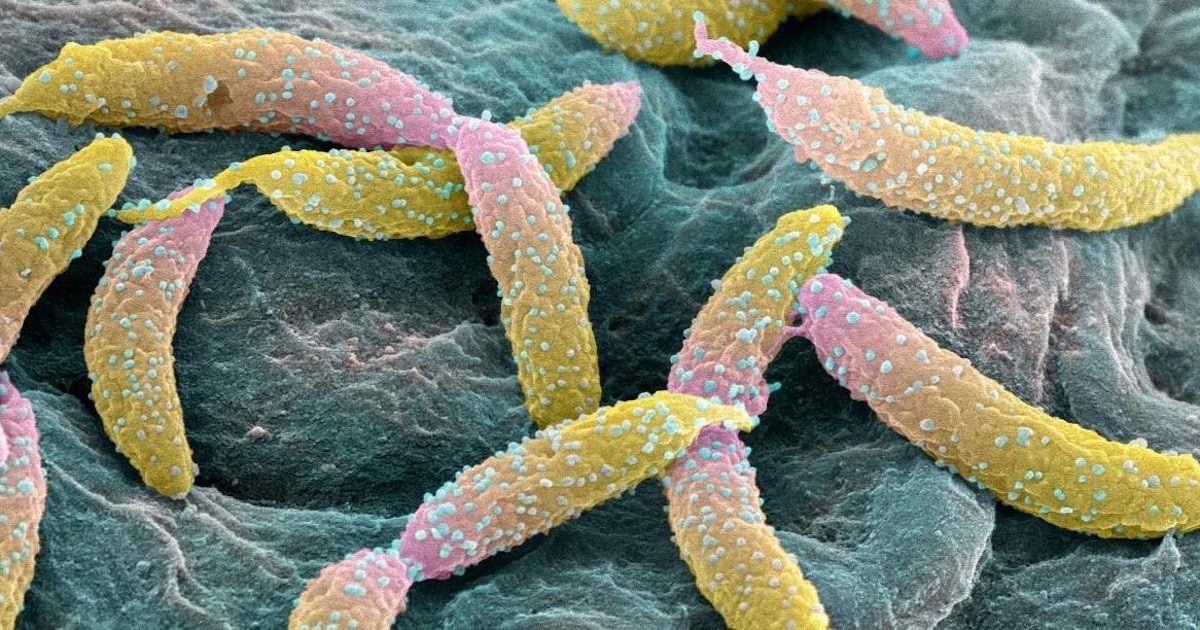
© University of Basel, Swiss Nanoscience Institute/Biozentrum, via EurekAlert!Caulobacter crescentus
Genomics has come a long way since the central dogma (the notion that DNA is the master controller that calls all the shots) and junk DNA (the expectation that much of the genome is non-functional). If scientists ditch those old dogmas and approach the genome expecting to find reasons for things, they often do.

Synonymous Mutations

To-may-to or to-mah-to? The British write flavour; the Americans write flavor, but generally each understands the other without too much difficulty. Genomes, too, have alternate ways of spelling things: GGU and GGC in messenger RNA both spell glycine. No big deal, thought geneticists; these "silent" mutations cause no change in the resulting protein. At the University of Notre Dame, however, biochemists are finding that the differences in spelling are not just background noise; they alter the protein's folding. Is that good or bad?

Rose

Billion-year-old algae and the discovery of newer genes hint at land plants' origin

wales countryside
© Graham Eaton / NPL / Minden PicturesGreen algae grow at the edges of a glacial lake in Wales. Hundreds of millions of years ago, similar algae adapted to survive temporarily outside of the water may have kicked off the evolution of green land plants.
A recently unearthed fossil and new genomic discoveries are filling important gaps in scientists' understanding of how primitive green algae eventually evolved into land vegetation.

Around 500 million years ago — when the Earth was already a ripe 4 billion years old — the first green plants appeared on dry land. Precisely how this occurred is still one of the big mysteries of evolution. Before then, terrestrial land was home only to microbial life. The first green plants to find their way out of the water were not the soaring trees or even the little shrubs of our present world. They were most likely soft and mossy, with shallow roots and few of the adaptations they would later evolve to survive and thrive on dry land. And though scientists agree that these plants evolved from some kinds of seaweed, we know comparatively little about those green algal ancestors.

But a few recent papers — two based on molecular biology, and one on rare, precious fossils from 1 billion years ago — are helping to fill in the gaps in our understanding of those ancient algae and what allowed them to eventually make the transition to land.

Galaxy

Researchers take 'strange' glimpse into neutron stars and symmetry violation

antihypertriton decay
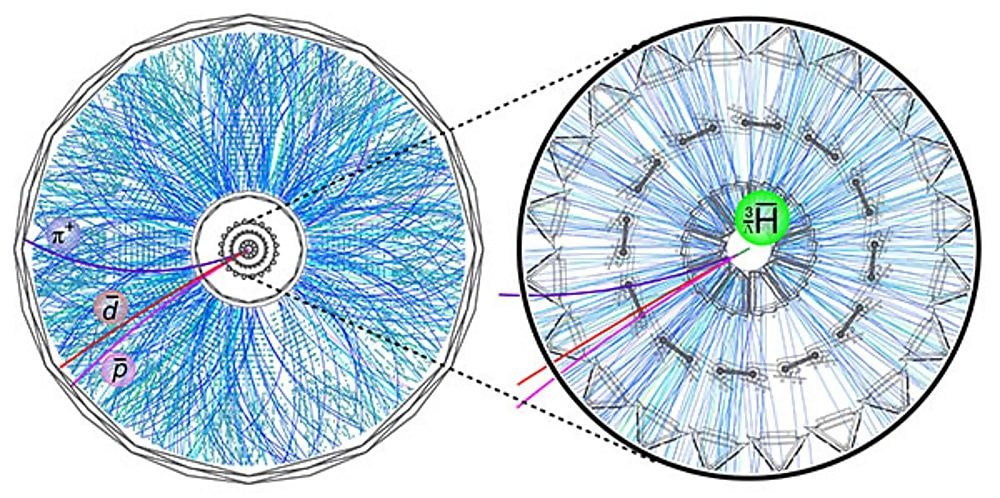
© J. Adam et al., Nat. Phys., 2020/Brookhaven National LaboratoryTwo RHIC detectors record the trajectories of the decay products of the antihypertriton.
Inner vertex components of the STAR detector at the Relativistic Heavy Ion Collider (righthand view) allow scientists to trace tracks from triplets of decay particles picked up in the detector's outer regions (left) to their origin in a rare "antihypertriton" particle that decays just outside the collision zone. Measurements of the momentum and known mass of the decay products (a pi+ meson, antiproton, and antideuteron) can then be used to calculate the mass and binding energy of the parent particle. Doing the same for the hypertriton (which decays into different "daughter" particles) allows precision comparisons of these matter and antimatter varieties.

New results from precision particle detectors at the Relativistic Heavy Ion Collider (RHIC) offer a fresh glimpse of the particle interactions that take place in the cores of neutron stars and give nuclear physicists a new way to search for violations of fundamental symmetries in the universe. The results, just published in Nature Physics, could only be obtained at a powerful ion collider such as RHIC, a U.S. Department of Energy (DOE) Office of Science user facility for nuclear physics research at DOE's Brookhaven National Laboratory.

The precision measurements reveal that the binding energy holding together the components of the simplest "strange-matter" nucleus, known as a "hypertriton," is greater than obtained by previous, less-precise experiments. The new value could have important astrophysical implications for understanding the properties of neutron stars, where the presence of particles containing so-called "strange" quarks is predicted to be common.

Comment: Early research on the hypertriton and its antimatter counterpart: Physicists create heaviest form of antimatter ever seen


Satellite

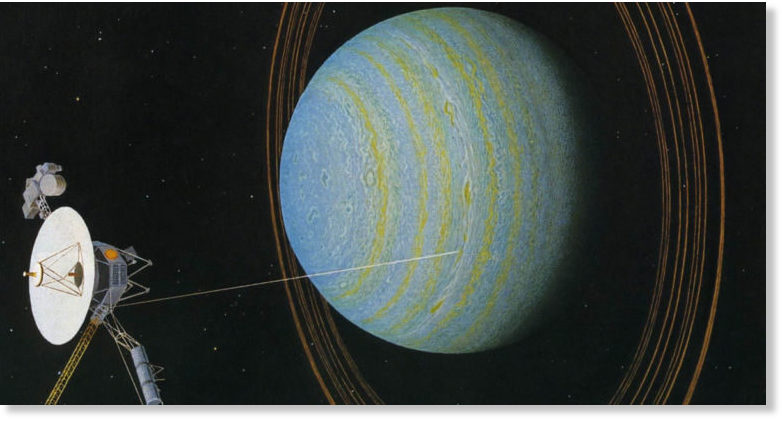
NASA data shows gas is leaking from Uranus

uranus
It's been several decades since NASA's Voyager 2 spacecraft reached the chilly planet Uranus. The probe cruised past the frigid world at a distance of around 50,000 miles, sending back a wealth of data for scientists to dig through. Now, 34 years after it visited Uranus, the data that Voyager 2 sent back has revealed something entirely new.

As NASA reports in a new post, researchers recently discovered that Voyager 2 cruised through a blob of charged gas called a plasmoid as it passed the planet. The spacecraft's journey through the plasmoid lasted only about a minute, but that was still long enough for scientists to spot the anomaly in the decades-old data.

Music

18-year-old blind pianist is so talented that scientists are studying his brain to learn why

Matthew Whitaker
© Screenshot, Youtube.
A blind piano prodigy has met major success in his life, entertaining audiences across the world since he was 11. And now scientists are studying his brain to find out what exactly makes him so good.

When Matthew Whitaker was born prematurely at 24 weeks, he was not only blind but he had a series of health problems and his parents were told that he had less than a 50 percent chance of survival. Before he even reached the age of two Whitaker had to undergo 11 surgeries.

However, not only did Whitaker manage to survive but by the age of three he was already able to skillfully play the piano and even write his own songs — without even needing a teacher.

Now 18, the Hackensack, New Jersey, native is now a universally praised tunesmith and jazz pianist who has performed at prestigious venues including the Lincoln Center, the Kennedy Center, Carnegie Hall, and the Apollo Theater. The virtuoso can even play anything by ear, ranging from Beyonce or Dvorak.

And now, the prodigiously talented musician is the focus of a new medical study that seeks to find out how exactly the brains of brilliant musicians work and how they are different from those of average people.