OF THE
TIMES


"And it seems to be supporting this idea that there could be a directionality in the universe, which is very weird indeed," Professor Webb says. "So the universe may not be isotropic in its laws of physics — one that is the same, statistically, in all directions. But in fact, there could be some direction or preferred direction in the universe where the laws of physics change, but not in the perpendicular direction. In other words, the universe in some sense, has a dipole structure to it.
"In one particular direction, we can look back 12 billion light years and measure electromagnetism when the universe was very young. Putting all the data together, electromagnetism seems to gradually increase the further we look, while towards the opposite direction, it gradually decreases. In other directions in the cosmos, the fine structure constant remains just that — constant. These new very distant measurements have pushed our observations further than has ever been reached before."
In other words, in what was thought to be an arbitrarily random spread of galaxies, quasars, black holes, stars, gas clouds and planets — with life flourishing in at least one tiny niche of it — the universe suddenly appears to have the equivalent of a north and a south. Professor Webb is still open to the idea that somehow these measurements made at different stages using different technologies and from different locations on Earth are actually a massive coincidence.
"This is something that is taken very seriously and is regarded, quite correctly with scepticism, even by me, even though I did the first work on it with my students. But it's something you've got to test because it's possible we do live in a weird universe."
But adding to the side of the argument that says these findings are more than just coincidence, a team in the US working completely independently and unknown to Professor Webb's, made observations about X-rays that seemed to align with the idea that the universe has some sort of directionality.
"I didn't know anything about this paper until it appeared in the literature," he says.
"And they're not testing the laws of physics, they're testing the properties, the X-ray properties of galaxies and clusters of galaxies and cosmological distances from Earth. They also found that the properties of the universe in this sense are not isotropic and there's a preferred direction. And lo and behold, their direction coincides with ours."
[...]
If there is a directionality in the universe, Professor Webb argues, and if electromagnetism is shown to be very slightly different in certain regions of the cosmos, the most fundamental concepts underpinning much of modern physics will need revision.
"Our standard model of cosmology is based on an isotropic universe, one that is the same, statistically, in all directions," he says. "That standard model itself is built upon Einstein's theory of gravity, which itself explicitly assumes constancy of the laws of Nature. If such fundamental principles turn out to be only good approximations, the doors are open to some very exciting, new ideas in physics."
Webb's team believe this is the first step towards a far larger study exploring many directions in the universe, using data coming from new instruments on the world's largest telescopes. New technologies are now emerging to provide higher quality data, and new artificial intelligence analysis methods will help to automate measurements and carry them out more rapidly and with greater precision.

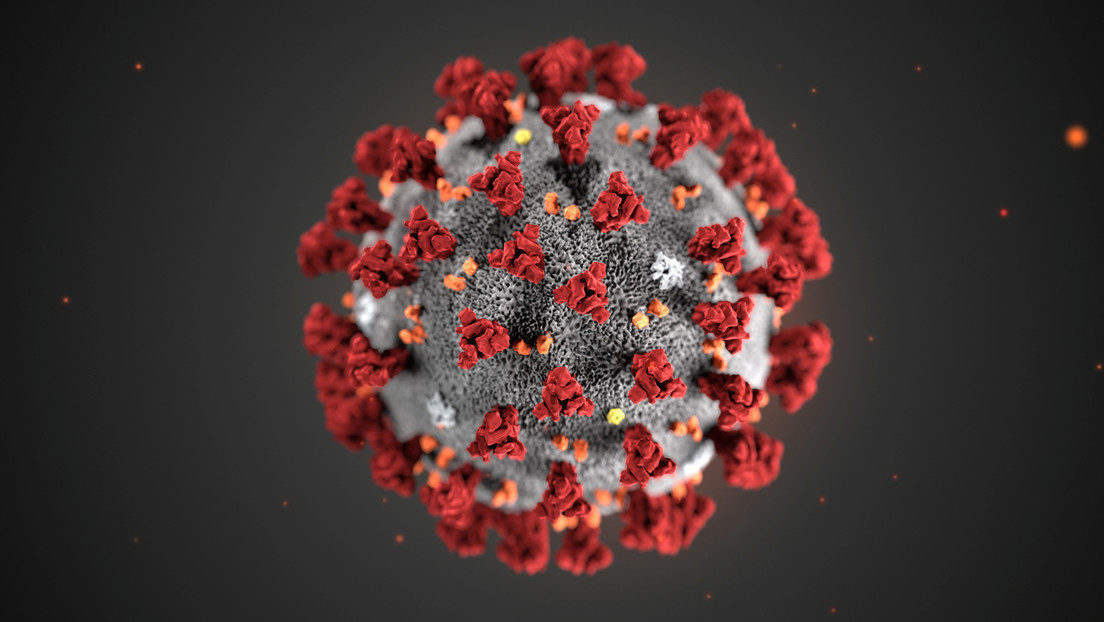
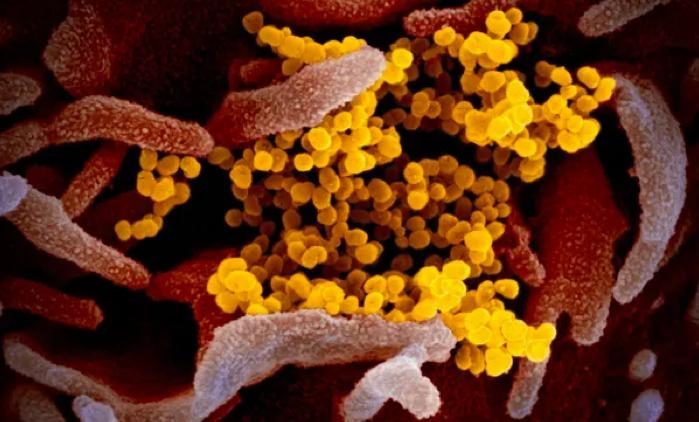
COVID-19 coronavirus is particularly dangerous for the elderly or those with aging-related senescent illnesses like diabetes, cancer, heart disease, and lung disease. As Professor Lisanti said in a statement on his new paper in the journal Aging, "If you look at the host receptors of COVID-19, they are related to senescence. Two proteins have been proposed to be the cellular receptors of COVID-19: one is CD26 - a marker of senescence, and the other, ACE-2, is also associated with senescence. So, older people would be predicted to be more susceptible to COVID-19, exactly as is observed clinically in patients. This could increase their probability of infection, and would explain the increased fatality of COVID-19 infection in older patients. All of this could be related to advanced chronological age and senescent cells."
Lisanti's laboratory has previously demonstrated that Z-pak [a version of Azithromycin] selectively removes 97% of senescent cells. Without those cells acting as host receptors, it may be harder for COVID-19 to take root in the body and cause serious damage.
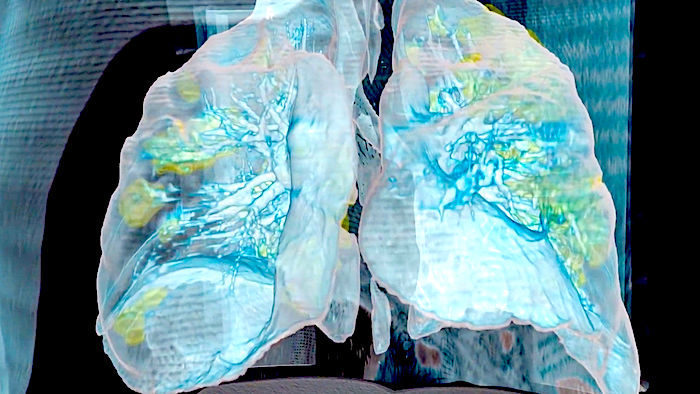
Lisanti's lab goes on, "Clinically, it appears what is leading to fatalities in older [COVID-19] patients is the very strong inflammatory reaction and the resulting fibrosis. Azithromycin inhibits inflammation-induced fibrosis, by targeting and removing senescent cells. The cost would be minimal, as the drug is off-patent, widely available and considered safe."
Z-pak has made headlines after doctors around the world such as the widely publicized French clinic trials and New York and New Jersey physicians have found promising results on the front-lines of coronavirus using it in combination with another generic drug hydroxychloroquine . . . .
Comment: The art of the miniature — Nature's smallest designs are the some of the most wonderful of all