OF THE
TIMES
The spread of COVID-19 has led to multiple policy responses that aim to reduce the transmission of the SARS-CoV-2. The principal goal of these so-called non-pharmaceutical interventions (NPIs) is to reduce transmission in the absence of pharmaceutical options in order to reduce resultant death, disease, and health system overload. Some of the most restrictive NPI policies include mandatory stay-at-home and business closure orders ("lockdowns"). The early adoption of these more restrictive non-pharmaceutical interventions (mrNPIs) in early 2020 was justified because of the rapid spread of the disease, overwhelmed health systems in some hard-hit places, and substantial uncertainty about the virus's morbidity and mortality.
Because of the potential harmful health effects of mrNPI, including hunger, opioid-related overdoses, missed vaccinations, increase in non-COVID-19 diseases from missed health services, domestic abuse, mental health and suicidality as well as a host of economic consequences with health implications, it is increasingly recognized that their postulated benefits deserve careful study... We propose an approach that balances the strengths of empirical analyses while taking into consideration underlying epidemic dynamics. We compare epidemic spread in places that implemented mrNPIs to counterfactuals that implemented only less-restrictive NPIs (lrNPIs). In this way, it may be possible to isolate the role of mrNPIs, net of lrNPIs and epidemic dynamics. Here, we use Sweden and South Korea as the counterfactuals to isolate the effects of mrNPIs in countries that implemented mrNPIs as well as lrNPIs. Unlike most of its neighbors that implemented mandatory stay-at-home and business closures, Sweden's approach in the early stages of the pandemic relied entirely on lrNPIs, including social distancing guidelines, discouraging of international and domestic travel, and a ban on large gatherings. South Korea also did not implement mrNPIs. Its strategy relied on intensive investments in testing, contact tracing, and isolation of infected cases and close contacts.


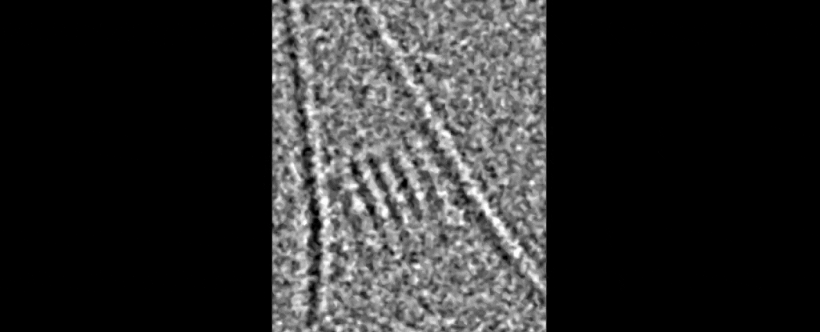
Statistical analysis of the light intensity in videos data revealed that the cell's fluorescence dimmed by about 3.5% each time the magnetic field swept over the cells. © Ikeya and Woodward, CC BY, originally published in PNASDOI: 10.1073/pnas.2018043118
Comment: It appears that there are few areas on our planet that aren't teaming with life:
- Microorganisms in parched regions extract needed water from colonized rocks
- 'Electric mud' teems with new, mysterious bacteria that may rewrite textbooks
- Dead Zone? Area with no life found on Earth
- Fungi that absorbs radiation has been growing all over Chernobyl plant
And check out SOTT radio's: The Truth Perspective: Are Cells the Intelligent Designers? Why Creationists and Darwinists Are Both Wrong