Science & TechnologyS


Info

Ancient ice reveals mysterious solar storm

Solar Storm
© NASA/SDO/AIA/LMSAL
Through analyzes of ice cores from Greenland and Antarctica, a research team led by Lund University in Sweden has found evidence of an extreme solar storm that occurred about 9,200 years ago. What puzzles the researchers is that the storm took place during one of the sun's more quiet phases - during which it is generally believed our planet is less exposed to such events.

The sun is a prerequisite for all life on Earth. But our life-giving companion can also cause problems. When there is strong activity on the surface of the sun, more energy is released, something that can give rise to geomagnetic storms. This in turn can cause power outages and communication disturbances.

Predicting solar storms is difficult. It is currently believed that they are more likely during an active phase of the sun, or solar maximum, during the so-called sunspot cycle. However, the new study published in Nature Communications shows that this may not always be the case for very large storms.

"We have studied drill cores from Greenland and Antarctica, and discovered traces of a massive solar storm that hit Earth during one of the sun's passive phases about 9,200 years ago", says Raimund Muscheler, geology researcher at Lund University.

Pi

Birds shuffle and repeat their tunes to keep the audience listening

Male song sparrows memorize a 30-minute playlist of their recently belted tunes and use that information to curate both their current playlist and the next one
© Andy Reago and Chrissy McClarren, via Wikimedia Commons.Male song sparrows memorize a 30-minute playlist of their recently belted tunes and use that information to curate both their current playlist and the next one.
The tweets of a little song sparrow and its "bird brain" are a lot more complex and akin to human language than anyone realized. A new study finds that male sparrows deliberately shuffle and mix their song repertoire possibly as a way to keep it interesting for their female audience.

The research, from the lab of Stephen Nowicki, Duke University professor of biology and member of the Duke Institute for Brain Sciences, and colleagues at the University of Miami, shows that singing males keep track of the order of their songs and how often each one is sung for up to 30 minutes so they can curate both their current playlist and the next one. The findings appear in Proceedings of the Royal Society B on Jan. 26.

Song sparrows are a common songbird throughout North America, but only males sing. They use their song to defend their turf and court mates.

Info

Best of the Web: Mysterious energy source is 'pulsing every 20 minutes' - Object unlike anything astronomers have seen before

Magnetar
© ICRARAn artist's impression of what the object might look like if it's a magnetar. Magnetars are incredibly magnetic neutron stars, some of which sometimes produce radio emission. Known magnetars rotate every few seconds, but theoretically, "ultra-long period magnetars" could rotate much more slowly.
A team mapping radio waves in the universe has discovered something unusual that releases a giant burst of energy three times an hour, and it's unlike anything astronomers have seen before.

The team that discovered it think it could be a neutron star or a white dwarf — collapsed cores of stars — with an ultra-powerful magnetic field. Spinning in space, the strange object sends out a beam of radiation that crosses Earth's line of sight, and for one minute in every 20, is one of the brightest radio sources in the sky.

Astrophysicist Dr. Natasha Hurley-Walker, from the Curtin University node of the International Centre for Radio Astronomy Research, led the team that made the discovery. "This object was appearing and disappearing over a few hours during our observations," she said. "That was completely unexpected. It was kind of spooky for an astronomer because there's nothing known in the sky that does that. And it's really quite close to us — about 4,000 light-years away. It's in our galactic backyard."

The object was discovered by Curtin University Honors student Tyrone O'Doherty using the Murchison Widefield Array (MWA) telescope in outback Western Australia and a new technique he developed. "It's exciting that the source I identified last year has turned out to be such a peculiar object," said Mr O'Doherty, who is now studying for a Ph.D. at Curtin. "The MWA's wide field of view and extreme sensitivity are perfect for surveying the entire sky and detecting the unexpected."

Info

Southern Ocean storms cause outgassing of carbon dioxide

robot technology
© Fred FourieResearchers have examined the inaccessible waters around Antarctica using unique robot technology, and find that ocean storms in the region lead to outgassing of carbon dioxide into the atmosphere.
Storms over the waters around Antarctica drive an outgassing of carbon dioxide into the atmosphere, according to a new international study with researchers from the University of Gothenburg. The research group used advanced ocean robots for the study, which provides a better understanding of climate change and can lead to better global climate models.

The world's southernmost ocean, the Southern Ocean that surrounds Antarctica, plays an important role in the global climate because its waters contain large amounts of carbon dioxide. A new international study, in which researchers from the University of Gothenburg participated, has examined the complex processes driving air-sea fluxes of gasses, such as carbon dioxide.

Storms bring carbon dioxide-rich waters to the surface

The research group is now delivering new findings that shed light on the area's important role in climate change.

"We show how the intense storms that often occur in the region increase ocean mixing and bring carbon dioxide-rich waters from the deep to the surface. This drives an outgassing of carbon dioxide from the ocean to the atmosphere. There has been a lack of knowledge about these complex processes, so the study is an important key to understanding the Southern Ocean's significance for the climate and the global carbon budget", says Sebastiaan Swart, professor of oceanography at the University of Gothenburg and co-author of the study.

Cassiopaea

The eye: A classic example of natural design

eye closeup
From Cicero in antiquity to John Ray three centuries ago, the eye has traditionally been held up as a marvel of design. Even Charles Darwin, after publishing his theory of evolution, privately admitted "The eye to this day gives me a cold shudder." And it should have. Ray had extolled the many wonders of the human vision system, and since then those wonders have only continued to mount.

John Ray was a leading 17th-century botanist. He is remembered for formalizing the concept of the biological "species." He is also remembered as the father of the 18th- and early 19th-century Natural Theology movement which emphasized nature's designs. Ray's study of the natural world led him to be increasingly impressed with its design.

Myriad Examples of Design

Of Ray's myriad examples of design, he paid particular attention to vision systems. The pupil, Ray noted, dilates and contracts in dim and bright conditions, respectively, to control the light entering the eye. That incoming light forms an image, but after passing through the lens of the eye it is inverted. Nonetheless, the nerves somehow present the image "in its right or natural Posture" to the soul.

Bizarro Earth

Why no one is freaking out about the looming massive earthquake threat in the Pacific Northwest

A monstrous earthquake in the Pacific Northwest is a certainty. We just don't know when.
Earthquake Illustration
© FINGERMEDIUM / GETTY IMAGES
For many people, natural disasters inspire both fascination and fear. They're a sign of nature's power to not only create, but also destroy. At the same time, they're a reminder of the human potential for ingenuity when it comes to protecting ourselves from the forces we cannot control.

In this case, there are two opposing forces: the North American Plate, an enormous tectonic plate that carries the entire continental United States on its back, versus the 90,000-square-mile Juan de Fuca Plate, located in the ocean off Washington, Oregon, and Northern California. For the past 200 million years, these two have been squaring off in an epic wrestling match in an area known as the Cascadia Subduction Zone, or CSZ. Trust us, nobody wants to see the end of this round. Yet only a few people seem truly bothered: seismologists, emergency management professionals, and those who have experienced earthquakes before.

It's certain that the Northwest will experience a devastating earthquake again, says Chris Goldfinger, an oceanographer at Oregon State University and one of the world's leading experts on subduction zone earthquakes. "We have no idea of the timing and how urgent it is," Goldfinger tells Pop Mech. "People tend to ignore it in that case." The majority of the public, as well as most governments in the Northwest, aren't yet pushing to implement the extensive infrastructure changes and early-warning communications systems needed to save tens of thousands of lives.

The Juan de Fuca Plate has been steadily pushing against the Pacific Coast as it slides beneath the North American Plate. But the roughly 47-million-square-mile North American Plate isn't budging. Instead, it's locked tightly against the Juan de Fuca's surface.

Blue Planet

Why the Yamnaya population should be seen as quintessentially European

Yamnaya
© STATE HISTORICAL MUSEUM, MOSCOWThe Yamnaya made knife blades like this one and other tools of bronze.
I was about to post a comment under a new preprint at bioRxiv, but the comment section isn't there anymore. Hopefully, this is just a temporary glitch.

The preprint in question is titled Reconstructing the spatiotemporal patterns of admixture during the European Holocene using a novel genomic dating method [LINK]. It's co-authored by Harvard/Broad MIT scientist Nick Patterson who occasionally comments at this blog.

My impression is that the authors see the people associated with the Yamnaya culture as Asians who simply used "far" Eastern Europe as a springboard to expand into other parts of Europe.

If so, they're dead wrong.

Comment: See also: And check out SOTT radio's: MindMatters: Zoroastrianism: The Ancient System of Values That Sought to Change The World, And Did


Info

Impossible material made possible inside a graphene sandwich

layer of cuprous iodide
© 2021 Kimmo Mustonen, Christoph Hofer und Viera SkákalovA single layer of cuprous iodide encapsulated in between two sheets of graphene (gray atoms).
New results in "Advanced Materials"

Atoms bind together by sharing electrons. The way this happens depends on the atom types but also on conditions such as temperature and pressure. In two-dimensional (2D) materials, such as graphene, atoms join along a plane to form structures just one atom thick, which leads to fascinating properties determined by quantum mechanics. Researchers at the University of Vienna in collaboration with the Universities of Tübingen, Antwerp and CY Cergy Paris, together with Danubia NanoTech, have produced a new 2D material made of copper and iodine atoms sandwiched between two graphene sheets. The results were published in the journal Advanced Materials.

The design of new materials allows for either improved efficiency of known applications or totally new applications that were out of reach with the previously existing materials. Indeed, tens of thousands of conventional materials such as metals and their alloys have been identified over the last hundred years. A similar number of possible 2D materials have been predicted to exist, but as of now, only a fraction of them have been produced in experiments. One reason for this is the instability of many of these materials in laboratory conditions.

In the recent study, the researchers synthesized 2D cuprous iodide that was stabilized in a graphene sandwich, as the first example of a material that does not otherwise exist in normal laboratory conditions. The synthesis utilizes the large interlayer spacing of oxidized graphene multilayers, which allows iodine and copper atoms to diffuse into the gap and to grow the new material. The graphene layers here have an important role imposing a high pressure on the sandwiched material that thus becomes stabilized. The resulting sandwich structure is shown in the illustration.

Cloud Grey

Even in the depths of sleep our brains are alert to stranger danger, new study reveals

sleep woman
© (B2M Productions/DigitalVision/Getty Images)
Even as we slumber, our industrious brains continue working to keep us alive. They ensure our heartbeats and breathing remain on track, wash off the waste they've accumulated throughout the day, and sort and file our memories. Now it seems they achieve all this and more while also monitoring our surroundings for stranger danger, a new study suggests.

"Unfamiliar voices should not be speaking to you at night - it sets off an alarm," University of Salzburg cognitive neuroscientist Manuel Schabus told New Scientist.

Schabus and colleagues observed this brain alarm in 17 volunteers. After a night to adjust to the new surroundings of the sleep lab, volunteers underwent polysomnography to record their brain waves, oxygen levels, heart and breathing rates, and movements.

Comment: See also:


Archaeology

Cambrian explosion becomes more explosive

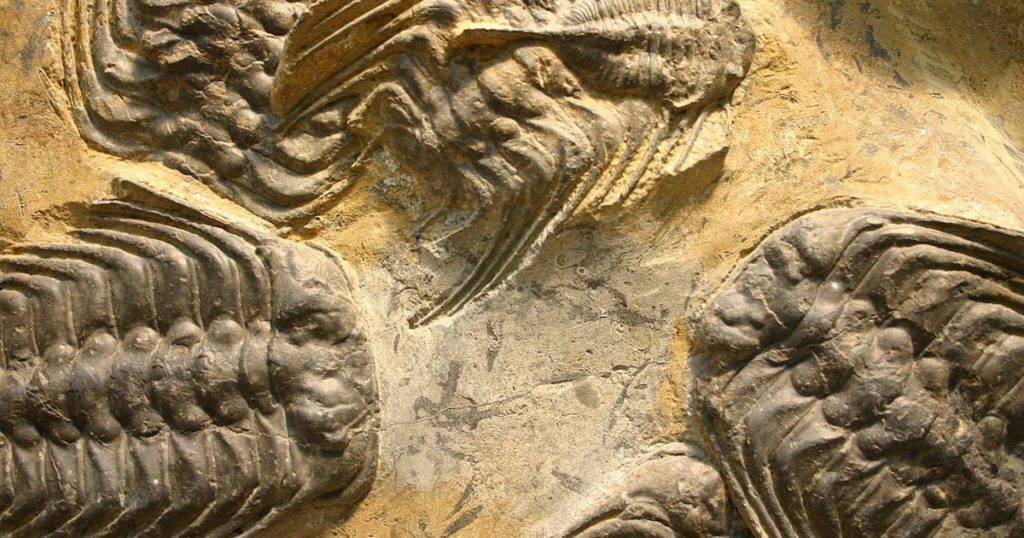
Fossil of Trilobite Walliserops trifurcatus​
© Wikimedia CommonFossil of Trilobite walliserops trifurcatus​
A period of 410,000 years seems like a long time for most people, but it's relatively brief for scientists who study Earth's history. Moreover, from a naturalistic perspective, this period of time would be considered implausibly brief for the required changes in the transition of life-forms from simple to complex. Several new research studies affirm the explosiveness of animal life in Earth's history and carry implications for evolution and creation.

Life Exploded onto the Scene

The Cambrian explosion refers to the sudden, simultaneous appearance of the greatest number of phyla ever witnessed during the 3.8-billion-year history of Earth's life. A phylum is a broad category of life-forms that share a common basic body plan. In eighteenth-century botanist Carl Linnaeus's taxonomic classification system, a phylum ranks just below a kingdom in terms of inclusiveness.

Presently, there are a total of 30 phyla that comprise all Earth's life. The Cambrian explosion, more than a half-billion years ago, saw the sudden appearance of all, or virtually all, these 30 phyla plus many more that became extinct. Estimates of the total number of phyla that appeared in the Cambrian explosion event range from 50 to 100.1 The new phyla that appeared in the Cambrian explosion (a largely marine event) included the first animals to possess skeletons, digestive tracts, circulatory systems, and complex internal and external organs. Not until the Cambrian explosion was there sufficient oxygen in Earth's atmosphere and oceans for such animals to exist.

Comment: