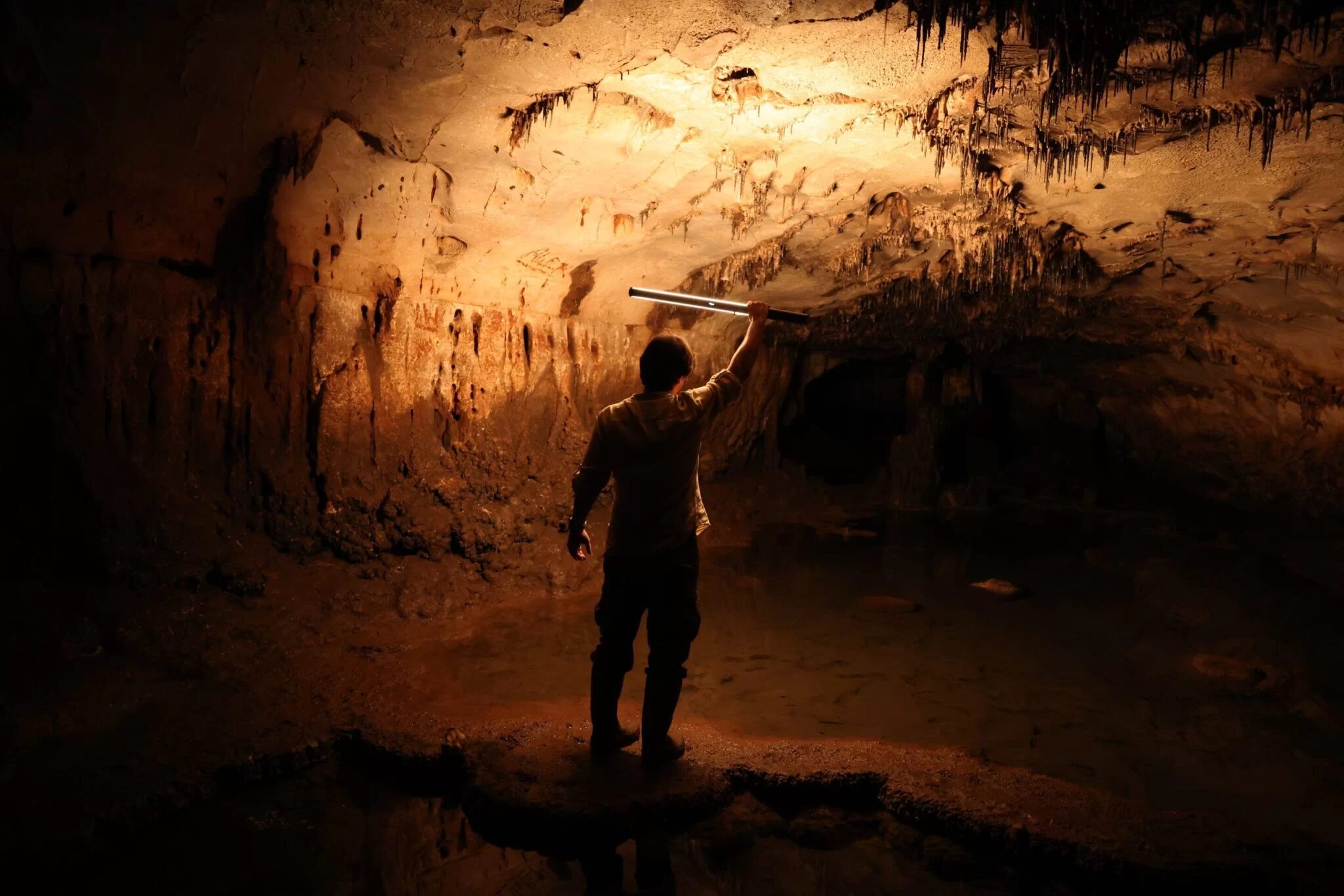
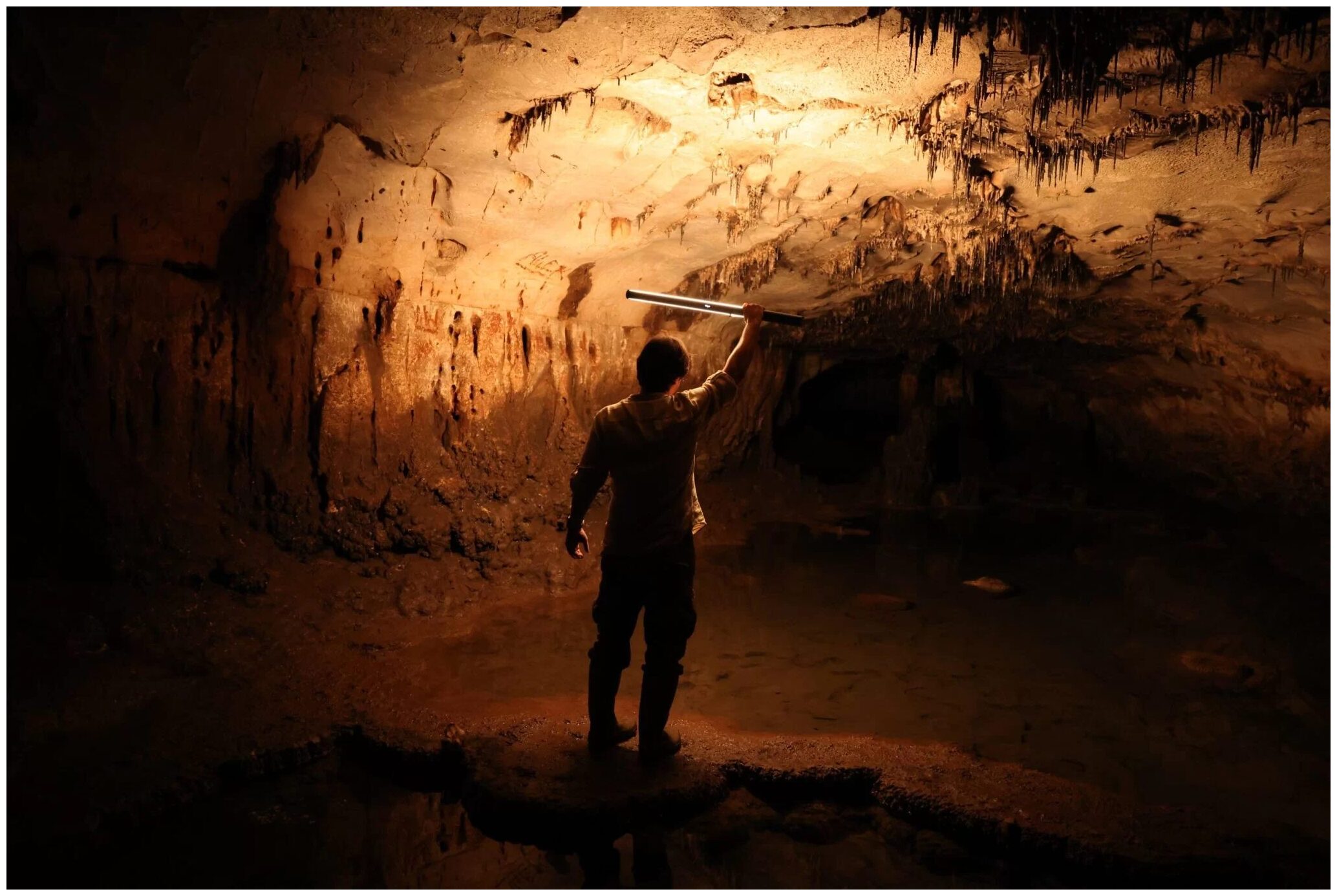
© A Ruiz-Redondo/V Barciela/X MartPartly flooded chamber which contains most of the motifs.
Archaeologists have
discovered a major Palaeolithic cave art site, arguably the most important found on the Eastern Iberian Coast in Europe.
Over a hundred ancient paintings and engravings, thought to be
at least 24,000 years old, have been found in a 500 metre-long cave in 'Cova Dones' or 'Cueva Dones' - a site located in Millares near Valencia in Spain.
The cave site is well-known by locals and often visited by hikers and explorers, but the existence of Palaeolithic paintings was unnoticed until researchers from the universities of Zaragoza and Alicante (Spain), and affiliated to
Archaeology at the University of Southampton (UK), made the exciting discovery in June 2021.
Findings of a study into the cave art, which highlight its true significance, are now published in the journal
Antiquity.Dr Aitor Ruiz-Redondo, Senior Lecturer of Prehistory at the University of Zaragoza (Spain) and research affiliate at the University of Southampton (UK) comments: "When we saw the first painted auroch [extinct wild bull], we immediately acknowledged it was important. Although Spain is the country with largest number of Palaeolithic cave art sites, most of them are concentrated in northern Spain. Eastern Iberia is an area where few of these sites have been documented so far.
"However, the actual 'shock' of realising its significance came long after the first discovery. Once we began the proper systematic survey we realised we were facing a major cave art site, like the ones that can be found elsewhere in Cantabrian Spain, southern France or Andalusia, but that totally lack in this territory."















Comment: Map of the sightings from Rare Bird Alert website:
A report from a couple of days earlier: North American birds 'blown across Atlantic' to Pembrokeshire, Wales