Animals
S


Binoculars

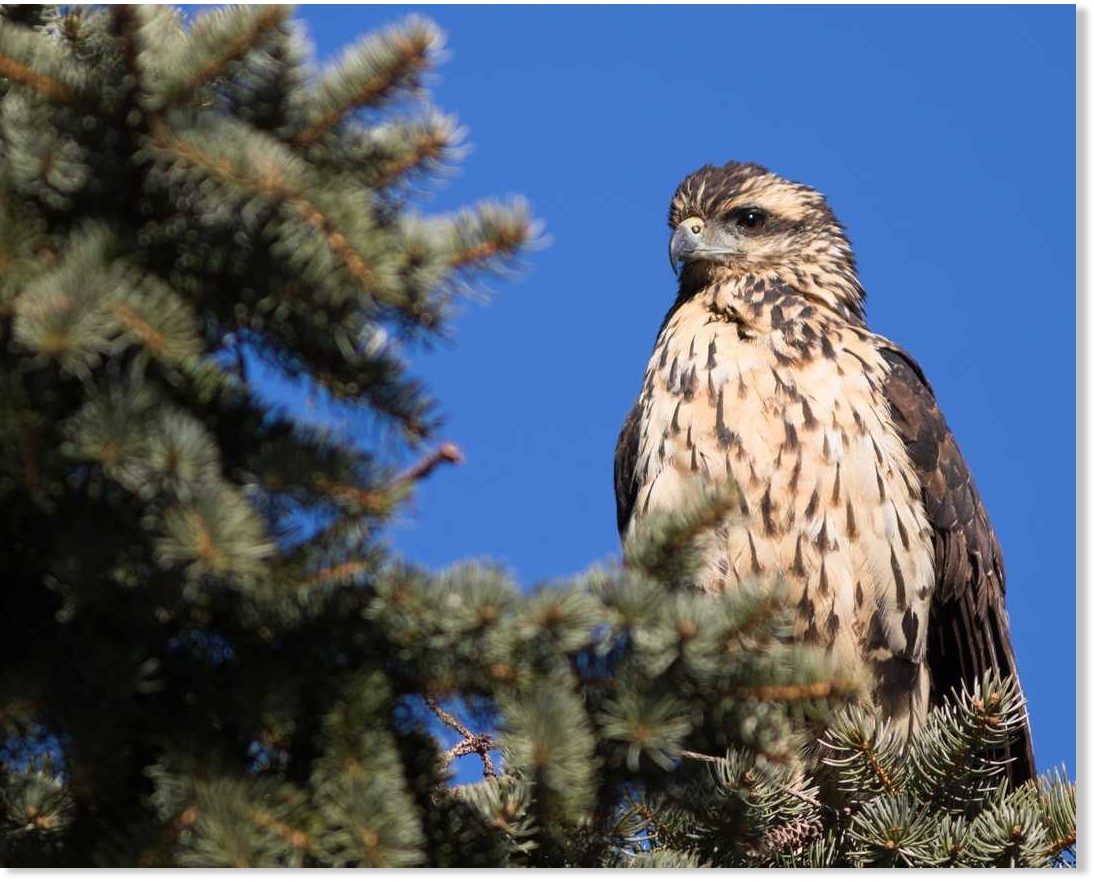
Wrong place, wrong time: This South American hawk doesn't migrate, but has somehow shown up in Maine

A great black hawk, native to Central and South America, in a tree in Maine
By now, you've likely heard about the gorgeous Mandarin duck appearing almost daily in New York City's Central Park. Since its arrival in October, the web-footed wonder has become a social media sensation - even though it isn't wild or rare.

While Mandarin Patinkin, as he has been dubbed, has hogged the limelight, a genuinely rare raptor from Central and South America has arrived from out of the blue in Maine.

The great black hawk had never been reported anywhere in the United States before this year, let alone 2,000 miles from home. The young raptor first showed up in Texas in April, reappeared in August in Biddeford, Maine, and then turned up in late November in Portland, Maine.

The crowd-pleaser has been attracting gawkers there ever since, including more than 1,000 in five days.

"This is a pretty huge deal," says Doug Hitchcox, staff naturalist for Maine Audubon. "Apart from being extremely off course, the bird is also visually appealing. Being a large raptor is helpful, but it also has very long legs, making it stand out from anything else in the area."


Attention

Biological Annihilation: A Planet in Loss Mode

Baby Starfish, Olympic National Park.
© Subhankar BanerjeeBaby Starfish, Olympic National Park.
On the great vanishing happening before our eyes

If you've been paying attention to what's happening to the nonhuman life forms with which we share this planet, you've likely heard the term "the Sixth Extinction." If not, look it up. After all, a superb environmental reporter, Elizabeth Kolbert, has already gotten a Pulitzer Prize for writing a book with that title.

Whether the sixth mass species extinction of Earth's history is already (or not quite yet) underway may still be debatable, but it's clear enough that something's going on, something that may prove even more devastating than a mass of species extinctions: the full-scale winnowing of vast populations of the planet's invertebrates, vertebrates, and plants. Think of it, to introduce an even broader term, as a wave of "biological annihilation" that includes possible species extinctions on a mass scale, but also massive species die-offs and various kinds of massacres.

Someday, such a planetary winnowing may prove to be the most tragic of all the grim stories of human history now playing out on this planet, even if to date it's gotten far less attention than the dangers of climate change. In the end, it may prove more difficult to mitigate than global warming. Decarbonizing the global economy, however hard, won't be harder or more improbable than the kind of wholesale restructuring of modern life and institutions that would prevent species annihilation from continuing.

With that in mind, come along with me on a topsy-turvy journey through the animal and plant kingdoms to learn a bit more about the most consequential global challenge of our time.

Attention

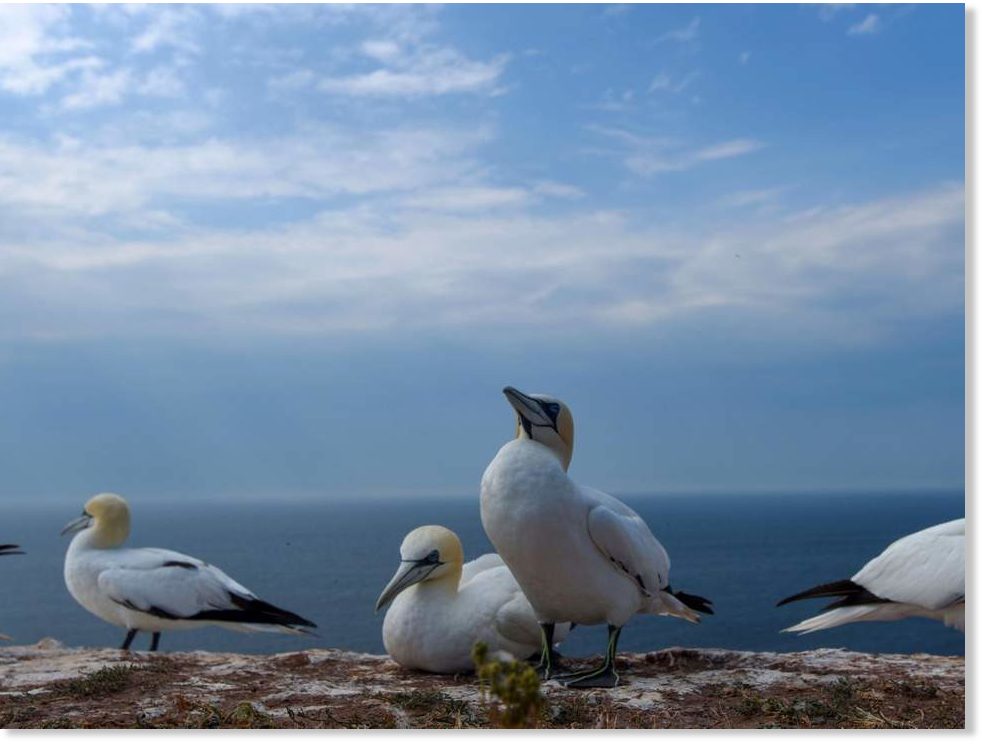
Seabird populations have dropped 70% as fishing industry competes for food

Overall seabird numbers have dropped massively
© AFP/Getty ImagesOverall seabird numbers have dropped massively since the middle of the 20th century
The world's seabirds are being pushed to the brink of extinction by the fishing industry which is competing with them for food, a new study has warned.

Populations have dropped by up to 70 per cent since the middle of the 20th century, experts said.

This is partly due to habitat destruction and pollution, but the new research led by the University of Aberdeen, has revealed that pressure from fishing has played a major role in this decline.

Scientists compared two time periods - 1970 to 1989 and 1990 to 2010 - to assess the degree of competition seabirds faced for prey species such as anchovy, mackerel and squid.

The team then estimated the annual consumption of those prey species for nearly 300 varieties of seabird, based on population counts and models.

Cassiopaea

Supernovae may have killed off large animals at dawn of Pleistocene

A nearby supernova remnant
© NASAA nearby supernova remnant.
Lawrence - About 2.6 million years ago, an oddly bright light arrived in the prehistoric sky and lingered there for weeks or months. It was a supernova some 150 light years away from Earth. Within a few hundred years, long after the strange light in the sky had dwindled, a tsunami of cosmic energy from that same shattering star explosion could have reached our planet and pummeled the atmosphere, touching off climate change and triggering mass extinctions of large ocean animals, including a shark species that was the size of a school bus.

The effects of such a supernova - and possibly more than one - on large ocean life are detailed in a paper just published in Astrobiology.

"I've been doing research like this for about 15 years, and always in the past it's been based on what we know generally about the universe - that these supernovae should have affected Earth at some time or another," said lead author Adrian Melott, professor emeritus of physics & astronomy at the University of Kansas. "This time, it's different. We have evidence of nearby events at a specific time. We know about how far away they were, so we can actually compute how that would have affected the Earth and compare it to what we know about what happened at that time - it's much more specific."

Melott said recent papers revealing ancient seabed deposits of iron-60 isotopes provided the "slam-dunk" evidence of the timing and distance of supernovae.

"As far back as the mid-1990s, people said, 'Hey, look for iron-60. It's a telltale because there's no other way for it to get to Earth but from a supernova.' Because iron-60 is radioactive, if it was formed with the Earth it would be long gone by now. So, it had to have been rained down on us. There's some debate about whether there was only one supernova really nearby or a whole chain of them. I kind of favor a combo of the two - a big chain with one that was unusually powerful and close. If you look at iron-60 residue, there's a huge spike 2.6 million years ago, but there's excess scattered clear back 10 million years."

Melott's co-authors were Franciole Marinho of Universidade Federal de São Carlos in Brazil and Laura Paulucci of Universidade Federal do ABC, also in Brazil.

Doberman

Elderly woman killed by dog in Marietta, North Carolina

canine attack
© Angela Antunes / CC by 2.0
The Robeson County Sheriff said an elderly woman was killed Monday night after a dog attack in the 2200 block of Olivet Church Road in Marietta.

Sheriff Burnis Wilkins said deputies found the woman dead outside near the roadway and two children badly hurt.

The sheriff said four Rottweilers were shot by deputies who were under attack while trying to render aid.


Originally, officials said the dogs were Pit Bulls, but later determined they were Rottweilers.

Attention

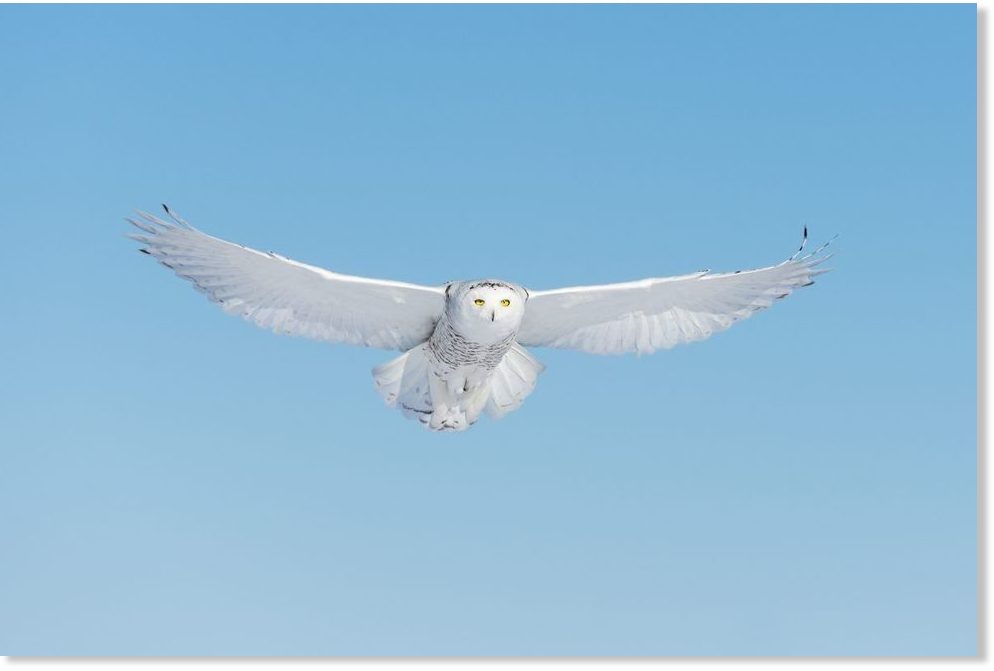
Snowy owls have returned to Wisconsin in high numbers - at least 43 reported so far

Snowy owl
Snowy owl
In recent years they've become an increasingly popular winter attraction across Wisconsin.

And once again, snowy owls are returning to our area for the cold weather months.

Bay Beach Wildlife Sanctuary Animal Curator Lori Bankson can sense the growing fascination over snowy owls in recent years.

"Wisconsin has been very lucky the last few years with the irruptions of so many owls coming down and some owls staying in the area, so with the power of the internet, with the information getting out there, with the DNR and so much great research going on, we can track these owls," says Bankson.

And thanks to the website ebird.com, the public can, too.

Since early November, this map details an estimated 43 snowy owls reported from 26 Wisconsin counties, with the lower Bay of Green Bay being a hot spot.


Comment: See also: Snowy owls expected to show up again this winter in USA - 8th consecutive season in an unusual sequence


Bug

Thousands in need of food after locusts decimate crops in Turkana, Kenya

Locusts
Locusts
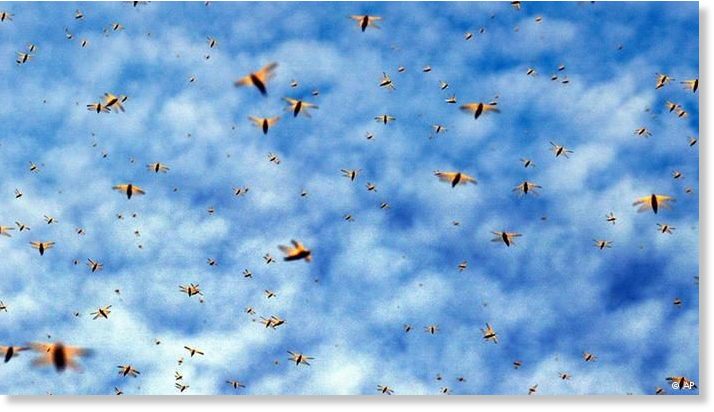
An MP has appealed to the Turkana County government, national government and humanitarian agencies to hasten relief efforts for at least 250,000 people facing starvation after a devastating locust invasion.

A locust swarm invaded Turkana County in June and decimated thousands of acres of food crops and vegetation with Kibish and Turkana North sub counties the hardest hit.

"The pastoralists have no pasture for their livestock that forms main source of food after the vast vegetation was damaged by the pests. Drought resistant crops like sorghum and millet were likewise destroyed by locusts, subjecting many households to severe food shortage," said Turkana North MP Christopher Nakuleau.

The MP said herders have since migrated with their animals to lands near the Ethiopia-South Sudan border in search of pasture and water, where he said, a local militia called Toposa is mobilising to attack herders as competition for scarce resources heats up.

Cloud Lightning

Lightning bolt kills 12 goats and dog in Cyprus

lightning
Twelve goats and a dog, believed to have been struck by lightning, were found dead on Friday in the village of Salamiou in Paphos after their own believed them have gone missing or stolen.

The dead animals were located by their owner on Friday. It is believed they were struck by lightning on Tuesday, when the man had reported to the police that the animals had disappeared from Plaka locality, in Salamiou.

Officials from the state vet services who examined the animals, found they had burn injuries to their coats, caused by lightning.

Attention

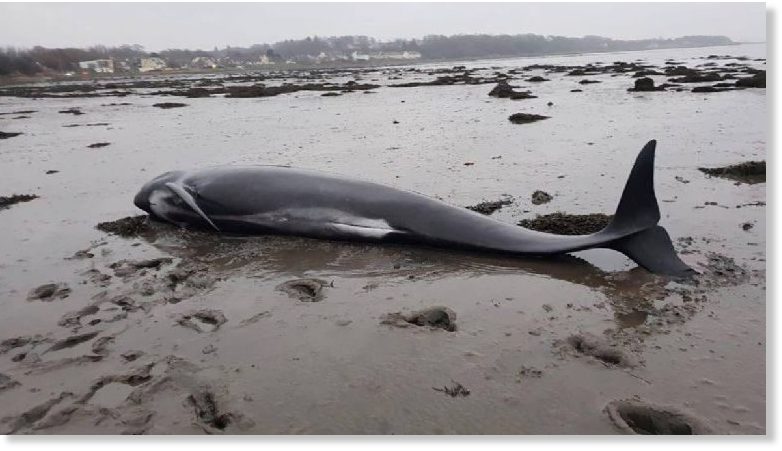
Five pilot whales strand in Fife, Scotland - 3 die

The pilot whales washed up in the Firth of Forth.
© James McKenzieStranded: The pilot whales washed up in the Firth of Forth. James McKenzie
Five pilot whales became stranded in Fife after being spotted in the Firth of Forth on Tuesday.

Three whales have died after beaching in the Firth of Forth.

Five pilot whales became stranded after they were initially spotted in shallow water near the Fife village of Culross on Tuesday.

The mammals were refloated from the mudflats near Torryburn at high tide on Wednesday evening by a British Divers Marine Life Rescue (BDMLR) team, assisted by the coastguard, Scottish Fire and Rescue Service, Special Operations Response Team and Network Rail.

Attention

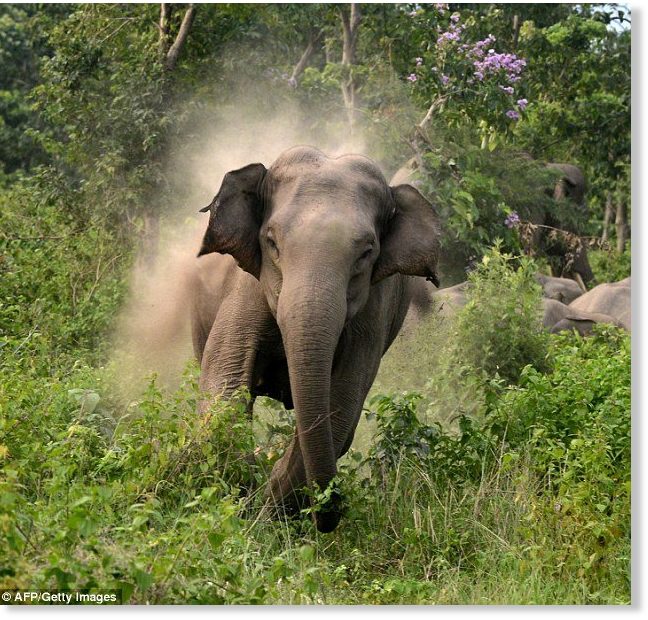
Peeved pachyderm: Elephant tramples 4 people to death in Assam, India

Charging elephant
© GettyCharging elephant
Four persons were trampled to death by a wild elephant at three nearby villages in West Karbi Anglong district on Tuesday, official sources said.

The elephant attacked the four persons - three women and a boy - when they were working in their sugarcane and paddy fields in villages under Kheroni area. The animal killed a woman and a 12-year-old boy at Bagidubi village, and two other women at Lomba Pathar and Jiribasa villages.

The elephant, suspected to have been separated from its herd, came out of the Kheroni forest a few days ago and wrecked havoc in the area destroying standing crops, the sources said.