Animals
S


Binoculars

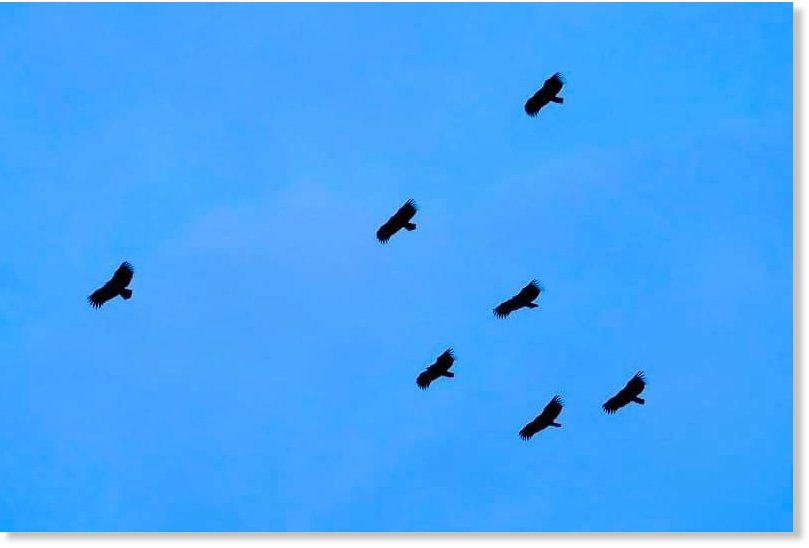
Non-migratory Griffon vultures from the Himalayas turn up circling over Singapore

A flock of vultures over Pinnacle@Duxton.
© Gerald Tew Chong Hwee/FacebookA flock of vultures over Pinnacle@Duxton.
Vultures have descended on Singapore like, well, vultures, triggering birdwatchers into a frenzy with rare sightings of the large carrion birds.

Himalayan vultures have been spotted in various locales including Bukit Timah and the Central Business District. One person had a lucky, close encounter with the Central Asia native last night after finding it just hanging out in the middle of a street near Maxwell Road.

"Impossibly large bird, spotted in Singapore!" read the post on beauty page Kirari Labo. It included a photo of the big bird totally owning the street like a boss. The bird then flew away, showing off its large wingspan as it soared over the vehicle, a moment caught in another video.


Info

Study shows animal life thriving around Fukushima

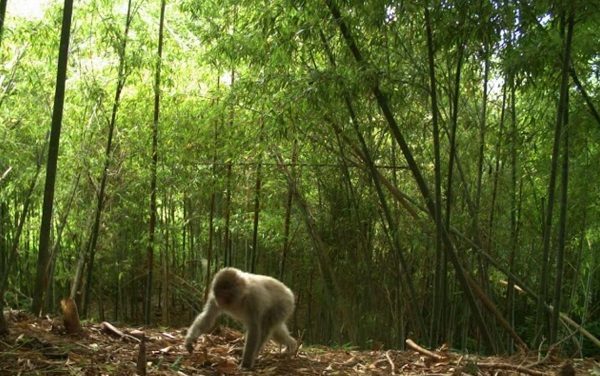
Fukushima monkey
Nearly a decade after the nuclear accident in Fukushima, Japan, researchers from the University of Georgia have found that wildlife populations are abundant in areas void of human life.

The camera study, published in the Journal of Frontiers in Ecology and the Environment, reports that over 267,000 wildlife photos recorded more than 20 species, including wild boar, Japanese hare, macaques, pheasant, fox and the raccoon dog — a relative of the fox — in various areas of the landscape.

UGA wildlife biologist James Beasley said speculation and questions have come from both the scientific community and the general public about the status of wildlife years after a nuclear accident like those in Chernobyl and Fukushima.

This recent study, in addition to the team's research in Chernobyl, provides answers to the questions.

Comment: See also: Chernobyl has become a refuge for wildlife 33 years after the nuclear accident


Butterfly

Birds and bats have strange gut microbiomes — probably because they can fly

bat fruit
© Holly LutzA Kenyan fruit bat, Epomophorus wahlbergi.
At a time when kombucha is commonplace on cafe menus and "probiotic-fortified" has become the newest health buzzword, our guts have never been more relevant. With good reason, humans have begun paying more attention to the bacteria living in our guts — our microbiomes. The microbiome helps fight disease and aid digestion, playing a pivotal role in many creatures' wellbeing, from canines to primates to rodents. But for the first time — largely in part due to museum collections — scientists were able to compare the guts of mammals, birds, reptiles, and amphibians alike. It turns out that not all species rely so heavily on their gut microbiomes. In fact, birds and bats have oddly similar microbiomes, and neither appear to rely on them much. "Why?" you may ask: to accommodate their ability to fly, scientists think.

"If you're carrying a lot of bacteria in your gut, it can be pretty heavy and may take resources away from you," says Holly Lutz, a research associate at Chicago's Field Museum and postdoctoral researcher at the University of California San Diego. "So if you're an animal that has really high energetic demands, say because you're flying, you may not be able to afford to carry all those bacteria around, and you may not be able to afford to feed them or deal with them."

Comment: Research into the microbiome and its significance - for all creatures - is still in its infancy so it would be hasty to rush to any conclusions, but one point does seem to be clear and that's in the significant variety that animals that fly have.

See also:


Doberman

Elderly farmer mauled to death by pet Boerboel in South Africa

canine attack
© Angela Antunes / CC by 2.0
The Boerboel had never shown signs of aggression but bit his owner to death. He was later shot in order for police and a doctor to enter the premises to attend to the victim.

An elderly Northern Cape farmer was killed by his pet boerboel on Saturday afternoon, reports Vaal Weekblad.

80-year-old Piet Lategan died in his house, after his fiancé managed to drag him inside after the attack.

According to local publication FiND iT, Lategan's daughter Betsie Swanepoel said that when it began to rain and hail this past weekend, Piet wanted to get a blanket to cover one side of his car, to protect it from the hail.

"My father and his fiancé, Santa Venter, 64, went outside to cover the car when their pet Boerboel bit her dress. She grabbed her dress from the dog's grip.

Binoculars

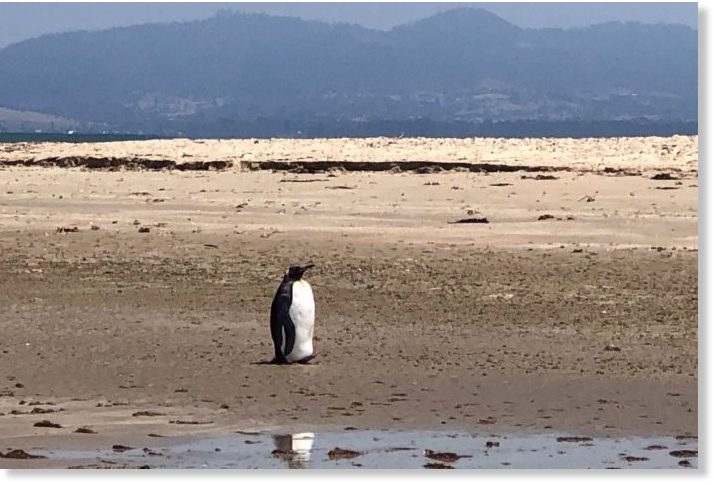
King penguin turns up on beach in Tasmania, Australia 1,500 kilometres from home

The penguin is in a healthy condition, experts say.
© James SmithThe penguin is in a healthy condition, experts say.
A king penguin has been spotted more than a thousand kilometres from its home on a southern Tasmanian beach, but a wildlife expert says it may not be lost.

The closest king penguin colony is on Macquarie Island, about 1,500 kilometres south of Hobart.

Marine Conservation Program wildlife officer Dr Julie McInnes said the sighting at Seven Mile Beach was exciting.

"It's a pretty rare thing to see king penguins up here in Tasmania, it's quite a way north from the usual range," Dr McInnes said.

"It's not unheard of, we have seen them a couple of times in different parts of the state."

Dr McInnes said it was not clear if the bird was lost — it may have come ashore to rest after a big fishing trip, or was undergoing its annual moult.

Comment: Three months ago another King Penguin turned up thousands of kilometers from home at Cape Point Beach in South Africa


Attention

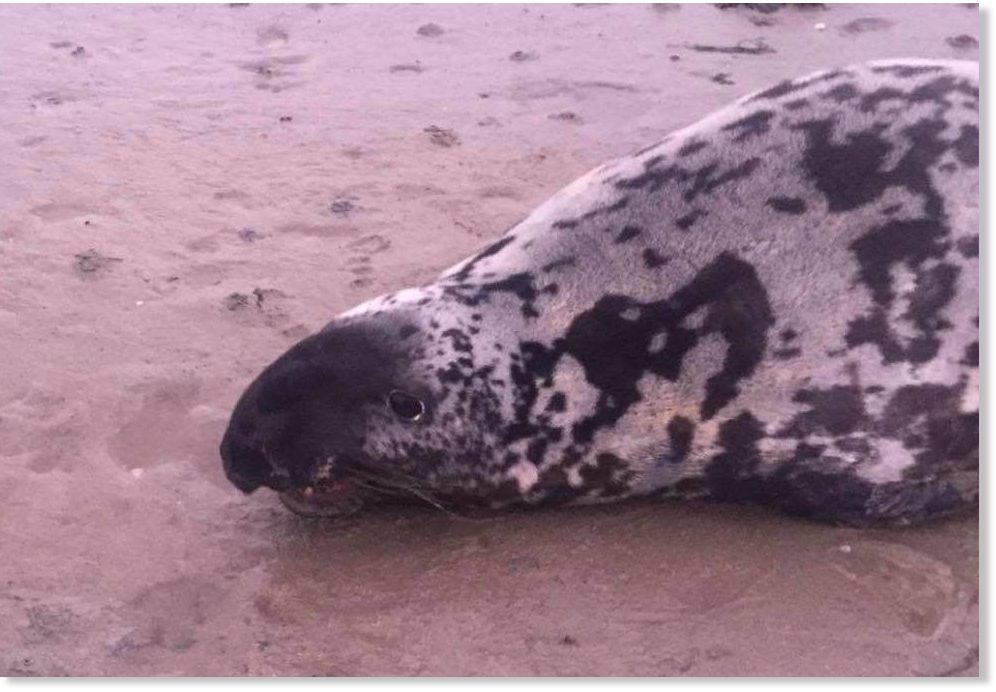
Two different seal species from the Arctic turn up in south-west Ireland

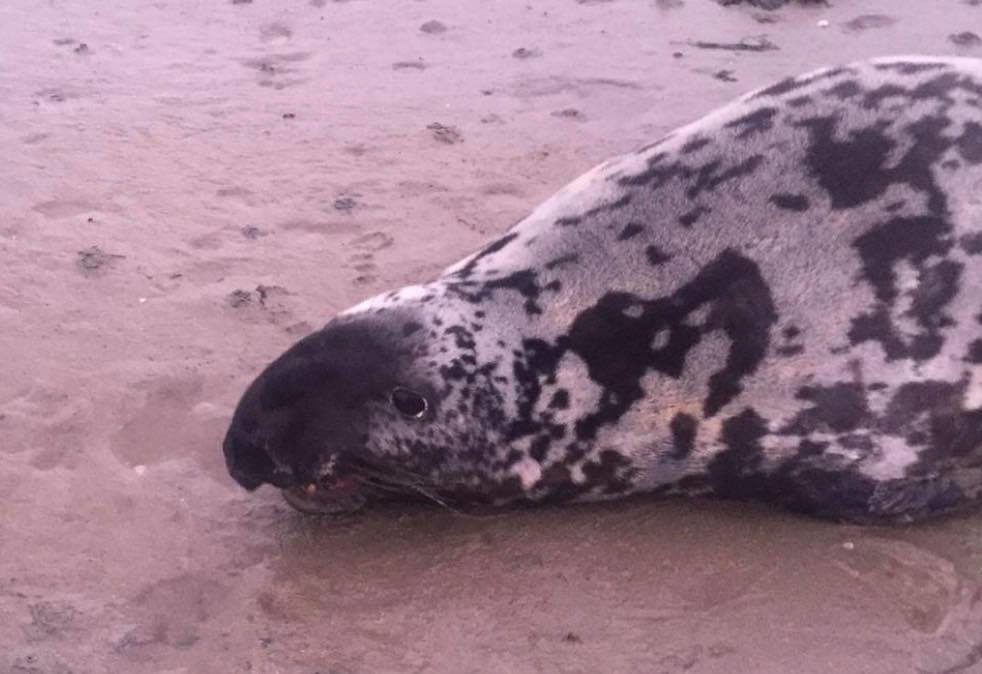
The male Hooded Seal was first seen at Toormore, Co Cork, on New Year's Day
© Helen Tilson/Schull Sea SafariThe male Hooded Seal was first seen at Toormore, Co Cork, on New Year's Day
Two extremely rare visitors from the Arctic paid visits to beaches on the westerly coasts of Cos Cork and Kerry last week.

The first of these was a male Hooded Seal, which appeared at Toormore beach, west of Schull, on New Year's Day. Apparently in good health, the animal measured more than 2 metres in length and was estimated to weigh around 300 kg.

Sexed as a male due to the distinctive, elastic balloon-like nasal cavity on the top of its head, which only males possess, the seal was observed (and filmed) inflating this sack on a few occasions.

It stayed on the beach for the remainder of the day, where it was monitored by volunteers to ensure its rest was undisturbed by onlookers, before swimming off from Toormore the following day (2nd) - it hasn't returned there or been seen anywhere else since.

While principally an Arctic species, Hooded Seal spends much of its life well away from land and has been seen as far south as the Mediterranean Sea. There are six previous Irish records: two historical occurrences are cited from Co Mayo in 1836 and Co Galway in 1898, with more recent sightings involving juveniles in Co Wexford in September 2001, Co Waterford in October 2006, Co Dublin in July 2012 and Co Donegal in 2016.


Comment: There was another unusual marine mammal migration from the Arctic region just last month: Killer whales migrate from Iceland to Italy for the first time in recorded history


Attention

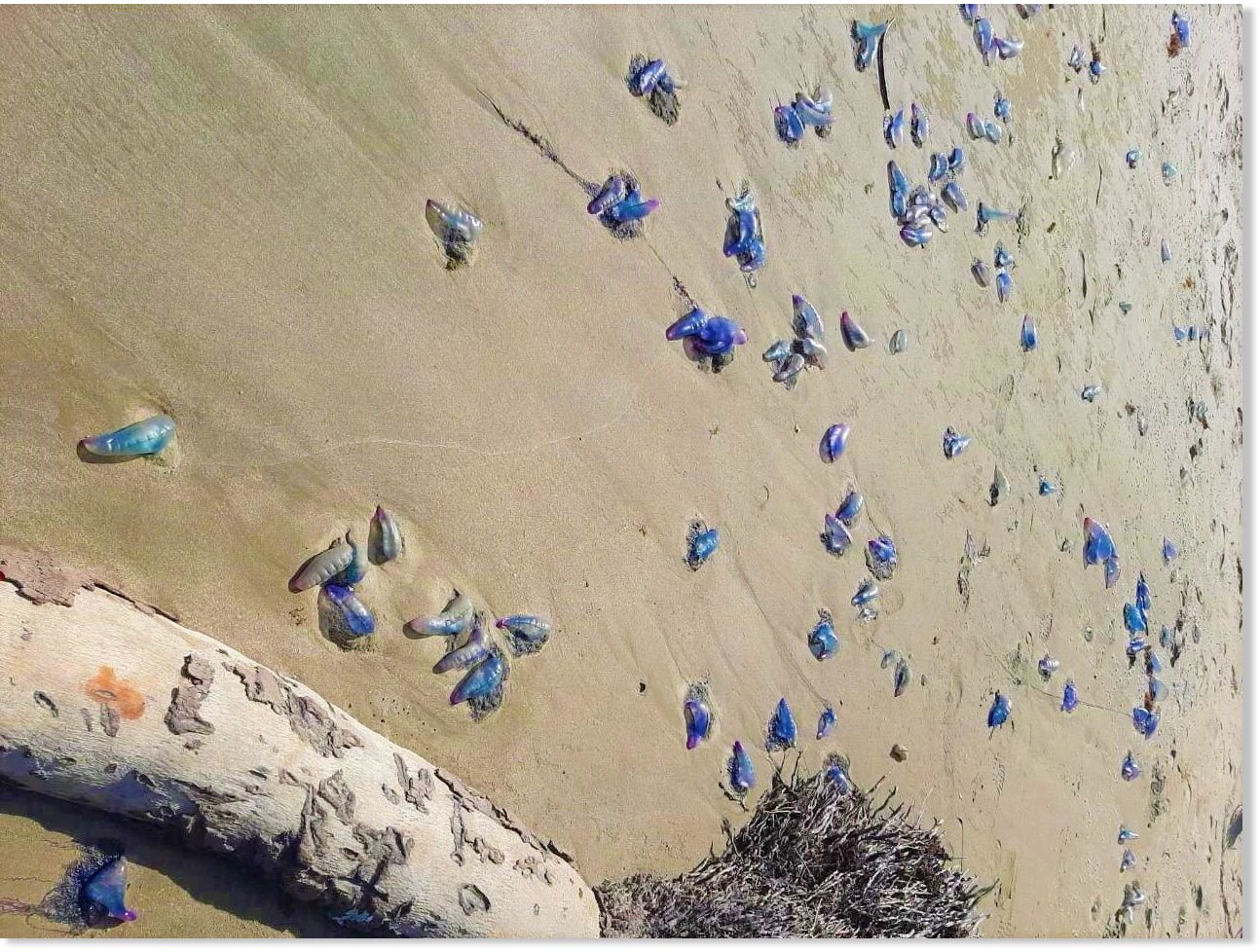
Portugese Man O' War wash ashore in unprecedented numbers along the beaches on Trinidad

These were found on the east coast.
The Portugese Man O' War, a marine animal that resembles a jelly fish, continue to wash ashore in unprecedented numbers along the beaches on Trinidad east and north coasts.

These organisms classified by the Institute of Marine Affairs as a dangerous marine creature, are known as siphonophore.

There differences between jellyfish and the Portugese Man O' War.

Doctor Judith Gobin a clinical ecologist and Lecturer at the University of the West Indies St. Augustine told the Express yesterday: "The Portuguese man o' war is often called a jellyfish as it looks like one. It is easily recognized by its balloon-like float, which may be blue, violet, or pink and reaches to about six inches above the water. It is actually a species of siphonophore, another group of animals that is closely related to jellyfish."


Attention

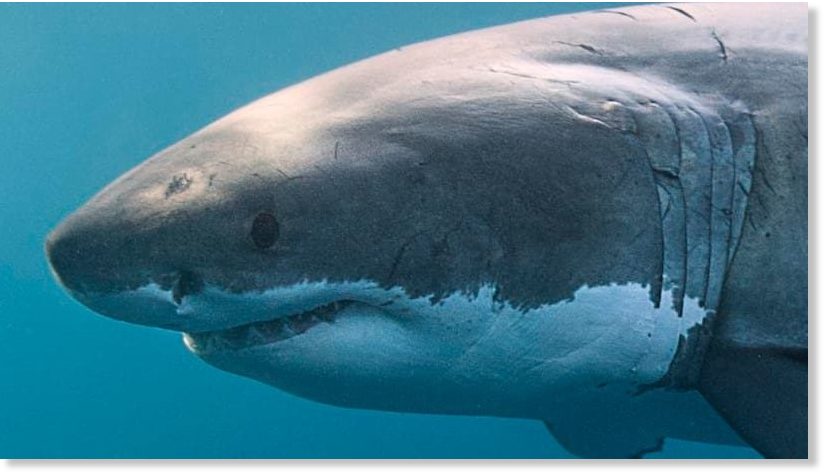
Fatal shark attack near Esperance, Western Australia claims diver's life

shark
A man has died after being attacked by a shark while diving off the coast of Esperance in Western Australia's south-east.

Police believe the man was diving from a boat in the area off West Beach when he was attacked.

"Esperance Police and Marine Rescue WA volunteers deployed to the area on board marine rescue vessels. They are still searching the ocean for the victim," police said a statement.

"A woman who was on board the boat at the time of the incident has been returned to shore, and has been taken by St John Ambulance to hospital. She is suffering from shock.

"Police Air Wing and specialist divers from Water Police are assisting with the search."

Local Glenn Quinlivan raced to the scene on boat after hearing the mayday call.


Attention

11 whales ground themselves, 4 die on Matarangi Spit, New Zealand

One of the dead whales had been cordoned off.
© LEIGH-ANN WIIGOne of the dead whales had been cordoned off.
The seven whales that survived a grounding at the Matarangi Spit have been shepherded out of the Matarangi Harbour by boats across the bar and out to sea.

A spokesperson from the Department of Conservation said the whales "were seen swimming strongly and being active and it's hoped they will remain at sea."

DOC staff are burying the four dead whales above the high tide mark at Matarangi together with local iwi who have worked closely with DOC staff in managing the stranding and refloat.

"We're asking people in the area to keep an eye out for the refloated whales possibly re-stranding in the next 24 hours or so. If people see any stranded whales please contact DOC's 24-hour number 0800 DOC HOT (0800 362 468)," the spokesperson said.

They also expressed thanks to everybody that has helped with the whales on the beach and in successfully refloating them this afternoon.


Attention

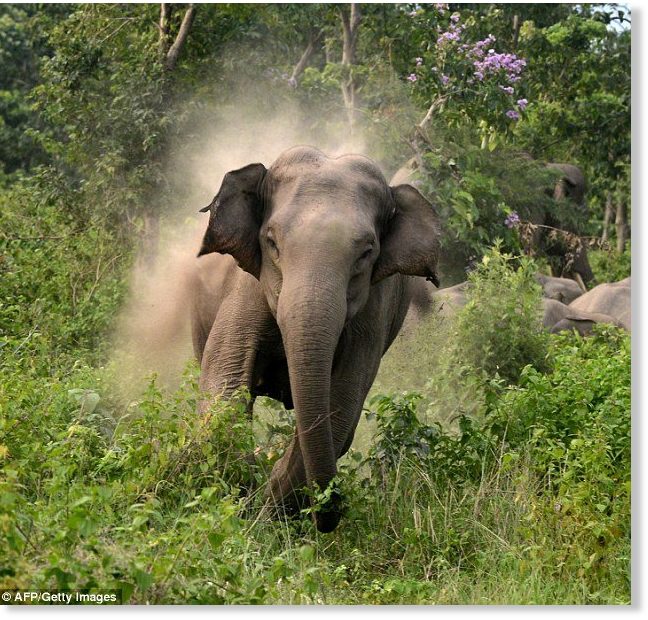
21 people killed by elephants in 12 months across Goalpara district in Assam, India

Charging elephant
© GettyCharging elephant
21 people died in 12 months in Goalpara including two in the last week of December according to AID-R

Assam's Goalpara district recorded the highest number of man-elephant conflict in 2019, an NGO has said.

According to the AID-R, an NGO studying conflict cases, 21 people died in 12 months, including two in the last week of December. Five elephants also died during the same period.

The worst instance of the conflict was on October 29 when a male elephant trampled five persons to death in Matia under Rangjuli range forest. Later, it died in Orang National Park following a heart attack when it was tranquillised and translocated by the forest department from Goalpara.

The death sparked a controversy as the tranquillisation involved Padma Hazarika, a legislator with elephant handling experience but not from the forest department.