Extreme Temperatures
S


Snowflake Cold

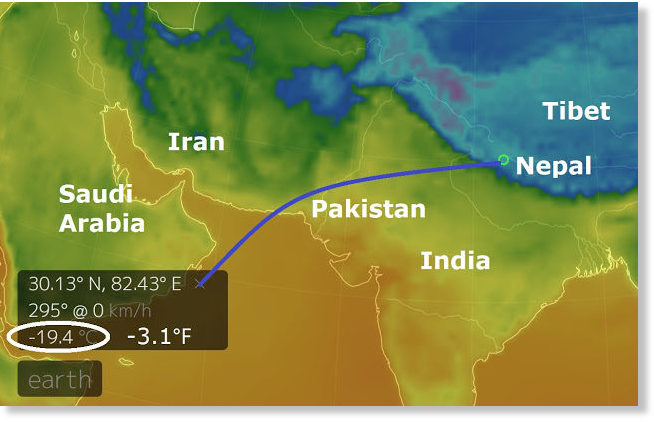
143 people dead due to severe cold in India near Nepal border, 60 dead in latter country

map Nepal
At least another 60 people have died in Nepal bringing the total to 71 after 11 died last week, with 143 more dead just over the border in Uttar Pradesh India from extreme cold in the area.

Twenty-six succumbed to the cold in Saptari while 17 died in Rautahat, nine in Parsa, seven in Siraha and six in Dhanusha. Sugawati Devi Sardar of Dakneswori Municipality-8 and Bisesh Kumar Pandit of Lalapatti at Chhinamasta Municipality-4 became the latest victims of cold today.

In Rautahat, two more persons died today.

With this, the death toll has reached 17 in the district.

Snowflake

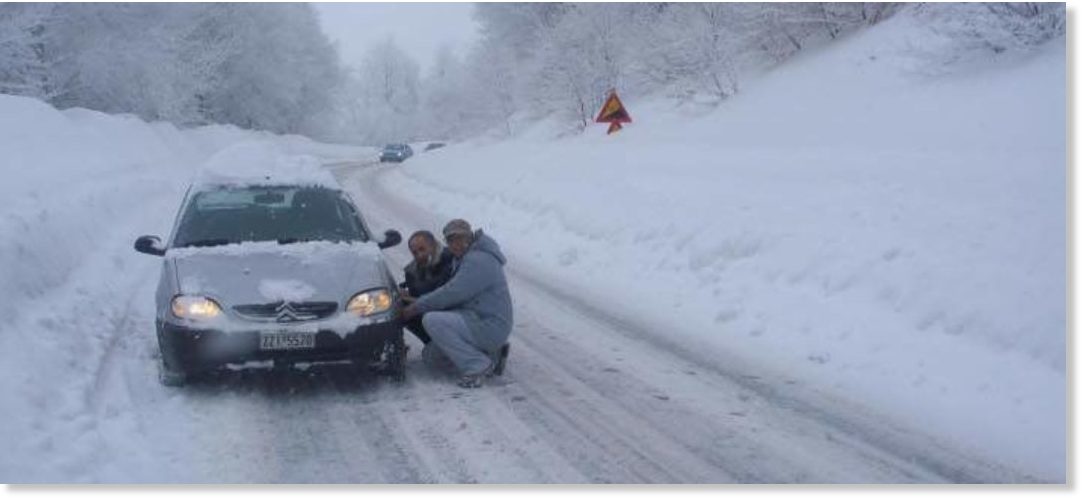
Snow blankets parts of central and northern Greece (VIDEOS, PHOTOS)

Near Karpenisisi
Near Karpenisisi
A weather front called 'Theseus' has brought a wave of cold and wet weather to Greece.

Many central and northern parts of the country have been covered by a blanket of snow as temperatures have plummeted.

In Thessaly heavy snowfall has created problems on roads. In areas of high altitude in the region of Larisa, Volos and Trikala snow ploughing vehicles are working overtime to clear the roads.


Snowflake

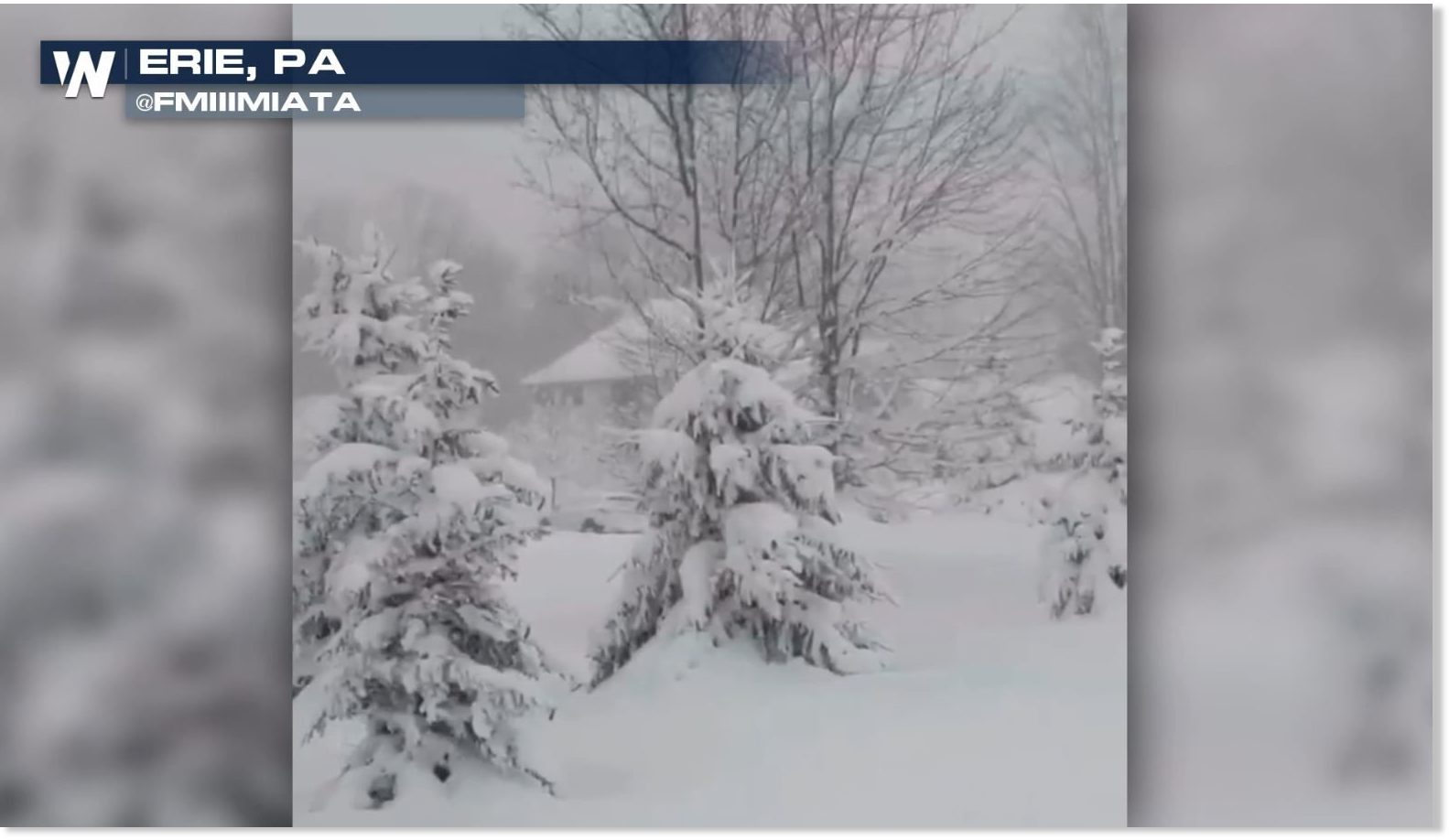
Erie in Pennsylvania on pace for snowiest season with 136.5″ of snowfall so far this winter

Erie, PA on pace for snowiest season
Snow. Something Erie, PA is probably tired of talking about this season. In fact, the city is on pace for the record snowiest season on record.

So far this winter season, the city has received 136.5″ of snowfall...an incredible 88″ more than a normal year.

The city was clobbered with more than 60″ of snow in a single lake effect snow event in December, prompting a state of emergency for the city. December, by far, was the big player in the seasonal snow, with nearly 121″ in that month alone!

Snowflake

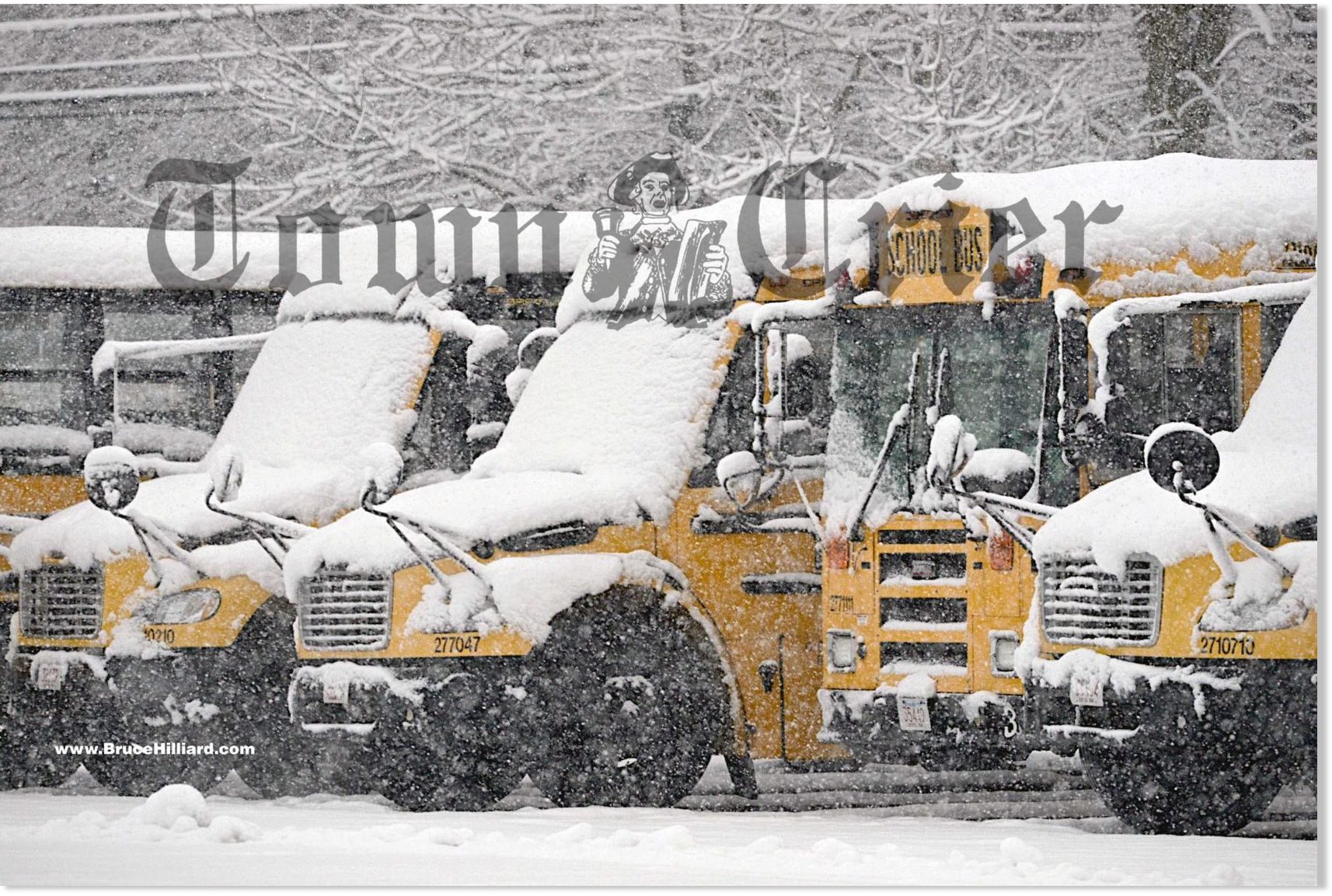
Nearly two feet of snow wallops Wilmington, Massachusetts

snow
Thursday's snowstorm brought almost two feet of snow in some areas of town, with snow falling from 7 a.m. on Thursday through into the night. Wilmington DPW, however, was ex­pecting the snow to start at 3 a.m., so they delayed their start plowing until about 10:30 a.m.

Operations Manager Jamie Ma­galdi explained that the excessive winds make it hard to quantify exactly how much snow fell, but he provided an average of 17.5 inches throughout the day. This storm fell in the midst of an extremely cold week, with temperatures in the negative degrees, which made the cleanup and the aftermath of the storm particularly difficult.

Magaldi shared that the town had a total of 90 workers plowing from Thursday morning to Friday afternoon.

"We had 45 staff and 45 contractors," he said.

The equipment they use ranges from snow plows to front loaders to sidewalk cleaners.

Ice Cube

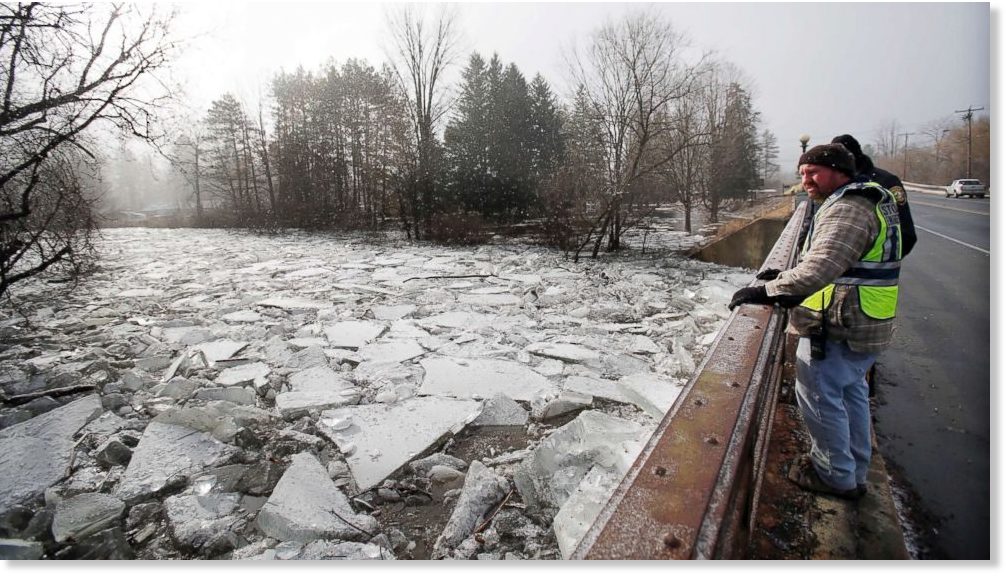
Record-cold wave recedes, but now ice jams are causing flooding in US northeast

River ice
Winter weather conditions continue to plague the Northeast.

The combination of melting snow, mild temperatures, and heavy rain have caused numerous ice jams to form in several Northeast states, including Pennsylvania, New York, Connecticut, Vermont and Massachusetts. The ice jams have caused some evacuations in areas near rising creeks and rivers. The ice jams are also responsible for shutting down parts of roadways.

Despite much colder temperatures than the end of last week, the threat of ice jam-related flooding will remain on Sunday across much of the Northeast. Runoff from heavy rain in area waterways, combined with chunks of ice will continue to cause water levels to change. Some parts of the region have flood watches and advisories through Sunday. Some waterways will begin to refreeze on Sunday.


Info

Evidence of something much bigger: New bee species found thriving in former Arctic nuke site - study

Bees
© Sina Schuldt / AFP
A species of bee has been discovered that is miraculously capable of surviving in the high arctic region where the Soviet Union once tested nuclear weapons for decades, according to a new study.

The 'Bombus glacialis' species lives on the archipelago of Novaya Zemlya, which the Soviet Union closed off decades ago to carry out scores of nuclear tests. While previously considered to be a subspecies of the B. polaris - one of the only other arctic bee types in the world - a recent study published in Polar Biology confirmed B. glacialis to be its own species.

Specimens of the bees were often collected by explorers who visited the island in the early 20th century, and are now preserved in natural history museums. Their existence, however, could be evidence of something much bigger.

Comment: See also: Russian military deploys radar array facility on remote Arctic island


Igloo

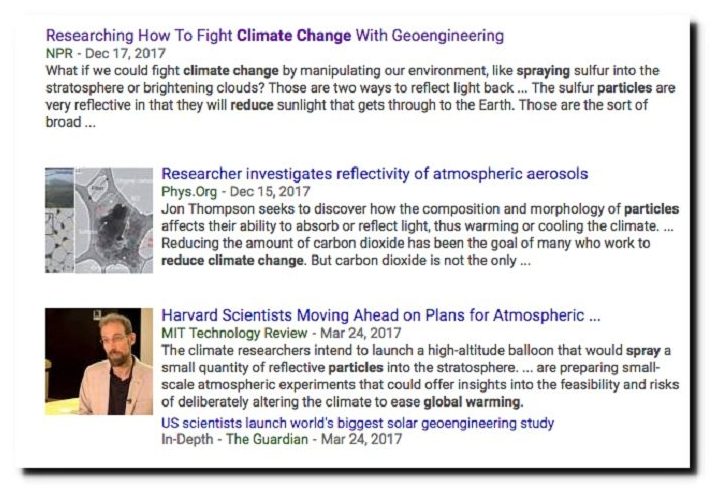
Academics and politicians looking to blot out the sun and make it colder!

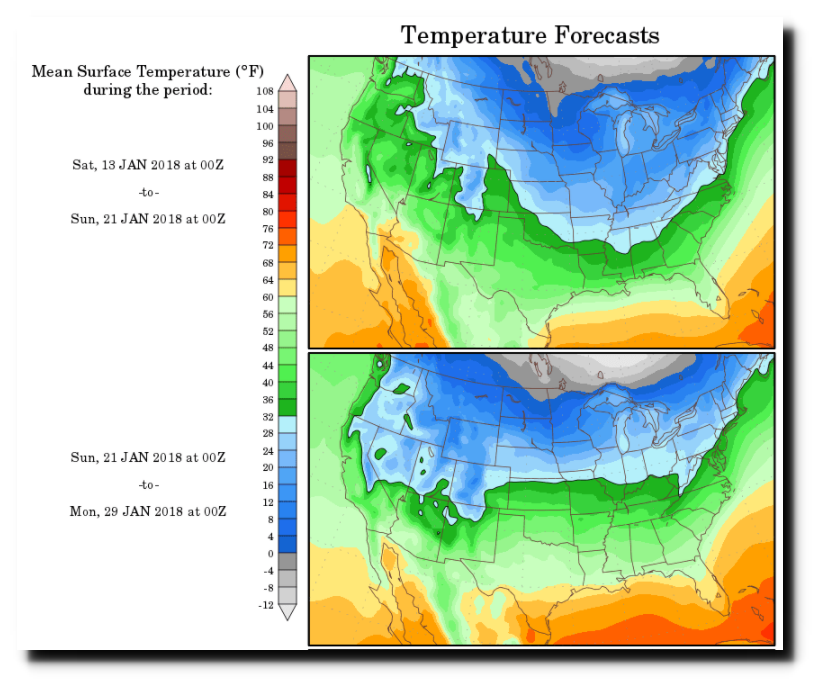
With the US experiencing possibly the coldest January on record, our top scientists and Democratic Party politicians are looking to spray pollutants into the atmosphere and blot out the sun - in order to make the weather even colder.
Climate News
© The Deplorable Climate Science Blog
Temps over US
© The Deplorable Climate Science Blog10-Day Temperature Outlook for the Conterminous U.S.
Last time we had winters this cold was in the 1970's, and scientists wanted to spray pollutants on Arctic ice in order to melt the ice cap and stop global cooling.

Snowflake

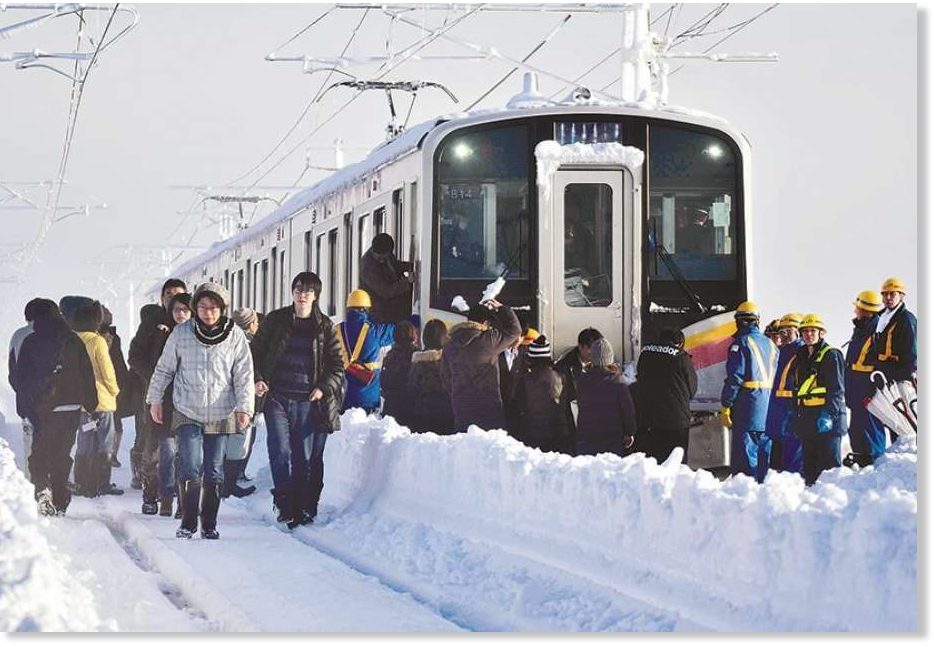
Heavy snowfall continues in western to northern Japan, 128 cms (50 inches) in 24 hours for Hiroshima Prefecture

snow Japan
Snow is continuing to fall on and off in areas of western to northern Japan.

The Meteorological Agency says some mountainous areas have received 30 to 50 centimeters of snowfall for the 24 hours until noon on Saturday.

As of 11 AM, the city of Ono, Fukui Prefecture, had 83 centimeters of accumulated snow, and Kitahiroshima, in Hiroshima Prefecture, had 128 centimeters.

The city of Niigata, facing the Sea of Japan, has had 8 times the average snowfall for this time of year.

More snow is forecast, particularly for areas along the Sea of Japan. Weather officials are warning of icy roads, avalanches and snow-related accidents.


Comment: See also: Heavy snowfall traps 430 passengers overnight on stranded train in Japan


Attention

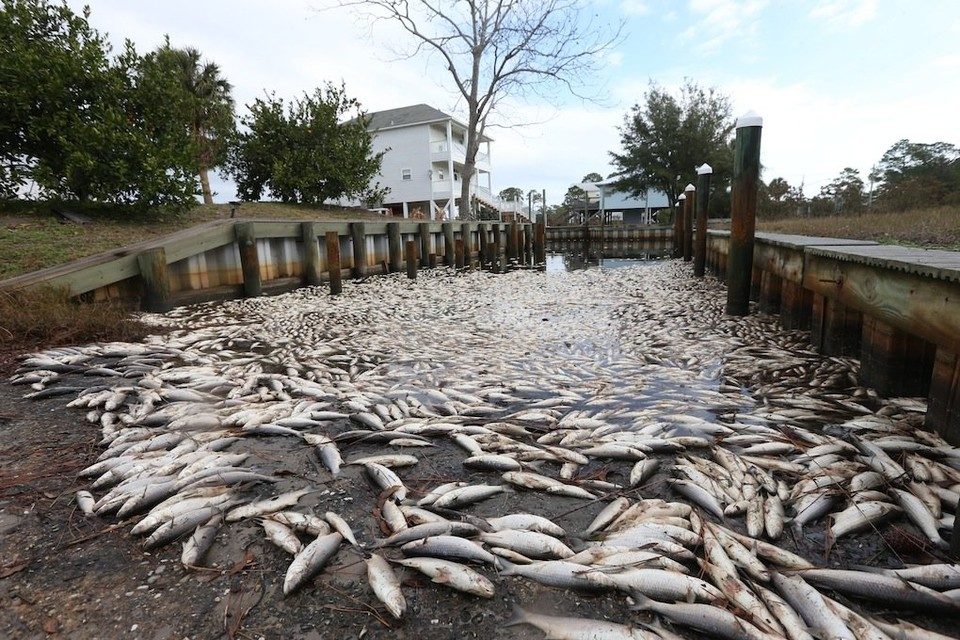
Thousands of dead fish on Alabama beaches likely died of cold temperatures

Residents near Little Lagoon in Gulf Shores are dealing with the effects of a large fish kill
© Brian KellyResidents near Little Lagoon in Gulf Shores are dealing with the effects of a large fish kill that occurred this week. Thousands of dead mullet in Gulf Shores can be seen in this photograph taken off of Minnow Lane Thursday, Jan. 11, 2018.
A large fish kill at Little Lagoon in Gulf Shores has locals holding their nose and gritting their teeth around usually scenic docks and beaches, but it's all part of the natural order of things, according to the Alabama Department of Conservation and Natural Resources.

"This is not a new phenomenon," said Kevin Anson, a marine biologist with the ADCNR's Marine Resources Division. "In 2014 there was a small fish kill, in 2011 I think, we had another cold event, and it's been documented going back into the 1960s."

Thousands of fish -- mostly white mullet -- have gone belly-up on the surface of Little Lagoon or washed up on shore this week, leaving behind an ugly scene, a terrible smell, and a feeding frenzy for birds who don't mind dead mullet, even if they're a few days old.

Sun

First sunrise in 40 days: Arctic Russian city finally greets daylight as polar night ends (PHOTOS)

Sunrise
© Pavel Lvov / Sputnik
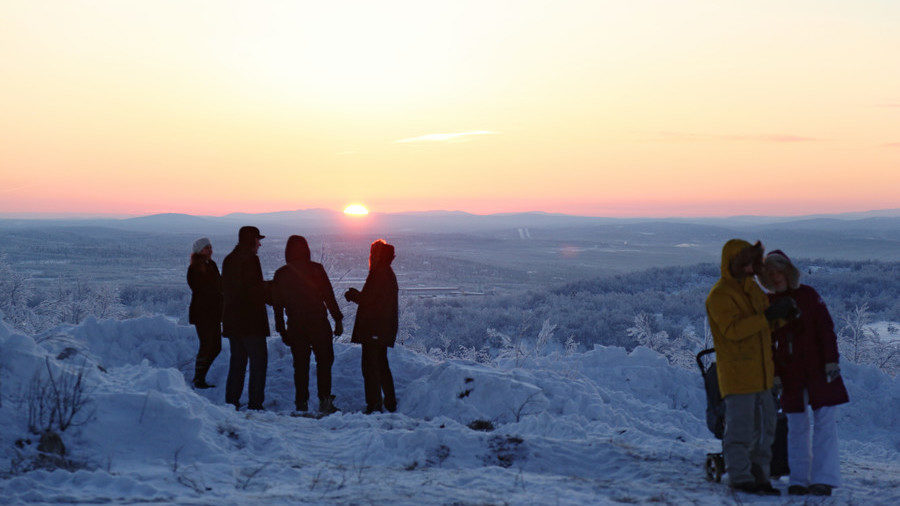
Having seen no sunlight for more than a month, the northern Russian port city of Murmansk has finally greeted a sunrise and a glimpse of daylight that lasted little more than half an hour.

Crowds of local residents gathered on top of a hill to watch the sun emerge from the horizon on Thursday, marking the end of the polar night. Despite sub-zero temperatures, people came to celebrate the end of 24-hour darkness, which began in early December.

The sight of the first sunrise has been drawing locals since 2007 for the annual event on the hill, which is appropriately named "Sunny mountain." People cheered and raised their cameras to capture the moment, as the first sunbeams appeared at 12:39pm.

The first daylight of the year does not last long, and Thursday's glimpse of sunlight had disappeared again within 34 minutes.