Extreme Temperatures
S


Arrow Down

Skier dies in avalanche on mountain in Banff National Park, Alberta

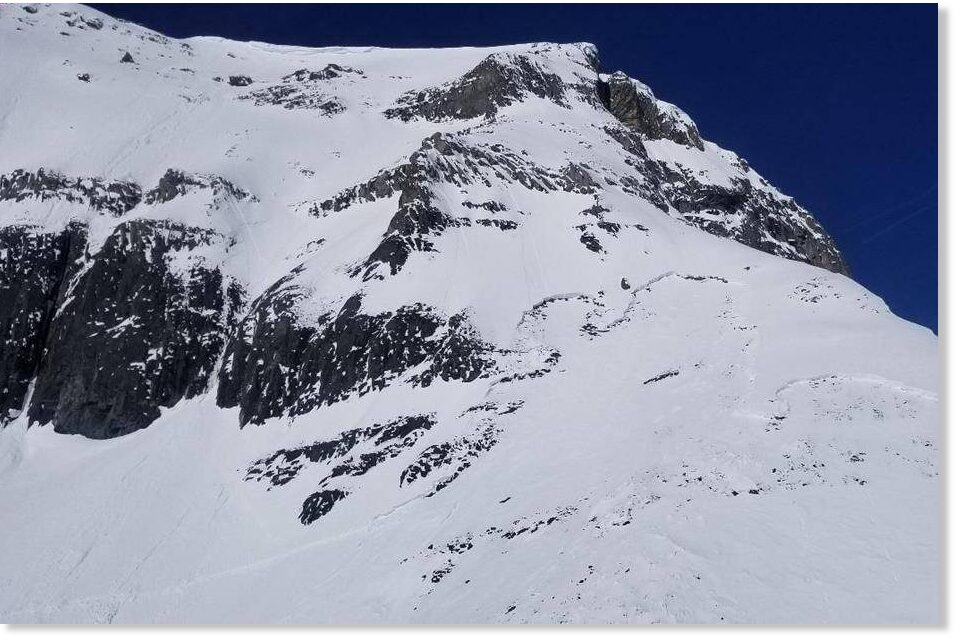
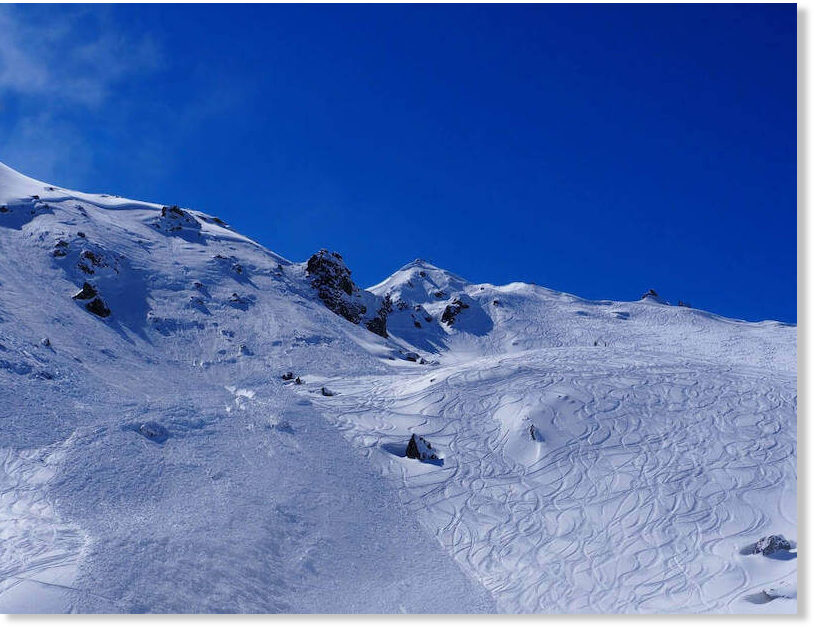
Haddo Peak in Banff National Park
© THE CANADIAN PRESS/HO-Parks CanadaHaddo Peak in Banff National Park is seen in an undated handout photo. A skier from Alberta has died in an avalanche while he and another skier were on a mountain in Banff National Park.
One skier managed to escape, but the second was swept away and killed in the slide

A skier from Alberta has died in an avalanche while he and another skier were on a mountain in Banff National Park.

Parks Canada says two male skiers from Canmore, Alta., were on the northeast face of Haddo Peak in the Lake Louise area on Monday when the avalanche was triggered.

Snowflake Cold

Best of the Web: Temperatures in UK plunge to -6C as Arctic blast strikes - more snow forecast

UK cold spell
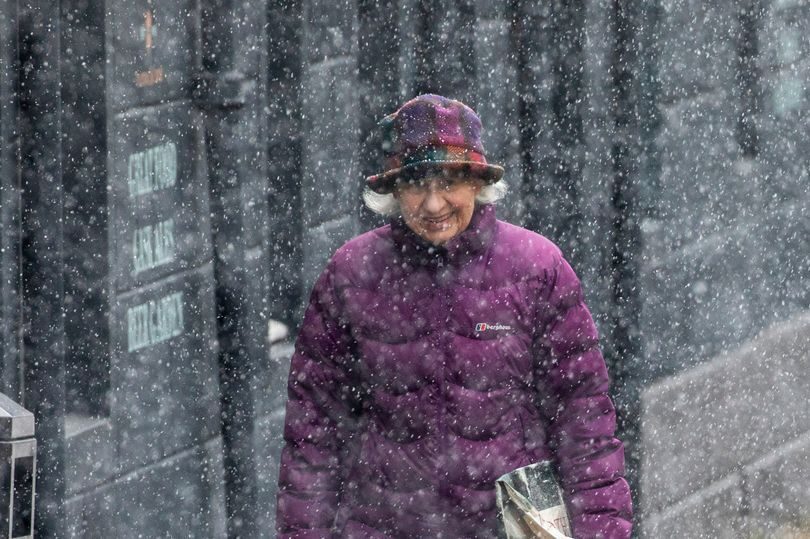
© Katielee Arrowsmith SWNSThere will be frost, snow and ice in places
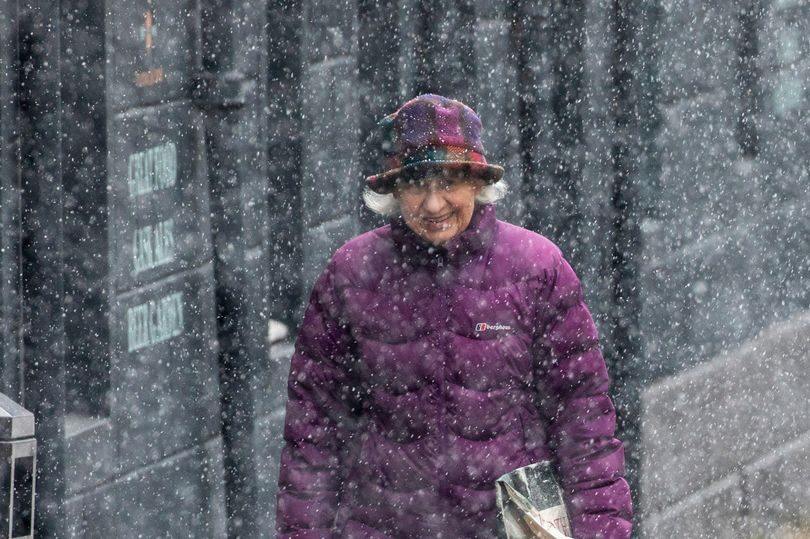
Brits are bracing for another bitterly cold day with warnings of more snow as well as bouts of rain as Arctic winds continues to sweep the nation.

Up to 3cm of snow is predicted to fall in parts of Scotland while the mercury is likely to drop to sub zero temperatures again on Wednesday.

Lows of -6C will hit central parts of England this morning and forecasters warned that it will be 'a cold start for all of us.'

It comes after temperatures plunged as low as minus 4.2C overnight in parts of the UK, while some regions had 11cm of snow fall.

Today, a yellow weather warning for snow remains in place for parts of northern Scotland until 10am.

The severe weather warning states that 'snow showers may lead to some transport disruption' in the affected regions, with up to 3cm set to fall.

London is set to record the coldest start to April in eight years, after St James's Park saw the coldest average over the first six days of the month back in 2013, the Star reports.


Comment: Historic Arctic cold blast hits Europe: Damaging frost and snow expected across most of continent


Snowflake

The Yukon phenomenon: record Whitehorse snow nearly 300% of normal

snow
Even taking into account the city's Arctic locale, this past winter was epically snowy for the Yukon capital.

It snowed before Halloween, and it never really stopped snowing.

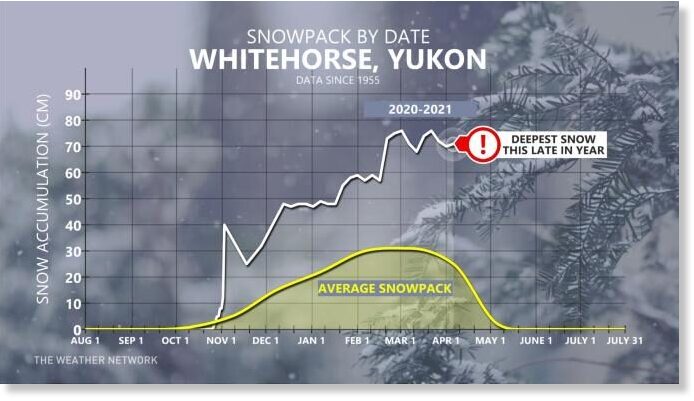
As of April 5th, there's 70 cm of snow on the ground across Whitehorse, Yukon; for the city of 25,000, it's a tremendous amount - the most on record for April 4th.

For reference, the snowpack usually peaks around 30 cm of snow, and by late April, the snow base remarkably diminishes to near zero. The sheer resiliency of the Yukon snowpack is quite peculiar.

Snowflake

Alaska snowstorm dumps up to 3 feet of snow, strands 5 people on North America's tallest peak

SNOW
Five people had to ski through a heavy Alaska snowstorm to a mountain chalet after abandoning their airplanes on a glacier on North America's tallest peak, where they were stranded for the weekend, officials said Monday.

The five landed Friday in three separate small airplanes — a Cessna 180 and two Piper PA18s — on Ruth Glacier on Denali, said Maureen Gualtieri, a spokesperson for Denali National Park and Preserve.

A fast-moving storm prevented them from flying off the glacier, and they spent Friday night in their airplanes at about 4,500 feet. They woke up Saturday and realized they didn't have enough resources to ride out the storm.

"That's when they called for help," Gualtieri said.


Snowflake Cold

UAH global temperature drops below 30-year baseline - Earth is cooling

UAH graph
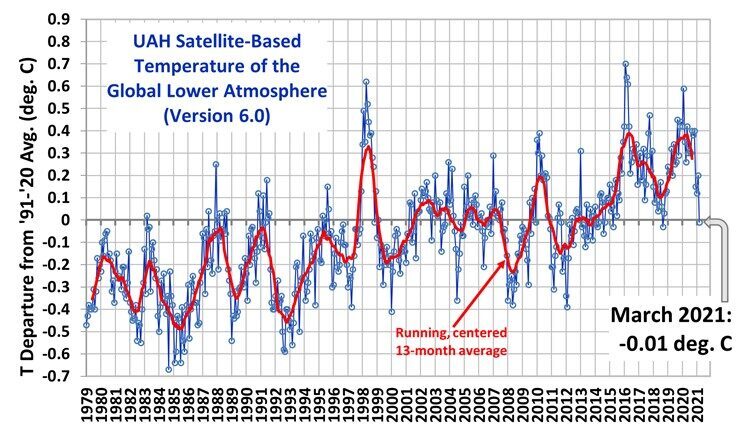
The Version 6.0 global average lower tropospheric temperature (LT) anomaly for March, 2021 has come in at -0.01 deg. C below the 30-year baseline, down from the February, 2021 value of +0.20 deg. C, and down substantially (approx. 0.6C deg. C) from where we were around a year ago.

A continuation of this downward plunge is highly probable over the coming months (with the odd bump along the way-climate is cyclic after all) as low solar activity and La Nina conditions persist.

According to the 15x NASA/NOAA AMSU satellites that measure every square inch of the lower troposphere (where us humans reside), planet Earth was actually warmer back in 1983:

Comment: See also:


Snowflake Cold

Best of the Web: Historic Arctic cold blast hits Europe: Damaging frost and snow expected across most of continent

extreme cold april europe 2021
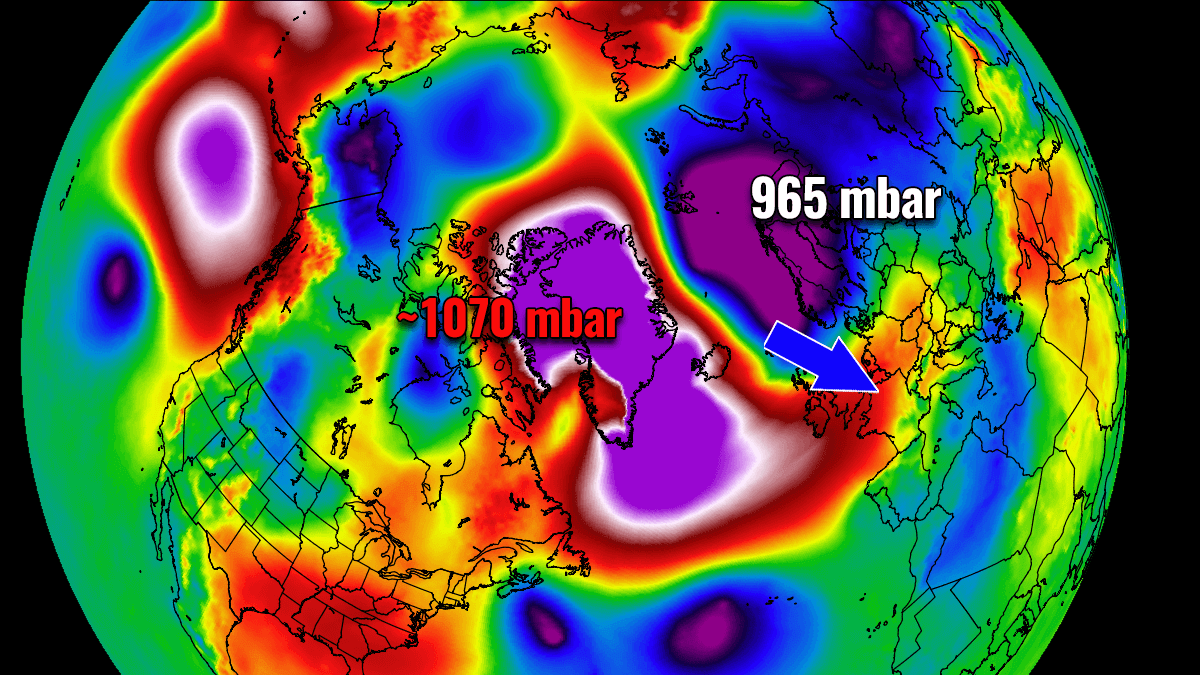
An exceptional, more than 100 mbar pressure difference between Greenland and northern Europe on Sunday has released a massive Arctic cold blast towards continental Europe. The sharp Arctic front is racing south and will result in intense snow with blizzard conditions across Slovenia and Croatia on Tuesday. Then, destructive and widespread frost to vulnerable vegetation is expected across central Europe.

A very dramatic weather pattern change is underway this Easter Monday as a deep Arctic cold-core is moving south across western and northern Europe. The first impact is over the UK and Ireland, then the core will spread towards central Europe and the Mediterranean tonight into mid-week days.

Snowflake

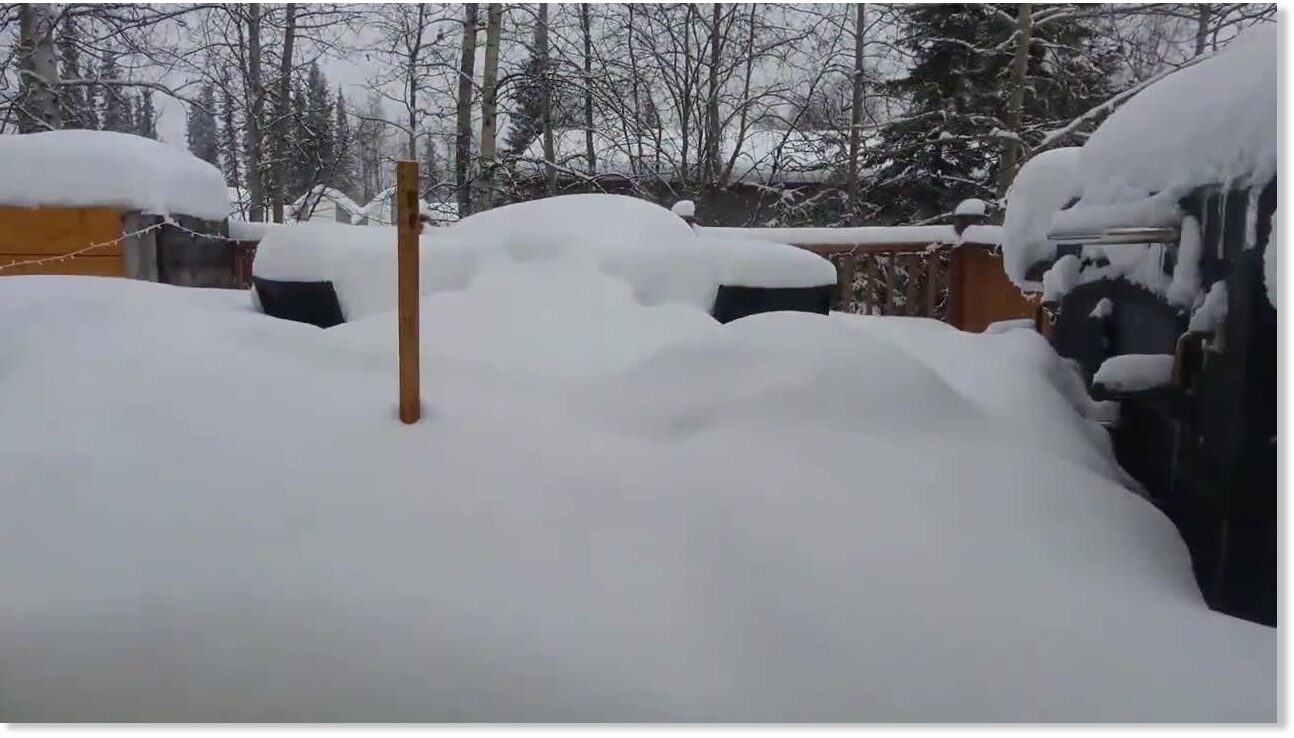
Record-breaking snow falls over Easter Weekend in Fairbanks, Alaska - almost 14 inches

snow

Snow storms hit areas near Fairbanks, Alaska, over the Easter weekend, breaking daily records for snowfall in the area, the National Weather Service (NWS) said.

In a time lapse video filmed by an NWS meteorologist, the level of snowfall rises significantly, leaving the scene under deep snow.

The official Fairbanks snowfall total for this event was up to 13.9 inches since Friday evening, according to the NWS. Credit: National Weather Service, Fairbanks via Storyful


Comment: Also in central Alaska about 100 miles west of Fairbanks:
'What a Crazy Day': Heavy Snow Falls in Tanana, Alaska

Snow was seen falling in Tanana, Alaska on April 4, as forecasters said the snow depth was 12.6 inches in nearby Fairbanks as of 8 pm.

A special weather statement' was issued for Tanana on April 4, with the National Weather Service warning "there is the potential for record cold temperatures across the area for this time of year."


Arrow Down

100 years later, the Scientific American reversal on CO2

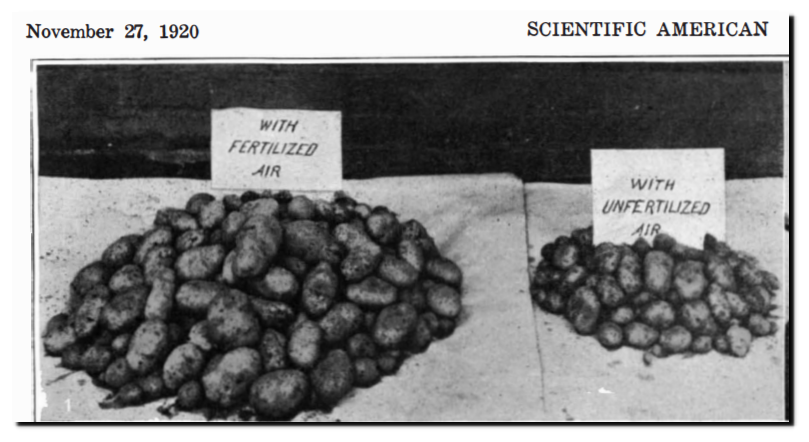
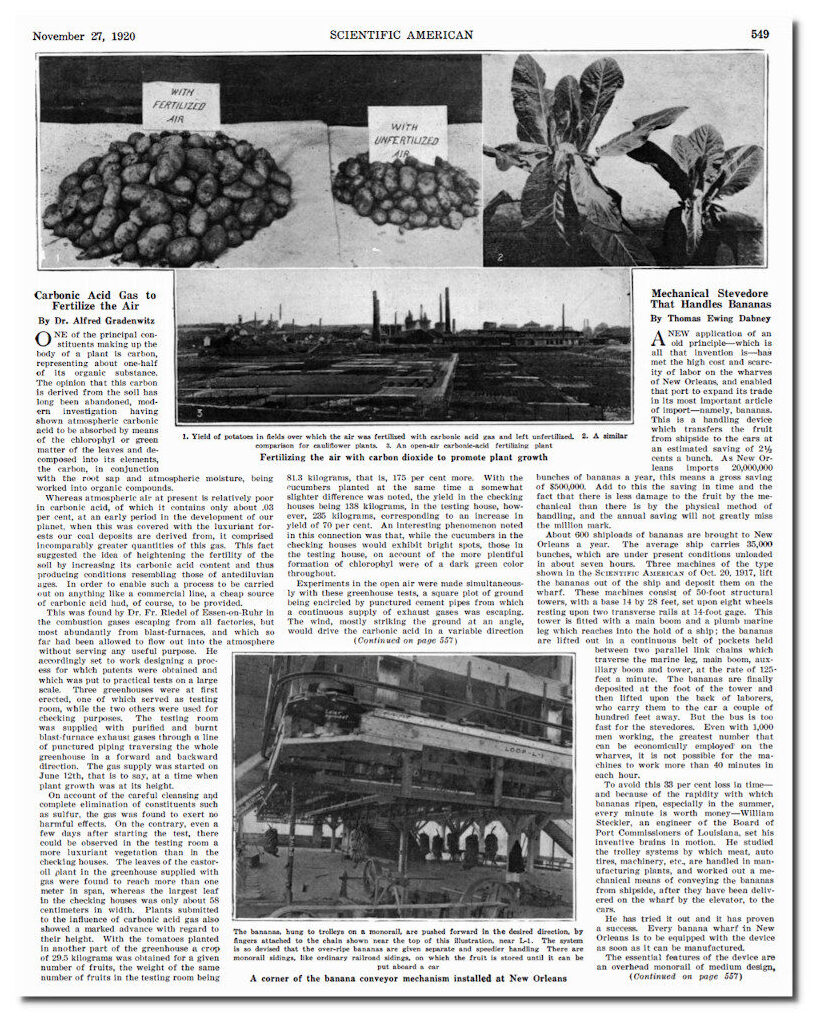
In 1920, Scientific American reported that the atmosphere was deficient in CO2, and that crop productivity could be greatly enhanced by introducing CO2 emissions from from smokestacks, and that earth was covered with luxuriant forests when CO2 levels were much higher.
Scientific American Article
© Real Climate Science
Fertilizing the air with carbon dioxide to promote plant growth

ONE of the principal constituents making up the body of a plant is carbon, representing about one-half of its organic substance. The opinion that this carbon is derived from the soil has long been abandoned, modern investigation having shown atmospheric carbonic acid to be absorbed by means of the chlorophyll or green matter of the leaves and decomposed into its elements, the carbon, in conjunction with the root sap and atmospheric moisture, being worked into organic compounds.

Whereas atmospheric air at present is relatively poor in carbonic acid, of which it contains only about .03 per cent, at an early period in the development of our planet, when this was covered with the luxuriant forests our coal deposits are derived from, it comprised incomparably greater quantities of this gas. This fact suggested the idea of heightening the fertility of the soil by increasing its carbonic acid content and thus producing conditions resembling those of antediluvian ages.
Scientific American Article

Arrow Down

Unusually deadly avalanche season in Switzerland this winter - 27 killed, 50% above average

Deadly avalanche in Greppon Blanc on 20 March 2021
With the end of Switzerland's ski season only weeks away, the number of avalanche deaths this season is already unusually high level.

The average annual number of people caught in avalanches over the last 20 years is 177. This winter 296 people were affected, a 67% rise. 215 (73%) of the avalanches this season were triggered by people, compared to an average of 113 over the last 20 seasons.

Over the same 20-year timespan an average of 18 lives were lost in avalanche accidents per ski season. Up until the end of March 2021, 27 people had died in avalanches this winter season, 50% more than an average season.

Snowflake Cold

Severe frosts damage fruit in Lleida and Huesca, Spain

frost
Last weekend, severe frosts were recorded in the stone fruit producing areas of Lleida and Huesca, in Spain. While temperatures fell below 0ºC during the nights of Friday, Saturday and Sunday, the most severe and longest frost was the one on the night of Saturday. The sector's prospects for the campaign had been great, given the excellent flowering of the fruit trees, but this first adverse weather event in the months prior to the harvest may change everything.

The damage caused by these frosts is severe, according to producers and agricultural organizations, not only because of the flowers that have been lost, but also because of the impact they could have on the quality of the fruit. Although there is still a long way to go before the harvest and more unforeseen weather events could be recorded, the volumes expected after this event could come close to last year's -when they were down by about 30%-, or fall even more.