Health & WellnessS


Biohazard

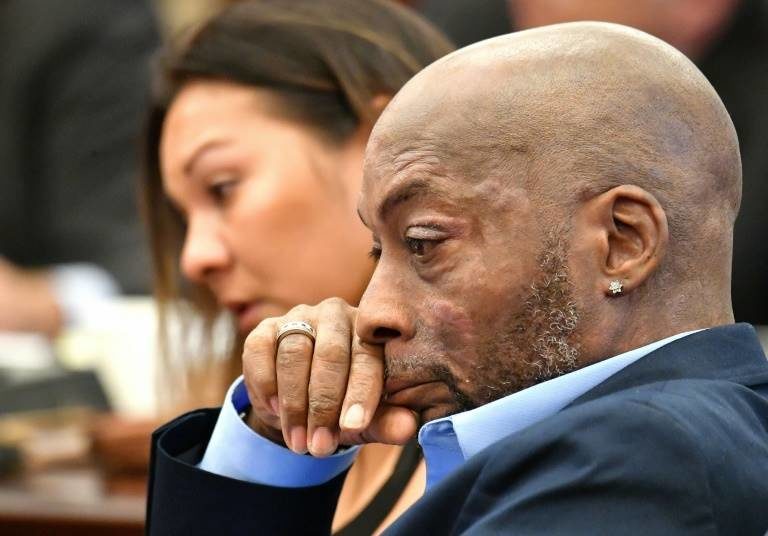
Terminally ill groundskeeper to testify in Roundup cancer trial

Dewayne Johnson monsanto cancer roundup
© Agence France-Presse / Josh Edelson/ FileCalifornian groundskeeper Dewayne Johnson -- seen in this file photo -- is to testify July 23, 2018 before the jury on whether a Monsanto weed killer is to blame for his terminal cancer
A California groundskeeper dying of cancer is slated to testify Monday before jurors hearing evidence in his lawsuit blaming Monsanto weed killer Roundup for his terminal illness.

The first-of-its-kind trial pitting 46-year-old Dewayne Johnson against the agrichemical colossus is expected to last into August.

"For the past 40 years, Monsanto has known the primary ingredient in Roundup can produce tumors in lab animals," Johnson's attorney Brent Wisner said during opening remarks to jurors.

California law calls for products containing chemicals known to cause cancer to have warning labels.

Comment: Monsanto is such an evil company, when Bayer bought it, they buried the name because of its horrendous reputation. But Bayer just put a new trademark on its psychopathic activities.


Health

In first recorded incident, a female Ebola survivor passes infection onto others one year later

Ebola infection in Foya, Liberia
© Daniel Berehulak/The New York TimesA health worker takes a blood sample from a man suspected of Ebola infection in Foya, Liberia, on Dec. 16, 2014. The virus was previously thought to be spread only by male survivors, as it can persist in semen for two years.
For the first time, scientists have found evidence that a woman can harbor the Ebola virus for more than a year and then infect others.

The discovery involved transmission within a Liberian family in the closing days of the West African epidemic that lasted from December 2014 to mid-2016. More than 28,600 people were infected and 11,325 died.

The episode raises new medical questions: Scientists do not know how the virus hid inside the woman for 13 months before re-emerging in lethal form.

However, because she fell ill soon after giving birth, experts believe the immune suppression that normally occurs in pregnancy may have triggered a relapse.

Comment:


Life Preserver

The vital nutrition of breast milk offers lifelong health benefits and needs to be better promoted

Breast Feeding
© Joe Magee‘We have completely ignored the importance of breast milk for decades, moving toward an industrialized way of feeding babies: infant formula.’

Mother's milk has many well-established advantages over infant formula but it also boosts the immune system and may prepare babies to prefer a healthy diet


There's a simple reason we have missed the critical importance of breast milk for lifelong health. "It's because science has been completely focused on the diseases of rich, middle-aged white men" says the UC Davis professor and researcher Dr Bruce German. Heart disease, high cholesterol, high blood pressure - these are the ailments that science has been focused on treating since the 1950s.


Comment: Way to inject a social justice narrative into an important discussion. White men aren't the enemy here, and you're not going to further your cause going to war against them.


Around that same time, infant formula became readily available and doctors and hospitals began recommending it widely. It was seen as an advance that went largely unquestioned in mainstream culture and society. The idea that formula was comparable to breast milk persisted for decades, and it wasn't until the 1980s that it came under intense public scrutiny when it was revealed that after aggressive marketing to women in poor countries, Nestlé infant formula was responsible for the deaths of 66,000 babies when formula was mixed with contaminated water.

Comment: Despite the race-baiting, the above article is a good illustration of the vital importance of breast feeding for the future health of infants. The idea that this would be up for debate in 2018 is enough to make one lose all faith in humanity.

See also:


Life Preserver

Nature's pharmacy: Herbal and food-based alternatives to antibiotics that could save your life

herbal medicine
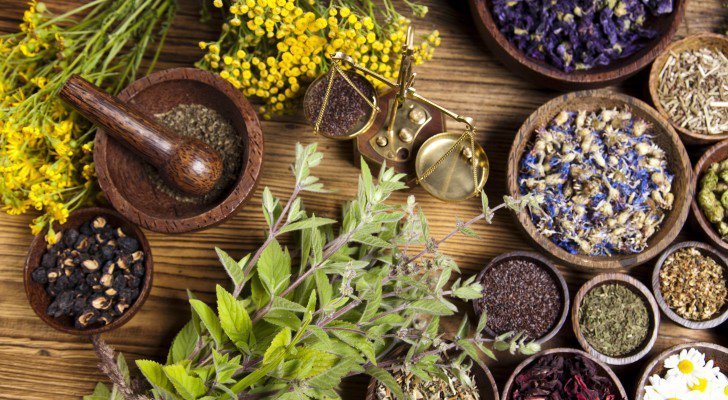
Using herbal medicines in nature help you to save your life when you are in danger. You should recognize the plant and its characteristics.

Plants, food, and herbal tinctures have been used as natural antibiotics to treat illness and disease for centuries. Then Big Pharma swept the nation. But with the advancement of Western medicine and pharmaceutical drugs, it's easy to forget how effective ancient healing remedies and natural antibiotics can still be.

Now, I should mention: as much as I believe in taking a natural approach to healing, I also believe there's a time and place for using over-the-counter drugs. But there are a few valid concerns that come with using pharmaceuticals.

First off, antibiotics are only effective as a "band-aid solution." Pharmaceutical drugs can be powerful for getting rid of pesky symptoms, but they fail to consider why an illness is there in the first place. This failing leaves you at greater risk for developing the same health problem over and over again.

The easy accessibility of antibiotics can also cause you to rely too heavily on OTC prescriptions when something goes wrong with your health-rather than focusing on disease prevention through proper nutrition, exercise, and stress management.

Doberman

Protect your pets: Grain-free kibble may put dogs at risk for heart disease

Grain free kibble heart disease dogs
Feeding grain-free/low-protein kibble to large dogs, especially predisposed breeds, increases their risk for taurine deficiency-related DCM.
Thirty years ago, researchers at the School of Veterinary Medicine at University of California, Davis discovered the link between taurine deficiency and dilated cardiomyopathy (DCM), a heart muscle disease in cats.1 According to Morris Animal Foundation, "The veterinary community was stunned" by this news, in part because the UC-Davis researchers were able to prove that DCM was reversible when cats received the amount of taurine they needed in their diet.2

Of course, most holistic veterinarians and others knowledgeable about veterinary nutrition and who understand the link between diet and disease weren't surprised. Taurine, which is an amino acid, is found in meat, and cats, as meat-eating obligate carnivores, haven't developed the ability to make their own taurine.

This means it's an essential amino acid for cats - they must get it from their diet, and 30 years ago when UC-Davis veterinarians made their discovery, we were well into the age of processed pet food, having made cats (and dogs) almost entirely dependent on humans for their nutrition.

Pet food formulators often guessed at the effects of extensive processing on nutrients. This is especially true for pet food (feed) that blends leftover pieces and parts from the human meat processing industry with other sources of questionable nutrients before they are rendered and cooked at high temperatures, depleting the nutrients that existed before processing, as well as altering the chemical composition of ingredients (and often creating toxic byproducts along the way).

Comment: More tips for improving your pet's health and well-being:


Cheeseburger

Ditching nature in favor of fake food

fake burger
Industrial agriculture is one of the most unsustainable practices of modern civilization. The "bigger is better" food system has reached a point where its real costs have become readily apparent. Like water running down an open drain, the earth's natural resources are disappearing quickly, as industrialized farming drives air pollution, water pollution, deforestation, rising carbon emissions and the depletion, erosion and poisoning of soils.1

The long-term answer, however, lies in the transition to sustainable, regenerative, chemical-free farming practices, not in the creation of food manufacturing techniques that replace farms with chemistry labs, which is the "environmentally friendly" alternative envisioned by biotech startups and its chemists.

Evil Rays

Is your cellphone giving you cancer? A guide to navigating the messy, frustrating research

cell phone
"Get that thing off your skull."

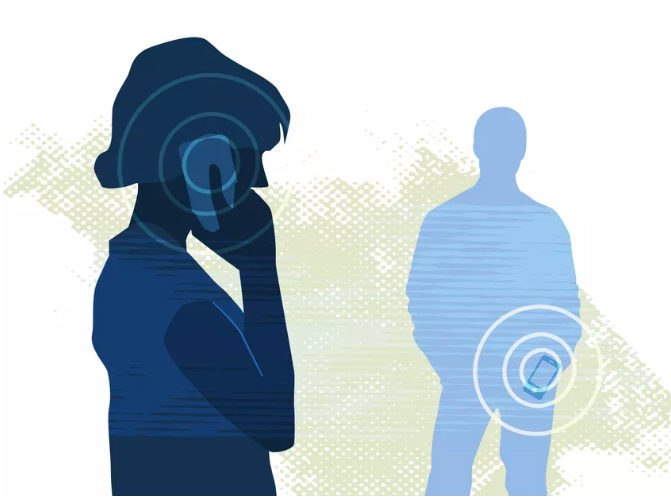
That's something my mom says just about every time she sees me with a cellphone pressed against my ear. She also worries about cellphones in pockets, telling my brothers that they're "frying their testicles" with their devices.

My mother is voicing something many cellphone users, or parents of cellphone users, intuitively feel: that these devices are somehow making us sick.

Though I have never been particularly concerned about cellphone radiation and cancer, my phone makes me uneasy. It commands too much of my attention. It sucks up too much of my time. And it feels unwise to have its heat so close to my brain.

But as anyone who's had suspicions can tell you, it isn't easy to find clear answers. Over the years, reports on the science of cellphone radiation and health haven't been very satisfying, especially on cancer - the ultimate cellphone health concern.

Comment: Watch the following video to learn more about research that wasn't included in the article above: Are WiFi, Bluetooth, 4G, and 5G bad for you? Hold on to your hats...


Pills

News Flash! Adderall doesn't make people smarter!

adderall


ADHD Drugs Aren't Doing What You Think, Scientists Warn 'Smart Pill' Users


About an hour before any organic chemistry final, there's usually a student desperate enough to pop some Adderall, hoping that the "smart pill" they bought on the college black market might help them finally understand what they're doing. As they sit there, waiting for the attention deficit/hyperactivity disorder medication to take effect, that student probably thinks they're about to ride a high to test victory. But research published Thursday in Pharmacy suggests that line of thinking is a bit off.

The study authors Lisa Weyandt, Ph.D., a professor of psychology at the University of Rhode Island, and Tara White, Ph.D., an assistant professor of Behavioral and Social Sciences at Brown University, started out investigating the effects of ADHD medications in students that actually have a diagnosable attention deficit disorder. They showed that in these students, there is decreased activity in the areas of the brain controlling "executive functions," which can make it hard for them to stay organized or focus.

Comment: These kids are playing with fire. Adderall is an addictive drug that is ruining lives. To use a dangerous stimulant as a study aid is foolhardy, to say the least. Hopefully, news of this study will gain some traction and save some students from falling into the Adderall trap.

See also:


Info

'Putting conscience before career' - Dr. Bob Sears emerges with full license to practice and no admission of wrongdoing

bob sears
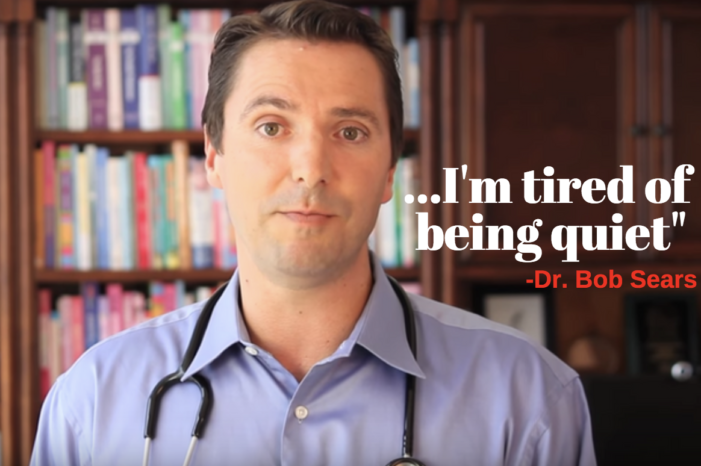
Bob Sears, MD faced down the Medical Board of California (MBC) and has come through with his license to practice fully intact. There was no admission of wrongdoing by Dr. Sears, the case never went to trial and hence there was no hearing.

The end result of an investigation spanning several years yielded a record-keeping issue and Dr. Sears being put on probation. In a recent Facebook post, he explains:
"A child and his mother came to me for help. The mom described how her baby had suffered a moderate to severe neurologic reaction to vaccines almost three years prior, and she was afraid a judge in her upcoming hearing was going to force her to resume vaccines now. Medical records of the reaction were not available yet, and I gave the patient a letter of opinion to show the judge that the reaction was severe enough to justify not doing any more vaccines."

Comment: Read more about California doctor Bob Sears - under review for putting 'conscience before career'


Cupcake Pink

'Sugar Coated' documentary shows how the sugar industry managed to dupe the world

sugar
Thousands of studies spanning many decades show excess sugar damages your health,1 yet the sugar industry successfully buried the evidence and misdirected the public with manipulated science. According to the sugar industry, sugar is a harmless source of energy and may even be an important part of a healthy "balanced" diet.

Dr. Cristin Kearns, a dentist and fellow at the University of California, made headlines when she published a paper2 detailing the sugar industry's historical influence on dietary recommendations. Evidence also shows how the sugar industry influenced the scientific agenda of the National Institute of Dental Research (now the National Institute of Dental and Cranial Research), which back in 1971 created a national caries program, downplaying any links between sugar consumption and dental caries.3

The documentary, "Sugar Coated" - which features Kearns, investigative journalist Gary Taubes, author of "The Case Against Sugar," and Dr. Robert Lustig, a leading expert on sugar metabolism and obesity - investigates the sugar industry's once secret PR campaign, showing how it normalized excessive consumption by deflecting evidence implicating sugar as a cause of ill health. As noted in the film's summary:4

Comment: The case against sugar is extensive and well documented. There are likely few other interventions that can improve health with the same magnitude as cutting our sugar and excess carbs.

See also: