Health & WellnessS


Cell Phone

Study finds teens glued to their phones at risk for modest rise in ADHD behaviors

teens on cellphones
© AFP Photo/NICHOLAS KAMM
Could teenagers suffer symptoms of attention deficit hyperactivity disorder after engaging in excessive smartphone use?

A new study out Tuesday says digital overload could be linked to a "modest" but significant rise in new ADHD behaviors, offering a warning to parents about the potential dangers of too much screen time.

The findings in the Journal of the American Medical Association were based on nearly 2,600 Los Angeles teens who answered survey questions over a two-year period -- making it one of the largest and longest studies on the topic to date.

The more social media, streaming video, text messaging, music downloads or online chats they engaged with, the more likely they were to report symptoms like difficulty organizing and completing tasks, or trouble remaining still.


Evil Rays

Are WiFi, Bluetooth, 4G, and 5G bad for you? Hold on to your hats...

5G, 4G, WiFi, and Bluetooth are bad for your health
5G is coming, and people are worried. Well, should we be?

To answer that question, we need to know what studies have been done on the safety of microwave-frequency digital radio transmissions.

We need to look at WiFi, Bluetooth, 3G, and 4G studies, as well!

After all, much of the concern about 5G is based on the results of those studies.

It turns out that there ARE a ton of studies out there that indicate that yes, it looks bad.

Of course, there is also the SAR "heating effect" argument, which is part of the problem as we'll see...

Red Flag

Are you addicted to Facebook?

facebook

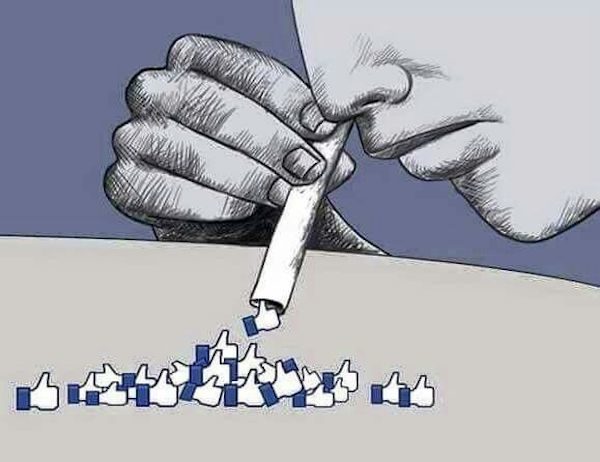
When describing the cultural impact of social media, to call it "phenomenal" would be an understatement. But is the overuse of social networking sites like Facebook on par with the use of physically addictive and/or mind-altering substances?


In a trend that shows no signs of slowing, the number of people who use social media has experienced a meteoric rise from just under a billion worldwide users in 2010, to more than 3 billion estimated users by 2021.[1] With nearly 2.2 billion active users each month,[2]Facebook leads the pack as the social networking site (SNS) where we're spending the bulk of our time online.

Not only are more people using social networking sites, we're also spending increasing amounts of time each day liking, commenting, and sharing our lives online. Don't assume that this is only a fad amongst young people: since 2012, adults are spending 50% more time on Facebook each day. An adult in the U.S. uses Facebook for an average of 135 minutes per day, equating to nearly 16 hours-that's two, full workdays-per week.[3] What accounts for the magnetism people young and old, feel for social media?

Comment: Are you Facebook dependent? New study findings reveal user trends


Muffin

Eating wheat fuels staphylococcus, clostridium, and klebsiella growth, study suggests

wheat gut health
Research indicates that the consumption of wheat contributes to the growth of pathogenic bacteria in our gut, adding to growing concern that wheat (which is often contaminated with Roundup herbicide) is one of the worst foods to consume for gut health.

A concerning study published in FEMS Microbiology Ecology titled, "Diversity of the cultivable human gut microbiome involved in gluten metabolism: isolation of microorganisms with potential interest for coeliac disease," reveals something remarkable about the capabilities (and liabilities) of human gut bacteria (microbiome) when exposed to foods such as wheat.

Some of the extremely hard to digest proteins in wheat colloquially known as "gluten" (there are actually over 23,000 identified in the wheat proteome and not just one problematic protein as widely believed) were found metabolizable through a 94 strains of bacterial species isolated from the human gut (via fecal sampling).

This discovery is all the more interesting when you consider that, according to Alessio Fasano, the Medical Director for The University of Maryland's Center for Celiac Research, the human genome does not possess the ability to produce enzymes capable of sufficiently breaking down gluten.

Syringe

Is the HPV vaccine causing infertility?

mouse injection
The data say yes: yet the FDA might approve the vaccine for adults. Action Alert!

A new study shows that women aged 25-29 who received the HPV vaccine have a lower probability of becoming pregnant. This is just the latest in a stream of evidence that points to the dangers of the HPV vaccine, particularly to those already infected with the virus-yet the FDA is considering a request from Merck to expand the population to whom the vaccine can be marketed. If the request is granted, it would be another example of how the agency sells out consumers for the benefit of the vaccine industry.

In addition to the study on the HPV vaccine preventing pregnancies, the government's vaccine adverse event reporting system (VAERS) lists a startling 57,287 adverse events from the vaccine, including 419 deaths-far more than any other vaccine. A World Health Organization study demonstrated that the vaccination has a tendency to produce clusters of serious adverse events. The American College of Pediatricians raised concerns that the vaccine could be linked to premature ovarian failure. And let's not forget the former Merck doctor who said that Gardasil "will become the greatest medical scandal of all time," that it "serves no other purpose than to generate profit for the manufacturer," and, like some other vaccines, that it can cause "Guillain-Barré syndrome, paralysis of the lower limbs, vaccine-induced MS, and vaccine-induced encephalitis."

Comment: See also: Gardasil vaccine destroys ovaries of 16-yr. old girl, causes infertility


Green Light

Federal judge gives green light to allow expert witnesses to testify that Roundup causes cancer

RoundUp
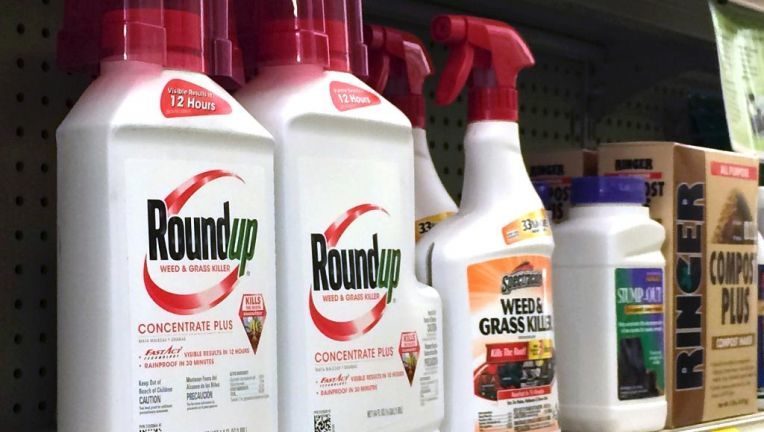
Containers of Roundup, left, a weed killer is seen on a shelf with other products for sale at a hardware store in Los Angeles on Thursday, Jan. 26, 2017.
Monsanto faced a major setback on Tuesday, as a federal judge ruled to allow three expert witnesses to testify that its controversial weed killer Roundup causes cancer, opening up a floodgate for thousands of lawsuits to come.

The agrochemical company, which is now a unit of Bayer AG following a $62.5 billion takeover that concluded in June, has been engulfed in a trial with 46-year-old Dwayne "Lee" Johnson in recent weeks.

Johnson claims he became sick with non-Hodgkin's lymphoma after using Roundup for more than two years as a groundkeeper for a school district outside of San Francisco.

Johnson is the first of a long list of about 4,000 people looking to sue the weed and seed maker for similar allegations.

Comment: Landmark lawsuit: Monsanto hid cancer danger of glyphosate for decades
Last week Judge Curtis Karnow issued an order clearing the way for jurors to consider not just scientific evidence related to what caused Johnson's cancer, but allegations that Monsanto suppressed evidence of the risks of its weed killing products. Karnow ruled that the trial will proceed and a jury would be allowed to consider possible punitive damages.

"The internal correspondence noted by Johnson could support a jury finding that Monsanto has long been aware of the risk that its glyphosate-based herbicides are carcinogenic ... but has continuously sought to influence the scientific literature to prevent its internal concerns from reaching the public sphere and to bolster its defenses in products liability actions," Karnow wrote. "Thus there are triable issues of material fact."


Coffee

Another good reason to drink coffee: Study shows it may boost longevity

cup of coffee
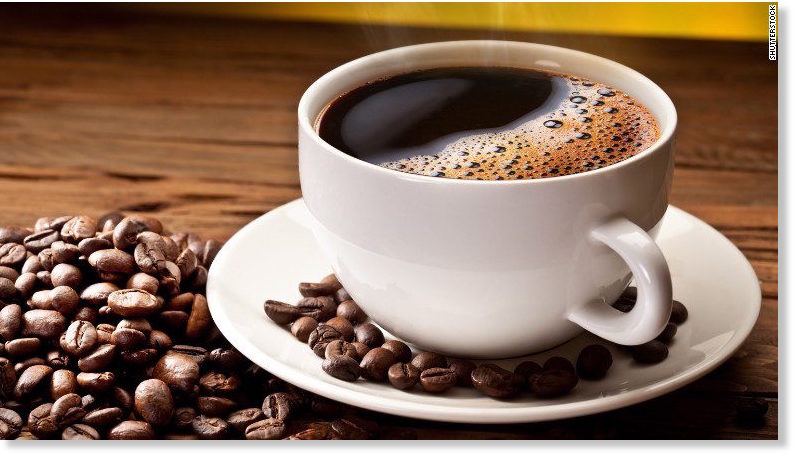
Go ahead and have that cup of coffee, maybe even several more. New research shows it may boost chances for a longer life, even for those who down at least eight cups daily.

In a study of nearly half-a-million British adults, coffee drinkers had a slightly lower risk of death over 10 years than abstainers.

The apparent longevity boost was seen with instant, ground and decaffeinated, results that echo U.S. research. It's the first large study to suggest a benefit even in people with genetic glitches affecting how their bodies use caffeine.

Overall, coffee drinkers were about 10 percent to 15 percent less likely to die than abstainers during a decade of follow-up. Differences by amount of coffee consumed and genetic variations were minimal.

The results don't prove your coffee pot is a fountain of youth nor are they a reason for abstainers to start drinking coffee, said Alice Lichtenstein, a Tufts University nutrition expert who was not involved in the research. But she said the results reinforce previous research and add additional reassurance for coffee drinkers.

Comment: Some more benefits of drinking the best beverage in the universe: And if all that isn't enough: The many incredible healing benefits of coffee enemas


Info

Stephanie Seneff: How Glyphosate poisoning explains the peculiarities of the Autism gut

glyphosate

Children with autism have a peculiar digestive system disorder, as was recently eloquently described by Dr. Arthur Krigsman at the AutismOne conference. How might glyphosate (Roundup) cause this?


In May of 2018 I had the opportunity to attend the AutismOne conference in Chicago, Illinois [1]. As in previous years, it was an exciting event where many experts, mostly alternative medicine practitioners, gave impassioned presentations offering their latest insights into various features of autism or biometrics linked to autism or treatment programs that they found to be beneficial. As in the past, I came away with increased optimism that we might finally solve the autism puzzle, along with many new leads on research topics that I needed to dig into more thoroughly, and renewed hope that autism can in fact be reversed.

Comment: The Health & Wellness Show: Interview with Brilliant Researcher Dr. Stephanie Seneff


Dig

Agroecology: Bringing farming back to nature

Agroecology
Farming the land as if nature doesn't matter has been the model for much of the Western world's food production system for at least the past 75 years. The results haven't been pretty: depleted soil, chemically fouled waters, true family farms all but eliminated, a worsening of public health and more. But an approach that combines innovation and tradition has emerged, one that could transform the way we grow food. It's called agroecology, and it places ecological science at the center of agriculture. It's a scrappy movement that's taking off globally.

Representatives of more than 70 countries gathered in Rome recently to discuss this approach to creating a healthier and more sustainable food system. (We were there.) It was an invigorating and encouraging gathering, made more so when José Graziano da Silva, the director general of the United Nation's Food and Agriculture Organization, called for "transformative change toward sustainable agriculture and food systems based on agroecology."

Comment: Agroecology: A system of food production for human need, not corporate greed


Bacon

Keto diet health tips for women

keto
Keto is exploding. No longer solely the province of cutting edge bodybuilders or longevity enthusiasts and neurodegenerative disease warriors, keto has invaded every walk of life. I hear about it in grocery stores, coffee shops, spin classes, business meetings, dinner parties, morning talk shows. Judging from our blog and sales metrics, women make up the largest group of recent entries into the diet. This is great, but it also comes with a small wrinkle: Just like they should do with fasting, most women need to take special precautions when implementing a ketogenic diet.

To begin with, one of keto's main benefits is also its biggest stumbling block for women: The inadvertent reduction in calorie intake and massive increase in satiety.

It's the quality that makes ketogenic diets so effective for weight loss, particularly in the obese and severely overweight. And that satiety, that provides a psychological boost. You're not just not hungry. You're not hungry because you're consuming your own body fat. You eat fewer calories than you were because all the food is coming from inside the house. That's powerful, and it perpetuates itself, leading to even more weight loss and making keto that much more sustainable.