Health & WellnessS


Pills

'Highly medicalized culture' in US leads to high risk of multiple drugs fatally interacting - study

prescription bottle
© Lucas Jackson / ReutersA pharmacy employee places instructional stickers on a prescription bottle.
One in 12 of US children who use prescription drugs on a regular basis is at risk of a major drug interaction that could stop their heart, a new study says. The authors cited America's tendency to turn to pills over other options.

The study, conducted by researchers at the University of Illinois at Chicago, found that one in every 12 children using two or more medications together are "potentially at risk for a major drug interaction" known as drug-drug interactions, or DDIs, lead researcher Dima Qato said, as quoted by HealthDay.

Most of those potential interactions "create dangerous heart rhythms called arrhythmias, which might lead to sudden cardiac death," Qato said.

Comment: See also:


Play

New film 'Genetically Modified Children' reveals monstrous child deformities caused by Monsanto agrochemicals used in Argentina (VIDEO)

Genetically Modified Children
The shocking film "Genetically Modified Children" unveils the horrors of decades of chemical-intensive agricultural practices in Argentina, where the majority of crops are genetically modified (GM) and routinely doused in dangerous agrochemicals, and the chokehold big tobacco companies such as Philip Morris and chemical and seed giants have on poverty-stricken farmers desperate to earn a living.

The film, produced by Juliette Igier and Stephanie Lebrun, shows the devastating health effects the region's agricultural sector is having on children,1 an increasing number of whom are being born with monstrous physical deformities. Some of the children's cases are so severe that, without a medical intervention, will result in death before the age of 5.

The film begins with the crew traveling from North Argentina in the Province of Misiones to the Brazilian frontier, an agricultural region that was one of the nation's first to begin growing genetically modified organisms (GMOs) in the mid-'90s.


Cloud Grey

Recent study finds air pollution takes a 'huge toll' on intelligence

air pollution
© Cathal McNaughton / Reuters
A new study found chronic exposure to air pollution can take a "huge" toll on one's intelligence. The average impact of breathing in toxic air is the loss of a whole year of education, the study found.

The risks posed by unsafe air to people's physical health are already well documented, as the World Health Organization claims 4.6 million people died in 2016 because of it. But pollution may also have a considerable effect on your intelligence.

The study carried out by researchers from Beijing's Peking University and Yale University in the US analyzed verbal and math test results of 20,000 people of all ages above 10 between 2010 and 2014, comparing them to records of nitrogen dioxide and sulphur dioxide pollution.

It found that the longer people are exposed to pollution, the more impeded their cognitive ability is, and that language becomes more of a struggle than math. It also found men to be more affected than women, especially if from a lower educational background.

Comment: See also:


Health

Would you like a little glyphosate with your breakfast?

glyphosate cereal
In August 2018, jurors ruled Monsanto (which was taken over by Bayer in June 2018) must pay $289 million in damages to DeWayne "Lee" Johnson, a former school groundskeeper who claimed the company's herbicide Roundup caused his terminal cancer. The jury agreed, awarding Johnson not only in the form of monetary justice but also collaborating claims that Monsanto knew for decades that Roundup was dangerous - and acted with "malice or oppression" to cover up its risks.1

Thousands of people across the U.S. have now filed lawsuits alleging that Monsanto's Roundup herbicide, and others containing the active ingredient glyphosate, caused them to develop cancer. This same chemical is the most widely used pesticide in the U.S., and it's now showing up in the food supply at potentially unsafe levels - and in common foods many Americans consume daily for breakfast and snacks, like cereal and granola bars.

Weed Killer Detected in Nearly All Food Samples Tested

The Environmental Working Group (EWG) commissioned independent laboratory tests to determine how much glyphosate is lurking in the U.S. food supply. While the U.S. Food and Drug Administration (FDA) has been testing foods for glyphosate, and tests reportedly revealed "a fair amount" of residues, their findings have not yet been made public.2 EWG's testing revealed, however, that 43 out of 45 food products made with conventionally grown oats tested positive for glyphosate, 31 of which had glyphosate levels higher than EWG scientists believe would be protective of children's health.


Health

Ten signs of an underactive thyroid

hypothyroidism
The thyroid is a butterfly-shaped organ in the front of the neck that produces the hormones which regulate the body's metabolism, including heart rate, body temperature and weight.

Those who understand the consequences of an underactive thyroid have received a diagnosis of hypothyroidism. In the U.S. the prevalence of thyroid disease is 12%, or 30 million Americans. Of those with thyroid disorders, 36% are considered hypothyroidism, of which 80% are autoimmune, also known as Hashimoto's thyroiditis.

In hypothyroidism, low levels of thyroid hormone production result in a decreased capacity to turn food into energy. Unfortunately, the majority of people with hypothyroidism go undiagnosed due to outdated medical lab testing, which affects far more women than men.

Comment: More on iodine:


Question

Boxers or briefs? What does the science say?

boxers or briefs
One type of underwear exposes men to significantly higher sperm concentrations and total sperm counts when compared to others according to new research led by Harvard T.H. Chan School of Public Health. The findings of this study, conducted in the Fertility Clinic at Massachusetts General Hospital, suggest that certain styles of men's underwear may inhibit production of sperm.

Overly tight clothing can cause a number of health issues for both men and women. Tight pants, in particular, can lead to urinary tract infections, over-active bladders, and even twisted testicles. When it comes to sperm however, the problem isn't the constriction that tight garments cause; it's the heat.

"These results point to a relatively easy change that men can make when they and their partners are seeking to become pregnant," said Lidia Minguez-Alarcon, lead author of the study and research scientist at the Harvard Chan School.

While previous research has shown that elevated scrotal temperatures can adversely affect testicular function, studies on whether and how different styles of underwear may impact sperm production have been inconsistent.

Cow

Veganism will not save the world, pastured animal farming will

farming image
© Illustration: Matt Kenyon‘Calls for us all to switch entirely to plant-based foods ignore one of the most powerful tools we have to mitigate against these ills – grazing and browsing animals.’

Intensively farmed meat and dairy are a blight, but so are fields of soya and maize. There is another way.


Veganism has rocketed in the UK over the past couple of years - from an estimated half a million people in 2016 to more than 3.5 million - 5% of our population - today. Influential documentaries such as Cowspiracy and What the Health have thrown a spotlight on the intensive meat and dairy industry, exposing the impacts on animal and human health and the wider environment.

But calls for us all to switch entirely to plant-based foods ignore one of the most powerful tools we have to mitigate these ills: grazing and browsing animals.

Comment: This article was bang-on until the last paragraph. It counter to all evidence that "we should all be eating far less meat". The opposite is, in fact, true. It seems odd that an actual livestock farmer would still whole-heartily accept the false narrative that meat consumption is somehow bad for us.

See also:


Newspaper

SOTT Focus: Study Shows People Who Kind of Remember Eating a Not-in-Fact Low Carb Diet May or May Not Die Earlier

surprise shock
I know, dude. We're all freakin' out.
The mainstream scientific community apparently hates low-carb diets. So do the mainstream media, who take every opportunity to parrot whatever 'study' gets published that can provide an attention-grabbing click-bait headline, trashing anything that actually goes against mainstream dietary dogma. Last week it was a new 'study' published in the Lancet, and despite the fact that it is a horrible piece of pseudo-scientific nonsense, it was dutifully splashed across the headlines of pretty much all mainstream media sources. And what was the shocking finding? Low-carb diets will shorten your lifespan. Of course they will.

The study appears to be attempting to show a "balanced" perspective by showing high-carb diets are also dangerous; as if we didn't know that eating lots of sugar is harmful. The researchers claim their findings show that a moderate approach is what's healthiest - less than 40%, or more than 70%, of calories from carbohydrates carried a higher risk of mortality, they claim.

But check out these headlines:
Both low- and high-carb diets can raise risk of early death, study finds
Low-carb diet linked to early death, Lancet medical study says
A Low-Carb Diet May Reduce Four Years of Your Life: Lancet
Low-carb diets associated with lower life expectancy, study suggests
Low-carb diets could shorten life, study suggests

Bug

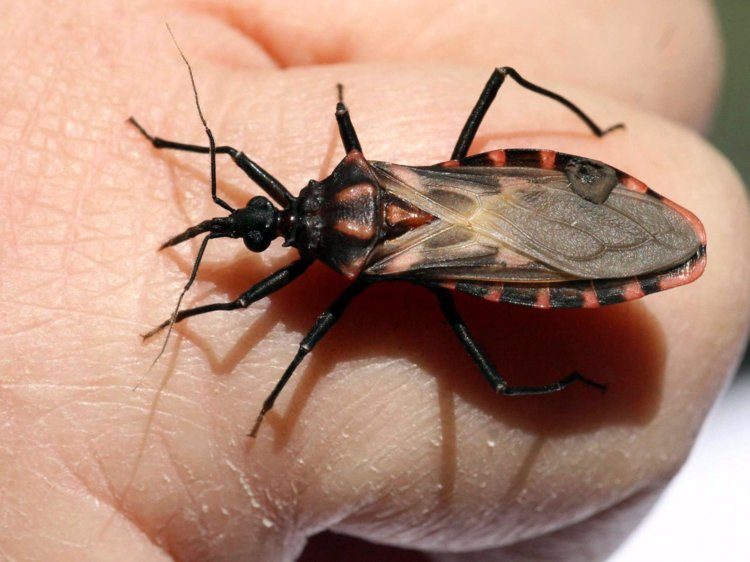
Parasitic 'kissing disease' Chagas is spreading across the US

chagas disease parasite
A parasitic illness that can cause strokes and heart failure is spreading across the US, doctors have warned.

Chagas disease is transmitted by an insect known as the 'kissing bug' because it tends to bite people's faces, near their mouths.

Many never shown signs that they've been infected with the disease, which is why it has earned the nickname of the 'silent killer'.

The disease has mostly been limited to Central and South America, but it has entered the States, sickening an estimated 300,000 Americans.

A statement released by the American Heart Association says that if US doctors don't become better at recognizing, diagnosing and treating Chagas disease, it could result in a devastating outbreak.

Donut

Food Pleasure Equation: How scientists engineer foods that are dangerously addictive

cheetos
"Food pleasure appears to involve both the opioid and cannabinoids reward circuitry that interact in complex ways." [Source]
It's no secret that the standard American diet is having a terrible effect on human health. What's is a secret, though, is how the food industry uses science and psychology to create processed food products that are devoid of nutrition, full of chemical additives and colorings, and incredibly addictive.

In fact, the science of how food companies get customers physically, mentally and emotionally hooked on their products reads like a good conspiracy theory. Major food manufacturers know good and well that repeat customers can be made by tricking the mind and body and overriding our natural tendency to seek out healthy, satisfying foods.
"The public and the food companies have known for decades now - or at the very least since this meeting - that sugary, salty, fatty foods are not good for us in the quantities that we consume them. So why are the diabetes and obesity and hypertension numbers still spiraling out of control? It's not just a matter of poor willpower on the part of the consumer and a give-the-people-what-they-want attitude on the part of the food manufacturers. What I found, over four years of research and reporting, was a conscious effort - taking place in labs and marketing meetings and grocery-store aisles - to get people hooked on foods that are convenient and inexpensive. " ~ Michael Moss