We live in a connected world. Not connected by the threads of modern human-to-human telecommunication (though these links have catalyzed big changes), but by our interactions with the plants, animals, mushrooms, microbes, soil and stone, water, air, fire and light with whom we share the biosphere. We became human, and continue to grow, fully embedded in this living, breathing system. The history of our species is written in our genetic code, where we find stories of ancient infections but also keys unlocked by the chemistry of the wild world. Our bodies and spirits remember how to walk on uneven ground, how to stay awake for hours waiting in the woods, how to find some food most days (though some days, none at all), how to handle the bracing chill of the river. And our physiology knows well how to work with bitter iridoids, polyphenols, pungent sulfur compounds, aromatic terpenes: we've known since before becoming human.
We are remembering that it's important to engage with this range of human experience. It started with exercise: best to move once in a while, rather than rest, if you want to maintain good health. Now folks are talking more about putting the body through short bursts of high-intensity exercise, followed by rest and interspersed with gentle aerobic activity. This puts the heart, lungs, muscles, joints and connective tissue through their full ranges of motion and capacity: just the lungs, for example, have the ability to take in more than ten times the air per breath than is needed during rest. Let them, once in a while! If you can, stretch out your stride. Put the body through its operating ranges. The result seems to be greater fitness1.
But this phenomenon isn't limited to exercise. Modulating our sleep schedules and including occasional bouts of sleep deprivation is a new area of research for mental health support2. Periodic fasting or reduced caloric consumption, either on a daily or weekly schedule, may help our digestion and metabolism3. Cold-water therapy, even if it's just part of your shower, puts the body through an experience of temperature range, shifting blood flow and circulation, helping athletes bounce back from tough workouts 4. In all these cases, as with high-intensity physical activity, we see the same features: first, they all expose us to a diversity of signals, situations, and inputs (all of which had relevance in our ancestral past). Second, this diversity of exposure is part of what makes "wellness".The declining diversity in our diet, when seen through this lens, may be cause for concern. Production has centralized and consolidated into larger facilities focused on a few key botanical species5. Our modern diet also has a homogenous flavor profile based on sweetness and salt -- a "bliss point" identified as most able to keep us coming back for more6. What's missing? Bitterness, of course, but also microbial diversity and secondary plant metabolites (or "phytonutrients"--compounds like polyphenols, polysaccharides, phytosterols, and more).
While all these elements are abundant in wild plants7, our palates today seem to prefer the blandly-sweet flavors of what Michael Pollan calls "edible food-like substances"8. With this stuff, digestion never gets to stretch out its stride. That's part of why I am grateful that bitter herbs are easy to find and prepare: they're like the gym for your digestion. Or rather, they're like a trail run on a frosty morning.














Comment: A question remains: why is this affecting one province (Bergamo) of one region (Lombardy) of northern Italy so badly?
We don't have the answer to that, but it's noteworthy that China took this seriously enough to take the measures it did in Wuhan, and to identify the culprit ('COVID-19'), and to crack its genome, and to inform the world about it, including what did and did not work to mitigate its effects and save however many lives.
Italy, the EU, the US, NATO, and the haughty 'Western Order', did NOT.
Incidentally, this revelation of a 'strange pneumonia outbreak' last Fall fits with our own direct experience. One of our editors contracted what we suspected was 'cryptogenic pneumonia' - which is a cover-all term experts use for 'pneumonia of unknown origin' - in early December.
Several physicians, however, couldn't diagnose it, believing instead that what they were seeing in lung scans was cancer. Biopsies, however, ruled this out. Even then they would NOT consider a viral source!
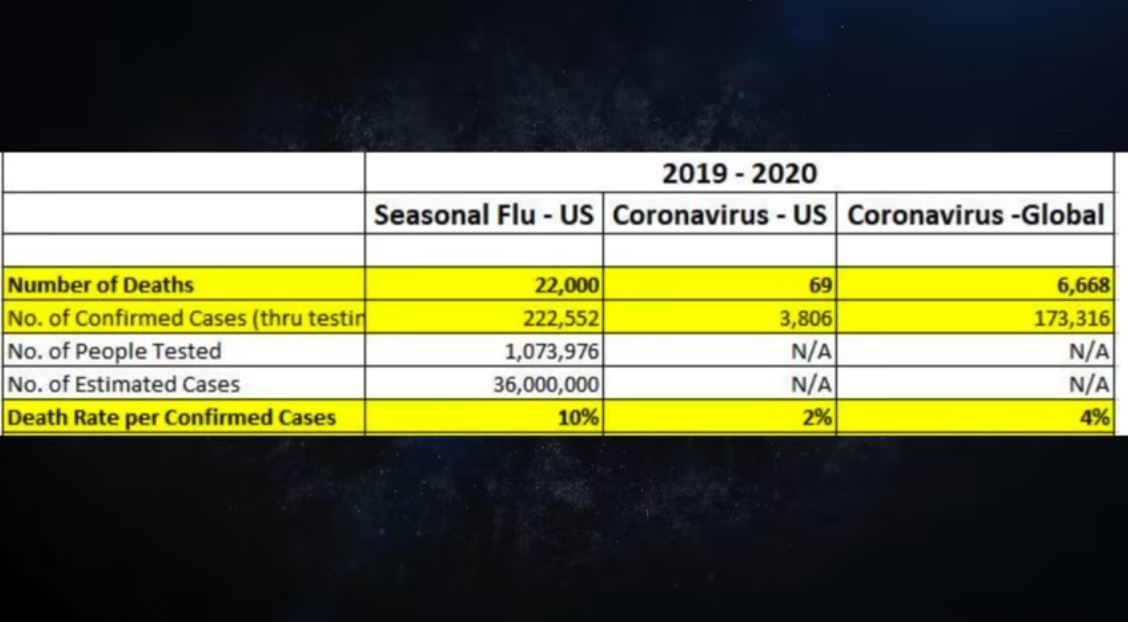
Coronavirus may very well have been out among the world population for much longer than thought. If that's the case, it shows just how groundless the current fear panic is - and worse, how it's being driven by nefarious geopolitical and social engineering interests.