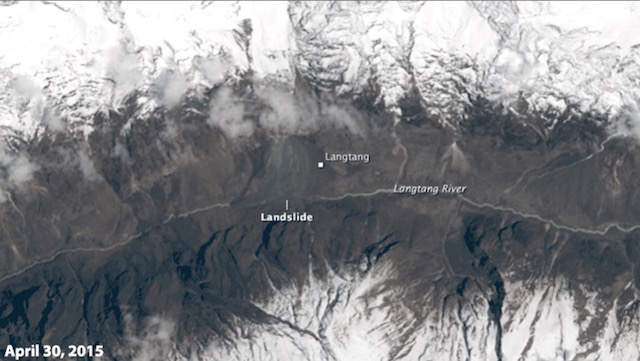
© USGS/NASA
The small village of Langtang, which was located along a popular trekking route near the base of Mount Langtang, was completely buried by ice and rocks shaken loose by
devastating earthquake that struck Nepal on April 25, 2015. At least 200 people died in this disaster.
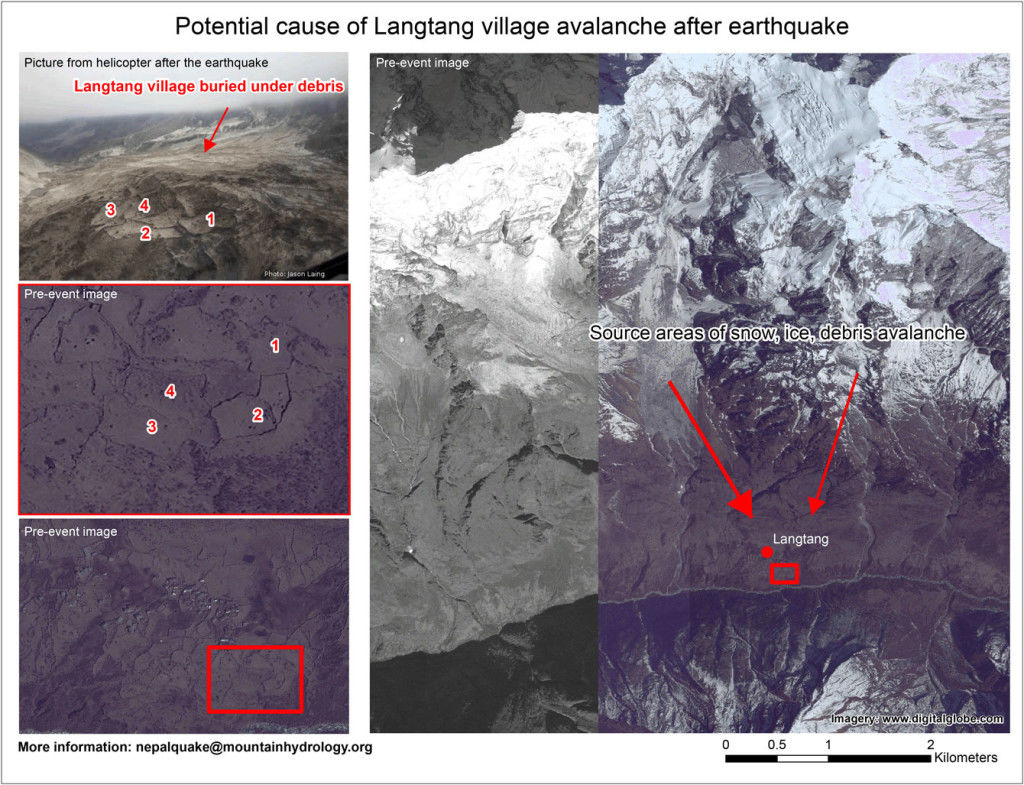
The village was located below a very steep ridge and above the ridge there is a glacier towards the north-west and large snow field right above the village, MountainHydrology
writes.
"There has been a lot of snow fall this year and at the moment of the earthquake there were considerable amounts of snow at higher altitudes. From a preliminary investigation we think it is most likely that either a snow avalanche from directly north of Langtang village or a debris/ice avalanche from the north-west has caused this disaster."
These are marked by red arrows in the map:
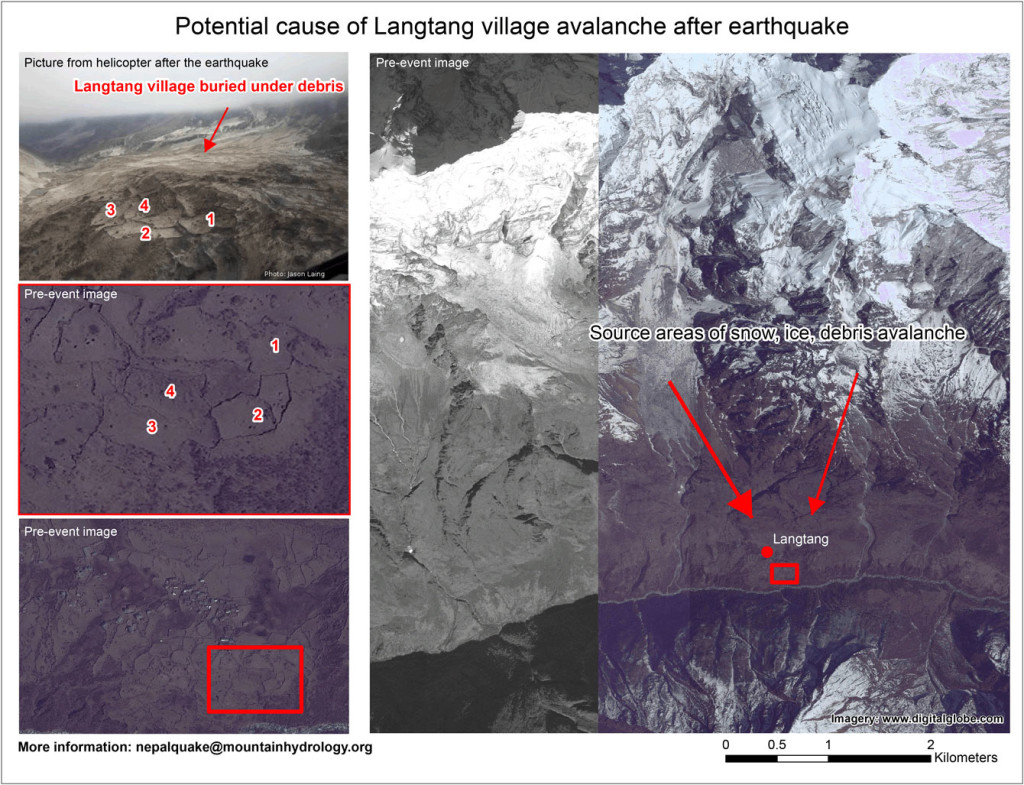
© Mountain Hydrology
While
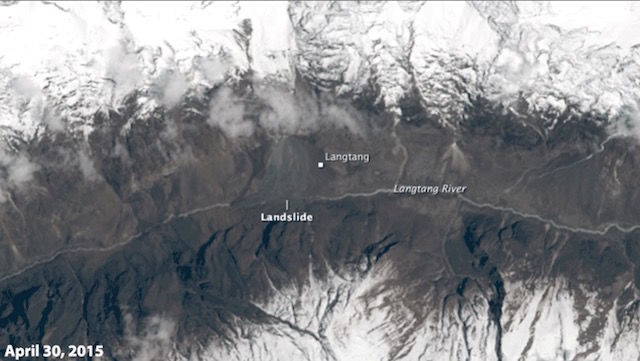
cloudy conditions have hampered satellite observations of Nepal since the earthquake, the Operational Land Imager (OLI) on Landsat 8 captured a clear view on April 30, 2015.
A mixture of snow, ice, and debris - which originated in snowfields on the slopes above Langtang - slid toward the Langtang River and buried the village.
Walter Immerzeel and Philip Kraaijenbrink, members of a
group of volunteer scientists (Mountain Hydrology) with expertise in remote sensing, were the first to identify and analyze the landslide using Landsat 8.













Comment: Also see: Sinkhole again in Allentown, Pennsylvania - this time it closes Lehigh Parkway South