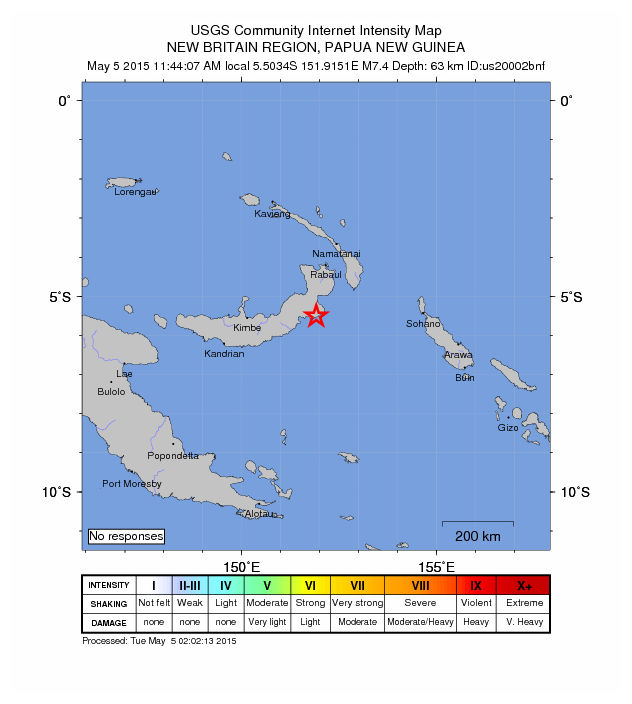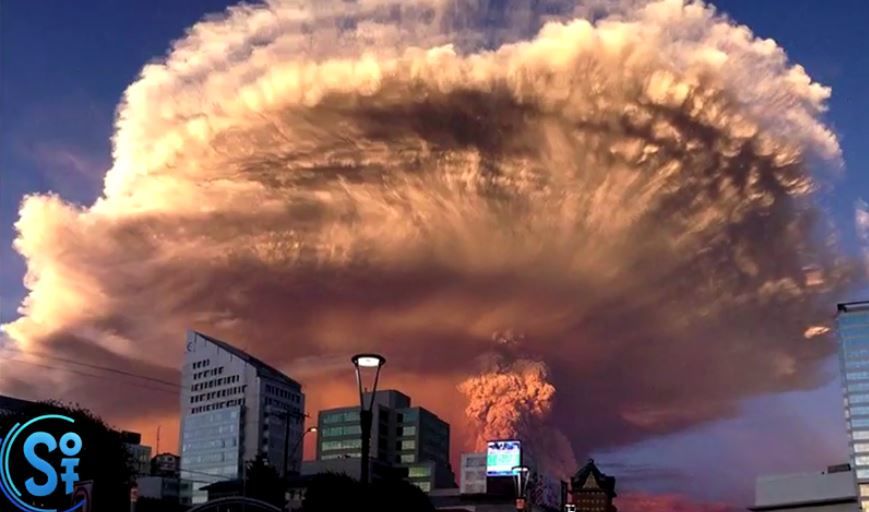
Raging wildfires in Siberia destroyed thousands of homes and injured hundreds of people. Late in the month, on the anniversary of the world's worst nuclear accident, wildfires broke out within the Chernobyl plant exclusion zone in northern Ukraine. Both the Middle East and China experienced their "worst sandstorms in years", while huge dust storms also brought chaos to parts of both the American and Russian West. There were devastating landslides in Indonesia and Afghanistan, and a slow-moving 'horizontal landslide' in a Siberian town... which was also the setting last month for another bizarre 'exploding crater-hole'.
Settlements in the 'driest place on Earth', Atacama Desert in Chile, were washed away after being inundated for the second month in a row. Severe flooding also hit drought-plagued Sao Paulo for the 4th time in 6 months, while melting snowpack combined with torrential rain to inundate parts of the US South and eastern Kazakhstan. Inches - and sometimes feet - of hail turned streets into rivers in the US, India, and Australia, where a "once-in-a-decade" storm battered the capital Sydney. The US Midwest saw multiple violent tornado outbreaks, while powerful tornadoes devastated communities in India and Brazil.
But none of this rocking and rolling was as destructive as the strongest earthquake to hit the Himalayas in over 80 years. The 7.9M quake pretty much destroyed Nepal, set off avalanches that buried Mount Everest's base camp, and killed people in northern India, Bangladesh, and Tibet. The quake's death toll could reach 10,000 people, and has left millions more homeless. The most spectacular event of the month occurred in southern Chile, where Calbuco volcano exploded to life after being dormant for 40 years, spewing lava and ash thousands of feet into the air...
Nova, a pit bull, shows off bullet wound sustained to hind end following attack.
One man was severely injured after he was attacked by a pit bull Monday in Port St. Lucie, according to a police report.
David Brashear, 63, was in critical condition at Lawnwood Medical Center after he was mauled by a pit bull named Nova on the 2200 block of Southeast Rich Street, police said.
The incident began around 3 p.m. when a neighbor requested that the pit bull's owner, Vincent Bacchus, bring his dog inside so that she could let her dogs out, the report said. As Bacchus was attempting to bring Nova inside, the pit bull turned on its owner and bit him in the arm. Bacchus was forced to jump a fence into his neighbor's yard to get away from Nova, according to the report.
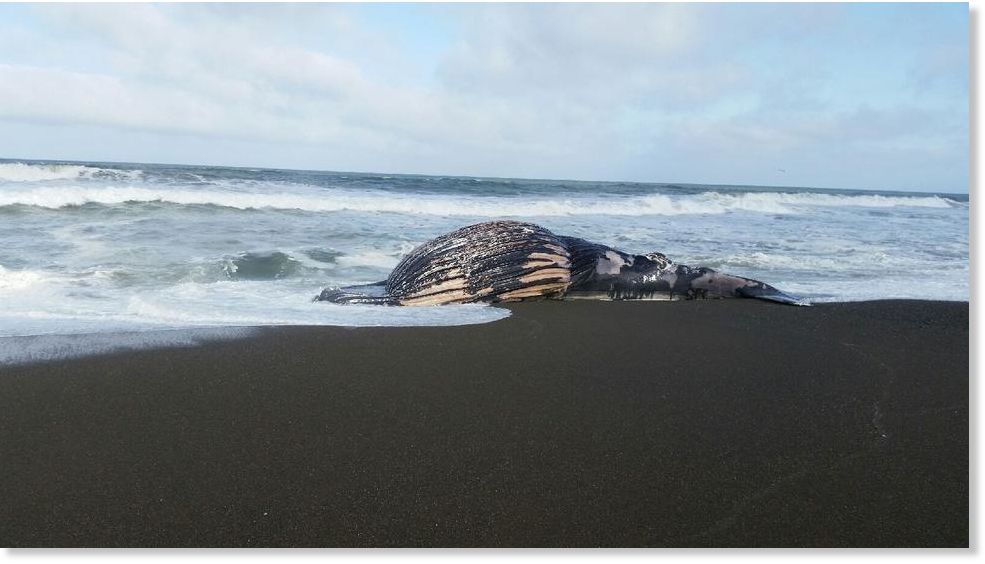
A second dead whale has washed up along the tiny coastal town of Pacifica, this time about half a mile from where the first one was found about three weeks ago.
The young female humpback whale was spotted on Monday at Sharp Park State Beach, and is already drawing crowds of onlookers taking photos, some with fingers crossed that this one won't stink and rot on the sand as the first one has been doing since it washed up at the same beach on April 15.
"I'm sorry to see it, it's quite a sight," said John Valentini, 74, of San Bruno. "I have no idea what's going on."
Sue Pemberton with the California Academy of Sciences was out at the beach Tuesday morning and told NBC Bay Area that she doesn't think there's anything particularly wrong with the ocean, or that there is an epidemic of dead whales.
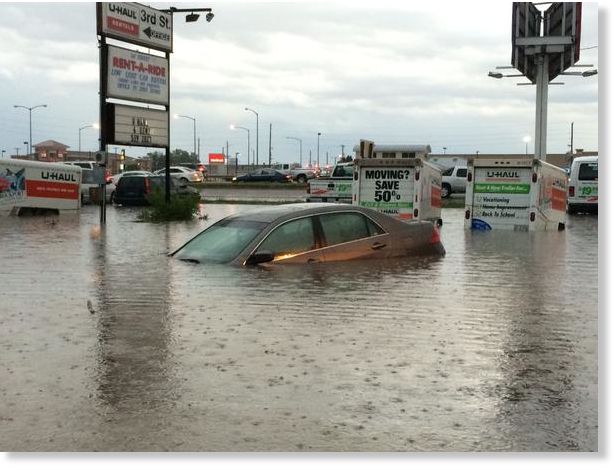
Manhattan, Kansas, and Lubbock, Texas, both suffered flash floods after record levels of rainfall fell between 04 and 05 May 2015,
Manhattan, Kansas
Flash floods raced through the streets of Manhattan, Kansas, yesterday 04 May 2015, after the heaviest rainfall to hit the city since 1908.
National weather service said that the official observation for Manhattan measured 2.97″ (75.43 mm) at 7 pm, breaking the daily rainfall record of 2.91″ set in 1908.
They also said that by 7:45pm, 3.37 inches (85.59 mm) of rain had been recorded at Manhattan Airport, and 4.15″ (105.4 mm) in areas to the north of the city.
The flash floods made roads impassable, causing major disruptions for drivers. Photos of the floods show water around 2 feet (60 cm) deep in the worst affected areas. Parts of Kansas State University campus were under water, deep enough that some students were able to kayak along campus roads. KSU later closed flooded parts of the campus.
National Weather Service warned today that storms and heavy rain were expected through the early morning hours, and that localized flooding was possible.
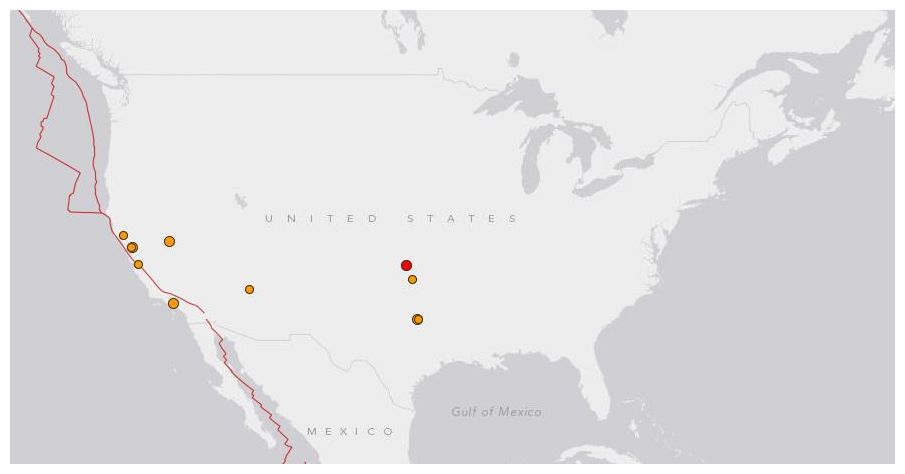
Did you know that Michigan was just hit by the worst earthquake that state has seen in more than 60 years? In recent days, there has been a series of alarming earthquakes all over the United States. Of course none of these earthquakes was anything like the massively powerful quake that just crippled the entire nation of Nepal, but many are concerned that these earthquakes could be a sign of what is to come.
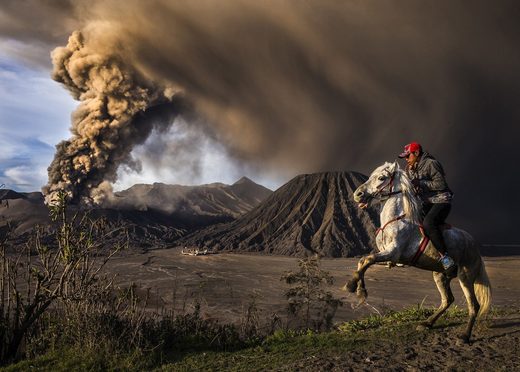
All over the planet, seismic activity is increasing. In fact, I recently wrote about how the number of volcanoes erupting right now is greater than the 20th century's average for an entire year. At the same time, the surface of the sun has become very, very quiet. As you will see in this article, there are scientists that link the two.
It is believed that times of very low solar activity have something to do with a rise in seismic activity, and there is one scientist that is claiming that solar activity is declining faster "than at any time in the last 9300 years" right now. So what does this mean for the future of our planet?
Before we get to that, let's review some of the very unusual earthquake activity in the U.S. that we have been witnessing lately.
A powerful explosion in an active Hawaiian lava crater was captured on webcam by the US Geological Survey. The footage shows how a rock fall prompted the lava lake to burst.
The video shows Hawaii's active Halemaʻumaʻu Crater in the Kilauea Volcano, often view at close range by tourists, as the crater's rocky wall suddenly collapses into the lava lake, causing an avalanche of dust to form.
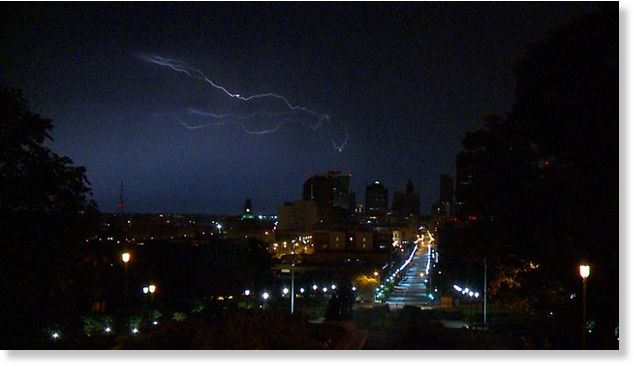
Authorities say a southeast Iowa man and the horse he was riding were killed by a lightning strike.
The Muscatine County Sheriff's Office says 35-year-old William J. "Billy" Clevenger and his horse died Monday night when they were struck by lightning near Moscow in rural Muscatine County.
The Muscatine Journal reports deputies were called to a property Monday night and found Clevenger and another man, John R. Jenkins.
Both men were taken to a Muscatine hospital, where Jenkins was treated and then released and Clevenger was pronounced dead.
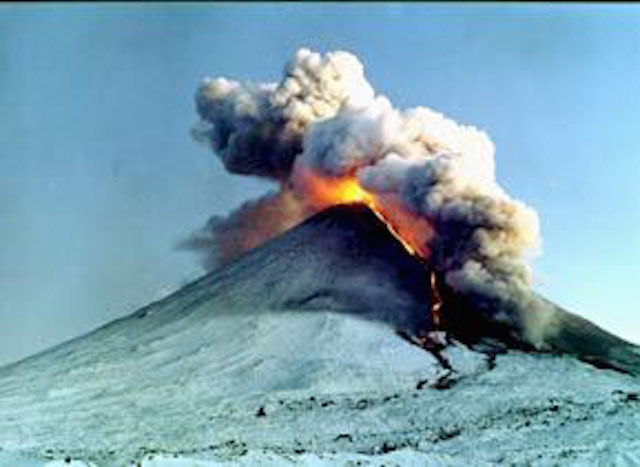
The Kliuchevskoi, the most powerful existing chain giants in the Russian peninsula of Kamchatka volcano, today launched clouds of gas-steam and ash to a height of seven thousand five hundred meters above the level the sea.
Emissions were captured by the observatory of geophysics and volcanology, a subsidiary of the Academy of Science of Russia in the Far East.
The wind spread the ash cloud at a distance of 40 kilometers to the northeast, toward the Gulf of Ozernovskiy, and does not represent a danger for the populations, the regional Emergency Situations Ministry, in a report televised on federal channels said.
However, civil defense declared code yellow -alert averagely for aviation security and recommended to travelers refrain from organizing tourist expeditions in the area of the volcano, active since 1 January.
Kliuchevskoi ranks as the largest and most powerful active basaltic volcano in Eurasia, with four thousand 850 meters.
Actually it gives its name to a group of giants (Kliuchevskaya) located near the east coast of the peninsula as Ploski Tolbachik, Shiveluch and Kizimen responsible for the intense seismic activity in the region since late 2012.
The Kamchatka Peninsula in the Russian Far East, is part of the zone of high seismic activity on the planet, the Ring of Fire.
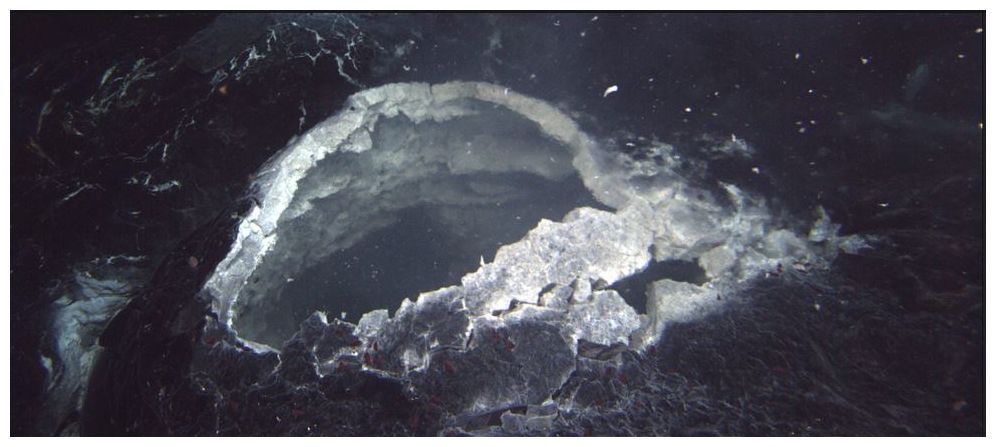
Axial Seamount, an active underwater volcano located about 300 miles off the coast of Oregon and Washington, appears to be erupting - after two scientists had forecast that such an event would take place there in 2015.
Geologists Bill Chadwick of Oregon State University and Scott Nooner of the University of North Carolina Wilmington made their forecast last September during a public lecture and followed it up with blog posts and a reiteration of their forecast just last week at a scientific workshop.
They based their forecast on some of their previous research - funded by the National Science Foundation (NSF) and the National Oceanic and Atmospheric Administration (NOAA), which showed how the volcano inflates and deflates like a balloon in a repeatable pattern as it responds to magma being fed into the seamount.
Since last Friday, the region has experienced thousands of tiny earthquakes - a sign that magma is moving toward the surface - and the seafloor dropped by 2.4 meters, or nearly eight feet, also a sign of magma being withdrawn from a reservoir beneath the summit. Instrumentation recording the activity is part of the NSF-funded Ocean Observatories Initiative. William Wilcock of the University of Washington first observed the earthquakes.
What is truth anyway? The truth is the essence of something, its natural state, something as it really is. It is really a quest for love, because to truly love something we must know it for what it really is. Perhaps we can sense in an unconscious way that there is a deeper truth to everything and everyone, and we are led to search for the truth about it, so that we can truly love it for what it really is.
- Joe Quinn
”
Recent Comments
They also want 7 odd Billion less people on the planet, we are the useless eaters carbon footprints they're planning on reducing.
Comment: Here's the updated list for dead whales washing up on the west coast of North America so far in 2015: Authorities investigate two dead gray whales off Santa Cruz County coast
Dead sperm whale found on beach in Pacifica, California
Dead killer whale found near Fort Bragg, California
Fin whale found dead in San Pedro harbor, California
Dead grey whale washes up near Ucluelet, Canada
Humpback whale found dead near Westport, Washington
Dead Humpback whale washes ashore in Monterey, California
Dead gray whale found off Torrey Pines State Beach, California
Beached pygmy sperm whale dies at Point Reyes, California
Dead gray whale discovered at Seattle ferry terminal
14 whales and 16 turtles wash up dead on Baja California Sur coast