Earth ChangesS


Snowflake Cold

Global Warming is dead: NASA satellites show polar ice caps growing instead of receding

Image
NASA satellite measurements show the polar ice caps have not retreated at all.
Updated data from NASA satellite instruments reveal the Earth's polar ice caps have not receded at all since the satellite instruments began measuring the ice caps in 1979. Since the end of 2012, moreover, total polar ice extent has largely remained above the post-1979 average. The updated data contradict one of the most frequently asserted global warming claims - that global warming is causing the polar ice caps to recede.

The timing of the 1979 NASA satellite instrument launch could not have been better for global warming alarmists. The late 1970s marked the end of a 30-year cooling trend. As a result, the polar ice caps were quite likely more extensive than they had been since at least the 1920s. Nevertheless, this abnormally extensive 1979 polar ice extent would appear to be the "normal" baseline when comparing post-1979 polar ice extent.

Updated NASA satellite data show the polar ice caps remained at approximately their 1979 extent until the middle of the last decade. Beginning in 2005, however, polar ice modestly receded for several years. By 2012, polar sea ice had receded by approximately 10 percent from 1979 measurements. (Total polar ice area - factoring in both sea and land ice - had receded by much less than 10 percent, but alarmists focused on the sea ice loss as "proof" of a global warming crisis.)

NASA satellite measurements show the polar ice caps have not retreated at all.

A 10-percent decline in polar sea ice is not very remarkable, especially considering the 1979 baseline was abnormally high anyway. Regardless, global warming activists and a compliant news media frequently and vociferously claimed the modest polar ice cap retreat was a sign of impending catastrophe. Al Gore even predicted the Arctic ice cap could completely disappear by 2014.

Comment: It shouldn't be a surprise that the ice caps aren't receding. The fact that global temperatures haven't shown any warming trend over the past 18+ years should provide a clue.


Attention

Dead whale found on Essequibo coast, Guyana

Image
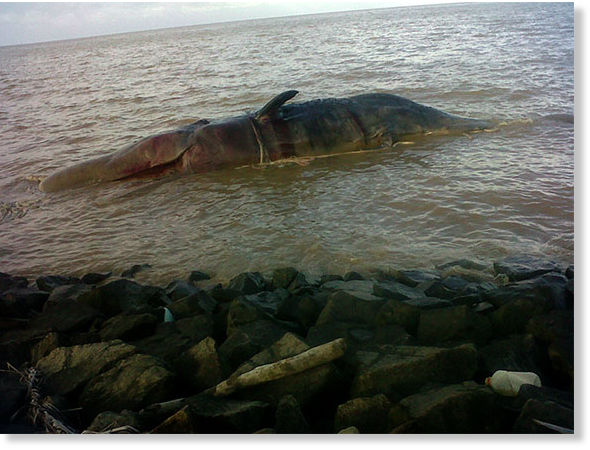
The dead whale
Residents of Maria's Lodge, Essequibo Coast and its environs are being plagued by an obnoxious odour after a whale washed up on the beach at around 2pm yesterday.

According to information, the Sanitary Department on the Essequibo Coast was contacted and promised to look into the matter as soon as possible. Stabroek News was told that upon hearing of the whale, residents flocked the area to get a glimpse of the dead mammal.

"If you see the traffic here this afternoon. Everybody wanted to see the whale. Parents were carrying their children and everyone wanted to say that they see a whale in their lifetime even when it is dead and stinking. The whale is about 50 feet long. (Yesterday) afternoon as the tide was going down, we realize it was there. It smell really bad and poses a risk to residents. We are hoping that it is removed soon," one resident said.

Cloud Lightning

Lightning bolts kills teen, injures 2 others in West Virginia

Image
A 17-year-old West Virginia boy died and two other 17-year-old boys were injured Monday after a lightning strike in Fayette County, the sheriff's office said.

The teens were injured about 3:30 p.m. ET near the town of Fayetteville, southeast of Charleston, Sheriff Steve Kessler said. The boys were fishing at a pond when a severe thunderstorm hit and lightning struck a tree near where they were standing. One of the surviving boys appeared to be seriously injured, although the condition of neither survivor could immediately be confirmed, Kessler said.

"This appears to be a very tragic freak accident," he said.

More showers and thundershowers are forecast for at least another week for Fayetteville, the National Weather Service said.

Ice Cube

Record Antarctic ice: Mawson base may have to relocate

Image
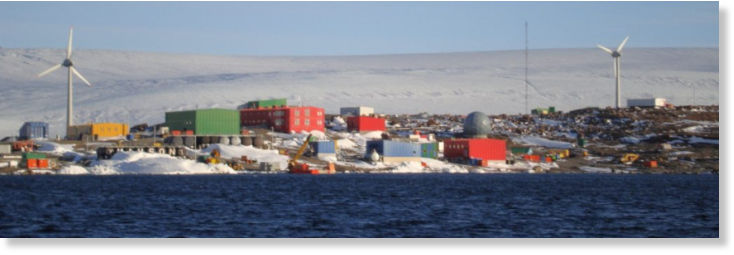
Mawson base
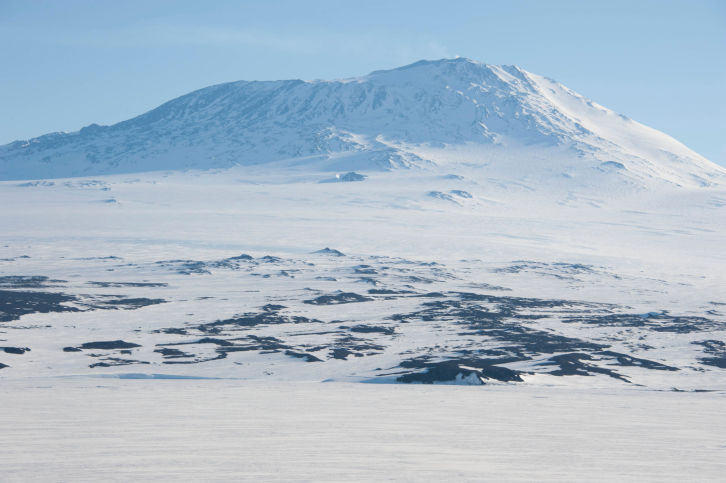
The record busting growth of Antarctic ice is threatening the viability of Australia's Mawson Antarctic research station.

According to The Australian;
"Satellite observations show a new daily record being set for ­Antarctic sea ice every day for the past two weeks. Annual records have also been broken every year for the past three years.

Rob Wooding, general manager of the Australian Antarctic Division's Operations Branch, said expanding sea ice was now causing serious problems.

Last year, fuel supplies were flown to Australia's Mawson base by helicopter because the harbour had failed to clear. Dr Wooding said the situation was "unsustainable".

He said it was possible for the Aurora Australis icebreaker to break through a certain amount of sea ice to enter the harbour, and the planned capability of a replacement icebreaker would increase the ability to do this.

But conditions experienced last year of thick sea ice, with snow cover, extending out 40 to 50km could not regularly be navigated by any Antarctic resupply vessel.

"If we were to face such a situation at Mawson for three or four successive seasons, it would be unlikely that we could continue to resupply the station under the current operating model," he said. "Unless we could find an alternative resupply strategy, questions would arise as to the ongoing ­viability of the station."
Read more: Here

Moon

5.8 Magnitude earthquake hits off Oregon coast

(Reuters) - An earthquake struck off the coast of the U.S. state of Oregon on Monday, the U.S. Geological Survey reported.

It said the magnitude 5.8 quake occurred at sea 450 km (280 miles) west of Yachats at a depth of 10 km.

(Reporting by Jeremy Gaunt; Editing by Janet Lawrence)

Comment: Just over a month ago, it is likely that the submarine volcano, Axial Seamount, erupted off the US North West coast.


Cloud Precipitation

Hundreds of birds killed by hailstorm in Ballari, India

Image
© The HinduA large number of Rose-ringed Parakeet are among the 13 species killed in the heavy rain accompanied by hail storm in Hagari Bommanahalli taluk on Friday night.
Hundreds of birds were killed in the heavy pre-monsoon rain accompanied by hail-storm that lashed in Ballari on Friday night.

For the first time such a large number of birds have been killed in heavy rain. This incident occurred near Krishnapur village, 27 km from Hagari Bommanahalli taluk in the district.

As many as thirteen species of birds, including Plum-headed Parakeet, cattle Egret, pond Heron, Grey Heron, crows, common Myna, Copper Smith Barbet, Rose-ringed Parakeet, Small Pratincole among others, were found dead.

These birds, who depend on the horticulture crops in the vicinity, roost on the coconut trees in the surrounding.

According to Vijaykumar Itagi, a bird watcher from Hagari Bommanahalli, who rushed to the spot on getting the information, as many as 1,570 birds were found dead within a 200 metre radius.

Snowflake

Almost June and more snow falls in Norway

Image
© Jarle VikaneVidda in May
Riding through this stuff on a motorcycle must be awfully cold. - Robert

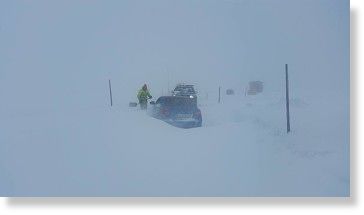
"It happened again yesterday on RV7," says reader.

Cars stuck in snow, another 10-15cm of snow.

Forecast for the next days: Storm with snow over 800m. Even the mainstream media thinks this is special!


I put up some clips on youtube from today's trip in the mountains. Today's road is in the same area as the Suleskardveien in the other video, it's the same area you can find the famous Pulpit Rock in the Lysefjord. Elevation is 800-950m on the highest sections.


Sun

Death toll nears 2,000 in Indian heat wave

Image
© Channi Anand / APAn Indian vendor sleeps under a temporary shed on a hot day on the outskirts of Jammu, India, Friday, May 29, 2015.
Showers and thunderstorms in parts of southern India on Saturday helped eased a weekslong summer heat wave that has claimed nearly 2,000 lives.

The heat wave, however, was expected to continue in some areas of worst-hit Telangana and Andhra Pradesh states for another 24 hours, said Y.K. Reddy, an Indian Meteorological Department director.

Heat-related conditions, including dehydration and heat stroke, have killed at least 1,490 people in Andhra Pradesh and 489 in Telangana since mid-April, according to state officials.

Daytime temperatures hovered between 40 and 45 degrees Celsius (104 and 113 degrees Fahrenheit) in the two states on Saturday, after soaring to as high as 48 C (118 F) earlier in the week, the meteorological department said.

Cloud Precipitation

Texas floods death toll reaches 31 and snake bites soar as they flee flooded areas

Image
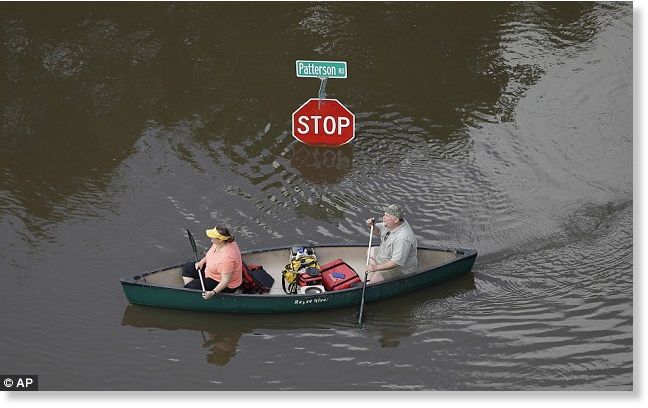
Waterways: This couple have turned to a canoe to navigate the streets of Houston as flooding continues. The death toll stood at 31 Saturday evening
The deadly floods in Texas continued Saturday as the number of people killed by the rising waters reached 31.

The latest deaths were confirmed as more bodies were pulled from the water around the Blanco River, which catastrophically burst its banks earlier in the week.

Even more rain fell at the start of the weekend, causing even more flooding in parts of the Lone Star State as the repercussions of the bad weather continue to make themselves felt.

In Houston, which has been devastated by the deluge, the Minute Maid Park baseball stadium was flooded during a game between the Houston Astros and the Chicago White Sox.

Concourses of the stadium were soaked in the afternoon as fans were left to cope with pounding rain - but the game continued, ending in victory for the home team.

Image
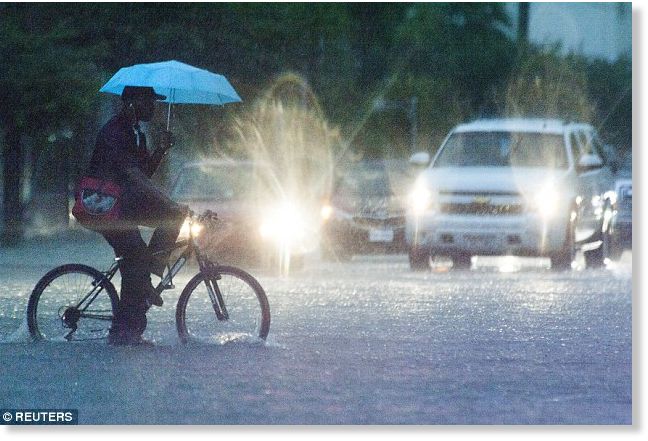
Pedal to dry land: An umbrella-wielding cyclist tries his best to navigate flooded Houston

Sun

The Salton Sea is blowing away

Image
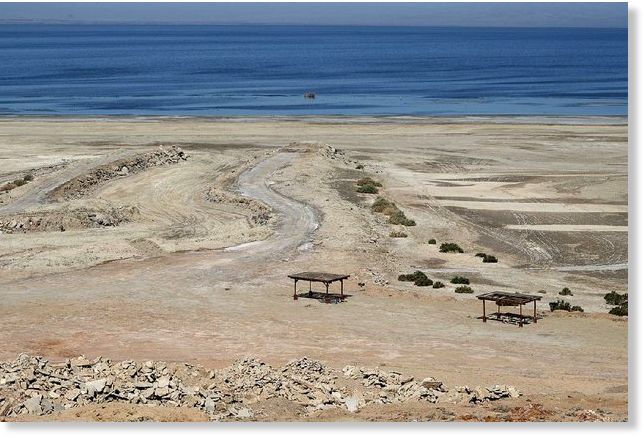
© THE WASHINGTON POST / BONNIE JO MOUNT Boat launches sit stranded above the shrinking Salton Sea, where the dry lake bed holds high levels of arsenic, selenium and DDT.
The bone-dry lake bed burned crystalline and white in the midday sun. Ecologist Bruce Wilcox hopped out of his truck and bent down to scoop up a handful of the gleaming, crusty soil.

Wilcox squeezed, then opened his fist. The desert wind scattered the lake bed like talcum powder.

"That's disturbing," Wilcox said, imagining what would happen if thousands of acres of this dust took flight. It's the kind of thing that keeps him up at night.

The Salton Sea is the largest lake in California, 360 square miles of unlikely liquid pooled in the middle of the Sonoran Desert. Now the sea is slipping away. The Salton Sea needs more water -- but so does just about every other place in California. And what is happening there perfectly illustrates the fight over water in the West, where epic drought has revived decades-old battles and the simple solutions have all been tried.