Earth ChangesS


Wolf

Woman survives prolonged wolf attack in India

Indian wolf
Indian wolf
A 50-year-old woman has survived an attack by a wolf in her farm house at Tengali village of Chitapur talukin this district today.

Police said that the animal bit Goribai on her arm and leg and she fell to the ground, crying out for help.

She fought with the beast for nearly 30 minutes alone and her son Goduba reached the spot and chased the wolf away.

The injured woman was immediately shifted to private hospital and doctors said she is recuperating well.

Chitapur Tahasildar Yallappa visited the hospital and enquired her about the incident.

Comment: See also: Wolf kills child and injures 2 others in Pakistan


Arrow Down

Russian car submerges into six meter sinkhole, never recovered (VIDEO)

Russian car in sinkhole
© Владимир Кобзев / YouTube
Probably not as epic as James Cameron's Titanic, but this Russian flick has its share of vehicles slowly submerging too. A Lada Kalina car drowned in a sinkhole as its owner frantically waited for rescuers to arrive ... but it was never seen again.

Footage of the car's descent into muddy abyss of Ufa, a city in the Urals, was uploaded online by an eyewitness, who said by the time rescuers arrived at the scene, the vehicle was "up to its glands" in the water.

Local news channel 360 reported that rescue workers drained with pumps the six meter sinkhole but found no car in it. They said it had been carried away by the stream of water that washed over the earth in the first place.

The owner of the car told the reporters that she will sue the municipal authorities for damage.


Seismograph

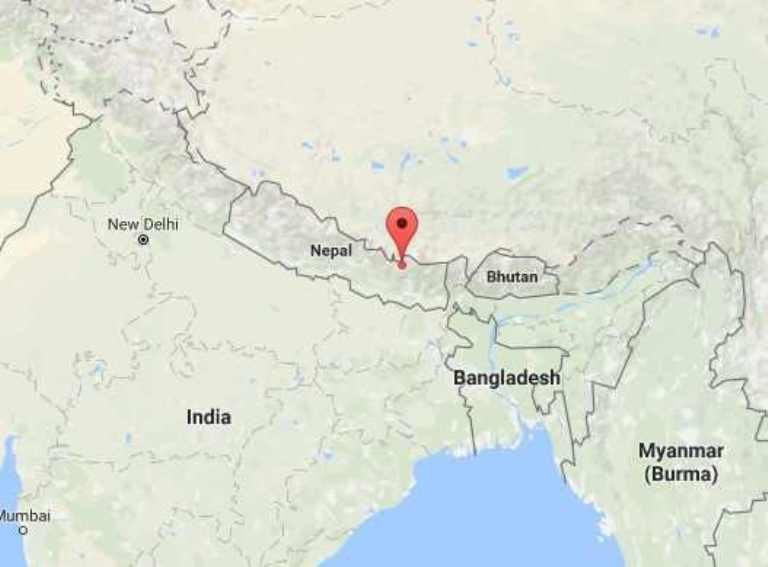
Shallow 5.4 magnitude earthquake hits Nepal, tremors felt in India and China

Nepal earthquake map Nov 2016
© Google
A strongly-felt earthquake with a preliminary magnitude of 5.4. has struck northeast Nepal, with shaking felt in Kathmandu and parts of China, India, Bhutan and Bangladesh, seismologists and residents are reporting.

The earthquake, which happened at 5:20 a.m. local time in Nepal on Monday, was centered about 18 kilometers (11 miles) northwest of Namche Bazaar in Nepal's Sagarmatha Zone. It struck at a depth of 10 kilometers (6.2 miles), making it a shallow earthquake.

Both the U.S. Geological Survey (USGS) and the European-Mediterranean Seismological Centre have put the preliminary magnitude of Monday's earthquake at 5.4.

Residents across the region reported feeling the early-morning tremor, but there was no immediate word about possible damage or casualties, though many residents reported that the tremors were strong enough to wake them up.

A resident in Banepa, about 110 kilometers west of the epicenter, described it as a "long shake". There were also many reports from Kathmandu. "Long mild shake felt and scary noise too at Lazimpat, Kathmandu. I was ready to jump off my bed and run," one resident told EMSC.

We're working to gather additional information.

Cloud Precipitation

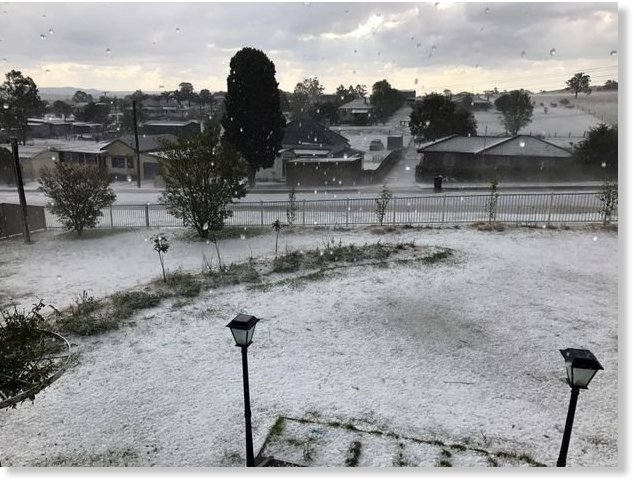
Severe hailstorm leaves the ground white in Killarney, Australia

 Killarney blanketed in white.
© Lisa Locke Killarney blanketed in white.

A Queensland town has been turned into a white wonderland after a severe thunderstorm brought through some heavy hail.

Killarney, southeast of Warwick, looked as if it had been hit by a snowstorm following the battering on Sunday afternoon.

Hail at Killarney. Video: Lisa Locke. #qldweather #7News pic.twitter.com/SNYpo2Pj4e
— 7 News Queensland (@7NewsQueensland) November 27, 2016
Large hailstones, fierce winds and heavy rain has hit parts of the southeast, as two thunderstorms sweep through the area.

One storm was detected on the radar about 3.30pm near Peak Crossing, southwest of Brisbane. It was heading in a northwest direction and was expected to hit Bundamba Lagoon and the area south of Amberley by 4.05pm and Amberley, Rosewood and south of Cunninghams Gap by 4.35pm
Severe storm continues to move north along ranges and towards #Boonah. Storm approaching #Ipswich has completely weakened. pic.twitter.com/d54ehGk0lH
— BOM Queensland (@BOM_Qld) November 27, 2016

Fish

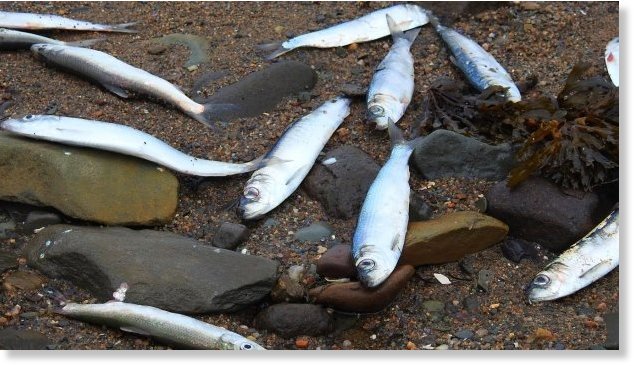
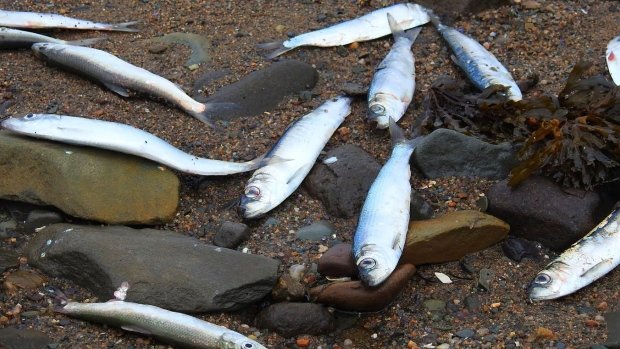
Thousands of dead herrings wash ashore in St. Marys Bay, Nova Scotia

Sightings like this on the shores around St. Marys Bay, N.S., have been a common sight since the beginning of last week.
© Joan ComeauSightings like this on the shores around St. Marys Bay, N.S., have been a common sight since the beginning of last week.
Scores of Atlantic herring are washing up on the shores around St. Marys Bay, N.S., but the reason isn't clear.

Within the last week, the herring have appeared on a 20-kilometre stretch of shoreline running between Marshalltown and Gilberts Cove.

"It seems to be a bit of a unique event in terms of just the sheer numbers that are showing up dead," said Shawn Craik, a biology professor at Université Sainte-Anne.

'Thousands of fish'

On Friday, Craik took some students to the shore at Gilberts Cove. He said that in some spots, there were eight fish washed up in a square-metre block.

"If you extrapolate that over the entire beach, we're talking about thousands of fish," he said.

While there, he spoke with a clam fisherman who said that in his 40 years of clamming on the beach, he had never seen anything like this.

The Digby detachment of Fisheries and Oceans Canada began receiving calls from concerned citizens about the problem on Tuesday, said Gary Hutchins, the detachment's conservation and protection supervisor.


Recycle

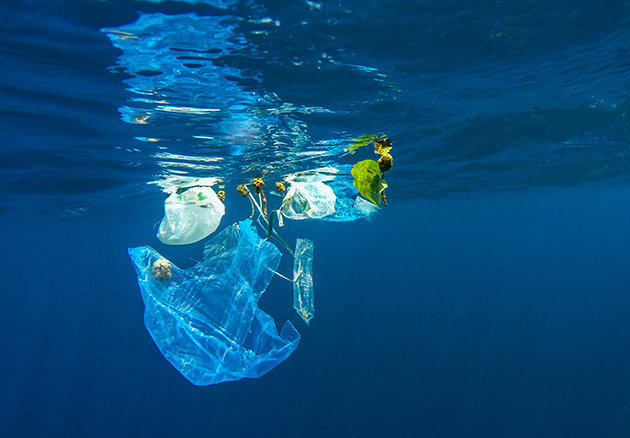
Ocean microplastics - a massive problem

microplastics
In today's world, plastic is an essential raw material. Since their invention in the 1930's, plastics have become ubiquitous in the manufacture of everyday products. In 2012 the plastics industry accounted for more than 1.4 million jobs in over 62,000 companies across the European Union.1 As useful and versatile as plastics are, however, their unchecked disposal on an unprecedented scale is resulting in significant global impacts on wildlife from marine environment pollution. Microplastics are particularly problematic, and as the life cycle comes full circle, it is feared that they could bring adverse impacts for humans too.

Comment: Plastic is believed to constitute 90 per cent of all rubbish floating in the oceans. The UN Environment Program estimated in 2006 that every square mile of ocean contains 46,000 pieces of floating plastic. Marcus Eriksen, a research director of the US-based Algalita Marine Research Foundation, said:
"The slowly rotating mass of rubbish-laden water poses a risk to human health, too. Hundreds of millions of tiny plastic pellets, or nurdles - the raw materials for the plastic industry - are lost or spilled every year, working their way into the sea. These pollutants act as chemical sponges attracting man-made chemicals such as hydrocarbons and the pesticide DDT. They then enter the food chain. What goes into the ocean goes into these animals and onto your dinner plate. It's that simple"


Cloud Precipitation

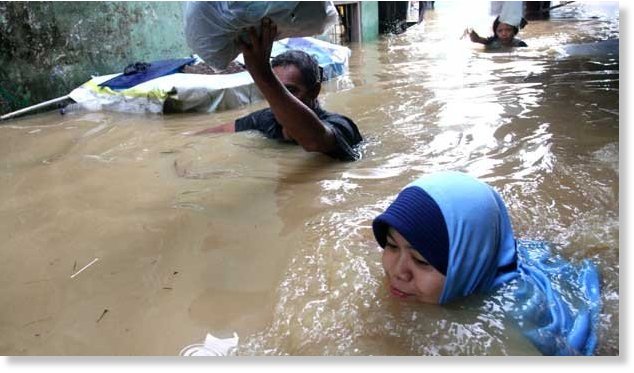
Floods hit 96 villages in East Java, Indonesia

flooding
Bojonegoro subdistrict's Disaster Mitigation Agency (BPPD) reported that 96 villages in 15 districts in the area were struck by flood due to overflow of Bengawan Solo river with 14.82 meters of water level (flood warning) on Saturday at round 2 o'clock in the afternoon (26/11).

"The flood from the river does not only inundate rice field areas, but also residential areas with 0.50-1 meter high of water," Bojonegoro's BPPD head Andik Sudjarwo said in Bojonegoro, East Java on Saturday (26/11). Based on BPPD data, the 96 villages are located in districts of Padangan, Trucuk, Malo, Dander, Kota, Balen, Kapas, Kanor, and Baureno.

He further estimates that the water level in Bnegawan Solo will continue to rise up to 15.30 m high due to floods in the upstream areas. Such estimation means that floods will hit 146 villages in 16 districts.

"We are currently still collecting data on the impact of Bengawan Solo overflow," he added.

Arrow Down

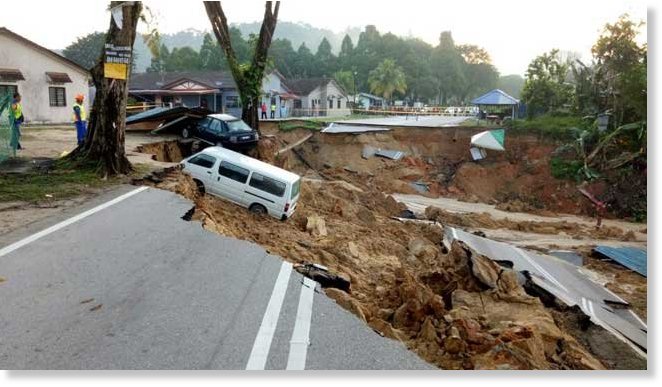
Major landslide in Serendah, Malaysia

At least six cars, two motorcycles and one van were swallowed up by earth in the 1.20am incident.
One person was injured and at least 10 vehicles were buried in a major landslide which struck Taman Idaman, Serendah early this morning.

At least six cars, two motorcycles and one van were swallowed up by earth in the 1.20am incident.

The injured person was identified as Mohd Fareez, 21, was on his motorcycle when the landslide occurred. He was sent to the Selayang Hospital.

Most of the affected vehicles were parked 50 metres from the location where the landslide took place.


Snowflake Cold

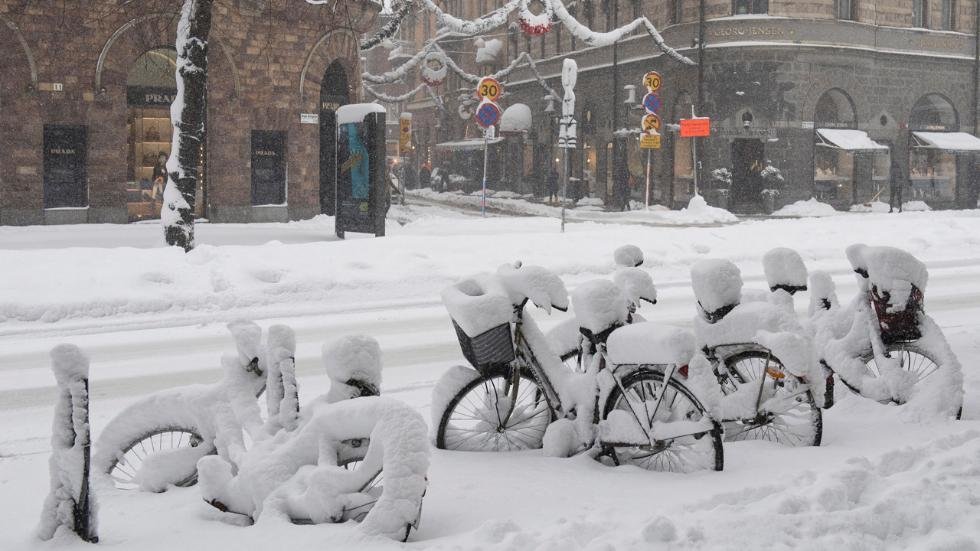
Global sea temperatures drop and record snow falls across Europe, Asia and USA

Stockholm record snowfall
© JONATHAN NACKSTRAND/AFP/Getty ImagesStockholm had its snowiest November day in 111 years.
The onset of winter in the Northern Hemisphere was lightning fast, sea surface temperatures are dropping globally and snow records drop across Europe, Asia and USA. The Southern hemisphere is far below normal temperatures and Australia loses up to 90% of its wheat crop due to frost and cold throughout 2016.


Comment: See also:


Arrow Up

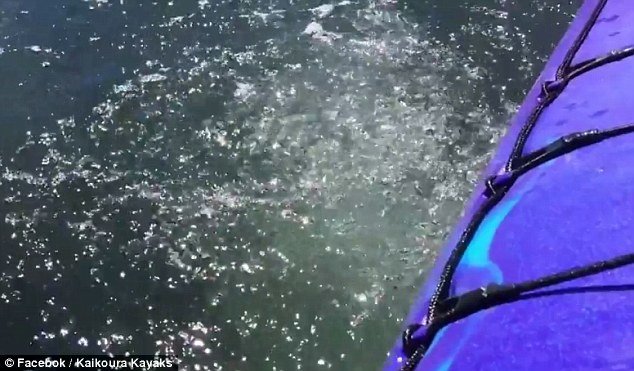
Outgassing of hydrogen sulfide and other gases off Kaikoura Peninsula, New Zealand

Kaikoura outgassing
© facebook/kaikoura kayaksBubbles have begun pluming out of the sea floor near where the epicenter of the earthquake that hit New Zealand earlier this month.
A Canterbury University lecturer has shed some light on the bubbles found off the Kaikoura Peninsula.

The phenomena was found in Whalers Bay by Matt Foy and Connor Stapley and it is believed they have been caused by the magnitude 7.8 quake.

Dr Matthew Hughes says the bubbles are likely dissolved gases in the sea floor which have become exposed by new cracks in the rock, and are now venting to the surface.

He says its very much like any other geologically active part of New Zealand.

The bubbles are a combination of several different gases, but the strong smell likely comes from hydrogen sulfide.


Comment: Here's a small sample we've collected of other recent natural outgassing related events: It is likely that outgassing of methane, hydrogen sulfide (and other natural gases) is coming up from deep below the earth's surface. See also:

SOTT Exclusive: The growing threat of underground fires and explosions